
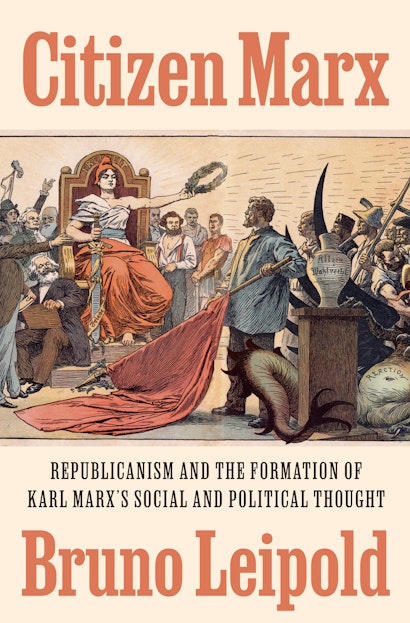
In Citizen Marx, Bruno Leipold argues that, contrary to certain interpretive commonplaces, Karl Marx鈥檚 thinking was deeply informed by republicanism. Marx鈥檚 relation to republicanism changed over the course of his life, but its complex influence on his thought cannot be reduced to wholesale adoption or rejection. Challenging common depictions of Marx that downplay or ignore his commitment to politics, democracy, and freedom, Leipold shows that Marx viewed democratic political institutions as crucial to overcoming the social unfreedom and domination of capitalism. One of Marx鈥檚 principal political values, Leipold contends, was a republican conception of freedom, according to which one is unfree when subjected to arbitrary power.
About the Author
Bruno Leipold is a fellow in political theory at the London School of Economics and Political Science. He is the coeditor of Radical Republicanism: Recovering the Tradition鈥檚 Popular Heritage.