
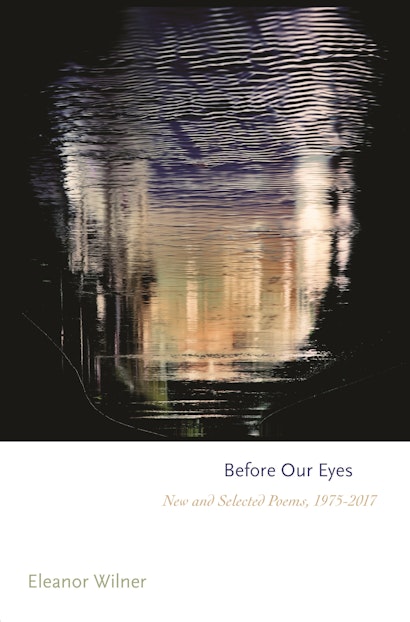

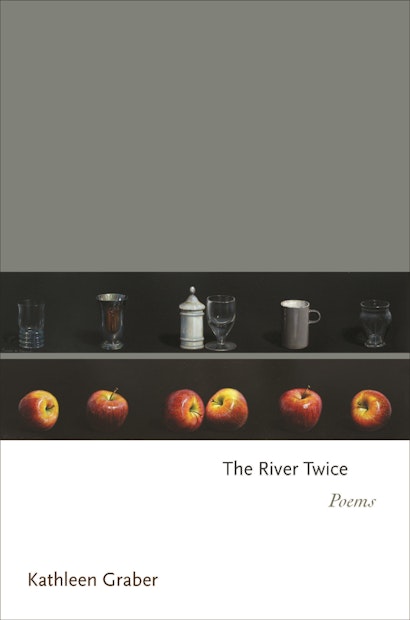
Throughout history, poets have rallied against autocracies, served as moral beacons in times of crisis, while others have intentionally avoided moral absolutes. We asked poets Kathleen Graber and Eleanor Wilner what ethical or moral aspirations and obligations they hope their own poems embody or enact.
EW: Well, Kathy, what, in a small space, can we make of this question? Looking out my window at the one broken shutter obscuring half my view of the street, I think of partiality, and the way poetry embodies what might be called 鈥渆thical aspirations鈥� by making that shutter immediately suggest how much we don鈥檛 see, and how, without the metaphor to suggest it, we don鈥檛 even notice the obstruction.
I think it鈥檚 important to keep language like 鈥渆thical obligations鈥� from implying a kind of conscious agenda, as there is something innately subversive of intention about poetry. I see in your poetry an improvisational freedom of association, outwitting logic, placing together unlike things, undoing conventional ways of thinking, opening new pathways through surprising conjunctions.
For instance, the way, on your desk (p 40) 鈥渂eside the two unopened volumes /on practical ethics I bought last year鈥攊s a green plastic action figure of the Swamp Thing, a hulking vegetable elemental鈥� who 鈥渟uffers from the delusion/of thinking he is a man.鈥� And what a train of associations follows in his wake, and who could guess what meaning would blossom from him when he reappears, transformed, at the poem鈥檚 end.
The poetic imagination is ethical because, however serious the subject, it is playful; it can鈥檛 be told what to think or what to see, and finds its way by being allowed its freedom. A poem seems a weird kind of worship, requiring devotion to attention without presumption, preconception or destination.
KG: Oh, Eleanor, I agree with all of this. And I am struck by what I will call the mythic thinking that informs your work, which is not, to my mind, a thinking that depends upon the structure of logic, which I would call a linear thinking, but a mindset that sees instead the cycle, the circle, the patterns, and the infinite repeating. If there is a narrative, it is one that comes to us like those bells in 鈥淔or the First Time,鈥� which, heard by the thawing frog in spring, are revelatory and shocking, yet that seem to also be an ancient sound made almost wholly (holy) of a kind of echo and reverberation. Maybe all music (poetry) is made that way? An echo, a vibration, with its intimations! This may be my way of saying that even though your poems may take up concerns that feel eternal, the movement within them never feels preordained but rather newly discovered, even when what they discover is their place within recurring or ongoing traditions.
For instance, I am drawn to the idea that the dog in the last of the new poems, the pet who recognizes the wanderer upon her return, who, of course, conjures Odysseus鈥檚 Argos, is, when the mirrors break, the forgotten, primal, possibly abandoned, animal soul recognizing its own return鈥攕uch an apt image of grace and redemption. Not that the animal is not capable of aggression, but only that its aggressions are so rarely gratuitous. I suppose I am proposing that while there may be pathologically deranged dogs, there aren鈥檛 unethical ones.
EW: Yes, we seem to be the only species that is rabid without having rabies. And, with you, and other poets of our time, I sense that redemptive power of the other animals in your poem, 鈥淭he Weight,鈥� in the acute distinction arising from an acupuncturist鈥檚 observation that belief is unnecessary to benefit from the needles:
… Lord, may there be a metaphor
here for all of the mysteries.
Each day I walk a line between my belief
in the sacred & my disbelief in the divine… .
I was struck by the profound difference caught in those two words鈥攁gain, the sacred as innate in the living world, along with a rejection of conventional religion that looks to a divinity above (and doctrinally at odds with) nature rather than inherent within it. And thinking of that poem鈥檚 title, I think of how your style alleviates the weight of the serious inquiry in which it is involved.
KG: Ha! Indeed. I confess to often consciously trying to find ways to think about serious things in ways that may not be burdensome to readers. But I also confess to seeing the larger questions of our lives informing even the smallest moments. And I wonder how can we, like the mother & daughter in your poem 鈥淕nawed Bone, Covered Bridge,鈥� standing on the bridge over the troubled waters of our time, both hover above them while still responding meaningfully to the urgent events around us? But how can we cultivate an empathetic, compassionate human discourse if we do not first find an existential perspective?
EW: I think you鈥檝e managed to find a stance both intimate and mindful in relation to our current troubled situation in your direct address to America poems, a refusal to let us off the hook of what is going on, and going wrong. In 鈥淎merica (peaches鈥�), considering the disappointing peaches in our markets: 鈥淚t is a fruit like the mind/we are making together: both overripe and immature.鈥� So the failure of our peach crop becomes an eloquent spokesman for our nation reaching decadence before going through maturity. (I did find a good white peach recently鈥攊t was, of course, in the Chinese market in Philly鈥檚 Wing Phat Plaza.)
The way the larger world informs our personal moments is achieved as your poems place those moments in disconcerting and sudden proximity to history鈥檚 atrocities, and just let them be, building meaning by accretion of such disparities, weaving a kind of rich conjecture. Like the world and the mind regarding it, everything (yes, okay, a qualified everything) is in these poems, and conclusions are everywhere fended off, unless it is 鈥渢he sky … saying its two things鈥�/more, no more, more, no more鈥斺赌�&苍产蝉辫;&苍产蝉辫;
KG: I fear I say that myself every morning lately as I read the news!
About the authors
Kathleen Graber teaches in the Creative Writing Program at Virginia Commonwealth University. Her poems have appeared in the New Yorker and the American Poetry Review, among other publications, and her first collection, Correspondence, was published in 2006. Eleanor Wilner is the author of seven previous collections of poetry, most recently Tourist in Hell and The Girl with Bees in Her Hair. In 2019, she received the Frost Medal for distinguished lifetime achievement in poetry, the highest award presented by the Poetry Society of America. Her other awards include the Juniper Prize, three Pushcart Prizes, and a fellowship from the MacArthur Foundation, and her work appears in many anthologies, including The Best American Poetry. She teaches in the MFA Program for Writers at Warren Wilson College and lives in Philadelphia.