
Socialists believe in economic emancipation from the domination and unfreedom of capitalism. But realising that monumental economic goal invariably and inescapably requires socialists to think about what political means, if any, might bring it about. In the long history of anti-capitalist struggle, socialists have given very different answers to that question.
In March 1835, amid growing working-class struggle for reform of Britain鈥檚 oligarchic constitution that excluded them from political participation, the Welsh socialist Robert Owen intervened to give one answer to the question. He counselled workers that 鈥淚t is not Universal Suffrage, Vote by [secret] Ballot, and Annual Parliaments that can effect that which is now required for the people of all countries.鈥� Instead, they 鈥渃ould insure their emancipation from their present sufferings by a much shorter and surer course than through political agitation.鈥�
The alternative course was one that Owen had been preaching for close to twenty years. In place of political agitation, he advocated the creation of small intentional communities where some 500-2000 people would live and work cooperatively together in a large square set of buildings鈥攐r 鈥減arallelogram鈥� as he referred to it. Owen had himself tried to set up several such communities in England and the United States. He was entirely convinced that they would attract support from all classes, spread across the world and peacefully bring about a new socialist society.
Owen鈥檚 intervention drew an immediate sharp rebuke from Bronterre O鈥橞rien, a social republican and leading Chartist (the working-class movement campaigning for democratic reform). 鈥淭he idea of cajoling a rich man out of his present enjoyments by telling him he will be more happy in a parallelogram鈥�, O鈥橞rien retorted, 鈥漚ppears to us the most complete hallucination that can enter the mind of man.鈥� Sceptical of some of Owen鈥檚 more far-reaching socialist ideas on abolishing private property, O鈥橞rien nonetheless held that emancipation from capitalism鈥檚 鈥渂astard despotism鈥� could not bypass the battle for political reform. For O鈥橞rien, there could be no expectation of social emancipation under 鈥渢he present aristocratic Government鈥�, for 鈥渦nder no Government but an extreme democracy is there slightest chance of its success.鈥�
Karl Marx was a 16-year-old schoolboy in the Prussian Rhineland when these debates between republicans and socialists were taking place in Britain. When he entered the public sphere seven years later as a journalist in 1842, he did so as a republican who shared the kind of criticisms O鈥橞rien had made of existing socialists. Marx similarly objected to socialism鈥檚 obsession with abolishing private property and especially attacked their neglect of political matters. 鈥淭he critic,鈥� Marx insisted, 鈥渘ot only can but must engage in these political questions (which according to the views of the crass socialists are beneath their dignity).鈥�
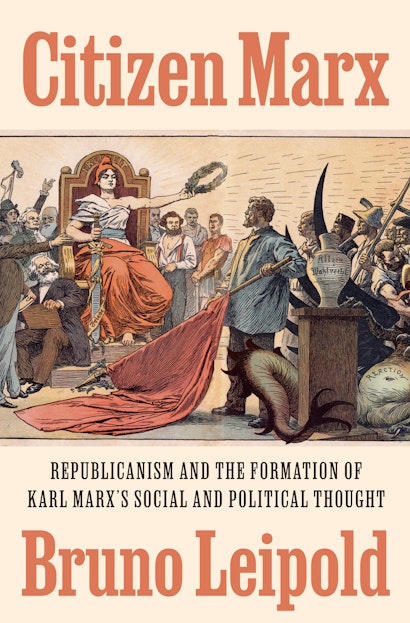
When Marx transitioned to communism a few months after writing these words he carried with him his prior republican political commitments. He set out to fashion a new republican socialism, that married the belief in abolishing capitalist private property to a commitment to the centrality of democratic politics in bringing it about. That involved, on the one hand, a critique of republicans who thought capitalism could be resisted by universalising private property through the small-scale independent production of artisans and peasants (which Marx thought entirely failed to recognise the productive efficiency and dynamism of large-scale industrial capitalism).
But it also involved a critique of the deeply anti-political tendencies of early socialism. In The Communist Manifesto, Marx (and Engels), attacked Owen for believing that class antagonisms could be overcome by 鈥渢he force of example鈥� of his parallelogram communities. This na茂ve belief led Owen and other socialists to engage in 鈥渂itter opposition to the political action of the working class鈥� including the Chartist struggle for democracy. Instead, Marx and Engels argued that 鈥渢he first step鈥� in the working class鈥檚 struggle for socialism had to be 鈥渨in[ing] the battle for democracy.鈥�
This deep commitment to politics and democracy contrasts with how Marx is usually presented to us. Public commentators repeat endless incantations of 鈥溾�s the Soviet Union proved鈥︹�� to exorcise any discussion of Marx, socialism and democracy. While a favoured framing device amongst academic critics of Marx is to depict him as the anti-political thinker par excellence, who subordinated everything to the economy. Understanding Marx in his nineteenth-century context and his attempt to displace the anti-political and anti-democratic tendencies in early socialism, shows how baseless these interpretations are. Democracy and politics were, for Marx, essential elements in the struggle for socialism.
What kind of democratic political structures did Marx think were required for socialism? It certainly included familiar institutions like universal suffrage and equal civic rights. But in response to the 1871 Paris Commune鈥攚hen the city鈥檚 working class briefly took power and led a radical democratic experiment鈥擬arx sketched a much more far-reaching account of popular democracy. Representatives should be paid the same wages as workers and elected much more frequently (an echo of the Chartist demand for annual parliaments) and constituents should in turn be able to give representatives binding instructions and have the power to recall them. This would mean that 鈥淚nstead of deciding once in three or six years which member of the ruling class was to misrepresent the people in Parliament, universal suffrage was to serve the people.鈥� State bureaucrats were to be similarly elected and recallable, turning 鈥渢he haughteous masters of the people into its always removable servants, a mock responsibility by a real responsibility, as they act continuously under public supervision.鈥�
It was these radical democratic institutions that Marx thought would provide the appropriate political terrain for ending the economic unfreedom and domination of capitalism. In a moment when 鈥渄emocracy鈥� is under siege on all sides and seemingly unable to deal with capitalism鈥檚 despotic and destructive rule over people, politics and the planet, Marx鈥檚 thought might be one unlikely resource for re-thinking democracy鈥檚 defining institutions.

Bruno Leipold is a fellow in political theory at the London School of Economics and Political Science. He is the coeditor of Radical Republicanism: Recovering the Tradition鈥檚 Popular Heritage.