
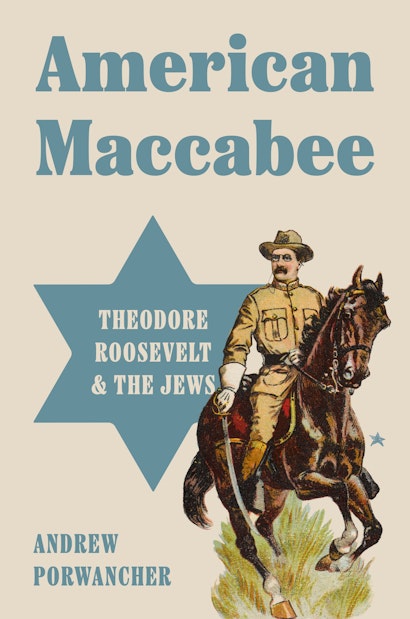
Two values have long exercised considerable purchase on our culture: meritocracy and diversity. The former embodies the quintessentially American ethos that one鈥檚 station in life should not be governed by accident of birth but by ability and drive.The latter refers to the equally American ideal that our leaders鈥攊n politics, business, and other spheres鈥攕hould be representative of the country鈥檚 demography. If our society proceeds from true equality of opportunity, then meritocracy and diversity are effectively synonymous; a system that rewards aptitude and effort ought to produce an elite that, by default, mirrors the nation鈥檚 heterogeneity. But if equality of opportunity is more myth than reality, then we can hardly expect our patrician classes to organically look like society at large. Liberals argue that the latter scenario requires us to make deliberate efforts to ensure diversity. Conservatives retort that we will never come to treat all people the same by treating some of them differently.
Questions of meritocracy and diversity have been freshly thrust to the center of our national discourse thanks to a pitched battle between two presidents鈥攐ne of the United States, the other of Harvard University. It is fitting, then, that the figure in American history who perhaps best personified the complicated relationship between meritocracy and diversity was someone who intimately knew both Harvard Yard and the Oval Office: Theodore Roosevelt. This Harvard alum turned head of state saw great virtue in talent and inclusion alike, but he often found it challenging to synthesize both values into a coherent worldview. It is unsurprising that this difficulty surfaced for TR when it came to hiring and promoting Jews in particular. After all, the question of Jewish belonging in America became ever more salient in his era as waves of Jewish refugees reached the nation鈥檚 shores.
Roosevelt鈥檚 oscillation between meritocracy on the one hand and diversity on the other was on full display in one especially illustrative letter. Written to a Gentile on the eve of his presidency, TR had by that point enjoyed numerous opportunities to recruit and elevate Jews鈥擱oosevelt had served as New York鈥檚 police commissioner, as leader of the Rough Riders, and as Governor of the Empire State. Throughout those experiences, he grappled with a core tension: Roosevelt wanted to include Jews in public service, yet his commitment to meritocracy demanded that religious identity remain irrelevant in employment and advancement. Looking back on his gubernatorial tenure, Roosevelt recalled, 鈥淥n the State Board of Charities, I thought it was right to see that the different creeds had representation, and I think that the Jews whom I appointed 鈥� were as fine a body of American citizens as have ever been put on such a board.鈥� Here, he touted the value of deliberately providing for religious diversity. But in that selfsame missive, Roosevelt then contradicted himself by refuting the notion that his selection of officials was influenced by their faith: 鈥淲hen I appointed Judge Hirschberg of Newburg on the Appellate Division of the Supreme Court, I did so not because he was a Jew but because I thought he was the best judge for promotion.鈥� The remainder of the letter vacillated between the principles of intentional diversity and faith-blind meritocracy. For instance, Roosevelt described how he actively sought Jews for the police department in order to combat stereotypes of Jewish frailty. Yet TR also emphasized that his elevation of a Jewish solider to the rank of lieutenant had nothing to do with that Rough Rider鈥檚 religion.
This dissonance dogged Roosevelt in his presidency as well. Roosevelt told the Christian writer Lyman Abbott that he felt it imperative that his cabinet have 鈥渁n absolutely representative character.鈥� Accordingly, TR named the first Jew in American history to a cabinet post. But in that same letter to Abbott, Roosevelt gainsaid his foregoing remark, rejecting the idea that intentional pluralism played any part in his cabinet choices: 鈥淚t is not considered whether any member of my cabinet is of English, or Scotch, or Dutch, or German, or Irish descent; whether he is Protestant, Catholic or Jew.鈥�
Roosevelt had mixed motivations in naming Jews to positions of import. He did genuinely believe that Americans of differing creeds should see their own in the highest echelons of civic life. But TR was also alive to the ballot box and consequently keen to cultivate Jewish constituencies. He sometimes privately conceded that he appointed certain Jews to appease their coreligionists. In 1904, for example, Roosevelt learned of allegations that a federal marshal of Jewish background, William Henkel, was growing cozy with the opposing party鈥檚 political machine. If the president were to oust Henkel, another Jew would be given the post. 鈥淲e could substitute for him some first-class Jew,鈥� Roosevelt wrote a senator. 鈥淚 would not want the Jews to feel that we had turned out one of their number when he is the only representative of the race at present holding a federal position in New York.鈥�
That was not an isolated incident. The next year, a congressman conveyed doubts to Roosevelt about a Jew whom TR was about to name as a customs surveyor. The president explained to the congressman his reluctance to reverse course: 鈥淥ne reason, which I do not like to have spoken of much, is that I like when I can to appoint a Jew for the very reason that it is often so difficult to find just the right Jew to appoint.鈥� Roosevelt鈥檚 candor here is striking. Of course he preferred not to publicly countenance such reasoning: it undermined his frequent refrain that merit alone is what mattered.
To say that we live in polarized times today is a clich茅, and for good reason: ours is a moment of acute division. On issues of meritocracy and diversity in particular, we remain no less conflicted as a society than Roosevelt had been as an individual. But Americans of all stripes can surely agree that genuine equality of opportunity is a goal worthy of our efforts. In other words, we might find the beginnings of common ground in the words of our twenty-sixth president, who famously declared that all deserve a 鈥渟quare deal鈥� because we are 鈥渆ntitled to no more and should receive no less.鈥�
Andrew Porwancher is professor of history at Arizona State University. His books include The Jewish World of Alexander Hamilton (快色直播) and The Devil Himself: A Tale of Honor, Insanity, and the Birth of Modern America.