The free and open exchange of ideas underlies intellectual inquiry and is the bedrock of a democratic society. Through engaged dialogue we refine our thinking, test our assumptions, and move closer to shared human truths. This process is vital not only for the evolution and advancement of ideas and scholarship, but also for the broader pursuit of freedom, justice, and understanding.
The books on this list underscore the enduring importance of dialogue across differences. From a history of global protest movements to the challenges that colleges and universities in the United States are currently facing, they demonstrate how open discourse is a necessary force for human connection, social progress, and democratic resilience.
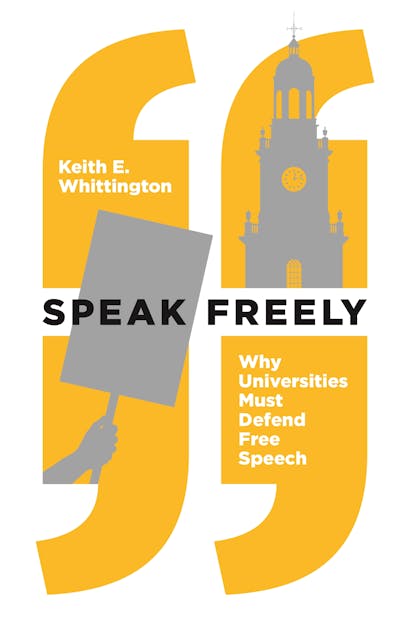
Free speech is under attack at colleges and universities today, as critics on and off campus challenge the value of freewheeling debate. In Speak Freely, Keith Whittington argues that universities must protect and encourage vigorous free speech because it goes to the heart of their mission to foster freedom of thought, ideological diversity, and tolerance. Examining hot-button issues such as trigger warnings, safe spaces, hate speech, disruptive protests, speaker disinvitations, and the use of social media by faculty, Speak Freely describes the dangers of empowering campus censors to limit speech and enforce orthodoxy.
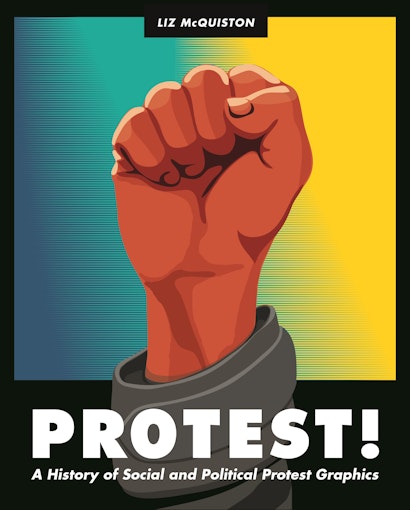
Throughout history, artists and citizens have turned to protest art as a means of demonstrating social and political discontent. From the earliest broadsheets in the 1500s to engravings, photolithographs, prints, posters, murals, graffiti, and political cartoons, these endlessly inventive graphic forms have symbolized and spurred on power struggles, rebellions, spirited causes, and calls to arms. Spanning continents and centuries, Protest! presents a major new chronological look at protest graphics.
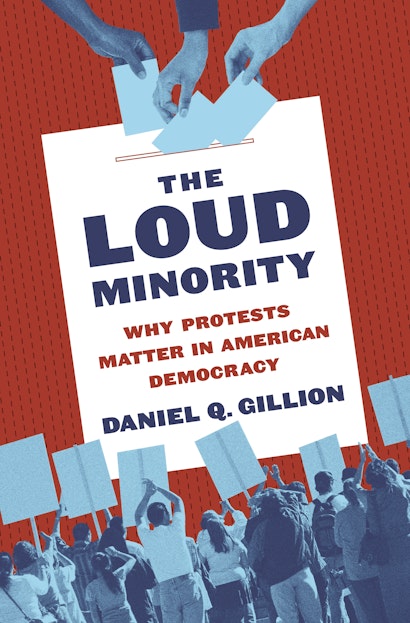
The 鈥渟ilent majority鈥濃�攁 phrase coined by Richard Nixon in 1969 in response to Vietnam War protests and later used by Donald Trump as a campaign slogan鈥攔efers to the supposed wedge that exists between protestors in the street and the voters at home. The Loud Minority upends this view by demonstrating that voters are in fact directly informed and influenced by protest activism. Consequently, as protests grow in America, every facet of the electoral process is touched by this loud minority, benefiting the political party perceived to be the most supportive of the protestors鈥� messaging.
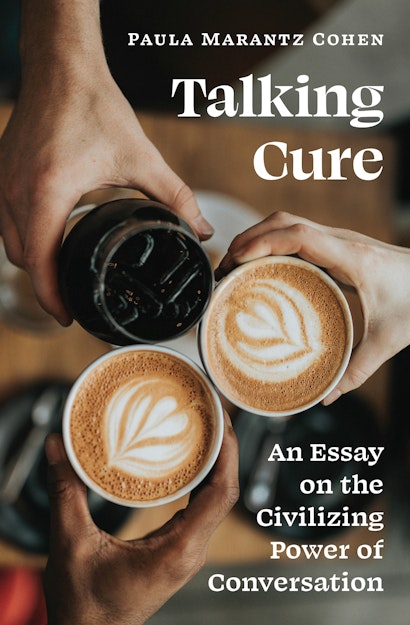
Talking Cure is a timely and enticing excursion into the art of good conversation. Paula Marantz Cohen reveals how conversation connects us in ways that social media never can and explains why simply talking to each other freely and without guile may be the first step to curing what ails our troubled society.

In this pathbreaking book, New York Times bestselling author Cass Sunstein asks us to rethink freedom. He shows that freedom of choice isn鈥檛 nearly enough. To be free, we must also be able to navigate life. People often need something like a GPS device to help them get where they want to go鈥攚hether the issue involves health, money, jobs, children, or relationships.
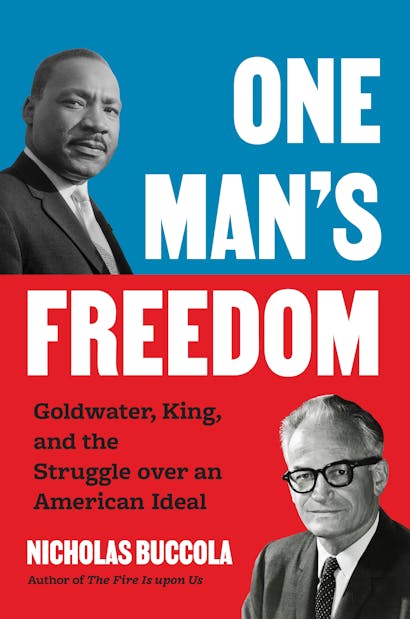
In the mid-1950s, Barry Goldwater and Martin Luther King Jr. emerged as the leaders of two diametrically opposed freedom movements that changed the course of American history鈥攁nd still divide American politics. King mobilized civil rights activists under the banner of 鈥渇reedom now,鈥� insisting that true freedom would not be realized until all people鈥攔egardless of race鈥攚ere empowered politically, economically, and socially. Goldwater rallied conservatives to the cause of 鈥渆xtremism in defense of liberty,鈥� advocating radical individualism. In One Man鈥檚 Freedom, Nicholas Buccola tells the compelling story of Goldwater and King鈥檚 dramatic decade-long debate over the meaning of an all-important American ideal.
Try to Love the Questions gives college students a framework for understanding and practicing dialogue across difference in and out of the classroom. This invaluable guide explores the challenges facing students as they prepare to listen, speak, and learn in a college community and encourages students and faculty alike to consider inclusive, respectful communication as a skill鈥攏ot as a limitation on freedom.
Do any of us really care about truth when it comes to politics? Should we? In a world of big lies, denialism, and conspiracy theories, democracies are experiencing two interlocked crises: a loss of confidence in democracy itself and the growing sense among many that politics is only about power鈥攏ot truth. In this book, Michael Patrick Lynch argues that truth not only can鈥攂ut must鈥攎atter in politics. He shows why truth is an essential democratic value鈥攁 value we need to sustain our democratic way of life鈥攁nd how it can be strengthened.
Where do you get your values and sensibilities from? If you grew up in a Western democracy, the answer is probably liberalism. Conservatives are right about one thing: liberalism is the ideology of our times, as omnipresent as religion once was. Yet, as Alexandre Lefebvre argues in Liberalism as a Way of Life, many of us are liberal without fully realizing it鈥攐r grasping what it means. Misled into thinking that liberalism is confined to politics, we fail to recognize that it鈥檚 the water we swim in, saturating every area of public and private life, shaping our psychological and spiritual outlooks, and influencing our moral and aesthetic values鈥攐ur sense of what is right, wrong, good, bad, funny, worthwhile, and more. This eye-opening book shows how so many of us are liberal to the core, why liberalism provides the basis for a good life, and how we can make our lives better and happier by becoming more aware of, and more committed to, the beliefs we already hold.
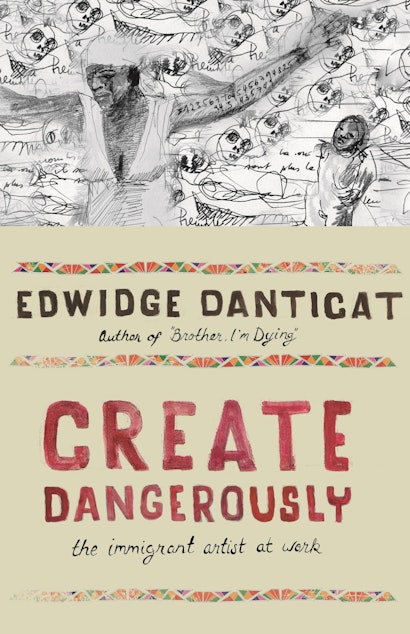
In this deeply personal book, the celebrated Haitian-American writer Edwidge Danticat reflects on art and exile, examining what it means to be an immigrant artist from a country in crisis. Inspired by Albert Camus鈥� lecture, 鈥淐reate Dangerously,鈥� and combining memoir and essay, Danticat tells the stories of artists, including herself, who create despite鈥攐r because of鈥攖he horrors that drove them from their homelands.
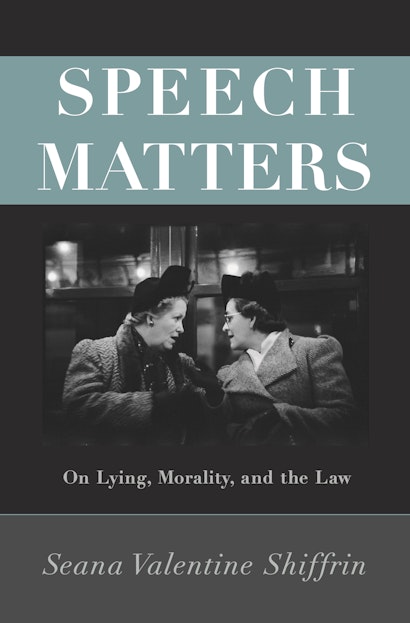
To understand one another as individuals and to fulfill the moral duties that require such understanding, we must communicate with each other. We must also maintain protected channels that render reliable communication possible, a demand that, Seana Shiffrin argues, yields a prohibition against lying and requires protection for free speech. This book makes a distinctive philosophical argument for the wrong of the lie and provides an original account of its difference from the wrong of deception.