
As the United States approaches its 250th anniversary, our series of reading lists is an invitation to reflect on and reckon with the ideas, conflicts, and aspirations that have shaped the nation over two and a half centuries. Over the years, American writers have profoundly influenced鈥攁nd challenged鈥攖he nation鈥檚 understanding of itself. This reading list explores literature and intellectual traditions that illuminate how American letters have reflected conflict, imagination, and change over time.
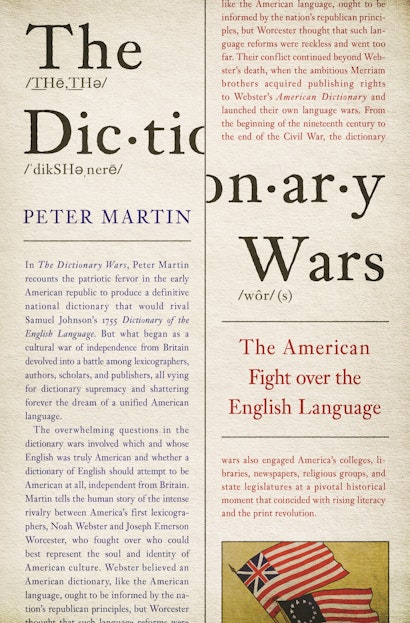
The Dictionary Wars recounts the patriotic fervor in the early American republic to produce a definitive national dictionary that would rival Samuel Johnson鈥檚 1755 Dictionary of the English Language. But what began as a cultural war of independence from Britain devolved into a battle among lexicographers, authors, scholars, and publishers, all vying for dictionary supremacy and shattering forever the dream of a unified American language. Peter Martin tells of the intense rivalry between America鈥檚 first lexicographers, Noah Webster and Joseph Emerson Worcester, and how their conflict continued beyond Webster鈥檚 death, when the ambitious Merriam brothers acquired publishing rights to Webster鈥檚 American Dictionary.
What is the use of fiction? This question preoccupied writers in the early United States, where many cultural authorities insisted that fiction-reading would mislead readers about reality. Founded in Fiction argues that this suspicion made early American writers especially attuned to one of fiction鈥檚 defining but often overlooked features鈥攊ts fictionality. Thomas Koenigs shows how these writers explored the unique types of speculative knowledge that fiction could create as they sought to harness different varieties of fiction for a range of social and political projects.

Today, coral and the human-caused threats to coral reef ecosystems symbolize our ongoing planetary crisis. In the nineteenth century, coral represented something else; as a recurring motif in American literature and culture, it shaped popular ideas about human society and politics. In Coral Lives, Michele Currie Navakas tells the story of coral as an essential element of the marine ecosystem, a cherished personal ornament, a global commodity, and a powerful political metaphor. Drawing on a wide range of sources, including works by such writers as Sarah Josepha Hale, Harriet Beecher Stowe, Frances Ellen Watkins Harper, and George Washington Cable, Navakas shows how coral once helped Americans to recognize both the potential and the limits of interdependence鈥攖o imagine that their society could grow, like a coral reef, by sustaining rather than displacing others.
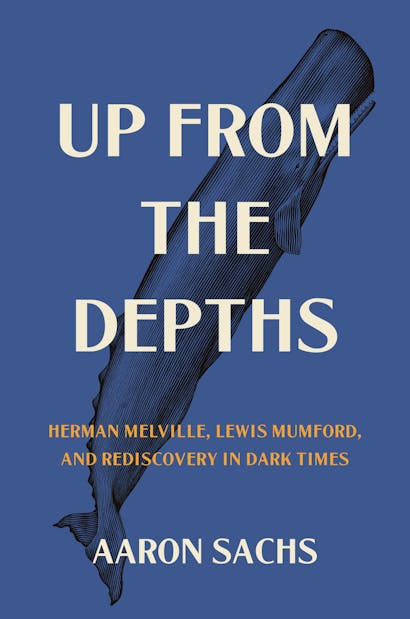
Up from the Depths tells the interconnected stories of two of the most important writers in American history鈥攖he novelist and poet Herman Melville (1819鈥�1891) and one of his earliest biographers, the literary critic and historian Lewis Mumford (1895鈥�1990). Deftly cutting back and forth between the writers, Aaron Sachs reveals the surprising resonances between their lives, work, and troubled times鈥攁nd their uncanny relevance in our own age of crisis.
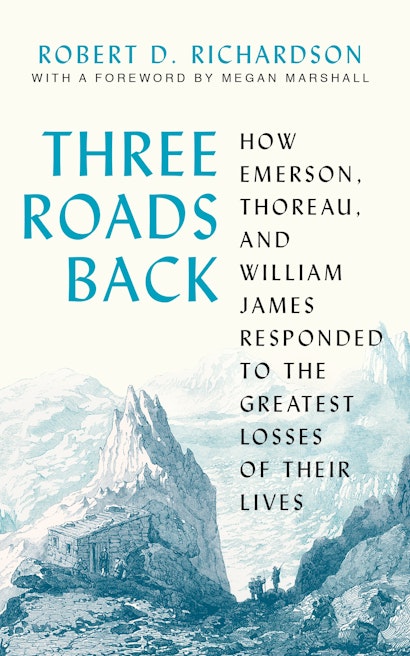
In Three Roads Back, Robert Richardson, the author of magisterial biographies of Ralph Waldo Emerson, Henry David Thoreau, and William James, tells the connected stories of how these foundational American writers and thinkers dealt with personal tragedies early in their careers. For Emerson, it was the death of his young wife and, eleven years later, his five-year-old son; for Thoreau, it was the death of his brother; and for James, it was the death of his beloved cousin Minnie Temple. Filled with rich biographical detail and unforgettable passages from the journals and letters of Emerson, Thoreau, and James, these vivid and moving stories of loss and hard-fought resilience show how the writers鈥� responses to these deaths helped spur them on to their greatest work, influencing the birth and course of American literature and philosophy.
Before Modernism examines how Black poetics, in antagonism with White poetics in the late eighteenth and early nineteenth centuries, produced the conditions for the invention of modern American poetry. Through inspired readings of the poetry of Phillis Wheatley Peters, George Moses Horton, Ann Plato, James Monroe Whitfield, and Frances Ellen Watkins Harper鈥攁s well as the poetry of neglected but once popular White poets William Cullen Bryant and Henry Wadsworth Longfellow鈥擵irginia Jackson demonstrates how Black poets inspired the direction that American poetics has taken for the past two centuries.
In Impermanent Blackness, Korey Garibaldi explores interracial collaborations in American commercial publishing鈥攁uthors, agents, and publishers who forged partnerships across racial lines鈥攆rom the 1910s to the 1960s. Garibaldi shows how aspiring and established Black authors and editors worked closely with white interlocutors to achieve publishing success, often challenging stereotypes and advancing racial pluralism in the process.
Few institutions seem more opposed than African American literature and J. Edgar Hoover鈥檚 white-bread Federal Bureau of Investigation. But behind the scenes the FBI鈥檚 hostility to black protest was energized by fear of and respect for black writing. Drawing on nearly 14,000 pages of newly released FBI files, F.B. Eyes exposes the Bureau鈥檚 intimate policing of five decades of African American poems, plays, essays, and novels. Starting in 1919, year one of Harlem鈥檚 renaissance and Hoover鈥檚 career at the Bureau, secretive FBI 鈥済hostreaders鈥� monitored the latest developments in African American letters. By the time of Hoover鈥檚 death in 1972, these ghostreaders knew enough to simulate a sinister black literature of their own. The official aim behind the Bureau鈥檚 close reading was to anticipate political unrest. Yet, as William J. Maxwell reveals, FBI surveillance came to influence the creation and public reception of African American literature in the heart of the twentieth century.
The world is never done catching up with Henry David Thoreau (1817鈥�1862), the author of Walden, 鈥淐ivil Disobedience,鈥� and other classics. A prophet of environmentalism and vegetarianism, an abolitionist, and a critic of materialism and technology, Thoreau even seems to have anticipated a world of social distancing in his famous experiment at Walden Pond. In Now Comes Good Sailing, twenty-seven of today鈥檚 leading writers offer wide-ranging original pieces exploring how Thoreau has influenced and inspired them鈥攁nd why he matters more than ever in an age of climate, racial, and technological reckoning.
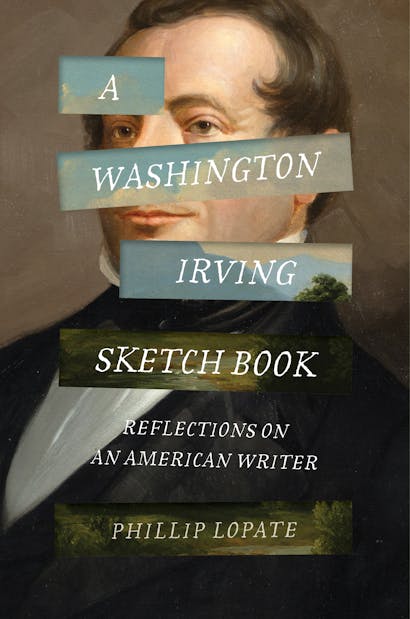
Washington Irving (1783鈥�1859) is often considered America鈥檚 first professional writer, supporting himself and his family amid the ups and downs of literary fortune. He burst on the scene with his uproarious History of New York, followed by his Sketch Book, a collection of personal essays and short stories that includes 鈥淩ip Van Winkle鈥� and 鈥淭he Legend of Sleepy Hollow.鈥� As an essayist and teacher, Phillip Lopate identifies with Irving, inspired by his humane and elegant prose style, and by Irving鈥檚 courage and persistence in the face of setbacks and his own limitations as a writer.
In this book, novelist Colm T贸ib铆n offers a deeply personal introduction to the work and life of one of his most important literary influences鈥攖he American poet Elizabeth Bishop. Ranging across her poetry, prose, letters, and biography, T贸ib铆n creates a vivid picture of Bishop while also revealing how her work has helped shape his sensibility as a novelist and how her experiences of loss and exile resonate with his own. What emerges is a compelling double portrait that will intrigue readers interested in both Bishop and T贸ib铆n.
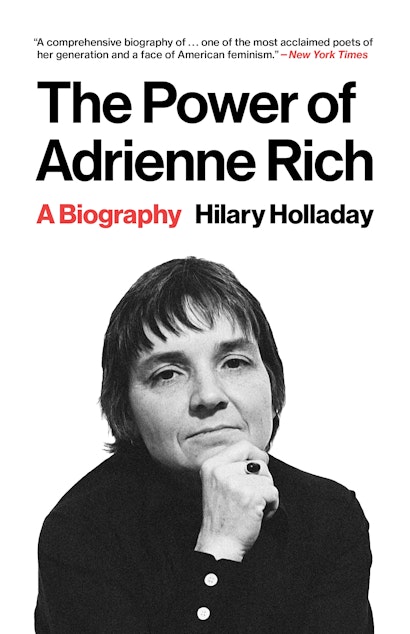
A major American writer, thinker, and activist, Adrienne Rich (1929鈥�2012) transformed herself from a traditional, Radcliffe-educated lyric poet and married mother of three sons into a path-breaking lesbian-feminist author of forceful, uncompromising prose as well as poetry. In doing so, she emerged as an architect and exemplar of the feminist movement, breaking ranks to denounce the male-dominated literary establishment and paving the way for women writers to take their places in the cultural mainstream. Drawing on a wealth of unpublished materials, including Rich鈥檚 correspondence and in-depth interviews with many people who knew her, Hilary Holladay provides a vividly detailed, full-dimensional portrait of a woman whose work and life continue to challenge and inspire new generations.
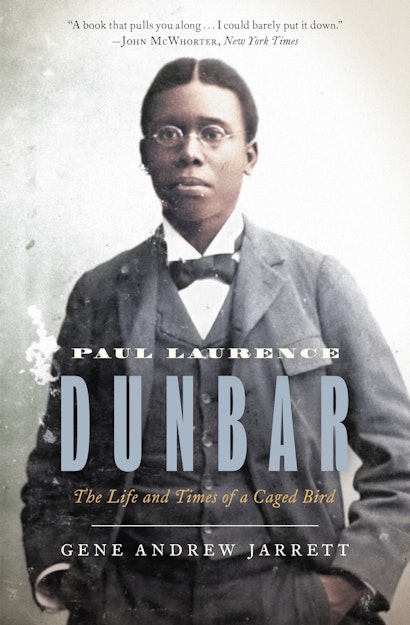
A major poet, Paul Laurence Dunbar (1872鈥�1906) was one of the first African American writers to garner international recognition in the wake of emancipation. In this definitive biography, the first full-scale life of Dunbar in half a century, Gene Andrew Jarrett offers a revelatory account of a writer whose Gilded Age celebrity as the 鈥減oet laureate of his race鈥� hid the private struggles of a man who, in the words of his famous poem, felt like a 鈥渃aged bird鈥� that sings.
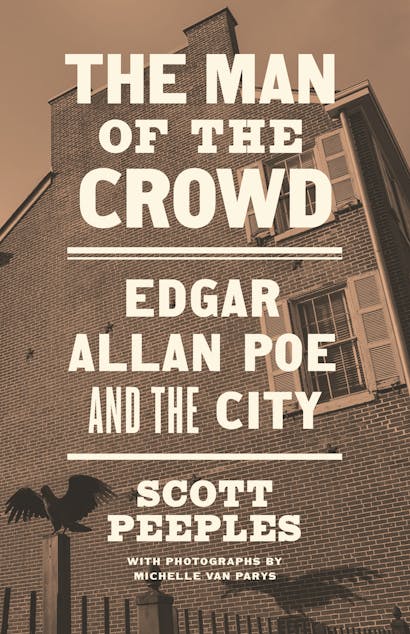
Edgar Allan Poe (1809鈥�1849) changed residences about once a year throughout his life. Driven by a desire for literary success and the pressures of supporting his family, Poe sought work in American magazines, living in the cities that produced them. Scott Peeples chronicles Poe鈥檚 rootless life in the cities, neighborhoods, and rooms where he lived and worked, exploring how each new place left its enduring mark on the writer and his craft. Featuring evocative photographs by Michelle Van Parys, The Man of the Crowd challenges the popular conception of Poe as an isolated artist living in a world of his own imagination, detached from his physical surroundings. The Poe who emerges here is a man whose outlook and career were shaped by the cities where he lived, longing for a stable home.
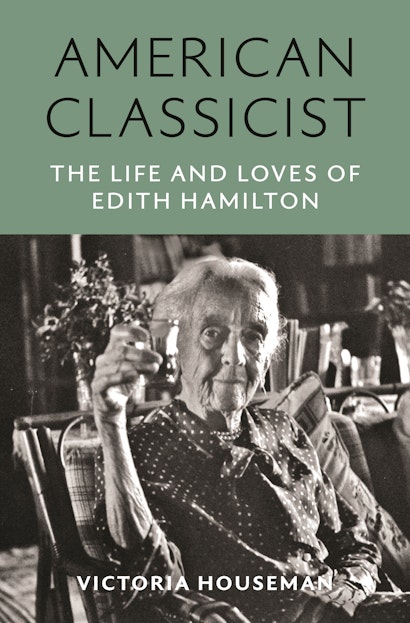
Edith Hamilton (1867鈥�1963) didn鈥檛 publish her first book until she was sixty-two. But over the next three decades, this former headmistress would become the twentieth century鈥檚 most famous interpreter of the classical world. Today, Hamilton鈥檚 Mythology (1942) remains the standard version of ancient tales and sells tens of thousands of copies a year. During the Cold War, her influence even extended to politics, as she argued that postwar America could learn from the fate of Athens after its victory in the Persian Wars. In American Classicist, Victoria Houseman tells the fascinating life story of a remarkable classicist whose ideas were shaped by鈥攁nd aspired to shape鈥攈er times.