
Shelley Frisch鈥檚 translations from German, which include biographies of Friedrich Nietzsche, Albert Einstein, Leonardo da Vinci, Marlene Dietrich/Leni Riefenstahl (dual biography), and Franz Kafka along many other works of fiction and nonfiction, have been awarded numerous translation prizes, including the Modern Language Association鈥檚 Aldo and Jeanne Scaglione Prize for a Translation of a Scholarly Study of Literature and the Helen and Kurt Wolff Translator鈥檚 Prize. Recently, she shared her thoughts about the principles that guide her work, rituals that she turns to as she settles in with a work, and what she enjoys most about translating texts.
Can you tell us about any guiding principles gleaned from translation theory or elsewhere that you bear in mind as you work your way through your translations?
SF: While translation theory can make for interesting reading, its prescriptions don鈥檛 seem to have any bearing on how I approach my work. Debates about 鈥渇oreignization鈥� vs. 鈥渄omestication,鈥� 鈥渇aithfulness,鈥� and such don鈥檛 aid me in my quest to transform texts into English. But I find inspiration from other writings, as I鈥檒l point out in a moment.
Because I鈥檓 an acoustic translator, I find that words need to sound right in combination. Sound does more than convey meaning鈥攊t often IS meaning. I would argue that the final product needs to read as well鈥攁nd sound as good鈥攊n the new idiom as it does in the source text. After all, one of the cruelest barbs one can level against a writer鈥檚 style in English is to accuse a text of sounding 鈥渢ranslated from German.鈥� If the original had a certain zing, so must the translation. When I read over my many drafts, I vocalize and subvocalize to make sure that the ring of the words and flow of the text are just right. The activity is like taste-testing cooking. Perhaps I need a dash of alliteration here, a pinch of sibilants there, and just a smidgen of contrast intonation to bring out the flavor of my sentences. Above all, I need to feel confident that the end result does not read like 鈥渢ranslationese,鈥� a flat, plain vanilla, least-common-denominator set of disambiguating gambits.
Language is not just what words mean, but how they mean鈥攚hat signals they send off as they go about signifying. As Toni Morrison once remarked in an interview, 鈥淵ou rely on a sentence to say more than the denotation and the connotation; you revel in the smoke that the words send up.鈥� There is always an urge to tug at the edges of what the English language allows. James Joyce was asked why he invented so many words for his novel Ulysses: 鈥淎ren鈥檛 there enough words for you in English?鈥� 鈥淵es,鈥� he replied, 鈥渢here are enough, but they aren鈥檛 the right ones.鈥� I鈥檓 also intrigued by John Berger鈥檚 declaration, in Confabulations, that 鈥渢rue translation is not a binary affair between two languages but a triangular affair, the third point of the triangle being what lay behind the words of the original text before it was written. True translation demands a return to the pre-verbal.鈥� And Douglas R. Hofstadter may be onto something with his concept of 鈥減oetic lie-sense,鈥� by which he means that the translator needs to lie (that is, deviate from the original) for the translated text to make sense to its new readership.
The language of any source text is amply overcoded, brimming with all manner of linguistic markers that can be included, excluded, transfigured, or reworked entirely for the target language. In recreating a work in a new linguistic garb, the translator gets to write not so much a derivative work but a fresh creation that gives rise to its own set of denotations and connotations. Puns are repunned, alliterations realliterated, sentences resentenced.
English is a Germanic language, yet German is considered a difficult language for English speakers to master. What stylistic differences present particular challenges to the German-to-English translator?
SF: German syntax is predicated on what I think of as the 鈥減unchline principle鈥�: it groups together the least important elements at the beginning, then crescendos to its key revelations鈥攎uch like telling a joke. The word nicht, which turns meaning on its head, often appears as the final word of a sentence. And the interminably long wait for the verb (which, like nicht, can occupy the very last syntactical slot), a subject of considerable fun-poking in Mark Twain鈥檚 essay 鈥淭he Awful German Language,鈥� similarly keeps the listener or reader in suspense until the very end. A translator has to figure out the extent to which English can preserve this suspense without adding gratuitous foreignness to the syntactic structure. It鈥檚 a tightrope act, and with sufficient (caffeine-fueled) inspiration鈥攁nd ample perspiration鈥攖he translator makes it to the other side without failing or falling.
German is exceedingly space-specific (three different words for 鈥渨here鈥�); then again, the English language can be oddly structure-specific: 鈥渦p蝉迟补颈谤蝉鈥�; 鈥渋ndoors.鈥� The far more robust use of the subjunctive in German offers a compact and nuanced way of introducing distancing or doubt; English translations often wind up with clunky workarounds. German prose can abound in exclamation marks; retaining those in English would make the text come across as too 鈥済olly gee.鈥� And historical texts are often written in the present tense in German, while the past tense appears more natural in English. Differences in what is considered humorous (or even offensive) may also necessitate textual tweaks in the translation.
How do you go about finding books to translate, and what are your translating rituals once you鈥檝e settled in with a text?
SF: I think of myself as a reactive translator (as opposed to a proactive translator who pitches books to publishers). When I鈥檓 offered a book to translate, I take the proposed time frame and other practical considerations into account, but first and foremost in my decision-making are a book鈥檚 subject matter and style. I鈥檓 drawn to works by and about literary and historical figures I already care about deeply (Kafka, Billy Wilder, Early German Romantics), but I also love immersing myself in an area of inquiry that is entirely new to me (competing zoos in Berlin, a history of eunuchs and castrati鈥�). The topic at hand needs to spark my desire to commit months (or longer) to pondering it, which is why, for example, I once turned down a 900-page biography of Goebbels: I simply couldn鈥檛 bear the thought of spending so much time with him!
As for translating rituals: I envy colleagues who stay with a section of their translation until it reads well, then move along to the next section. My own method feels self-punishing, but it鈥檚 what works for me; I churn out a very rough draft of the full text as quickly as I can, still showing all the signs of the in-betweenness of the evolving new text, with bits and pieces of German interspersed with translated phrases, and slashes dividing the synonyms that come to mind as I type. Now that I鈥檝e confronted the text as a whole, the real work begins鈥攇rappling with bedeviling linguistic matters, tracking down information at the library, gulping down coffee during frequent caf茅 runs. (I was once interviewed in my favorite caf茅 in 快色直播, and the published piece carried a photo of me in my 鈥渢ranslation sweater鈥� embroidered with big coffee cups.) Portability is this profession鈥檚 blessing and curse; you never stop thinking about the plethora of choices as the wordsmith within you invades every last bit of what you鈥檇 hoped might be your 鈥渄own time.鈥� Once I鈥檝e gone through umpteen drafts and am as satisfied as I鈥檒l ever be that the linguistic and factual challenges have all been addressed, I come to the final draft, which is all about the acoustic dimension. Now I need to fine-tune the cadences until the text sounds the way I鈥檇 hoped, and off it goes to the publisher. I鈥檓 especially pleased when reviewers describe my published translations as 鈥減unchy鈥� or 鈥渮ingy.鈥�
Are there notable differences between translating nonfiction and fiction?
SF: The process is remarkably similar. Contrary to popular belief, nonfiction translation entails equal dedication to the rhythm and overall musicality of the language. Nonfiction also demands a great deal of fact checking and wrapping your mind around the lingo of the text鈥檚 field(s) of inquiry (learning to 鈥渢alk the talk鈥� of physics, for example, when you鈥檙e translating an Einstein biography). The learning curve can be exhilarating. I鈥檝e 鈥渨orked on鈥� atomic clocks and atomic bombs, and written on topics ranging from castrati to condoms to communism to Kafka (for the sake of alliteration?). The linguistic fingerprint I strive for blends the author鈥檚 and my idiolects with the modes of expression specific to the subject matter. I have elsewhere described my acquisition of the requisite voice for these nonfiction texts as 鈥渁 dizzying leap to quasi-expertise on the widest variety of themes.鈥�
Translators get typecast early on. I guess editors have determined that my turf is complex works of nonfiction that others would run from. Though I鈥檝e also translated works of fiction鈥攅njoyably so鈥攏onfiction is a pleasure all its own, a deep dive into fields that lie outside my usual range but invite me in as I translate. Nonfiction broadens my horizons by enabling me to write with a (faux-)authority that ripens into true understanding. I love what I do.
You鈥檝e been in the field of translation for decades. What do you most enjoy about this profession?
SF: I love working鈥攁nd playing鈥攚ith words, seeking out the perfect acoustic elements, and indulging in wordplay of the punnish variety if the text allows (and sometimes even when it doesn鈥檛!). Translation can be a wonderfully liberating form of writing. The novelist Nancy Mitford called translation 鈥渢he pure pleasure of writing without the misery of inventing.鈥� And Gregory Rabassa, the translator most closely associated with his masterful English-language rendition of Gabriel Garcia-Marquez鈥檚 One Hundred Years of Solitude, similarly declared that the translator is the 鈥渋deal writer, because all he has to do is write; plot, theme, characters, and all the other essentials have already been provided, so he can just sit down and write his ass off.鈥�
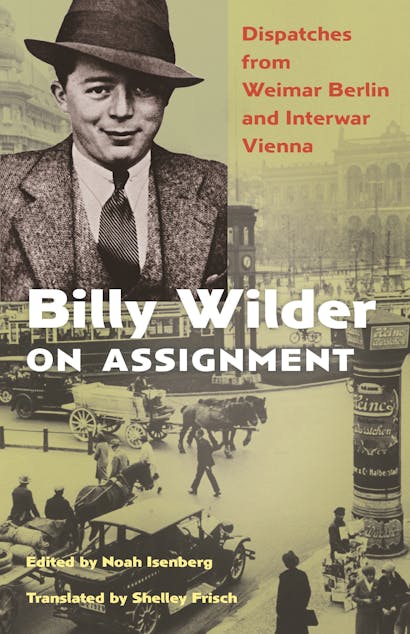
Shelley Frisch鈥�s most recent translation for 快色直播, Billy Wilder on Assignment, was published in April 2021, and a new annotated edition of Kafka鈥檚 aphorisms is forthcoming in March 2022.