
Reading literature is a deeply dialectical experience, one that offers a variety of paradoxical pleasures. One of the most salient of these is that in reading well we both submit to the text and resist it. In reading literature especially, to a significant extent, we surrender ourselves to the writer鈥檚 vision if not necessarily the writer鈥檚 values. But we also resist what we read, questioning it, challenging it, modifying it in ways we find necessary.
The pleasure of this dialectical textual response requires some meaningful connection with the person on the other side of the reading transaction. And so a second paradoxical pleasure is that reading is both solitary and social. The image of the individual reader absorbed in a book, addictively hooked, irretrievably lost, so fully transported that time seems to stop, remains a compelling one. In 鈥淭he House Was Quiet and the World Was Calm,鈥� Wallace Stevens describes such an engrossed reader merging with a book. Stevens鈥檚 reader becomes the book; nothing separates them; there is no need for mediation; reader and book are fused.
And yet that sole reader, paradoxically, is not alone at all. Every reader truly engaged in an authentic act of reading is connected, at least, minimally, with one other person鈥攚ith the writer himself or herself (or the illusion or trace of the writer), as well as with the speaker, narrator, and character(s) the writer鈥檚 work brings to life.
The reader鈥檚 pleasures are not exclusively solitary pleasures; they are social pleasures as well鈥攖丑别 pleasures of society beyond the reader鈥檚 connection with the writer alone, pleasures manifested in our conversations about books with friends and acquaintances. They are reflected, too, in readers鈥� joining together in book clubs run through schools and libraries and other civic associations.
Here are ten dialectical tensions to add to this first pair, constituting all together an even dozen paradoxical pleasures of reading:
- The tension between 鈥渢ext鈥� and 鈥渨ork,鈥� the black marks on the white page (鈥渢ext鈥�), and the version of the work we readers bring to life in our minds as we read (鈥渨ork鈥�). Or, alternatively, the tension between the work as created by the author and the work as recreated by us as we read.
- The tension between the temporal flow of reading鈥攎aking sense as we go through the text鈥攁nd making additional sense in retrospect, in the tranquility of post-reading reflection. Forward and backward reading. The tension between the text in motion and the text at rest.
- The tension between the pleasures associated with finality and those associated with deferral; the delights of progressing slowly and forestalling, and thereby heightening, the pleasures of closure. And the pleasure of ending, finishing, concluding.
- The tension between the text as a mirror in which we see ourselves and the text as a window into a strange other world, which is both disorienting and exciting as we encounter that world and the 鈥渙ther鈥� in it. The tension between reading toward the self and reading toward the world.
- The tension between the text as visible and invisible鈥攁s an artifact you examine and as a place in which you lose yourself in its story and its world. 鈥淔oregrounding the text as an object of interest,鈥� as Lydia Davis notes; and losing sight of your discriminating mind while reading.
- The tension between author consciousness and reader consciousness, between mindlessness鈥攇iving your mind over to the author鈥攁nd mindfulness鈥攎aintaining control of your mind; a tension related to that of submission and resistance.
- The tension between the formation and the breaking of illusions; the tension between suspending and asserting disbelief. The tension between skepticism and belief, between doubt and trust.
- The tension between the implied reader and the actual reader; the gap between what the text requires of us and what we bring to texts and make of them in all our idiosyncratic particularity. The tension between the potential and the actual, the ideal reader and actual readers.
- The tension between the text/work as finished and the text/work as unfinished鈥攖丑别 closed versus the open work.
- The tension between the work as an independent self-contained aesthetic object and the work as embedded, connected, contextualized in a larger social structure. The text as a singular self-enclosed authorial production and the text as a relational social artifact with ties to the world.
These oppositional strains pull inward toward the reader鈥檚 concerns and push outward, away from the self-centered reader, taking readers beyond themselves. On one hand, reading looks into textual relationships within a work鈥攊mages, details, actions, and other patterns鈥�intra-textual reading. On the other, reading looks out toward textual connections beyond a work, between and among the text and other texts and contexts鈥�inter-textual reading. Inward-directed and outward-directed reading complement and reinforce each other. They deepen each other, enrich each other, complete each other. Theirs is a dialectical relationship, a marriage of reconcilable dualities.
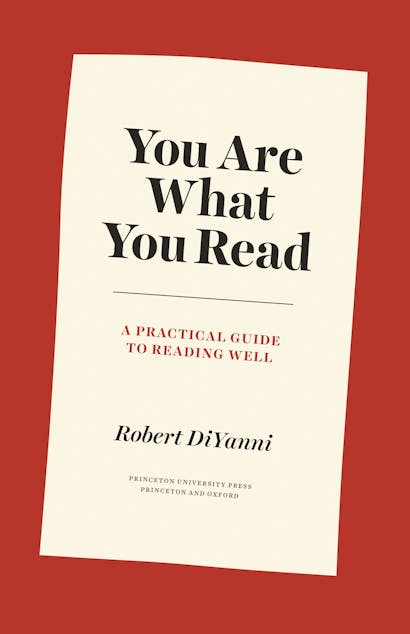
Robert DiYanni is an Adjunct Professor of Humanities at New York University and author of The Craft of College Teaching.