
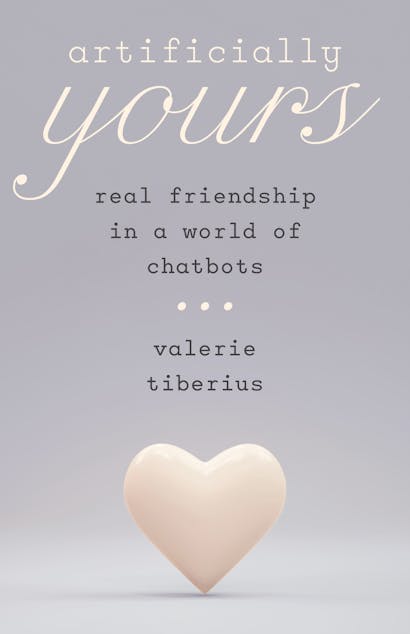
The first-year students in my seminar on AI and friendship surprised me. I gave them an assignment to spend ten minutes testing a chatbot for its friendship potential and I never would have predicted their response. One student鈥檚 reaction sums up the class vibe: 鈥淥K, I鈥檓 going to try not to swear, but I f***ing hate this!鈥� Though almost all of them used AI to do their homework, they had no desire to have a relationship with it.
Vehement negative reactions to people befriending, dating, or even marrying AI chatbots are everywhere. It鈥檚 not just that people don鈥檛 want it for themselves. Lots of people don鈥檛 want pets for themselves, but we don鈥檛 find them horrified by cat or dog lovers. A large percentage of the people I have talked to about companion chatbots think that people who choose them are pathetic, delusional, and a harbinger of the end of everything good. Why is that?
There are surely many reasons, but living in Minneapolis and observing my community鈥檚 response to the threat imposed by ICE, I鈥檝e been thinking about an explanation that hasn鈥檛 been much discussed. At a protest I went to recently, the call and response chant was 鈥淲ho takes care of us? We take care of us!鈥� This expresses the spirit of what is happening here now: we are trying to take care of each other, including other human beings who are complete strangers. The thing to notice about chatbots is that however smart they get, they aren鈥檛 part of the 鈥渨e鈥濃�攁nd this matters.
It is well known that we are a profoundly social species鈥攈uman beings would not have survived evolution if we had not learned how to cooperate and take care of each other. Human infants would never survive to adulthood if they were not embedded in caring communities. We can鈥檛 make it on our own. Making it in groups requires coming up with systems of values, rules, and expectations that we share enough so that we can get along. You might call this system of shared guidelines 鈥渕orality.鈥�
There are those who think that morality is underpinned by something grand and transcendent. For instance, God or Reason with a capital R. Maybe so, but approaches to morality that depend on these foundations that transcend humanity have been roundly attacked, and there鈥檚 certainly no consensus that they exist or that they would provide a solid foundation if they did. It鈥檚 a good bet that morality is just about us, our communities and shared values; what it depends on, in other words, is what the philosopher James Lenman calls in his book The Possibility of Moral Community 鈥渢he Big Important Things We Share.鈥� Like the values of honesty, kindness, fairness, and courage. This doesn鈥檛 make morality any less important, but it may make it more fragile.
If morality is fragile, we have good reason to be concerned when social ties weaken. This is not a new concern: in 2000, the social scientist Robert Putnam detailed the destructive consequences of fraying social connections in his book Bowling Alone. The metaphor of bowling is illuminating, because it shows that what鈥檚 really at issue here is not just doing the same thing at the same time, but doing things together with a shared sense of purpose.
Let鈥檚 say we鈥檙e bowling together. We divide into teams, follow the rules, keep score, and aim to win but also to improve and have fun. One of our group decides he doesn鈥檛 want to stay behind the fault line. He starts throwing his ball from halfway down the lane. Another uses a curling stone instead of a bowling ball and sweeps it down the lane with a broom. A third scores herself 100 points every time she gets a gutter ball. Pretty soon, we are not bowling anymore. There isn鈥檛 enough that we share to play the game鈥攁nd I would bet that this wouldn鈥檛 be much fun for very long.
If morality depends on us and our shared commitments, then it also cannot stand too many players who aren鈥檛 interested in playing together. To keep morality going, we have to be willing to stand up for the Big Important Things We Share, to hold each other accountable when we fall short of those values, and to be open to the possibility that we are in the wrong and deserve to be held to account by others. We have to be team players and teamwork takes work, humility, and patience.
If this is how things are, choosing chatbot companions can seem like choosing to bowl alone in the next lane, making up your own rules. Chatbots do not hold us responsible for anything, and it makes little sense to hold them (rather than their creators) responsible for whatever bad advice they give us. Chatbots are not committed to figuring out how to live together with us; they are not on our team.
So, one reason people react so strongly to human beings turning to chatbots for companionship may be that this phenomenon taps into a deep fear of the dissolution of moral community. This fear has already been activated by political polarization and the growing wealth gap. AI companions are making it worse. To sustain the moral values and guidelines that have made life on earth possible for us, we have to stay committed to what we share and to the other people with whom we share it. A future in which everyone is just playing in their own lane is a bleak one. My students鈥� reactions to chatbot friends give me hope that a different and better future is possible, but it won鈥檛 happen if we don鈥檛 recognize the importance of playing together.
Valerie Tiberius is professor of philosophy at the University of Minnesota. Her books include What Do You Want Out of Life? A Philosophical Guide to Figuring Out What Matters (快色直播), Well-Being as Value Fulfillment: How We Can Help Each Other to Live Well, and The Reflective Life: Living Wisely with Our Limits.