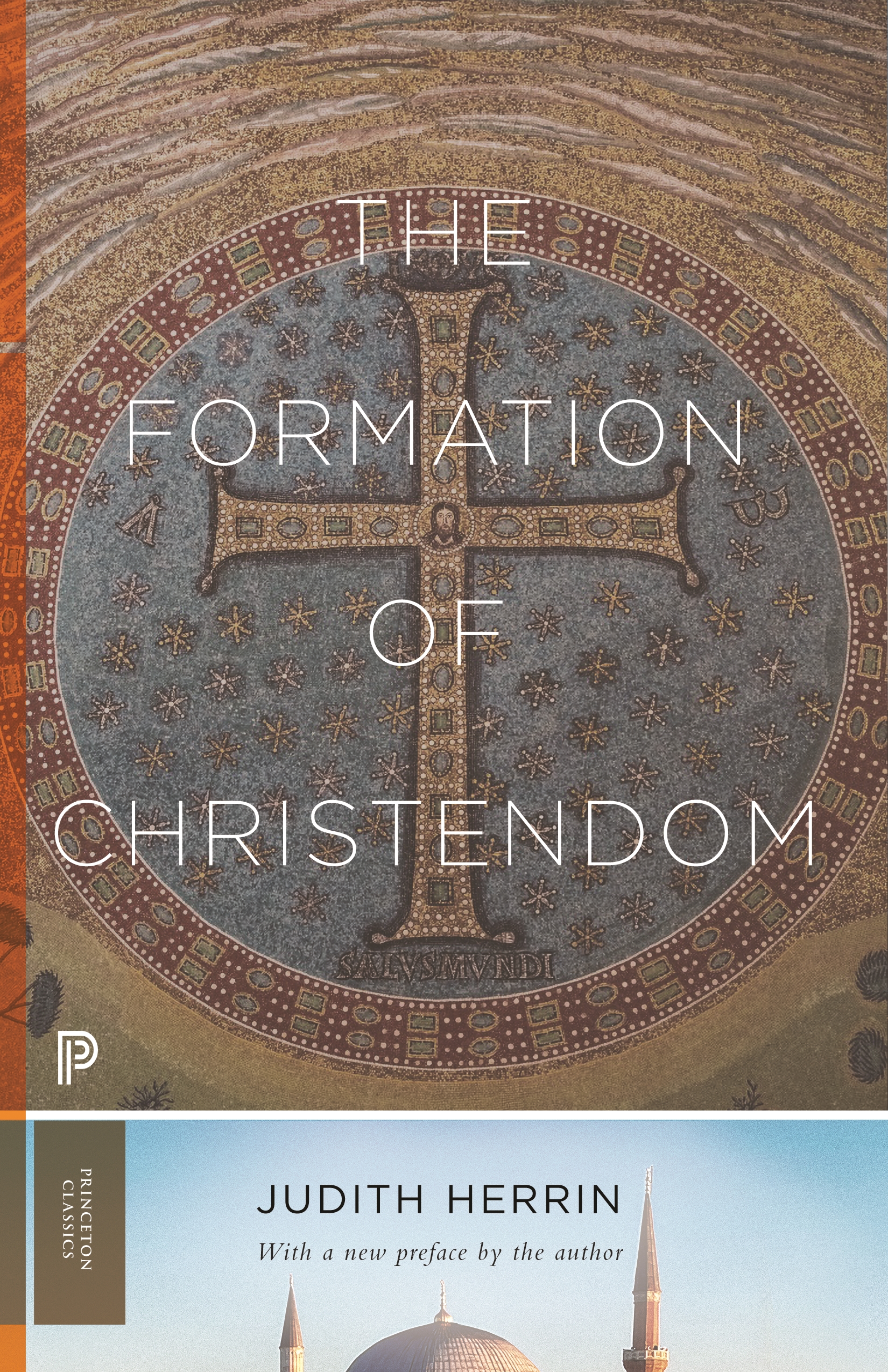
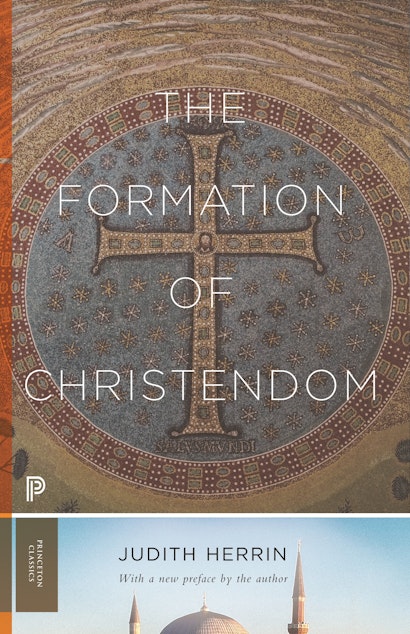
In this acclaimed history of Early Christendom, Judith Herrin shows how鈥攆rom the sack of Rome in 410 to the coronation of Charlemagne in 800鈥攖he Christian 鈥淲est鈥� grew out of an ancient Mediterranean world divided between the Roman west, the Byzantine east, and the Muslim south. Demonstrating that religion was the period鈥檚 defining force, she reveals how the clash over graven images, banned by Islam, both provoked iconoclasm in Constantinople and generated a distinct western commitment to Christian pictorial narrative. In a new preface, Herrin discusses the book鈥檚 origins, reception, and influence.
Judith Herrin is professor emeritus in the Department of Classics at King鈥檚 College London. Her books include Ravenna: Capital of Empire, Crucible of Europe; Byzantium: The Surprising Life of a Medieval Empire; Unrivalled Influence: Women and Empire in Byzantium; Margins and Metropolis: Authority across the Byzantine Empire; and Women in Purple: Rulers of Medieval Byzantium (all 快色直播). She lives in Oxford, England.
"A brilliant overview of how the legacy of the Roman empire continued to shape the Mediterranean world."鈥擱owan Williams, New Humanist
"贬别谤谤颈苍鈥檚 Christendom is an obvious candidate for the 快色直播 Classics series. Here one can savour the clarity and originality of her account of such dauntingly named theological upheavals as the Monothelite controversy (over the psychology of Christ鈥檚 divinity versus his humanity) of the seventh century, or the struggles over the use of icons in Christian worship that came close to ripping the Byzantine empire apart in the eighth and ninth."鈥擠iarmaid MacCulloch, Times Literary Supplement 鈥嬧�嬧�嬧�嬧�嬧�嬧��
"It will no longer be possible to hop from pagan antiquity to Carolingian Europe as if nothing had happened in between. Judith Herrin has laid her sheet of paper over the map of that 'dark' age and rubbed and rubbed until the rich web of connections and cracks has shown through."鈥擬arina Warner, The Independent
"An ambitious, learned, lucid, and instructive book."鈥擜lexander Murray, Times Literary Supplement
"Herrin's scholarship is unerring, her scope is wide and her style fluent. . . . The treatment of the so-called iconoclastic controversy, the dispute over the veneration of images in Christian worship which convulsed the Byzantine world in the eighth century, is sparkling. . . . Debate about where modern Europe came from . . . will be enriched by this civilized and accomplished book."鈥�The Economist
"Herrin follows some magnificent themes with the lucid dispassion of a good detective."鈥擳homas D'Evelyn, Christian Science Monitor
"It is [the] binding together of distant past and immediate present which makes Judith Herrin's scholarship so exciting: she can convince the reader that the roots of Western distinctiveness really do lead all the way to forgotten episcopal meetings in small towns in Asia Minor in the fourth century."鈥擬ichael Ignatieff, The Observer
"A learned, challenging, and gracefully written interpretation of the transition from antiquity to the Middle Ages."鈥擱obert L. Wilken, Commonweal
"A serious and powerful book. . . . A grand synthesis on a scale few people would dare now to attempt, ranging across diverse societies with considerable assurance."鈥擟hristopher J. Wickham, International History Review