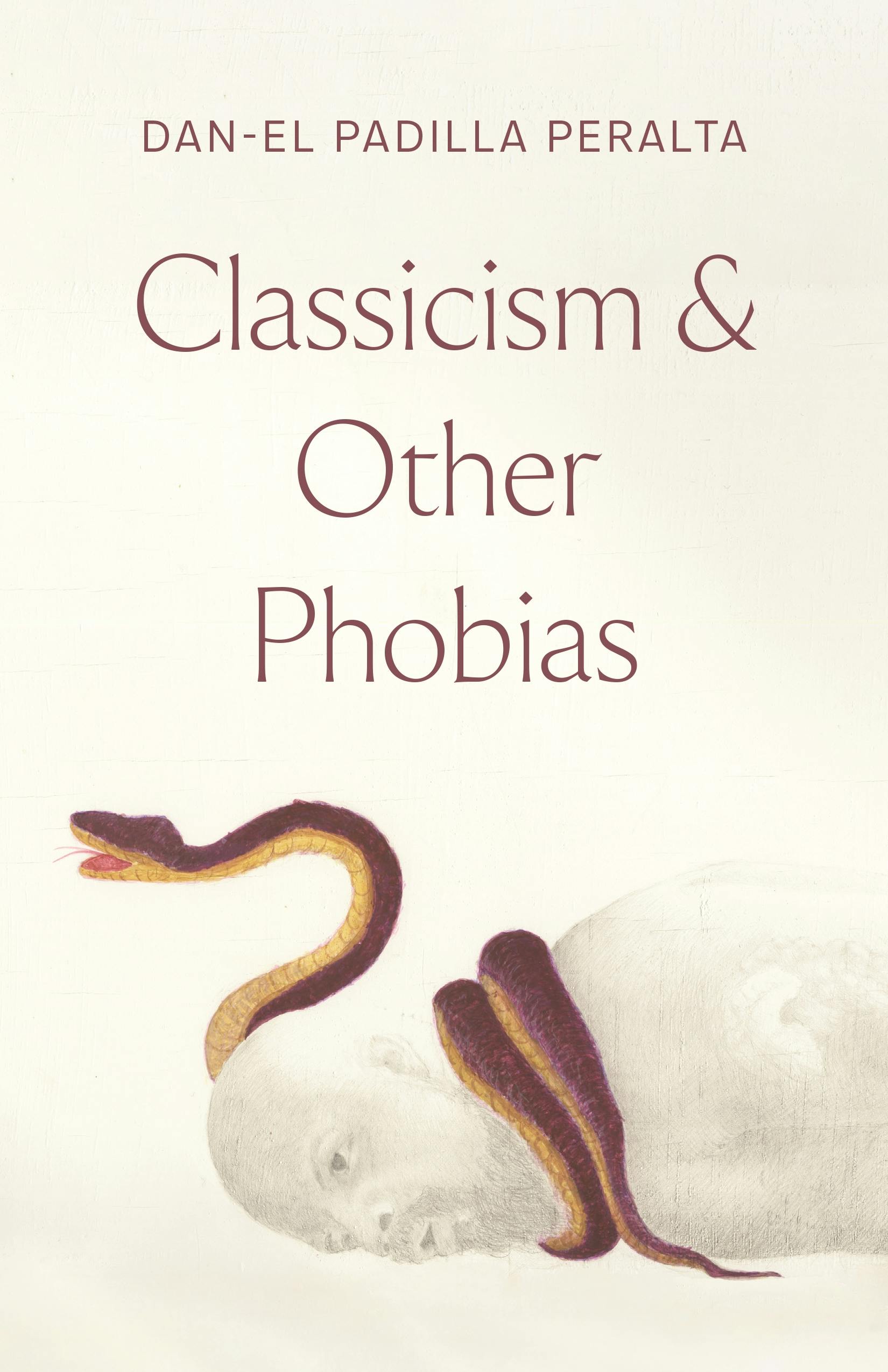
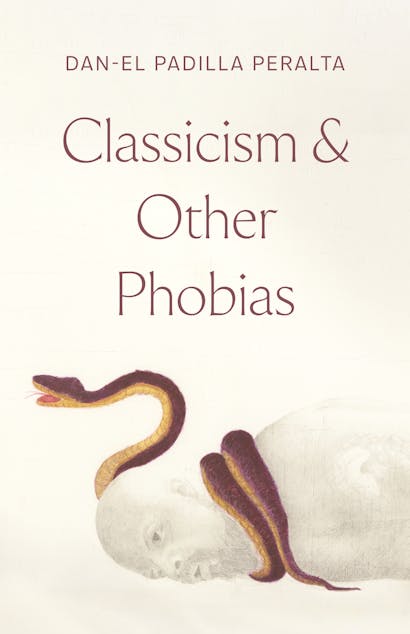
Greek and Roman antiquity has been enshrined in disciplines and curricula at all levels of education, perpetuating what the historian of political thought J.G.A. Pocock has called 鈥渁 conceptual dictatorship on the rest of the planet.鈥� Classicism and Other Phobias shows how the concept of 鈥渃lassicism鈥� lacks the capacity to affirm the aesthetic value of Black life and asks whether a different kind of classicism鈥攐ne of insurgence, fugitivity, and emancipation鈥攊s possible.
Engaging with the work of Sylvia Wynter and other trailblazers in Black studies while drawing on his own experiences as a Black classicist, Dan-el Padilla Peralta situates the history of the classics in the racial and settler-colonialist settings of early modern and modern Europe and North America. He argues that immortalizing ancient Greek and Roman authors as 鈥渢he classical鈥� comes at the cost of devaluing Black forms of expression. Is a newfound emphasis on Black classicism the most effective counter to this phobia? In search of answers, Padilla Peralta ranges from the poetry of Juan de Castellanos to the writings of W.E.B. Du Bois and paintings by contemporary artists Kehinde Wiley and Harmonia Rosales.
Based on the prestigious W.E.B. Du Bois Lectures delivered at Harvard University, Classicism and Other Phobias draws necessary attention to the inability of the classics as a field of study to fully cope with Blackness and Black people.
"I have rarely been so engaged by a book. . . . The prose here is vibrant with passion and anger, with vulnerability and excess, with critical energy and reflective self-awareness. . . . It is, precisely, an essay to open a conversation, a conversation that is pressing, timely, and important."鈥擲imon Goldhill, Bryn Mawr Classical Review
"Dan-el Padilla Peralta’s aim [is] to model a new, better kind of Classics: rich, humane, capacious and alert to the complicity between cultural value and real-world power. This is an exhilarating book that all who are invested in in Classics, and indeed in the humanities, will want to read."鈥擳im Whitmarsh, Times Literary Supplement
“Audacious and erudite, panoramic yet deeply personal, generational talent Dan-el Padilla Peralta’s urgent dissection of Greco-Roman classicism’s anti-Black, colonialist genetics doubles as a world-building initiation into the liberatory practice of theory. No humanist today can ignore Padilla Peralta’s call to revolution. All who grapple with their disciplines’ racialized debts—and all still in denial—must read this book. Today’s minoritized creators of tomorrow’s knowledge won’t be able to put it down.”—Nandini Pandey, author of The Poetics of Power in Augustan Rome
“Classicism and Other Phobias, written by one of the most prolific and original practitioners in contemporary classical studies, offers an essay in the fullest sense: an invitation to join in an exercise of critical imagination and self-questioning. Dan-el Padilla Peralta offers a probing examination of the past and present world-making of North Atlantic classics and asks whether alternative classicisms rooted in Black and Afro-diasporic traditions can generate reparative stances and practices that do not simply reenact past plunder.”—Katherine Harloe, University of London
“In this vibrant, necessary, and expansively reparative book, Dan-el Padilla Peralta explores how the (in)humanities might overcome historic forms of overrepresentation in order to make space for non-Eurocentric classicisms. Whilst exposing the racializing processes through which systems of classical knowledge and value have been traditionally forged, Classicism and Other Phobias also looks beyond mediations of Greco-Roman antiquity to affirm the aesthetic and epistemic vitality of Black, Afro-Caribbean, and Indigenous ways of knowing.”—Verity Platt, Cornell University
“Classicism and Other Phobias makes an electric case against classicism as it has been traditionally defined, widening the view toward the historical pluralities while simultaneously seeding critique at the core of the overall intellectual project that is the ‘classical.’ Through his personal voice and autobiographical reflection, Padilla Peralta makes a defiant assertion of personhood not contingent upon classical invocation, but as a continued and embodied ancestral presence. The result is a powerful argument on how constraints of the discipline ultimately limit the humanity of its own practitioners.”—Hannah 膶ul铆k-Baird, author of Cicero and the Early Latin Poets
“This radically creative, sweeping book assembles a chorus of voices—scholars, artists, and spirits—long sidelined in the study of classicism. Dan-el Padilla Peralta offers a hopeful model for historiographies entangled in the colonial and white supremacist legacies of the European Enlightenment. Rather than looking only to its past or future, he urges us to reclaim classics as a space for reparation and world-building in the present.”—John Corso-Esquivel, author of Feminist Subjectivities in Fiber Art and Craft: Shadows of Affect