On January 1, 2017, Daniel Bell was appointed dean of the School of Political Science and Public Administration at Shandong University鈥攖he first foreign dean of a political science faculty in mainland China鈥檚 history. In The Dean of Shandong, Bell chronicles his experiences as what he calls 鈥渁 minor bureaucrat,鈥� offering an inside account of the workings of Chinese academia and what they reveal about China鈥檚 political system. It wasn鈥檛 all smooth sailing鈥擝ell wryly recounts sporadic bungles and misunderstandings鈥攂ut Bell鈥檚 post as dean provides a unique vantage point on China today.
Bell, neither a Chinese citizen nor a member of the Chinese Communist Party, was appointed as dean because of his scholarly work on Confucianism鈥攂ut soon found himself coping with a variety of issues having little to do with scholarship or Confucius. These include the importance of hair color and the prevalence of hair-dyeing among university administrators, both male and female; Shandong鈥檚 drinking culture, with endless toasts at every shared meal; and some unintended consequences of an intensely competitive academic meritocracy. As dean, he also confronts weightier matters: the role at the university of the Party secretary, the national anticorruption campaign and its effect on academia (Bell asks provocatively, 鈥淲hat鈥檚 wrong with corruption?鈥�), and formal and informal modes of censorship. Considering both the revival of Confucianism in China over the last three decades and what he calls 鈥渢he Communist comeback鈥� since 2008, Bell predicts that China鈥檚 political future is likely to be determined by both Confucianism and Communism.
Awards and Recognition
- A Financial Times Best Summer Book
- A Financial Times Best Book of the Year- Politics
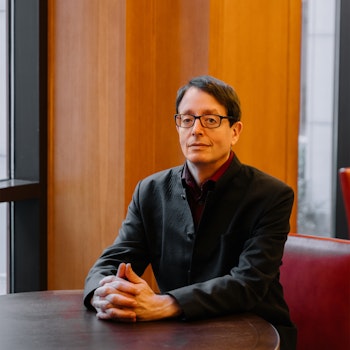
Daniel A. Bell is Chair Professor of Political Theory with the Faculty of Law at the University of Hong Kong. He served as Dean at Shandong University's School of Political Science and Public Administration from 2017 to 2022. He is the author of The China Model, Just Hierarchy (with Wang Pei), Beyond Liberal Democracy, China's New Confucianism (all 快色直播), and other books. Wyntner Woody is a performer whose work spans a range of media, from audiobooks and the stage to television and radio. He is the narrator of Scalia Dissents: Writings of the Supreme Court’s Wittiest, Most Outspoken Justice and Rawi Hage’s novel De Niro’s Game, among other audiobooks.
鈥泪苍 The Dean of Shandong, Daniel Bell takes us where few Westerners have gone鈥攊nto the faculty lounge, teaching rooms, and party meetings of a Chinese university in the era of Xi Jinping. Think Lucky Jim meets Brave New World: Bell鈥檚 account of life as a senior Western academic in a Chinese university is by turns humane, disturbing, hilarious鈥攁nd always eye-opening.鈥濃�擱ana Mitter, author of Forgotten Ally: China鈥檚 World War II, 1937鈥�1945
鈥淒aniel Bell is wry, informed, open-minded, and enlightening in his look at Chinese bureaucracy from his years on the inside. Everyone interested in China will find new insights in this terse, funny book.鈥濃�擩ames Fallows, author of China Airborne
鈥淎 leading interpreter of the Confucian tradition, Daniel Bell takes us into the citadel of contemporary Chinese higher education. Honest and wise, entertaining and witty, he tells the story of an illustrious scholarly life that began in French Canada and Oxford and led to the deanship at Shandong University, one of the most prestigious in China. The personal narrative sparkles, but Bell also analyzes with great clarity and insight the many challenges as well as promises facing China and Chinese intellectuals in the unfolding twenty-first century.鈥濃�擜nna Sun, author of Confucianism as a World Religion: Contested Histories and Contemporary Realities
鈥淚f you think a book about a 鈥榤inor educational bureaucrat鈥� in provincial China must be dull, think again. This is a sparkling, compulsively readable book about how an Oxford-educated Canadian political scientist became the leading theorist of political Confucianism in China. Bell鈥檚 story is charming and filled with self-deprecating humor, but it is also remarkably courageous, given the current climate. It will leave you with a sense that you understand the Chinese and the Chinese system much better than you did before.鈥濃�擩ames Hankins, author of Virtue Politics: Soulcraft and Statecraft in Renaissance Italy
鈥淏ell offers a fascinating glimpse into the workings of a Chinese university as both an insider (a dean) and an outsider (a Canadian). Along the way he treats, with a light hand, the cultural and philosophical underpinnings of contemporary China. This is a book anyone interested in that country will enjoy.鈥濃�擲hadi Bartsch, author of Plato Goes to China: The Greek Classics and Chinese Nationalism
鈥淒aniel Bell has rightly earned a reputation as the dean鈥攂oth literally and figuratively鈥攐f Confucian studies. But even more important is his cosmopolitan and communitarian spirit, a compelling worldview that makes him a true bridge between East and West. The wisdom of this book鈥攁s with all of Bell鈥檚 writing鈥攊s both novel and universal.鈥濃�擯arag Khanna, author of The Future is Asian