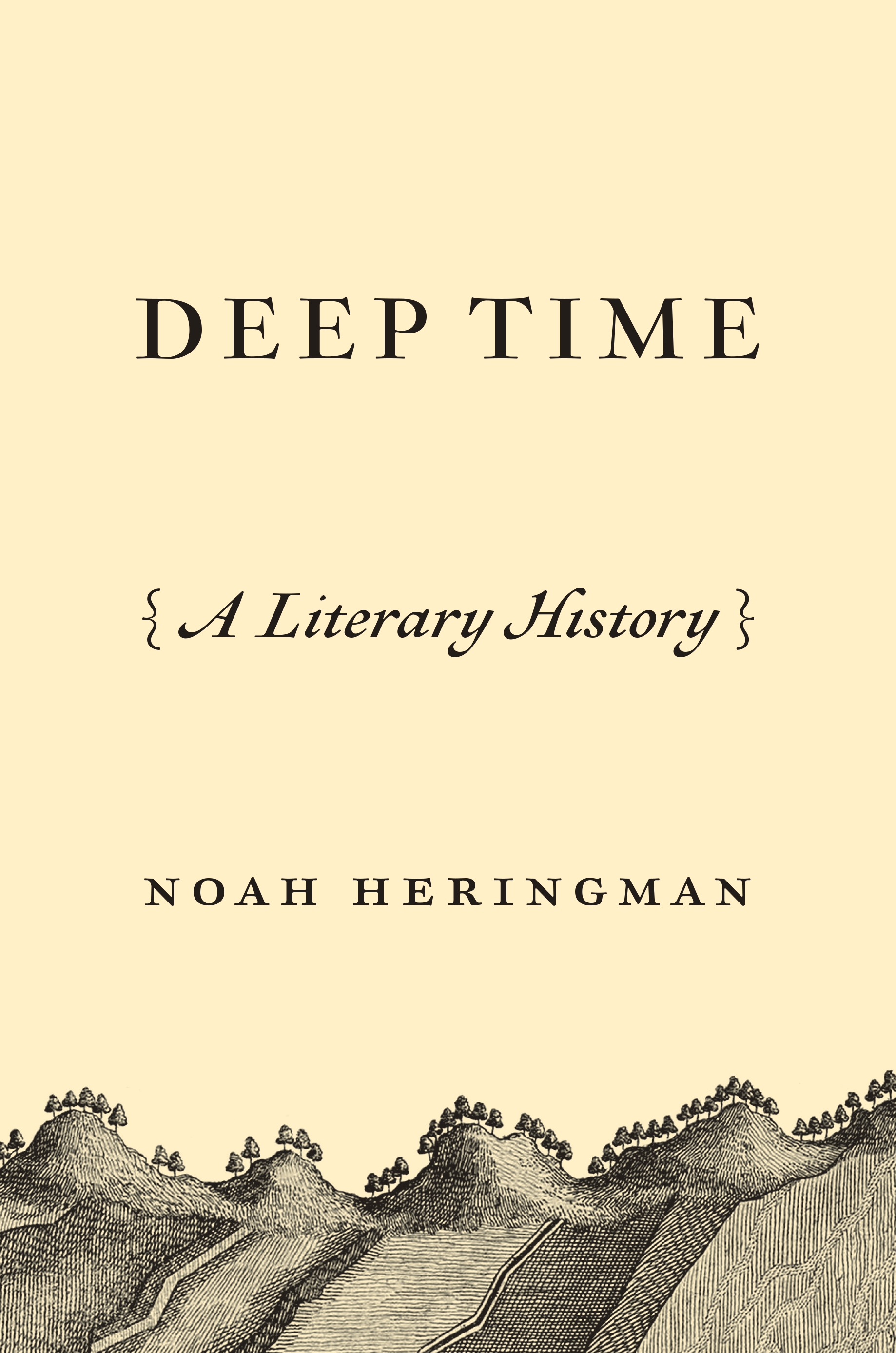
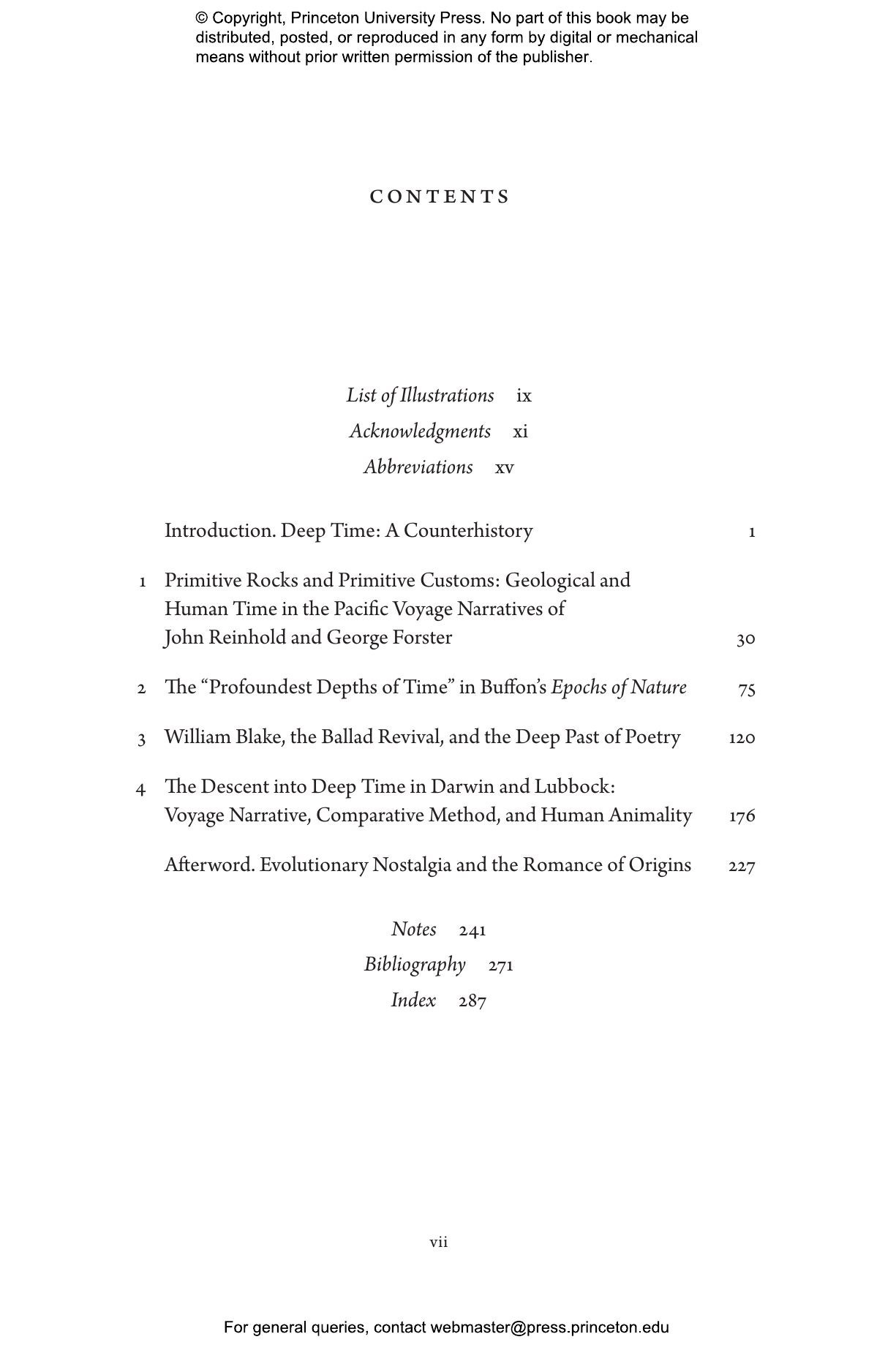
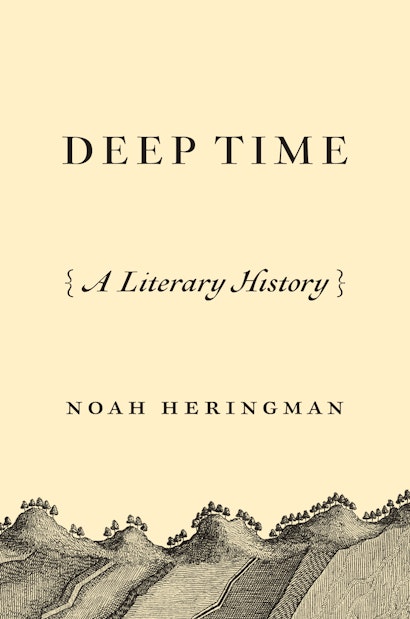
Deep Time: A Literary History
Hardcover
Paperback
ebook (EPUB via app)
- Sale Price:
- $24.50/拢21.00
- Price:
-
$35.00/拢30.00 - ISBN:
- Published:
- Jan 3, 2023
- Copyright:
- 2023
- 16 b/w illus.
30% off with code PUP30
ebook (PDF via app)
- Sale Price:
- $24.50/拢21.00
- Price:
-
$35.00/拢30.00 - ISBN:
- Published:
- Jan 3, 2023
- Copyright:
- 2023
- 16 b/w illus.
30% off with code PUP30
-
Audio and ebooks (EPUB and PDF) purchased from this site must be accessed on the
快色直播 app. After purchasing, you will receive an email with
instructions to access your purchase.
About audio and ebooks - Request Exam Copy
In this interdisciplinary book, Noah Heringman argues that the concept of 鈥渄eep time鈥濃�攎ost often associated with geological epochs鈥攂egan as a metaphorical language used by philosophers, poets, and naturalists of the eighteenth and nineteenth centuries to explore the origins of life beyond the written record. Their ideas about 鈥渢he abyss of time鈥� created a way to think about the prehistoric before it was possible to assign dates to the fossil record. Heringman, examining stories about the deep past by visionary thinkers ranging from William Blake to Charles Darwin, challenges the conventional wisdom that the idea of deep time came forth fully formed from the modern science of geology. Instead, he argues, it has a rich imaginative history.
Heringman considers Johann Reinhold Forster and Georg Forster, naturalists on James Cook鈥檚 second voyage around the world, who, inspired by encounters with Pacific islanders, connected the scale of geological time to human origins and cultural evolution; Georges-Louis Leclerc, Comte de Buffon, who drew on travel narrative, antiquarian works, and his own fieldwork to lay out the first modern geological timescale; Blake and Johann Gottfried Herder, who used the language of fossils and artifacts to promote ancient ballads and 鈥減rehistoric song鈥�; and Darwin鈥檚 exploration of the reciprocal effects of geological and human time. Deep time, Heringman shows, has figural and imaginative dimensions beyond its geological meaning.