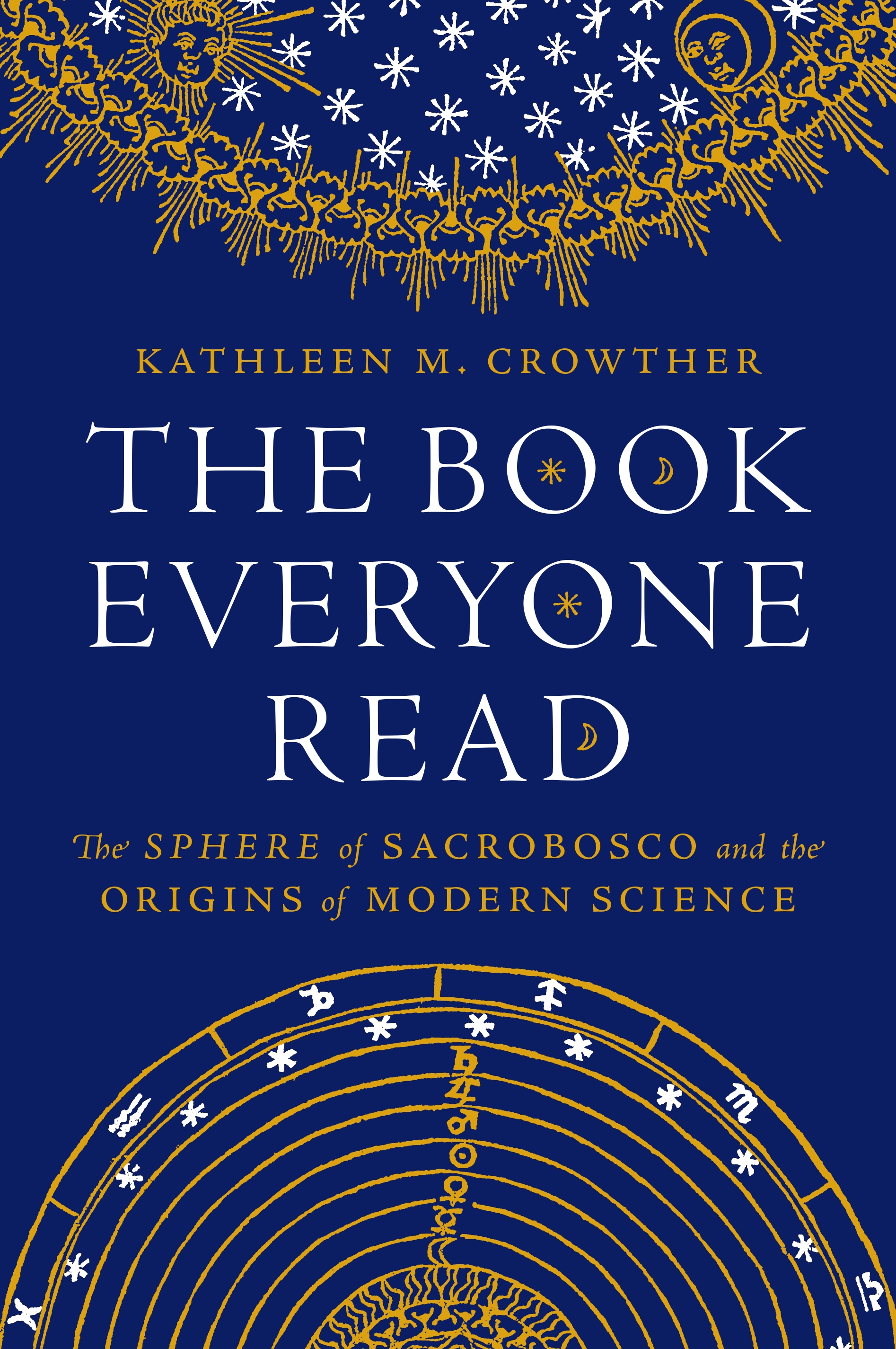
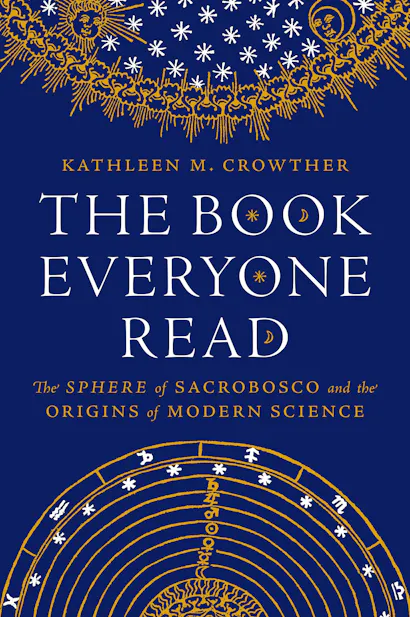
Few people today have heard of Johannes de Sacrobosco, yet his textbook was the most widely read astronomy book ever written. For five hundred years, from when it was first written in the Middle Ages to the dawn of the modern world, the Sphere introduced Europeans to the cosmos. The Book Everyone Read traces the unpredictable twists and turns of scientific knowledge and discovery through the stories of Sacrobosco鈥檚 readers鈥攁nd in doing so, tells a new story of the emergence of modern science.
Kathleen Crowther shows how the secret to the Sphere鈥檚 longevity lay with its readers themselves, who chose which aspects of Sacrobosco鈥檚 original thirteenth-century text to accept, which to modify, and which to reject. Far from unchanging, editions of the book were accompanied by commentary, corrections, and details that challenged and revised the book鈥檚 original worldview of a finite, Earth-centered cosmos. Crowther introduces us to the university professors who peppered their lectures on the Sphere with tales of the exciting new discoveries made with telescopes and musings on the new Sun-centered model proposed by Copernicus, the navigators who found their way across the Atlantic using information about the stars they found in the book, the missionaries who brought translations of it to the Americas and Asia, and many others.
Through the surprising life of a medieval book of astronomy, The Book Everyone Read charts a scientific conversation that extended far beyond what we understood before.
Kathleen M. Crowther is professor in the Department of the History of Science, Technology, and Medicine at the University of Oklahoma. She is the author of Adam and Eve in the Protestant Reformation and Policing Pregnant Bodies: From Ancient Greece to Post-Roe America.
“Before social media, before bestseller lists, before book groups—even before the printing press—one slim volume managed to capture a wide, diverse audience that read it, recopied it, and repeatedly revised it in the light of new discoveries. Kathleen Crowther tells the fantastic tale of a breakthrough science book that held sway for four hundred years.”—Dava Sobel, author of Longitude and Galileo’s Daughter
“A compelling account of how one pithy, stunningly popular textbook shaped the way people saw the world for centuries. Wide-ranging and beautifully illustrated, Crowther’s book demonstrates why Sacrobosco’s accessible description of the medieval universe lasted well beyond its initial reception in the Middle Ages, to exert a vital influence on Copernicus and Columbus and reach readers from Mexico to China.”—Seb Falk, author of The Light Ages: The Surprising Story of Medieval Science
“Who knew that an introductory text for twelve-year-old boys would become one of the most-read books in the European corpus? Kathleen Crowther’s compelling account expertly makes a case for the continuing importance of De Sphaera over four hundred years of European colonization, religious upheaval, and scientific change. A superbly written introduction to the scientific revolution that provides new insights for experts as well.”—Pamela H. Smith, author of From Lived Experience to the Written Word: Reconstructing Practical Knowledge in the Early Modern World
“This meticulously researched study traces the enduring influence of Sacrobosco’s De Sphaera through a rich body of archival evidence. Crowther’s work provides an accessible and valuable guide to the text’s reception and will be an indispensable resource for future scholarship.”—Matteo Valleriani, Max Planck Institute for the History of Science
“For more than four centuries, from about 1230, one book contained everything that an educated European was expected to learn about the constitution and arrangement of the physical universe. Kathleen Crowther’s lucid and compelling presentation describes that picture of the world and deftly explains how it could have persisted for so long.”—Robert S. Westman, University of California, San Diego
“Kathleen Crowther’s brilliant work shows that a didactic text long considered evidence of scientific stagnation represented in fact a springboard for controversy and a vehicle for transformation. A history of medieval and early modern astronomy rather than just a study of Sacrobosco’s masterpiece, The Book Everyone Read will be enjoyed by scholars for its original and exhaustive approach, and by general readers for its accessible style. Indeed, a book everyone should read.”—Ivano Dal Prete, author of On the Edge of Eternity: The Antiquity of the Earth in Medieval and Early Modern Europe
Accessibility Features
-
Inaccessible, or known limited accessibility
-
No known hazards or warnings