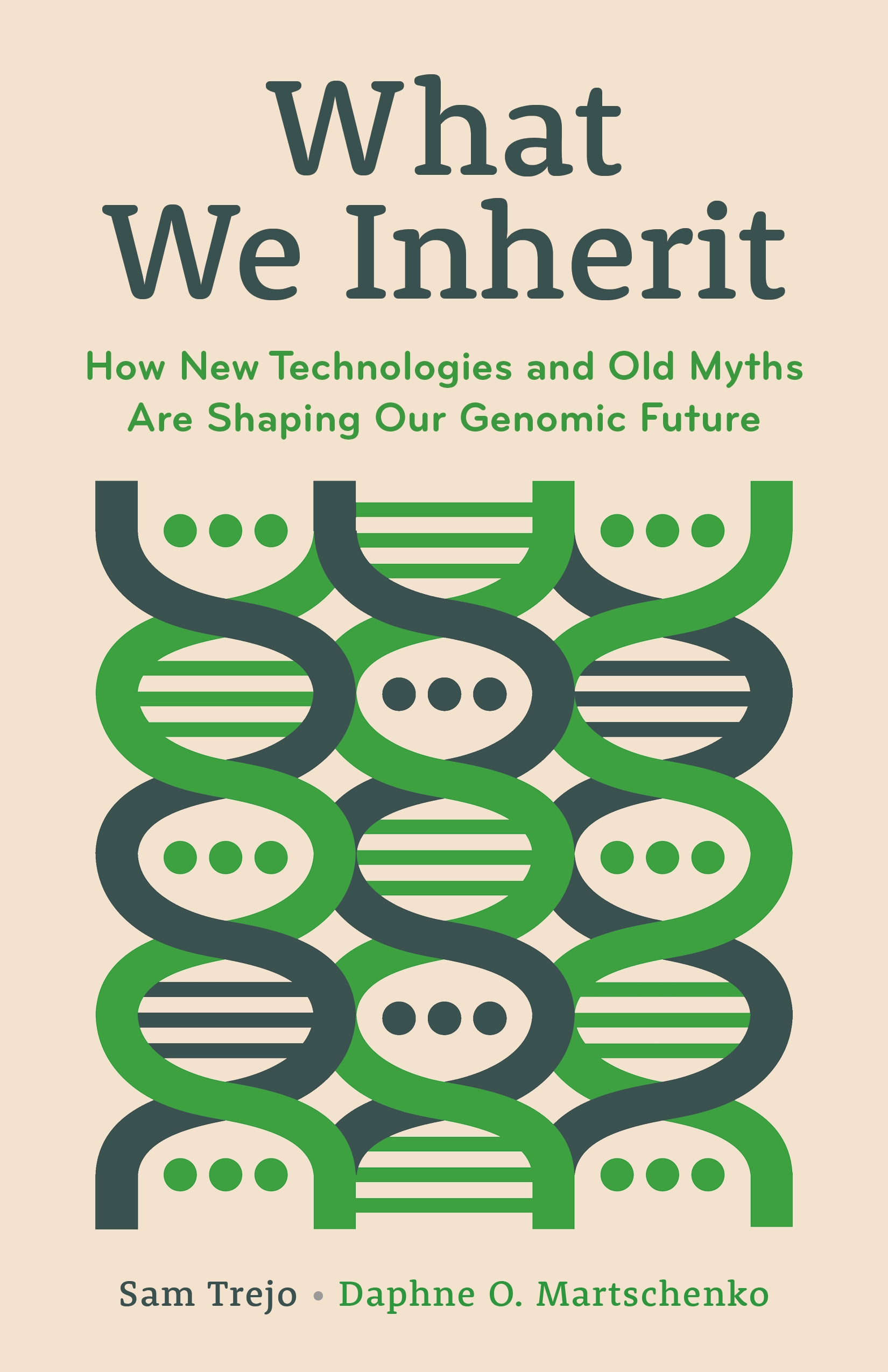
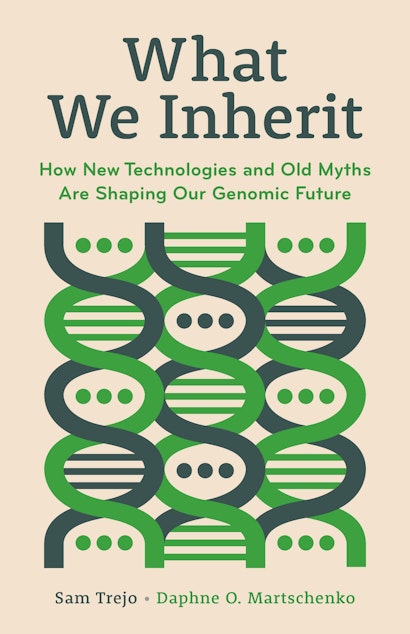
Over the past decade, the field of human genetics has produced an extraordinary range of discoveries鈥攊ncluding the refinement of polygenic scores, which use a person’s DNA to estimate their likelihood of developing a trait or disease. But are these new technologies ready to leave the research lab and be deployed in schools, fertility clinics, and the wider world? In What We Inherit, Sam Trejo and Daphne Martschenko offer different perspectives on the societal impact of the rapidly unfolding DNA revolution. Trejo, a sociologist and expert on the complex ways people鈥檚 genes influence their life鈥檚 trajectory, believes that new genomic tools鈥攊f used thoughtfully鈥攃an improve society; Martschenko, a bioethicist who specializes in the thorny social issues raised by biomedical advances, is more cautious. They debate both the risks and the opportunities posed by such new technologies as at-home genetic tests and polygenic embryo selection鈥攁ll while engaging in a wide-ranging dialogue on ideology, biology, and social inequality.
While grappling with these new technologies, Trejo and Martschenko remind us that we inherited from our ancestors not only DNA but also wrongheaded ideas about genes. Together, they caution against two particularly harmful genetic myths: that genes determine an individual鈥檚 future, and that race and genetics are inherently connected. A polygenic score, for example, is not a definitive marker for disease. And race is a sociopolitical construct, not a biological identity. Trejo and Martschenko argue that, to avoid exacerbating social inequality, we need to begin regulating genomic tools sooner rather than later.
Sam Trejo is assistant professor of sociology at 快色直播 University, where he holds the Charles H. McIlwain University Preceptorship. Daphne O. Martschenko is assistant professor of biomedical ethics at Stanford University.
"Throughout, the authors provide clear explanations, often unpacking the complex nature of genetics through real-life stories. It adds up to a well-researched and nuanced look at emerging genomic research."鈥�Publishers Weekly
"A perfect combination of expertise to address all angles of the issues. . . . Indeed, seeing the thoughtful process behind [Sam Trejo and Daphne O. Martschenko's] opposing views in a discussion format brings home how difficult the discussions around these topics can be. . . . Yet readers who likely feel more attuned to one of the authors’ views at the start of the book will come to appreciate the other side as they learn more about polygenic scores, social genomics, and their influence on genetic myths."鈥擡va Amsen, Undark Magazine
"Daphne O. Martschenko and Sam Trejo both want to make the world a better, fairer, more equitable place. But they disagree on whether studying social genomics—elucidating any potential genetic contributions to behaviors ranging from mental illnesses to educational attainment to political affiliation—can help achieve this goal. . . . In What We Inherit: How New Technologies and Old Myths Are Shaping Our Genomic Future, we get to see how their collaboration can shed light on our rapidly advancing genetic capabilities."鈥擠iana Gitig, Ars Technica
"Fresh and exciting."鈥擬atthew Cobb, Times Literary Supplement
“Martschenko and Trejo have written a remarkable book that opens up a contentious topic with passion, rigor, nuance, openness, and mutual respect. A must-read for anyone interested in genetics and human lives—and anyone searching for a respite from ‘angry science.’”—Kathryn Paige Harden, author of The Genetic Lottery: Why DNA Matters for Social Equality
“Is DNA destiny? Are there genetic differences between races? Trejo and Martschenko tackle these difficult questions head-on, revealing how DNA both shapes and is shaped by the social world, and providing a crucial road map for responsible stewardship of genetic technologies. This compelling book illuminates how emerging genetic technologies could either deepen societal inequalities—or help us build a fairer, healthier future.”—Dalton Conley, author of The Social Genome: The New Science of Nature and Nurture
“What We Inherit is a bold and timely interrogation of how genetics and myth collide. With clarity and courage, Sam Trejo and Daphne Martschenko remind us that we inherit not only DNA but also dangerous stories filled with bias. What makes this book especially compelling is how the authors, who do not always agree, invite us into their informed and nuanced dialogue—showing what healthy debate can look like. The result is a rare and essential guide toward a genomic future rooted in justice and care, and a framework useful for all fields and all difficult discussions.”—Anna Malaika Tubbs, author of The New York Times bestsellers The Three Mothers and Erased: What American Patriarchy Has Hidden from Us
“What We Inherit takes scholarly debate and collaboration to a new level, transforming them into a stunning example of reciprocity and synergy across the sciences.”—Rina Bliss, author of What’s Real About Race? Untangling Science, Genetics, and Society
“What We Inherit is like eavesdropping in on the riveting conversation at the table next door—where two brilliant scholars are hashing out their points of agreement and disagreement about the promises and perils of genomics. Part history of biology, part primer on the science of heredity, part genetics myth-busters, part health policy, Martschenko and Trejo’s account charts a course that reveals why genomics remains so highly contentious, how people who don’t see eye to eye can still eagerly learn from one another, and where science and society must go from here.”—James Tabery, author of Tyranny of the Gene: Personalized Medicine and Its Threat to Public Health
This publication has been produced to meet accepted Accessibility standards and contains various accessibility features including concise image descriptions, a table of contents, a page list to navigate to pages corresponding to the print source version, and elements such as headings for structured navigation. Appearance of the text and page layout can be modified according to the capabilities of the reading system.
Accessibility Features
-
WCAG v2.2
-
WCAG level AA
-
Table of contents navigation
-
Single logical reading order
-
Short alternative textual descriptions
-
Print-equivalent page numbering
-
Landmark navigation
-
Index navigation
-
Epub Accessibility Specification 1.1
-
ARIA roles provided
-
All non-decorative content supports reading without sight
-
No known hazards or warnings