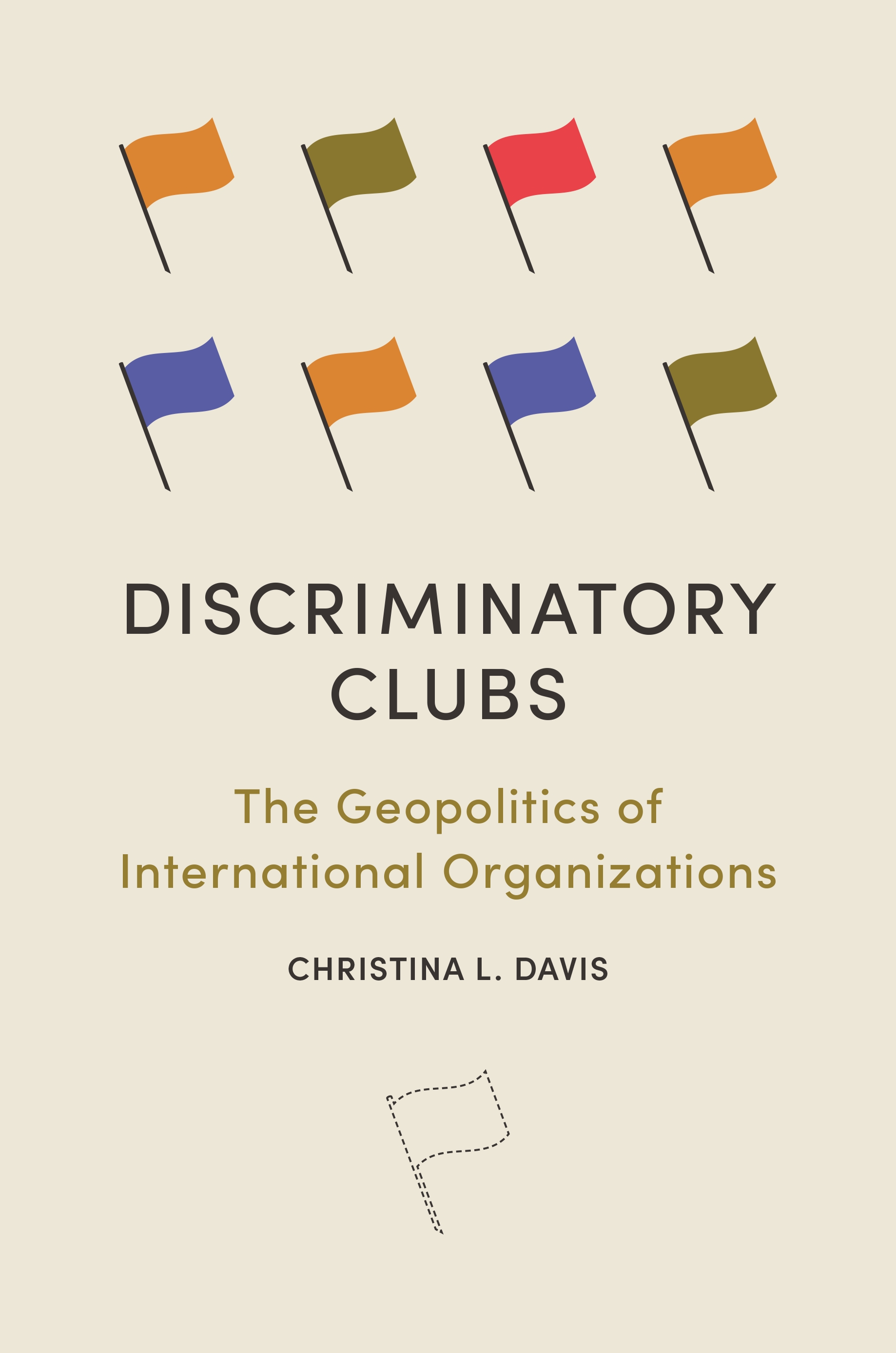
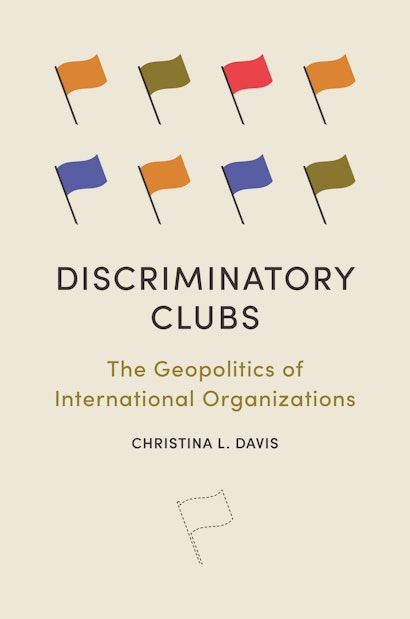
Discriminatory Clubs: The Geopolitics of International Organizations
Hardcover
Paperback
ebook (EPUB via app)
- Sale Price:
- $27.97/拢24.50
- Price:
-
$39.95/拢35.00 - ISBN:
- Published:
- Jul 18, 2023
- Copyright:
- 2023
- 70 b/w illus.
30% off with code PUP30
ebook (PDF via app)
- Sale Price:
- $27.97/拢24.50
- Price:
-
$39.95/拢35.00 - ISBN:
- Published:
- Jul 18, 2023
- Copyright:
- 2023
- 70 b/w illus.
30% off with code PUP30
-
Audio and ebooks (EPUB and PDF) purchased from this site must be accessed on the
快色直播 app. After purchasing, you will receive an email with
instructions to access your purchase.
About audio and ebooks - Request Exam Copy
Member selection is one of the defining elements of social organization, imposing categories on who we are and what we do. Discriminatory Clubs shows how international organizations are like social clubs, ones in which institutional rules and informal practices enable states to favor friends while excluding rivals.
Where race or socioeconomic status may be a basis for discrimination by social clubs, geopolitical alignment determines who gets into the room to make the rules of global governance. Christina Davis brings together a wealth of data on membership provisions for more than three hundred organizations to reveal the prevalence of club-style selection on the world stage. States join organizations to deepen their association with a particular group of states鈥攎ost often their allies鈥攁nd for the gains from policy coordination. Even organizations that claim to be universal, to target narrow issues, or to cover geographic regions use club-style admission criteria. Davis demonstrates that when it comes to the most important decision of cooperation鈥攚ho belongs to the club and who doesn鈥檛鈥攇eopolitical alignment can matter more than the merits or policies of potential members.
With illuminating case studies ranging from nineteenth-century Japan to contemporary Palestine and Taiwan, Discriminatory Clubs sheds light on how, for global and regional organizations such as the WTO and the EU, alliance ties and shared foreign-policy positions form the basis of cooperation.
Awards and Recognition
- A Choice Outstanding Academic Title of the Year