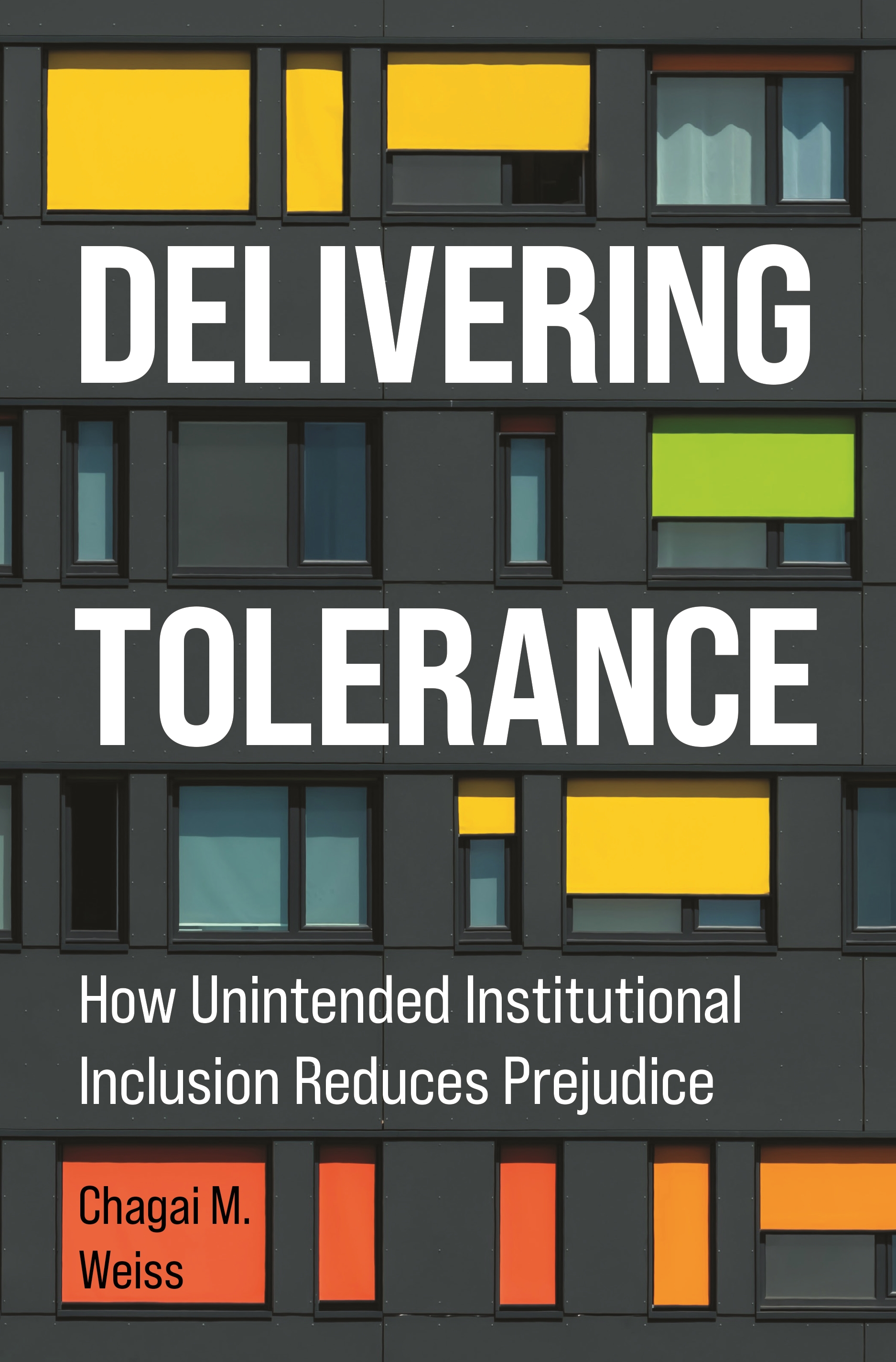
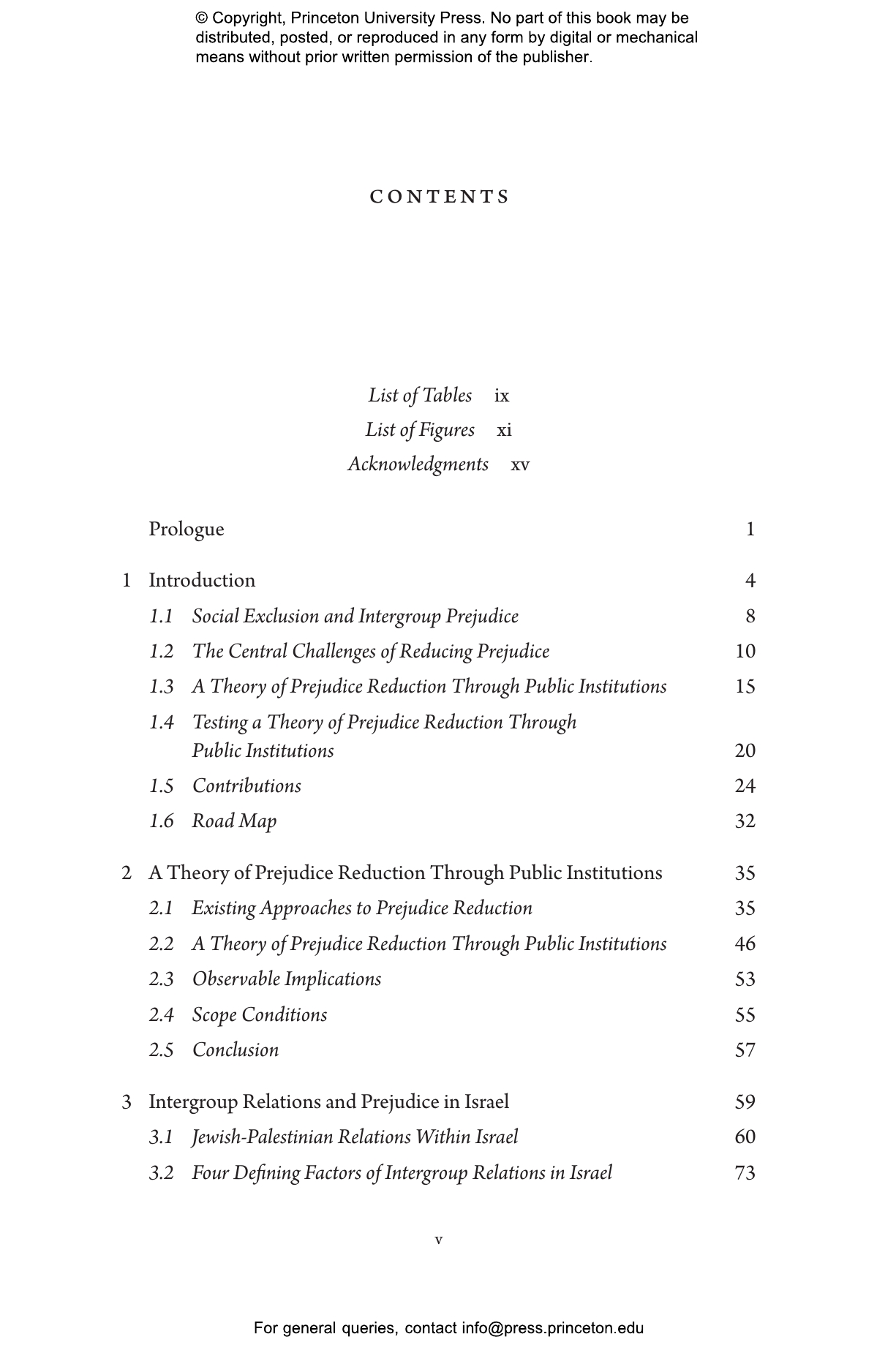
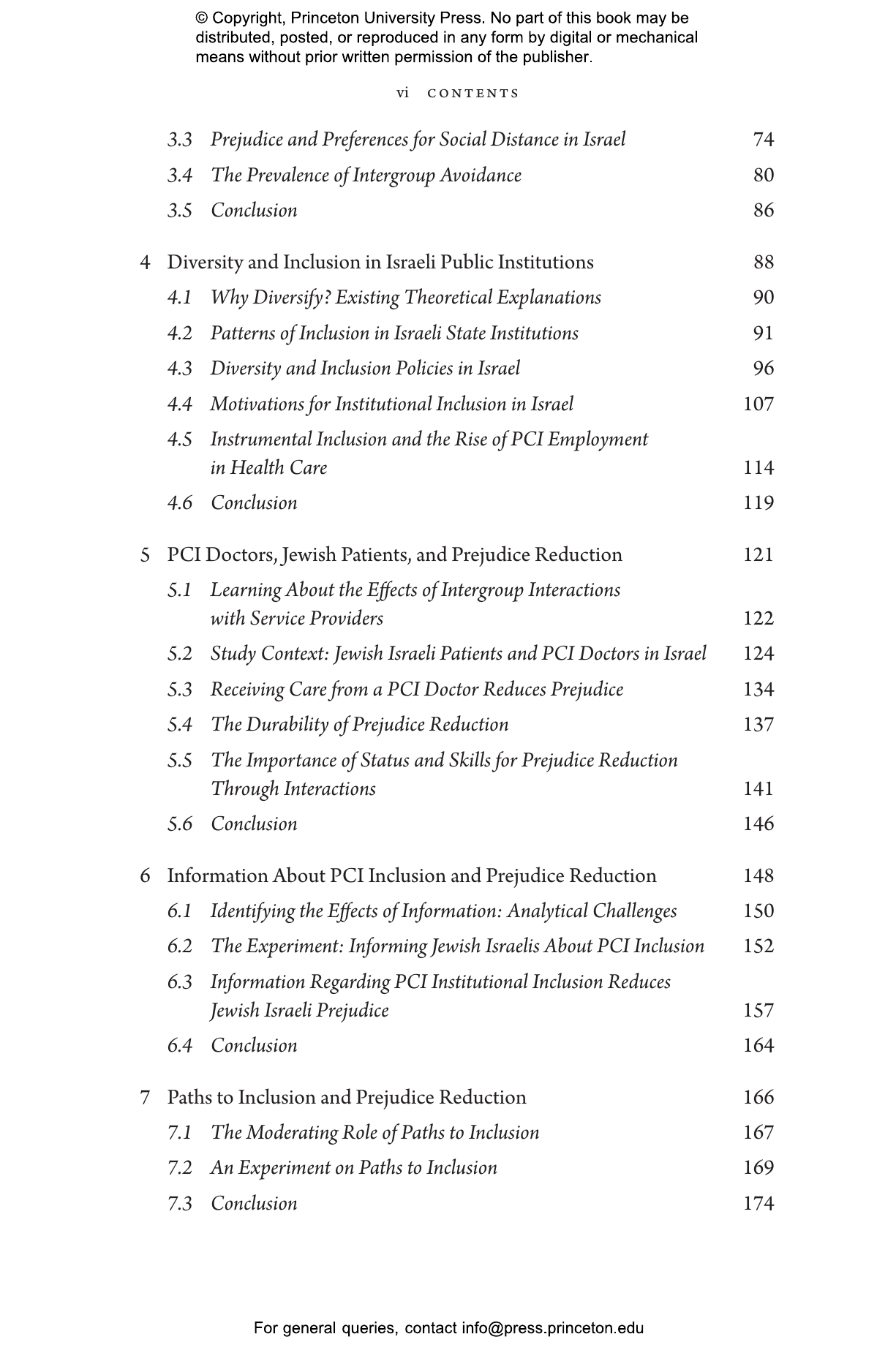
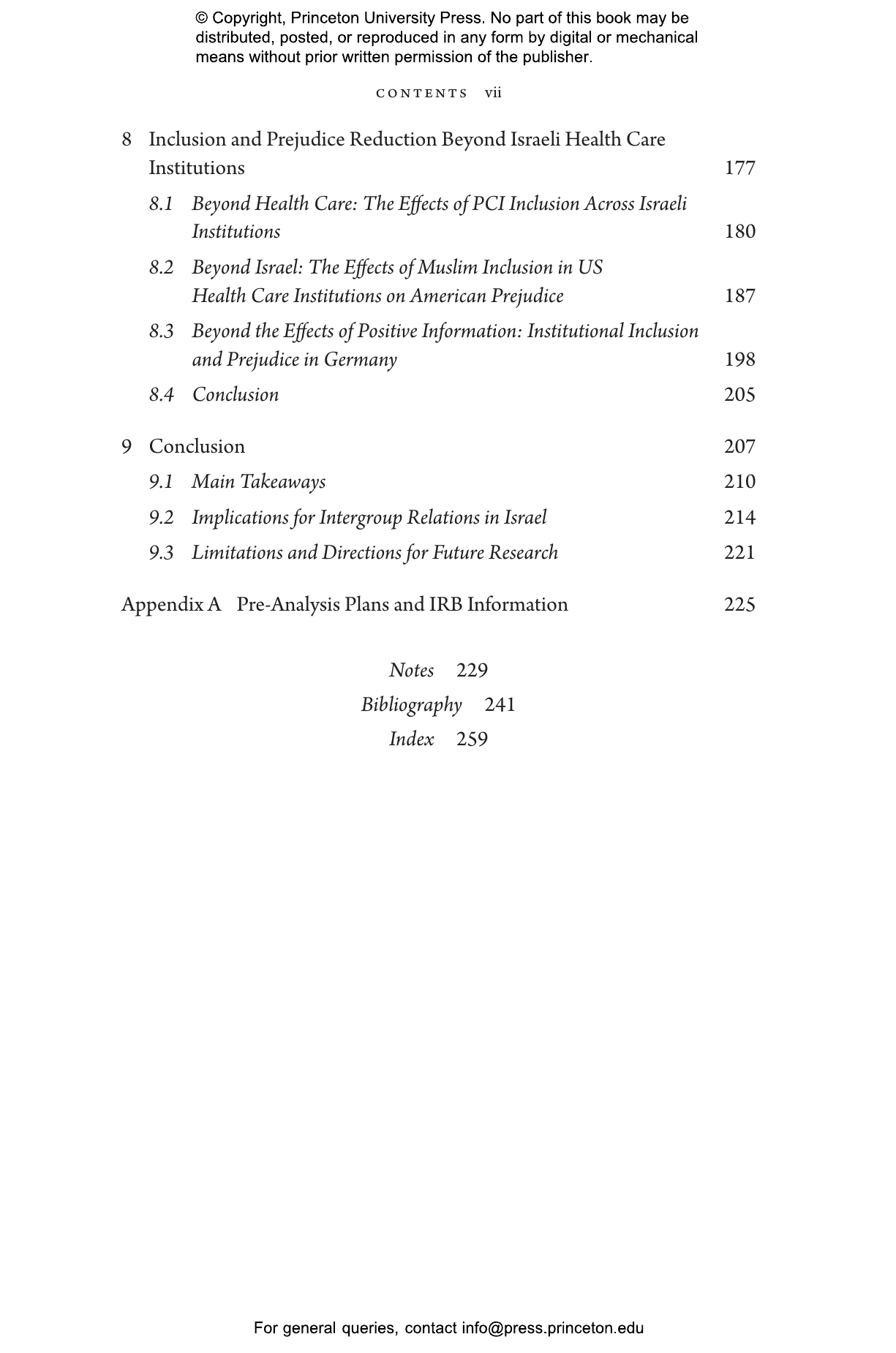
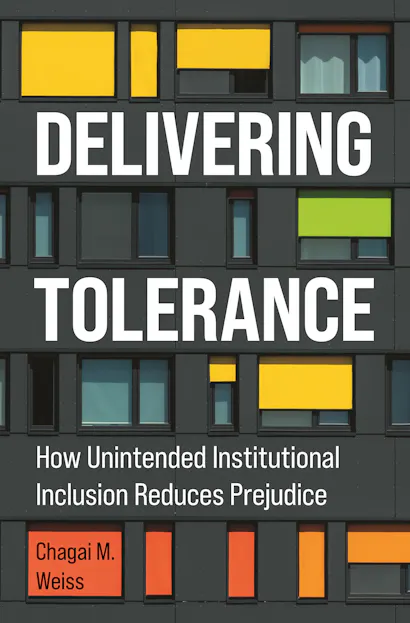
Decades of social science research focuses on reducing prejudice, which is considered an impediment to intergroup cooperation. Reducing prejudice is notoriously challenging, however, because it is durable and because it motivates avoidance of experiences that would improve intergroup relations. In Delivering Tolerance, Chagai Weiss develops a theory of prejudice reduction through public institutions. Weiss argues that instrumental, and often unintended, minority inclusion in public institutions that provide essential services鈥攊ncluding schools, hospitals, and police forces鈥攃an facilitate various forms of exposure to out-group service providers that reduces prejudice at scale. Overcoming the challenges of both durability and avoidance, such exposure is especially persuasive in shifting attitudes toward minorities.
To test his theory, Weiss examines what is perhaps the most extreme, prominent, and intractable example of group conflict鈥攖he relationship of Israelis and Palestinian citizens of Israel (PCI). He finds that Israelis鈥� brief yet meaningful interactions with PCI doctors reduce prejudice, and that information about the rate of PCI inclusion in Israeli healthcare institutions reduces intergroup animosity. He also shows that patterns of prejudice reduction generalize beyond the Israeli case of healthcare institutions, examining other institutional domains and examples of inclusion dynamics in the United States and Germany. Reducing prejudice is discouragingly difficult, but Weiss鈥檚 account reveals how institutions and the people within them can improve intergroup relations in conflict-ridden societies.
Chagai M. Weiss is assistant professor of political science and the Andrea and Charles Bronfman Chair of Israel Studies at the University of Toronto. He is the coauthor of Abstraction in Experimental Design: Testing the Tradeoffs.
“This is an impressive work, one of the few studies of contact theory that deals directly with the problem of avoidance. It will no doubt make an impact on the fields of intergroup relations, political behavior, and institutional design.”—Gwyneth McClendon, New York University
“This is an excellent book that will motivate new research on ways to reduce inter-ethnic conflict. It advances the prejudice-reduction literature by exploring conditions under which minority group incorporation in public institutions will reduce majority group bias. Weiss pushes us to rethink classic psychological theories of prejudice reduction and his book fills an important gap in the bias-reduction literature.”—Nicholas Sambanis, Yale University
“This book advances a powerful message: minority inclusion in public institutions can reduce prejudice, even in deeply divided societies. Empirically sophisticated and deeply consequential to contemporary debates, Delivering Tolerance persuasively shows how everyday interactions and signals showcasing minorities’ contributions can spark meaningful change. A major achievement!”—Rafaela M. Dancygier, 快色直播 University
“Chagai Weiss has taken the study of prejudice in a new direction, laying out a fresh theoretical agenda focusing on institutional inclusion and offering a series of creative and meticulously executed experiments that span multiple countries.”—Donald P. Green, Columbia University
“In this extraordinarily creative, thought-provoking, and empirically rigorous book, Chagai Weiss shows that prejudice reduction is possible. With a wide ranging set of analyses of multiple sources of data, Weiss offers a compelling account that will be must-reading for those studying politics and psychology in divided societies, and for those searching for practical policy solutions to overcome prejudice.”—Evan Lieberman, Massachusetts Institute of Technology
“In this brilliant and important study, Chagai Weiss shows how cross-group interactions in public institutions like health care facilities can foster prejudice reduction in segregated societies.” —Daniel N. Posner, University of California, Los Angeles
“This book brilliantly analyzes an extremely important case of institutionally driven prejudice reduction. Weiss’s original research findings are both rigorous and hopeful, and will stimulate scholarly and policy thinking about the design of institutions and of prejudice reduction interventions.”—Betsy Levy Paluck, 快色直播 University
Accessibility Features
-
Inaccessible, or known limited accessibility
-
No known hazards or warnings