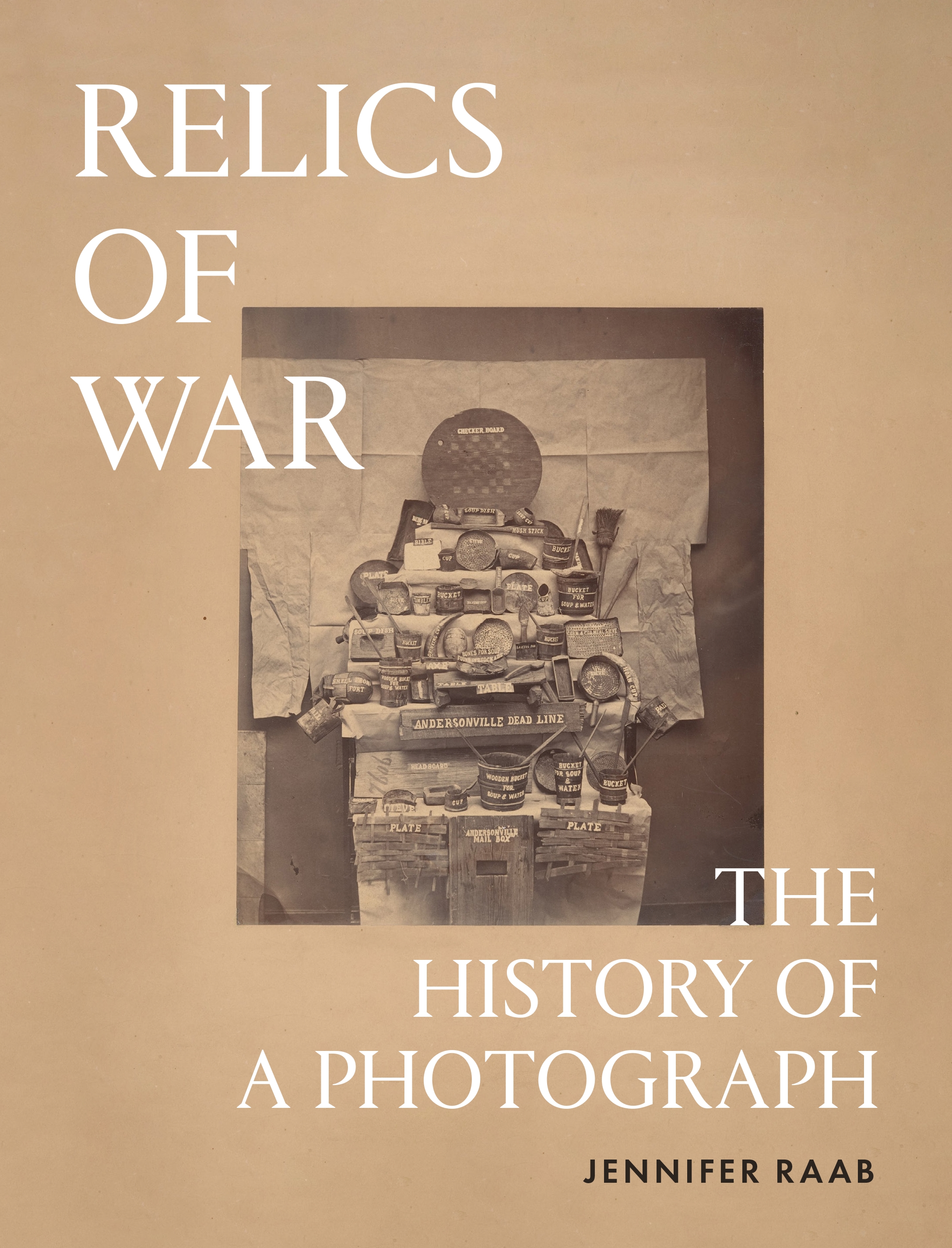
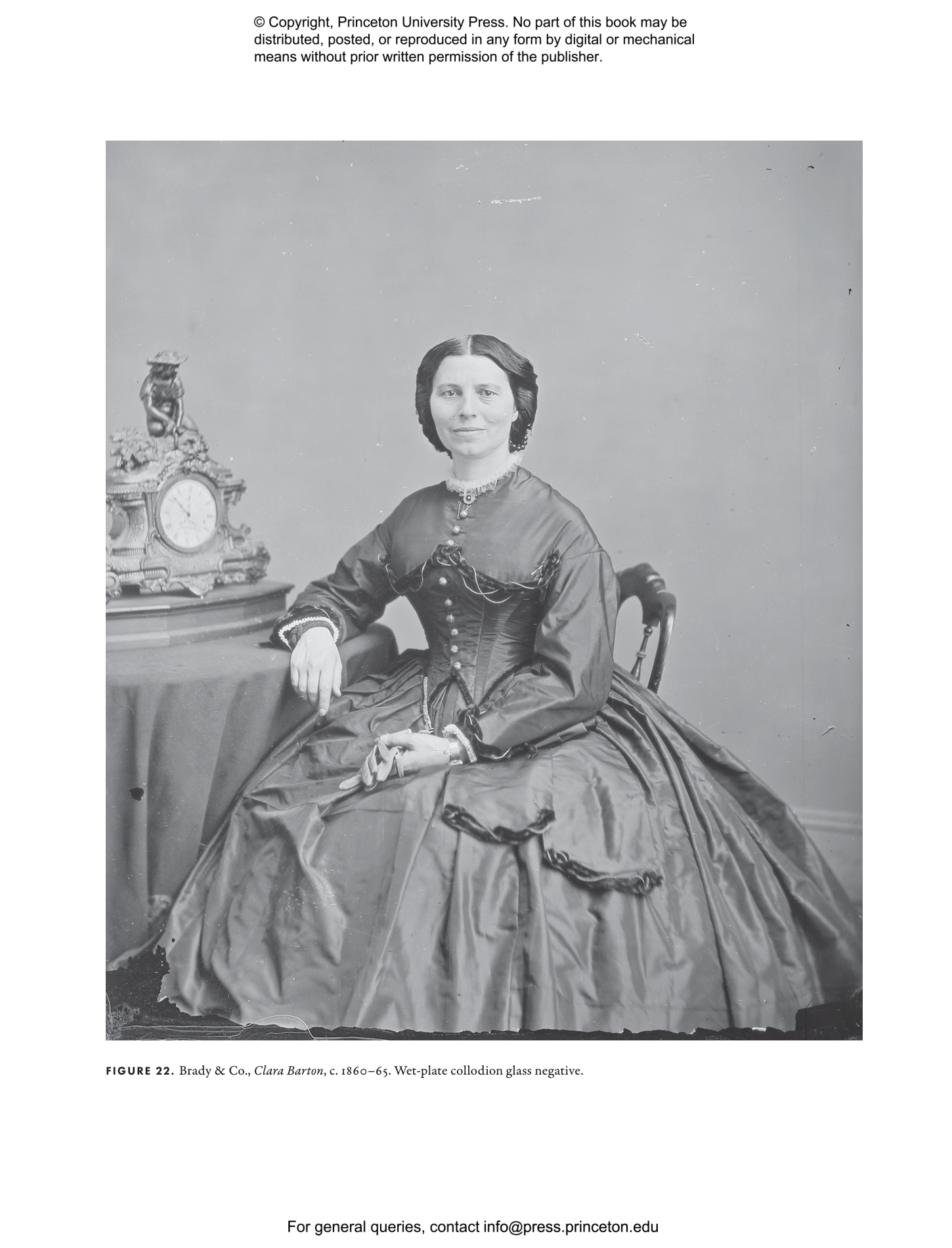
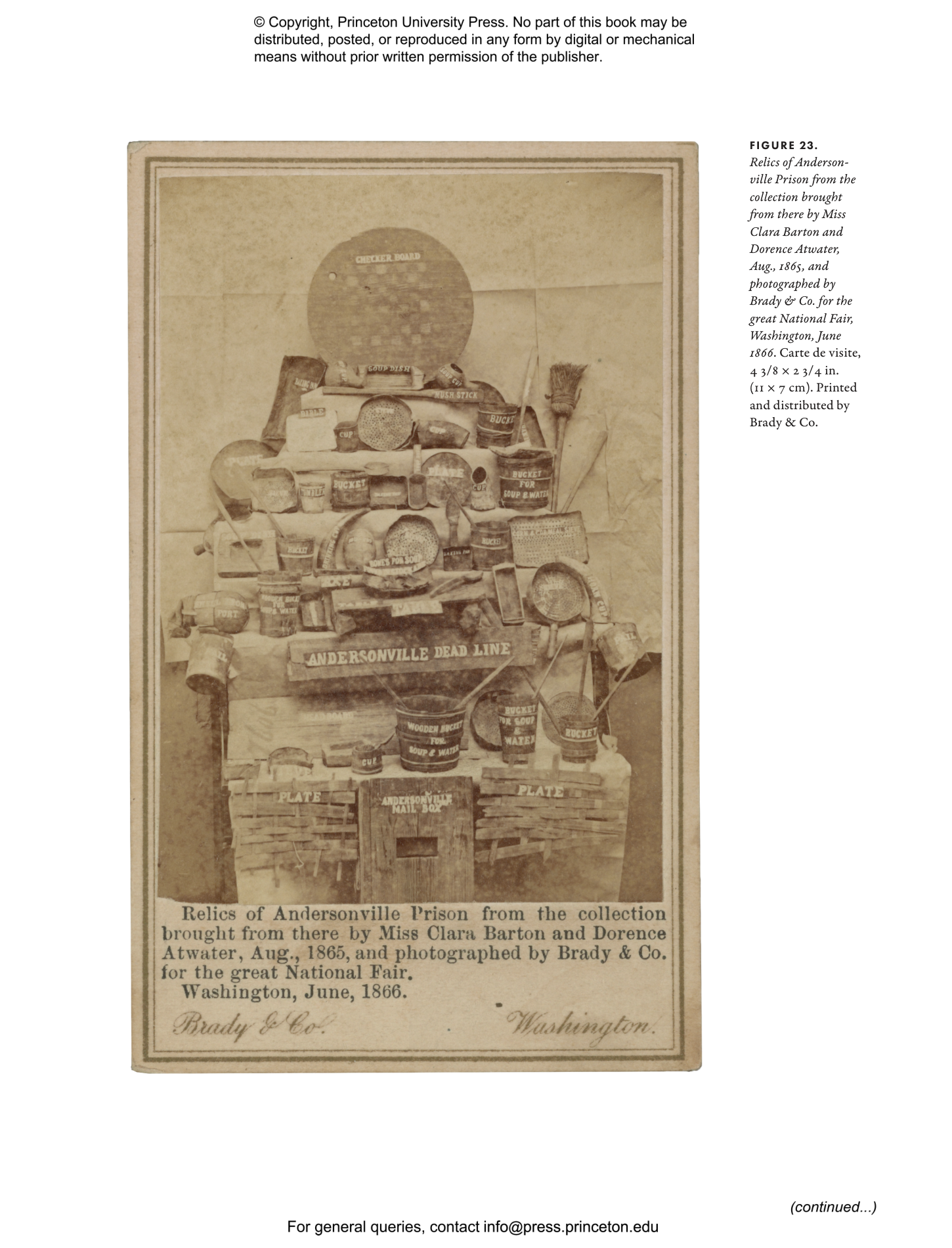
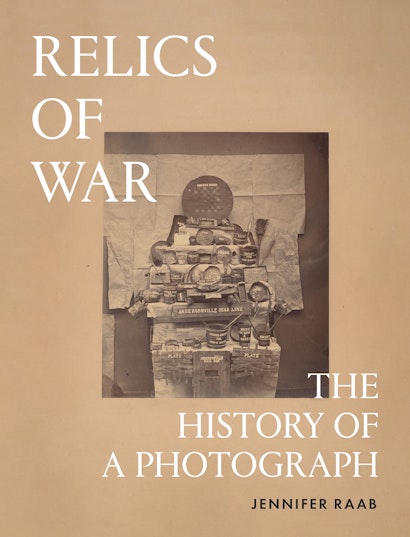
In 1865, Clara Barton traveled to the site of the notorious Confederate prison camp in Andersonville, Georgia, where she endeavored to name the missing and the dead. The future founder of the American Red Cross also collected their relics鈥攚hittled spoons, woven reed plates, a piece from the prison鈥檚 鈥渄ead line,鈥� a tattered Bible鈥攁nd brought them back to her Missing Soldiers Office in Washington, DC, presenting them to politicians, journalists, and veterans鈥� families before having them photographed together in an altar-like arrangement. Relics of War reveals how this powerful image, produced by Mathew Brady, opens a window into the volatile relationship between suffering, martyrdom, and justice in the wake of the Civil War.
Jennifer Raab shows how this photograph was a crucial part of Barton鈥檚 efforts to address the staggering losses of a war in which nearly half of the dead were unnamed and from which bodies were rarely returned home for burial. The Andersonville relics gave form to these absent bodies, offered a sacred site for grief and devotion, mounted an appeal on behalf of the women and children left behind, and testified to the crimes of war. The story of the photograph illuminates how military sacrifice was racialized as political reconciliation began, and how the stories of Black soldiers and communities were silenced.
Richly illustrated, Relics of War vividly demonstrates how one photograph can capture a precarious moment in history, serving as witness, advocate, evidence, and memory.
Awards and Recognition
- Winner of the Charles Rufus Morey Book Award, College Art Association
"A groundbreaking study of a little-known nineteenth-century image documenting objects made and used by Union prisoners in the infamous Confederate camp at Andersonville. Raab’s vivid insights, paired with her concise, evocative prose, make the book both engaging and reflective. Ultimately, Relics of War shows how a deep investigation of a single work of art can illuminate far-reaching cultural histories, provided that the narrative is crafted with precision and care."鈥擬orey Award Committee, College Art Association
"Those who lost loved ones in the U.S. Civil War were doubly bereaved: they not only grieved for their dead but also mourned their inability to care for them properly. . . . In Relics of War, art historian Jennifer Raab uses a single, idiosyncratic photograph to explore in rich and often astonishing detail these circumstances. . . . Raab’s original approach—recursive, research-intensive, meditative—has the power to once again put [Clara] Barton’s 'strange assemblage of insistently material things' to work—this time as the basis for historical analysis that is invigorated by these objects. . . . Embodying the will to live in the face of death, they stand in for the historian who reconstructs the past while honoring the materiality and persistence of objects that must, by definition, remain mute."鈥�The Journal of Military History
"Raab’s text provides an important lens through which to view our current moment."鈥�ARLIS/NA
"It takes daring and bravado to write an entire book on a single artwork, especially when that artwork is a little-known nineteenth-century photograph. Jennifer Raab’s new book, Relics of War: The History of a Photograph, takes on this challenge. . . . Readers come to grasp the gendered, racial, and material contours of Civil War memory and mourning through Raab's layered visual and literary frames of analysis."鈥�West 86th: A Journal of Decorative Arts, Design History, and Material Culture
"Raab explores her view of the transformative role played by Relics of Andersonville in a critical issue for Civil War-era America, namely, the location, identification, and burial of hundreds of thousands of war dead. . . . Relics of War combines unique perspectives, along with some fascinating research in a work that should especially appeal to those interested in the convergence of art and American history."鈥�On Point: The Journal of Army History
"Beautifully illustrated. . . . If, as Raab contends, Barton recognised the power of objects to bring ‘the pain of the past into the present’, Relics of War enacts a similar temporal bridging for the twenty-first century, challenging contemporary readers to reckon with a tumultuous and consequential moment through the photograph as an enduring relic."鈥�History of Photography
"Relics of War is an exploration of how the nation used photography to capture what words could not."鈥�H-Net Reviews
“In her focus on a single photograph, Jennifer Raab illuminates the far wider worlds of Civil War America and of our own time. This is a brilliant book with something new to learn on nearly every page.”—Drew Gilpin Faust, author of This Republic of Suffering: Death and the American Civil War
“Relics of War is a fascinating and moving book, full of profound insight and moral weight. By telling the story of Barton’s photograph and the rough-hewn objects shown within it, Raab reveals how it functions variously as memory, witness, and indictment.”—Kirk Savage, author of Standing Soldiers, Kneeling Slaves: Race, War, and Monument in Nineteenth-Century America
“Relics of War is an astonishing account of how Americans tried to make sense of the meaning of their deadly Civil War and its long aftermath. The book’s beautifully illustrated pages carry new images and revelatory interpretations, all the way from the familiar Mathew Brady images in the opening pages to the startling and moving conclusion. An ingenious work in the material culture of race, reunion, and war.”—John Fabian Witt, author of Lincoln’s Code: The Laws of War in American History
“Relics of War offers a rich exploration of the visual cultures of the Civil War that extend the subject well beyond the usual images used to understand it. With elegant prose, Raab demonstrates a deeply impressive attention to detail while showing how a single historical object can call up diverse associations for a viewer.”—Elizabeth Hutchinson, author of The Indian Craze: Primitivism, Modernism, and Transculturation in American Art, 1890–1915
No known hazards or warnings
Accessibility Features
-
Inaccessible, or known limited accessibility
-
No known hazards or warnings