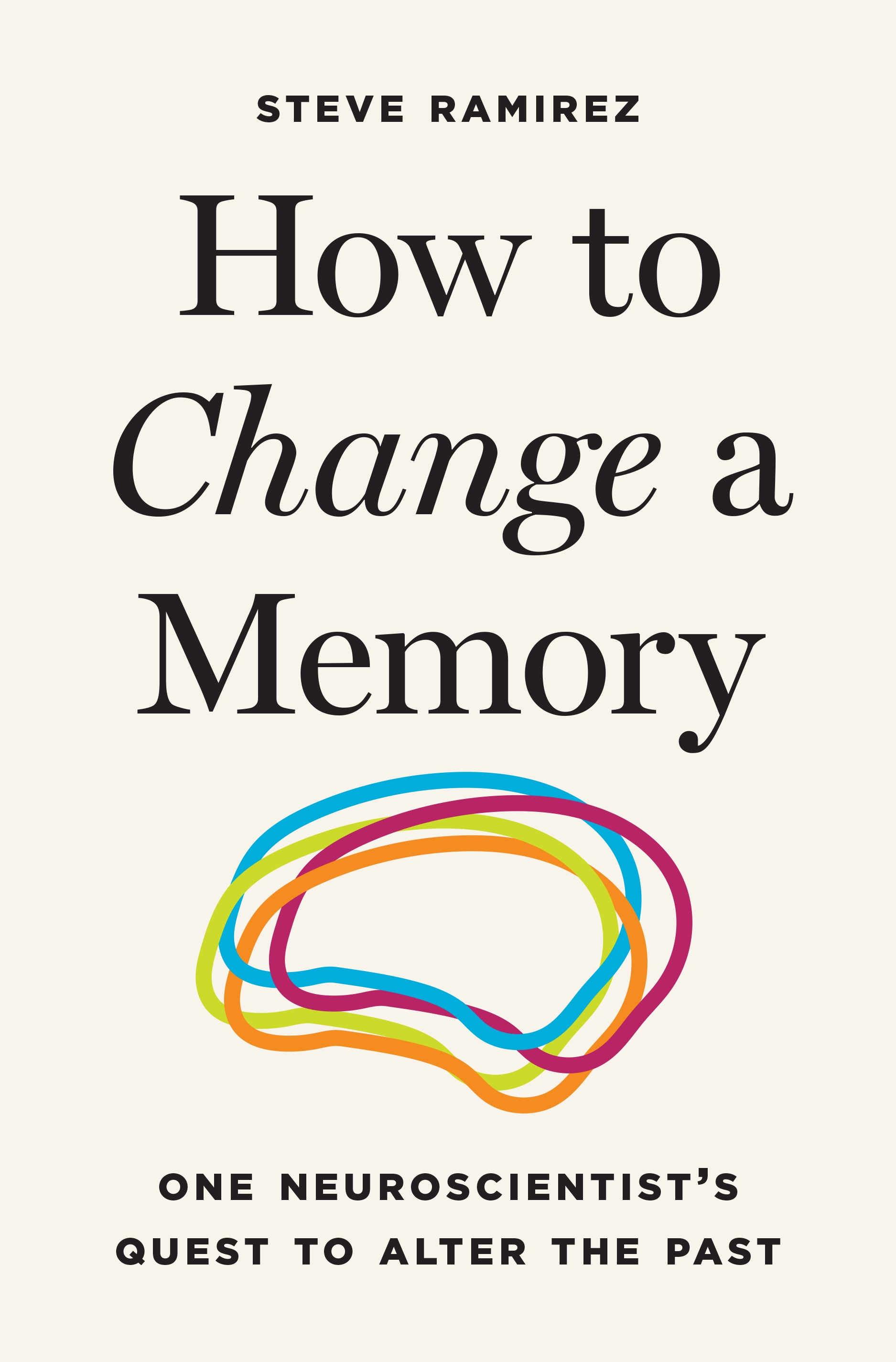
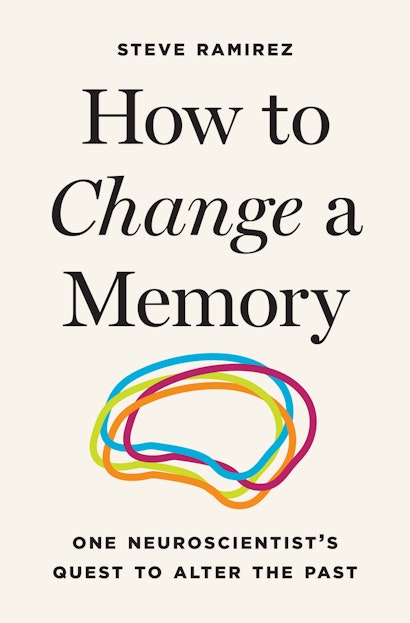
As a graduate student at MIT, Steve Ramirez successfully created false memories in the lab. Now, as a neuroscientist working at the frontiers of brain science, he foresees a future where we can replace our negative memories with positive ones. In How to Change a Memory, Ramirez draws on his own memories鈥攐f friendship, family, loss, and recovery鈥攖o reveal how memory can be turned on and off like a switch, edited, and even constructed from nothing.
A future in which we can change our memories of the past may seem improbable, but in fact, the everyday act of remembering is one of transformation. Intentionally editing memory to improve our lives takes advantage of the brain鈥檚 natural capacity for change.
In How to Change a Memory, Ramirez explores how scientists discovered that memories are fluid鈥攖hey change over time, can be erased, reactivated, and even falsely implanted in the lab. Reflecting on his own path as a scientist, he examines how memory manipulation shapes our imagination and sense of self. If we can erase a deeply traumatic memory, would it change who we are? And what would that change mean anyway? Throughout, Ramirez carefully considers the ethics of artificially controlling memory, exploring how we might use this tool responsibly鈥攆or both personal healing and the greater good.
A masterful blend of memoir and cutting-edge science, How to Change a Memory explores how neuroscience has reached a critical juncture, where scientists can see the potential of memory manipulation to help people suffering from the debilitating effects of PTSD, anxiety, Alzheimer鈥檚, addiction, and a host of other neurological and behavioral disorders.
Awards and Recognition
- Finalist for the PROSE Award in Popular Science and Mathematics, Association of American Publishers
- Shortlisted for the Royal Society Trivedi Science Book Prize
"[Ramirez’s] storytelling moves fluidly between memoir and science writing, blending lab anecdotes with personal reflections in a way that makes even the most technical discoveries feel intimate. . . . For students and young scientists, the book is a beacon—it shows that science does not demand that we hide our imperfections and that our fragilities and limits can coexist with creativity and rigor, reminding readers that discovery is a deeply human pursuit rather than a purely technical one. For nonexpert readers, it delivers complex neuroscience in a form that is intimate, relatable, and often funny."鈥擥isella Vetere, Science
"[A] riveting debut, which blends personal narrative and scientific analysis. . . . While the idea of memory manipulation may seem creepy, the potential for good is immense, according to Ramirez, who convincingly posits that these new tools may lead to treatments for PTSD, anxiety disorders, and addiction, and might even be able to reactive memories lost to dementia. It's an illuminating look at a dynamic area of neuroscientific research."鈥�Publishers Weekly
"Fascinating stuff. . . . [A] great book."鈥擨ra Flatow, Science Friday
"A riveting account not only of [Ramirez's] research but also his own struggles with memory."鈥擜lan Alda, Clear and Vivid with Alan Alda
"The book, How to Change a Memory, hooked me and didn’t let me go. . . . What I liked most about the book. . . is its undercurrent: [Ramirez’s] research became intensely personal."鈥擪evin Berger, Nautilus
"The book isn't just a breezy summary of memory research, though, it's an engaging and at times heartbreaking telling of Ramirez's personal journey pursuing this research."鈥擡d Cara, Gizmodo
"Ramirez . . . provides an informative and accessible account of an emerging field that has the potential to assist people afflicted with anxiety, PTSD, and dementia."鈥擥lenn C. Altschuler, Psychology Today
"[Presents] a really optimistic view of what neuroscience can do for psychiatric disorders."鈥擲ara Talpos, Undark
"In movies . . . there’s often a sinister air around the memory-tweaking scientist character. Ramirez, a Boston University professor, is friendly, earnest and. . . . sees this research not as the next frontier of coercive mind control but as another way to alleviate mental suffering, alongside medications and cognitive therapies."鈥擟orinne Purtill, Los Angeles Times
"[In his book] Professor Steve Ramirez explored a realm of science so advanced that, until now, it has only existed in sci-fi movies. . . . As he chronicled both his breakthroughs experimenting on the brains of rodents at Boston University, as well as his grief over the death of his lab partner, Xu Liu, he revealed that rewriting human memories could one day become a common part of modern medicine."鈥擱ob Waugh, Daily Mail
"Partly a deep dive into [Ramirez's] scientific research . . . and part memoir about how he has dealt with difficult memories of his own."鈥�CBC Radio Quirks & Quarks
"[Ramirez] carefully considers the ethics of artificially controlling memory, exploring how we might use this tool responsibly, both for personal healing and for the greater good."鈥擥unnel Minett, Breathwork Science
"Ramirez’s book is a terrific example of a scholar taking the time to break down his research and explain why it’s important. . . . We’d all be better off if more brain scientists were willing to explain experimental concepts with plot points from Inception, Bladerunner 2049, and Eternal Sunshine of the Spotless Mind."鈥擣rederick Hess, Education Next
"A book about the science of memory [that] reads like a memoir."鈥擜mory Sivertson, WBUR On Point
“Steve Ramirez deftly blends storytelling and science in this deeply personal book. Ramirez has done game-changing work to reveal the mechanisms of memory. How to Change a Memory puts these discoveries in a broader context, telling the story of memory in a manner that is both engaging and accessible.”—Charan Ranganath, author of Why We Remember: Revealing the Hidden Power of Memory
“How to Change a Memory is a magnificent gem. Steve Ramirez treats us to an engaging account of his groundbreaking research on manipulating memories. He shows us how our memories are controllable, and that by modifying memories, we can heal the mind and promote health. We can change life as we know it. Rarely will you find a scientific memoir that leads you to say, ‘I couldn’t put it down.’ This is one.”—Elizabeth F. Loftus, author of Eyewitness Testimony
“Combining his own compelling personal story with first-hand accounts of the pathbreaking science that he helped to create, Steve Ramirez explains startling discoveries about memory in an engaging and fascinating way. How to Change a Memory is a must-read for anyone interested in how the brain constructs the past.”—Daniel L. Schacter, author of The Seven Sins of Memory: How the Mind Forgets and Remembers
This publication has been produced to meet accepted Accessibility standards and contains various accessibility features including concise image descriptions, a table of contents, a page list to navigate to pages corresponding to the print source version, and elements such as headings for structured navigation. Appearance of the text and page layout can be modified according to the capabilities of the reading system.
Accessibility Features
-
WCAG v2.2
-
WCAG level AA
-
Table of contents navigation
-
Single logical reading order
-
Short alternative textual descriptions
-
Print-equivalent page numbering
-
Landmark navigation
-
Index navigation
-
Epub Accessibility Specification 1.1
-
ARIA roles provided
-
All non-decorative content supports reading without sight
-
No known hazards or warnings