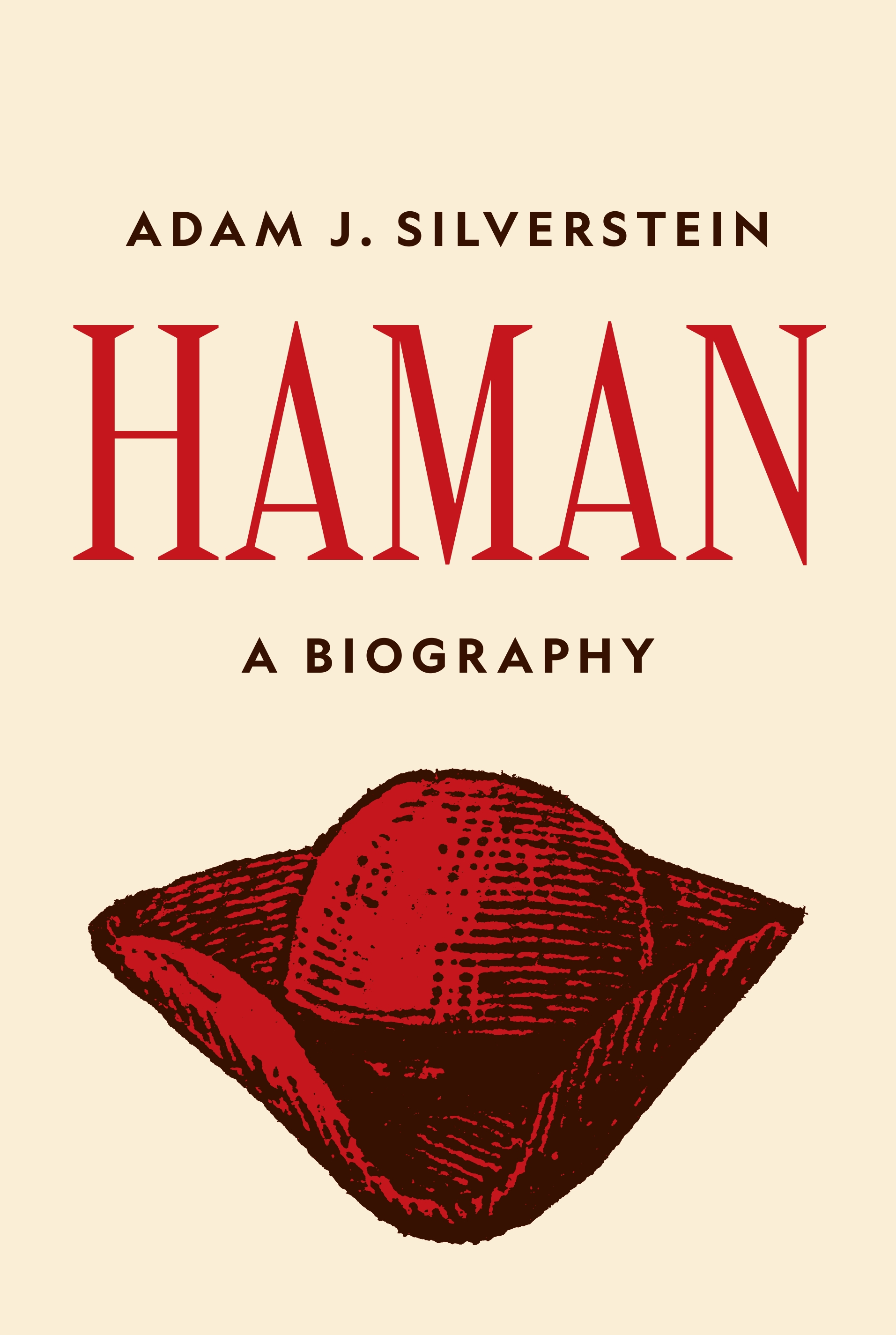
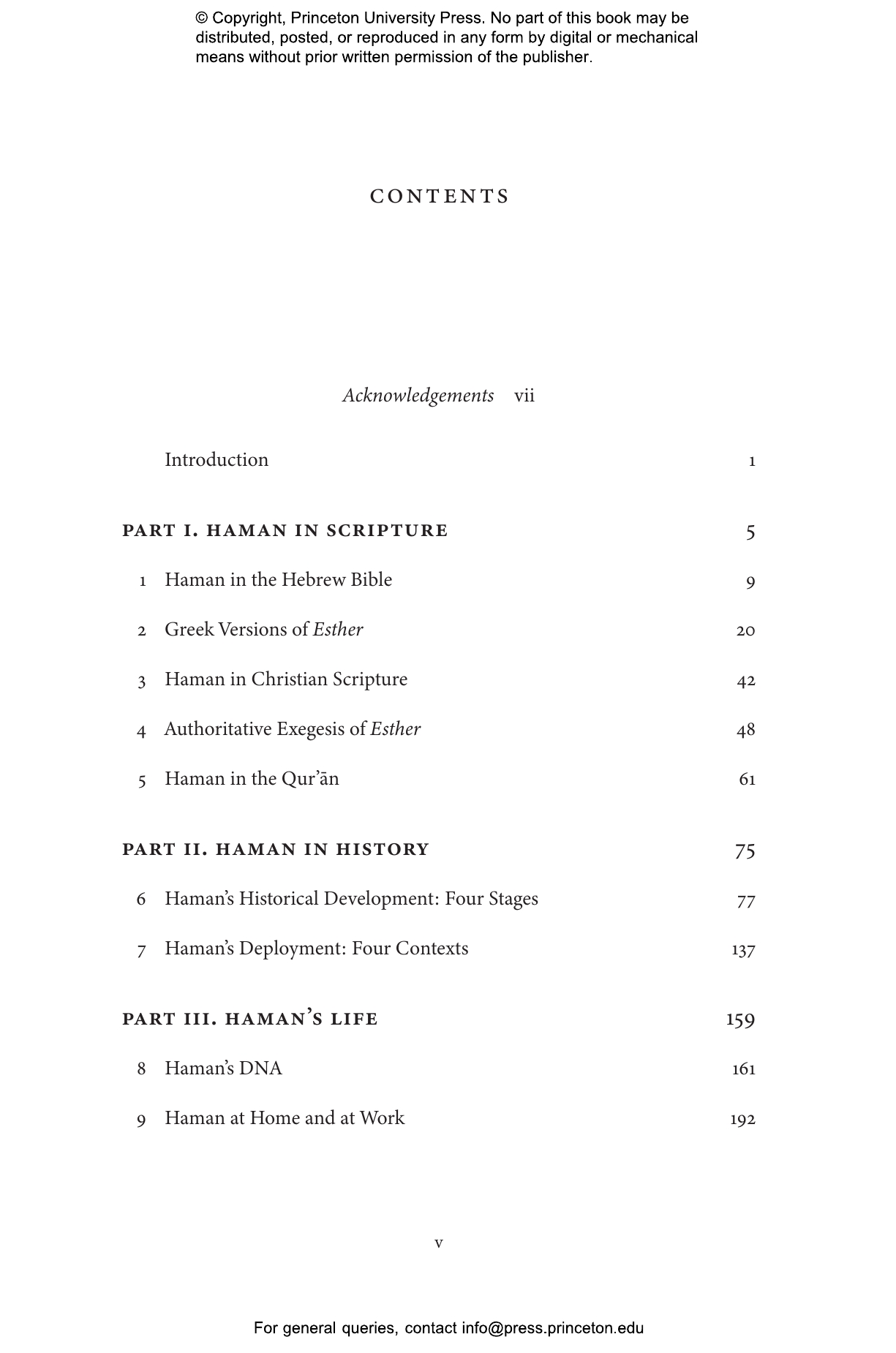
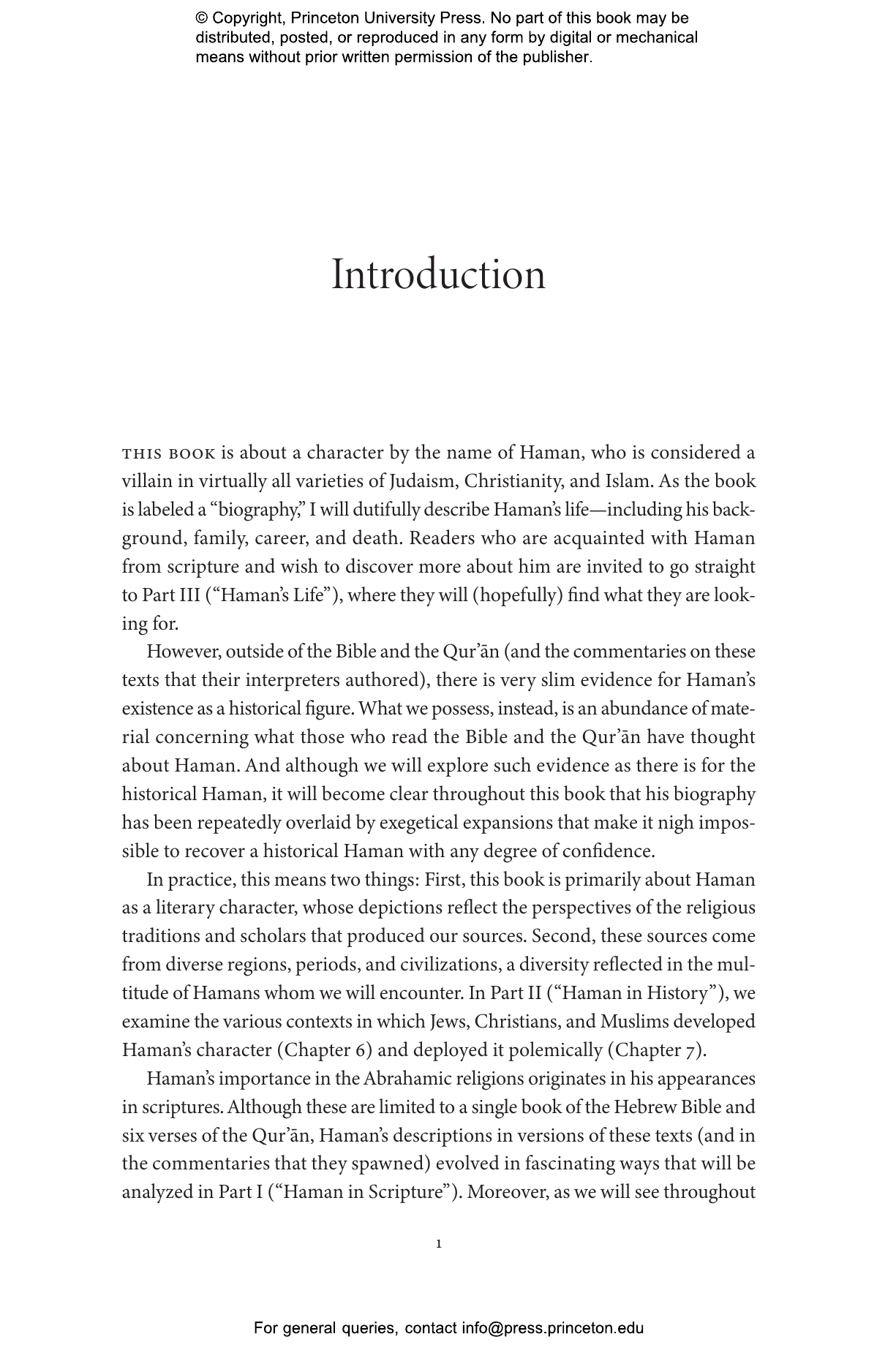
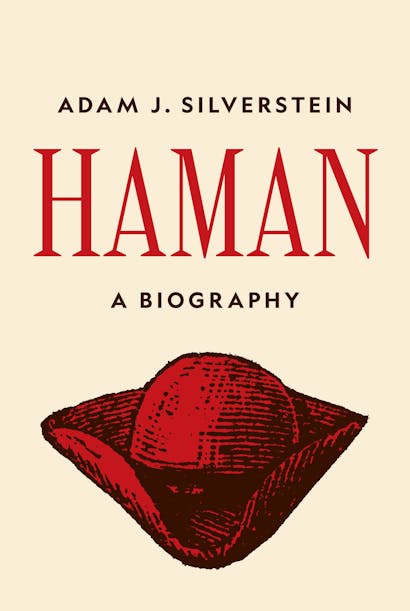
Haman, infamous as the antagonist in the book of Esther, appears as a villainous figure in virtually all varieties of Judaism, Christianity, and Islam. In this 鈥渂iography鈥� of Haman, Adam Silverstein traces the evolution of this villainous character from the ancient Near East to modern times, drawing on sources in a variety of languages and from diverse genres. Silverstein considers the evidence for a historical Haman and analyzes the abundance of material that documents what those who read the Bible and the Qur鈥櫮乶 have thought about him over the past two millennia.
With this book, Silverstein offers an essential and original account of the rich diversity and openness of Abrahamic civilizations throughout history. Taking Haman as a case study, Silverstein guides the reader through diverse intellectual terrains, covering ancient Near Eastern cultures, pre-Islamic Iranian literature, Abrahamic scriptures and their interpretation, late antiquity, Islamic history, and interfaith relations. He shows how the figure of Haman has both united and divided Jewish, Christian, and Muslim communities, who collaborated fruitfully in their efforts to grasp the meaning and significance of their holy books, but who also deployed the 鈥淗aman鈥� label polemically against each other. Silverstein also considers Haman鈥檚 prebiblical origins, raising the possibility that the book of Esther was receiving and reconfiguring Haman no less than later works were, with Esther鈥檚 villain taking his place in a long line of reimagined Hamans.
Haman: A Biography is the first book-length study to contextualize an Abrahamic character not only within Jewish and Christian traditions but also with reference to the character鈥檚 prebiblical background and reception in Islamic cultures.
Adam J. Silverstein holds the the Max Schloessinger Chair of Islamic Studies at the Hebrew University of Jerusalem. He is the author of Veiling Esther, Unveiling Her Story; Islamic History: A Very Short Introduction; and Postal Systems in the Pre-Modern Islamic World.
"Adam Silverstein’s Haman: A Biography . . . shows how to be both scholarly and fascinating. Scrutinizing original sources from multiple languages, Silverstein shows how Jews worried that God was not explicitly present in the book of Esther, early Christians worried about themes of vengeance and ethnocentricity, and the Quran six times identifies Haman as an Egyptian and even a pharaoh."鈥擬arvin Olasky, Discovery Institute
"An impressive, well-written, argumentative book that shows not only a far more complex version of Haman than one might expect, but also how one story can develop through time and be affected by different cultures."鈥擱abbi Rachel Esserman, The Reporter
"Silverstein's ‘biography’ of the biblical figure Haman, the villain of the Jewish Purim story, is a remarkable scholarly achievement. . . . [If] readers grew up thinking of Haman as a wicked, wicked man, they owe it to themselves to read this marvelous book. . . . Elegantly and conceived and presented, Haman skillfully melds biblical (using more than one bible) and Qur’anic exegesis."鈥�Choice
“This is a beautiful, smart, and engaging work, which has completely changed my understanding of the book of Esther. It is a supremely well-researched, sensitively argued, well-sourced, and overall fascinating presentation of the extreme (and, frankly, surprising) complexity and variety of complexities concerning the biblical villain. An academic and literary tour de force.”—Shari Lowin, Stonehill College
“This is a rich book which has all the hallmarks of Adam Silverstein’s work—particularly in terms of range and erudition (literary, linguistic, and historical), with important elements of originality. Despite covering a vast range of technical subjects, it is accessibly and engagingly written, and it chimes with a number of developments in scholarship, particularly in the field of biblical studies.”—Philip Alexander, University of Manchester
“Silverstein’s biography of Haman offers a fresh and fascinating consideration of the afterlives of one of the Bible’s quintessential villains. Haman, we discover, emerges in ever-surprising garbs in Jewish, Christian, and Muslim contexts.”— Ilana Pardes, author of The Song of Songs: A Biography
This publication has been produced to meet accepted Accessibility standards and contains various accessibility features including a table of contents, a page list to navigate to pages corresponding to the print source version, and elements such as headings for structured navigation. Appearance of the text and page layout can be modified according to the capabilities of the reading system.
Accessibility Features
-
WCAG v2.2
-
WCAG level AA
-
Table of contents navigation
-
Print-equivalent page numbering
-
Next / Previous structural navigation
-
Landmark navigation
-
Index navigation
-
Epub Accessibility Specification 1.1
-
ARIA roles provided
-
All non-decorative content supports reading without sight
-
No known hazards or warnings