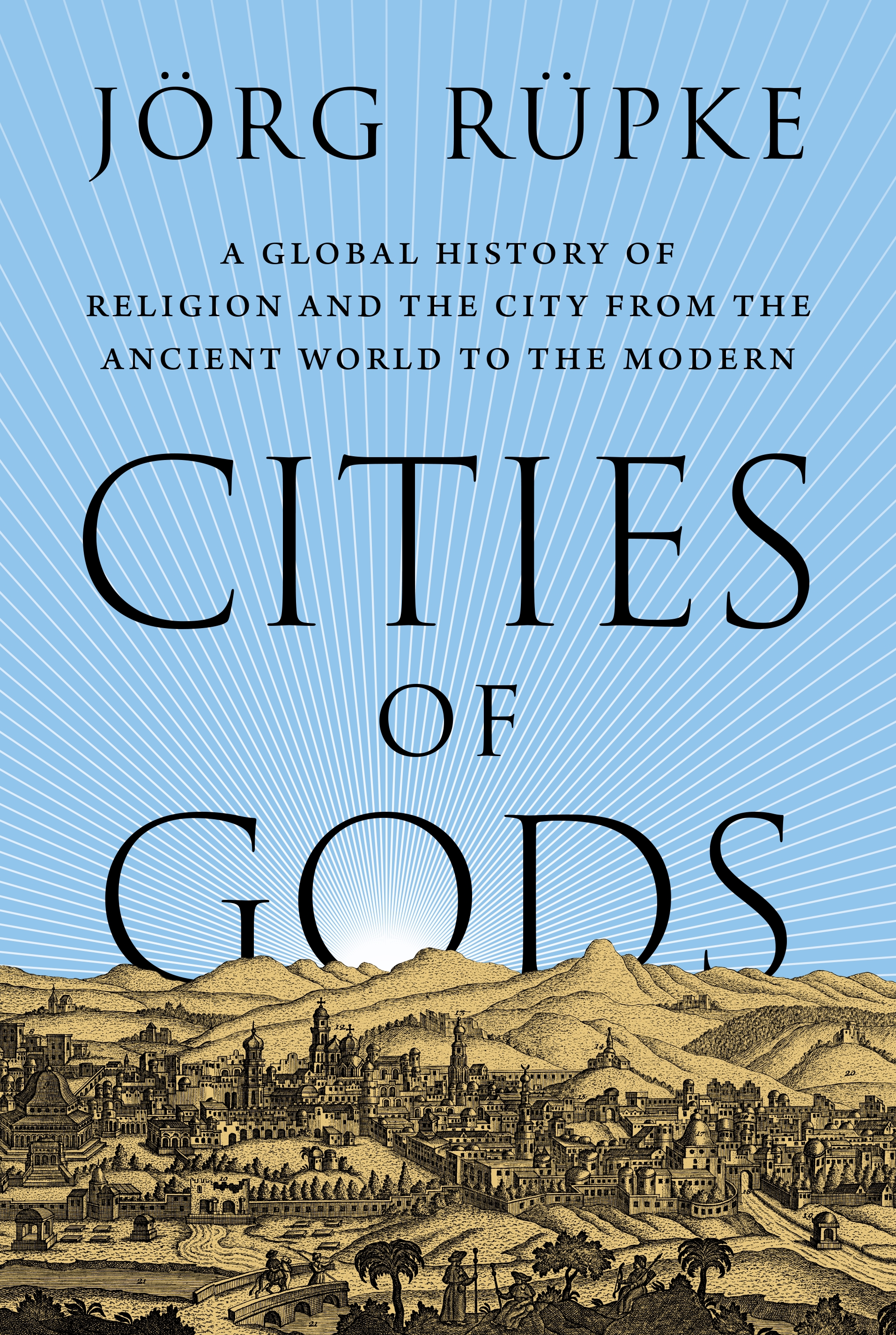
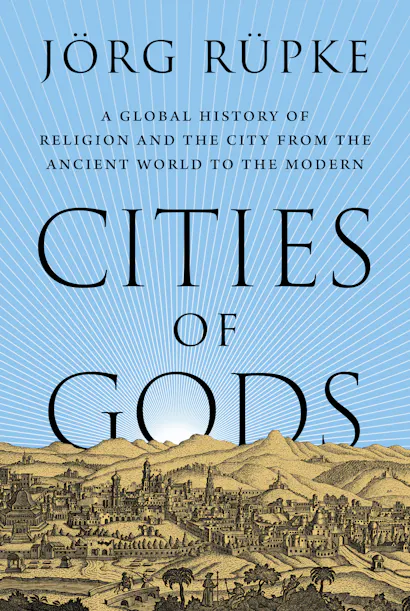
In Cities of Gods, J枚rg R眉pke offers an entirely new vision of the history of religion鈥攐ne in which religion has shaped cities and cities have shaped religion. R眉pke shows how religious actions and ideas have produced cities since urbanization began some 6,000 years ago鈥攁nd how cities have, in turn, changed religious practices. Cities have created new mass rituals that instill the idea of an encompassing community; priestly hierarchies, religious organizations, and globalized religious traditions follow. Urban religion, R眉pke argues, helps people in cities build a world and an identity that make living in a risky and powerful space more bearable.
R眉pke explores early processes of urbanization in Mesopotamia and Asia, showing how people鈥檚 willingness to live differently creates urban space. In examining the dynamic relationship between urban and religious change, R眉pke considers the differences and commonalties of cities including Uruk, Jerusalem, Vanarasi, Chang鈥檃n, Cairo, Lhasa, and Kyoto. The construction of monuments, the embellishment and appropriation of beliefs and rituals, the inclusion of ancestors and deities in social life: each offers a different lens for a history of the city that is also a history of religion. Much of what we consider characteristic of religion and religious practices comes not from the lone cry of a prophet or the prayer of a saint but from an urban religion built from the solidarity of people living in cities.
J枚rg R眉pke is fellow in the history of religion and codirector of the Max Weber Center for Advanced Cultural and Social Studies at the University of Erfurt in Germany. He is the author of many books, including most recently Religion and Its History: A Critical Inquiry; Pantheon: A New History of Roman Religion (快色直播); Religious Deviance in the Roman World: Superstition or Individuality?; and On Roman Religion: Lived Religion and the Individual in Ancient Rome.
“As one of the most influential theorists of ancient religion, R眉pke offers a six-thousand-year account of the entangled histories of urbanism and religion around the globe, showing how each has played a central role in shaping, stabilizing, and sustaining the other. This bold new argument will engage social scientists and historians for decades to come.”—Greg Woolf, author of The Life and Death of Ancient Cities: A Natural History
“Cities of Gods is a gripping, breathtaking, and visionary work that single-handedly rewrites the intertwined histories of urbanization and religion. Ranging from Babylon to Paris, from Rome to New York City, this masterful study is a powerful testament to the importance of comparative history and to the central place of religion in understanding the urban past and present. A must-read for anyone interested in the human search for identity and belonging in shared spaces.”—Julia Kindt, author of Rethinking Greek Religion
“In Cities of Gods, J枚rg R眉pke offers a revolutionary history of religion and social evolution. Drawing from a dazzling range of evidence from around the world, R眉pke explains how initial steps toward urbanism and social complexity were intertwined at every stage with religious ideologies and institutions. This is a splendid book.”—Clifford Ando, author of The Matter of the Gods: Religion and the Roman Empire
This publication has been produced to meet accepted Accessibility standards and contains various accessibility features including concise image descriptions, a table of contents, a page list to navigate to pages corresponding to the print source version, and elements such as headings for structured navigation. Appearance of the text and page layout can be modified according to the capabilities of the reading system.
Accessibility Features
-
WCAG v2.2
-
WCAG level AA
-
Table of contents navigation
-
Single logical reading order
-
Short alternative textual descriptions
-
Print-equivalent page numbering
-
Landmark navigation
-
Index navigation
-
Epub Accessibility Specification 1.1
-
ARIA roles provided
-
All non-decorative content supports reading without sight
-
No known hazards or warnings