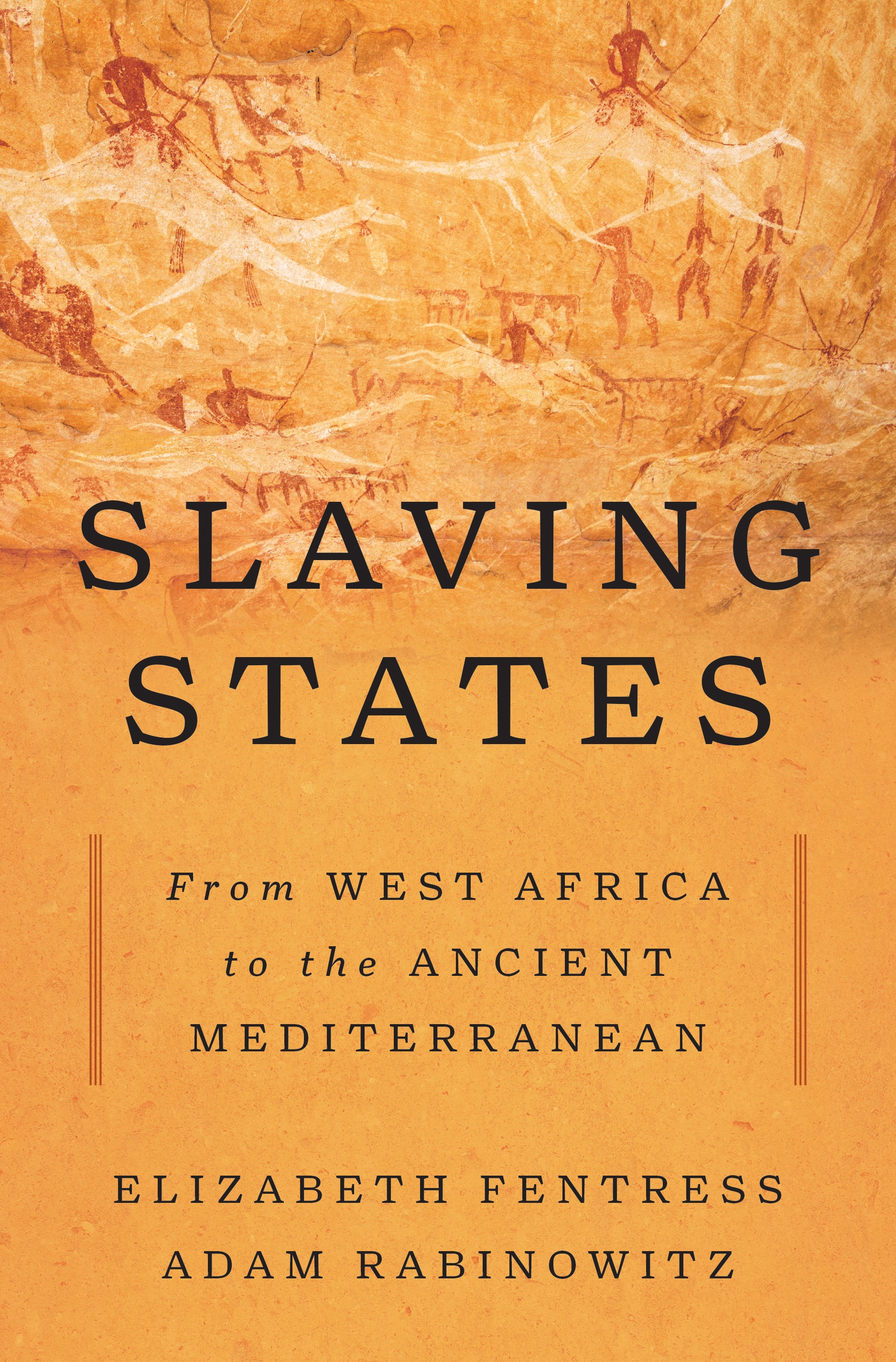
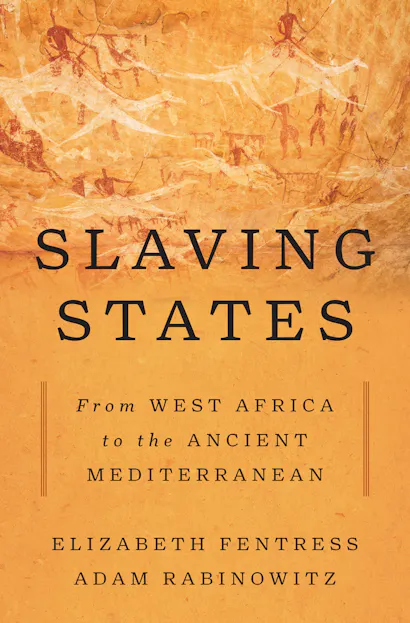
The growing economies of ancient Greece and Rome created an ever-increasing demand for enslaved labor, which was supplied by states on the peripheries of their empires. In Slaving States, archaeologists Elizabeth Fentress and Adam Rabinowitz examine how violent bands of warriors in the outlying regions of Gaul, Scythia, and the Fezzan (part of modern-day Libya) gradually became states that specialized in selling humans to the slave economies of Greece and Rome. They trace a series of transformations鈥攐f people into objects that could be bought and sold, of warrior bands into state-level societies, and of opportunistic captive-taking into slaving economies.
Fentress and Rabinowitz use as a model the West African state of Dahomey, whose development into a slaving state between the seventeenth and nineteenth centuries is, unlike that of their ancient counterparts, well documented. Drawing on textual and archaeological evidence, they show that the slaving zones of early modern West Africa and of antiquity have much in common, rooted in the structure of slaving itself. The evolution of the ancient warriors of Gaul, Scythia, and the Fezzan from head-takers to slave merchants may have taken different paths, but it is clearly written in their histories. With Slaving States, Fentress and Rabinowitz offer an entirely new perspective on ancient slavery. By exploring the supply side of the market for enslaved people, they show that that slavery transforms the society that supplies enslaved people as much as it transforms the society that uses them.
Elizabeth Fentress is an archaeologist and the former Mellon Professor of the Humanities at the American Academy in Rome. In 2022, she received the Gold Medal Award for Distinguished Archaeological Achievement from the American Institute of Archaeology. She is the coauthor of The Berbers: The Peoples of Africa. Adam Rabinowitz is associate professor of classics and acting director of the Institute of Classical Archaeology at the University of Texas at Austin. An active field archaeologist, he currently directs the Histria Multiscalar Archaeological Project at the Greek and Roman city of Histria in Romania.
"Illuminating historical insight into an ancient institution."鈥�Kirkus Reviews
“Slaving States is a triumph of ancient Mediterranean archaeology and of comparative history. With a blizzard of new data and novel interpretation, Fentress and Rabinowitz provide an ingenious and persuasive model for identifying trade and exchange in humans, which leaves little trace in the material record.”—Josephine Quinn, author of How the World Made the West: A 4,000 Year History
“I am full of admiration for the scholarship displayed in this original, thought-provoking book. Fentress and Rabinowitz sensitively but directly engage with the difficult issues relating to the processes by which people become enslaved and the characteristics of slaving states that have emerged across time, place, and cultures—from the Gauls and the Roman Empire, to Scythians and the Greek world, to Saharan Garamantes and Rome.”—David J. Mattingly, author of Imperialism, Power, and Identity: Experiencing the Roman Empire
“This book has changed the way I think not only about ancient slavery, but about the premodern world as a whole. Fentress and Rabinowitz provide global history in its truest form by showing the striking effects of slave societies upon communities far beyond their borders.”—Seth Bernard, author of Historical Culture in Iron Age Italy: Archaeology, History, and the Use of the Past, 900–300 BCE
“This remarkable book, based on a truly interdisciplinary approach that is all too rare, is an indispensable starting point for discussing slaving in the ancient world, and is essential reading for anyone interested in slavery in any period.”—Chris Wickham, author of The Donkey and the Boat: Reinterpreting the Mediterranean Economy, 950–1180
This publication has been produced to meet accepted Accessibility standards and contains various accessibility features including concise image descriptions, a table of contents, a page list to navigate to pages corresponding to the print source version, and elements such as headings for structured navigation. Appearance of the text and page layout can be modified according to the capabilities of the reading system.
Accessibility Features
-
WCAG v2.2
-
WCAG level AA
-
Table of contents navigation
-
Single logical reading order
-
Short alternative textual descriptions
-
Print-equivalent page numbering
-
Landmark navigation
-
Index navigation
-
Epub Accessibility Specification 1.1
-
ARIA roles provided
-
All non-decorative content supports reading without sight
-
No known hazards or warnings