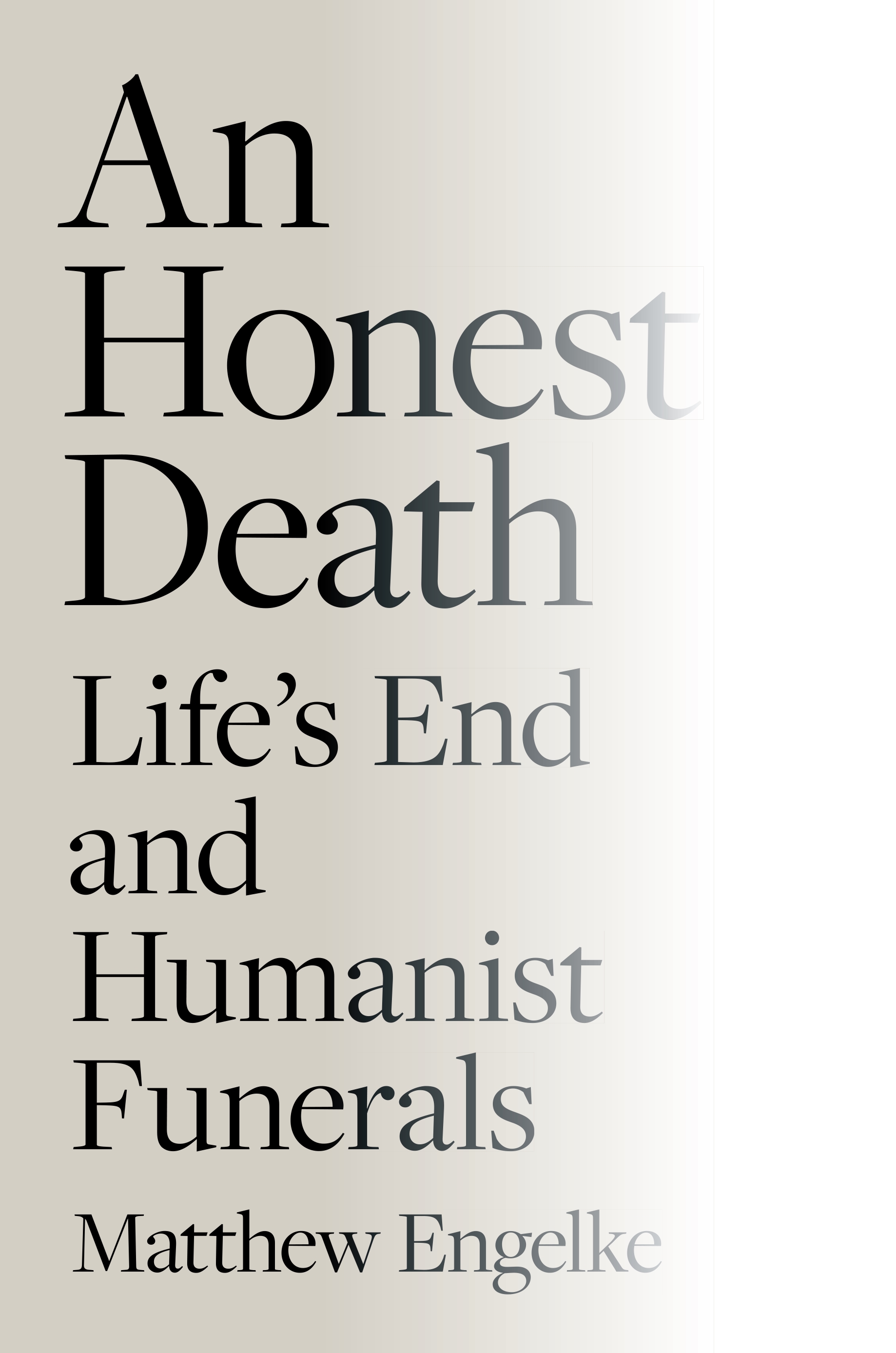
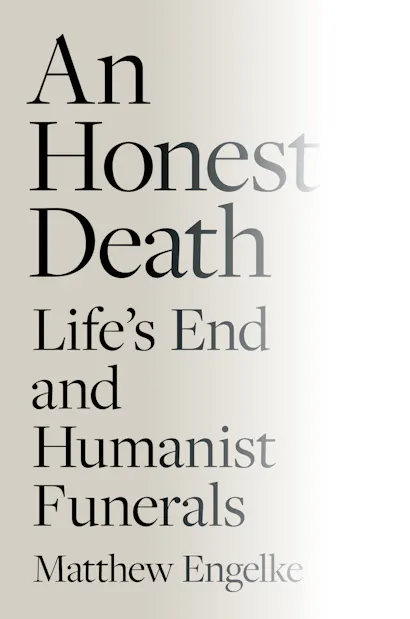
An Honest Death is an intimate and moving ethnographic account of funerals for people who don鈥檛 believe in God or an afterlife. Focusing on secular funeral celebrants of the British Humanist Association (now called Humanists UK), the book examines how their ritual work is geared toward helping realize a secular world. There is a strong ethical commitment behind this effort, which is to face death with honesty based on the belief that this life is all we have. For the humanist celebrants and those they serve, this is what allows for a life with meaning and purpose.
Written in a vivid style, the book centers on the lives and the funerals of particular people, from a three-year-old child to a man in his nineties. Anthropologist Matthew Engelke, who trained as a humanist celebrant as part of his research, describes how these officiants try to craft 鈥渟incere鈥� funerals, avoiding language and music that might suggest that the person who died had any religious beliefs. The book also captures the highs and lows for humanist celebrants of working in the funeral business鈥攁 business that is, for many of them, a kind of vocational calling.
Above all, An Honest Death draws out the tensions in secular humanist thought and practice between reason and the body, rationalism and materialism. Nothing matters more to the humanists than 鈥渄aring to know鈥� in the Enlightenment tradition, but nothing is so certainly known as the fact that we are finite and embodied creatures.
Matthew Engelke is professor and chair of the Department of Religion at Columbia University and previously taught for more than fifteen years at the London School of Economics and Political Science. He is a recipient of the Clifford Geertz Prize from the Society for the Anthropology of Religion and the Victor Turner Prize for Ethnographic Writing. His books include How to Think Like an Anthropologist.
“In death, Enlightenment ideals of reason and individual autonomy come up against the rock face of matter. Engelke explores what it means to bridge an impossible dualism, to live honestly with finitude, to be secular. This is a beautifully written, humane ethnography of a community struggling to die and therefore to live with its beliefs.”—Thomas W. Laqueur, author of The Work of the Dead: A Cultural History of Mortal Remains
“Engelke’s searching and elegant ethnography examines how the evolving secular humanist movement understands the finality of death as exactly that which gives life meaning. Although each of us will die, the Enlightenment yet lives. An Honest Death provides an unexpected balm in existential times, like a cup of good tea.”—Shannon Lee Dawdy, author of American Afterlives: Reinventing Death in the Twenty-First Century
“In this engaging book, Engelke invites his reader into the world of humanist funerals in the UK, where celebrants help the grieving face the passage between life and death without spiritual consolation. With a light theoretical touch, his compelling ethnography shows the persistence of ritual, symbol, and the tragic, even in a resolutely secular setting.”—Pamela E. Klassen, author of Blessed Events: Religion and Home Birth in America
“An Honest Death is a landmark study of secularity, both a richly textured account of humanist celebrants’ work with the dead and an incisive exploration of the tension between rationalism and materialism that defines the secular. In exceptionally clear and engaging prose, Matthew Engelke offers not only an essential ethnography of secular people but also a decisive argument for the critical importance of anthropology in studying the secular.”—Mayanthi Fernando, University of California, Santa Cruz
“Matthew Engelke’s fascinating study explores how members of the British Humanist Association, ardent partisans of the Enlightenment crusade against religion, seek to invent a contemporary funeral service compatible with their rigorously secular commitments—a form of anticeremonial ceremony. A work of great analytical subtlety and insight, An Honest Death traces the difficult labor of crafting a secular funeral, in all its rhetorical, bodily, and organizational dimensions, one that remains faithful to the Enlightenment values of autonomy, honesty, and sincerity, while simultaneously giving expression to the existential significance of death for human life. The result is a profound reflection on the contradictions and challenges of secularism as a way of life.”—Charles Hirschkind, University of California, Berkeley
This publication has been produced to meet accepted Accessibility standards and contains various accessibility features including concise image descriptions, a table of contents, a page list to navigate to pages corresponding to the print source version, and elements such as headings for structured navigation. Appearance of the text and page layout can be modified according to the capabilities of the reading system.
Accessibility Features
-
WCAG v2.2
-
WCAG level AA
-
Table of contents navigation
-
Single logical reading order
-
Short alternative textual descriptions
-
Print-equivalent page numbering
-
Landmark navigation
-
Index navigation
-
Epub Accessibility Specification 1.1
-
ARIA roles provided
-
All non-decorative content supports reading without sight
-
No known hazards or warnings