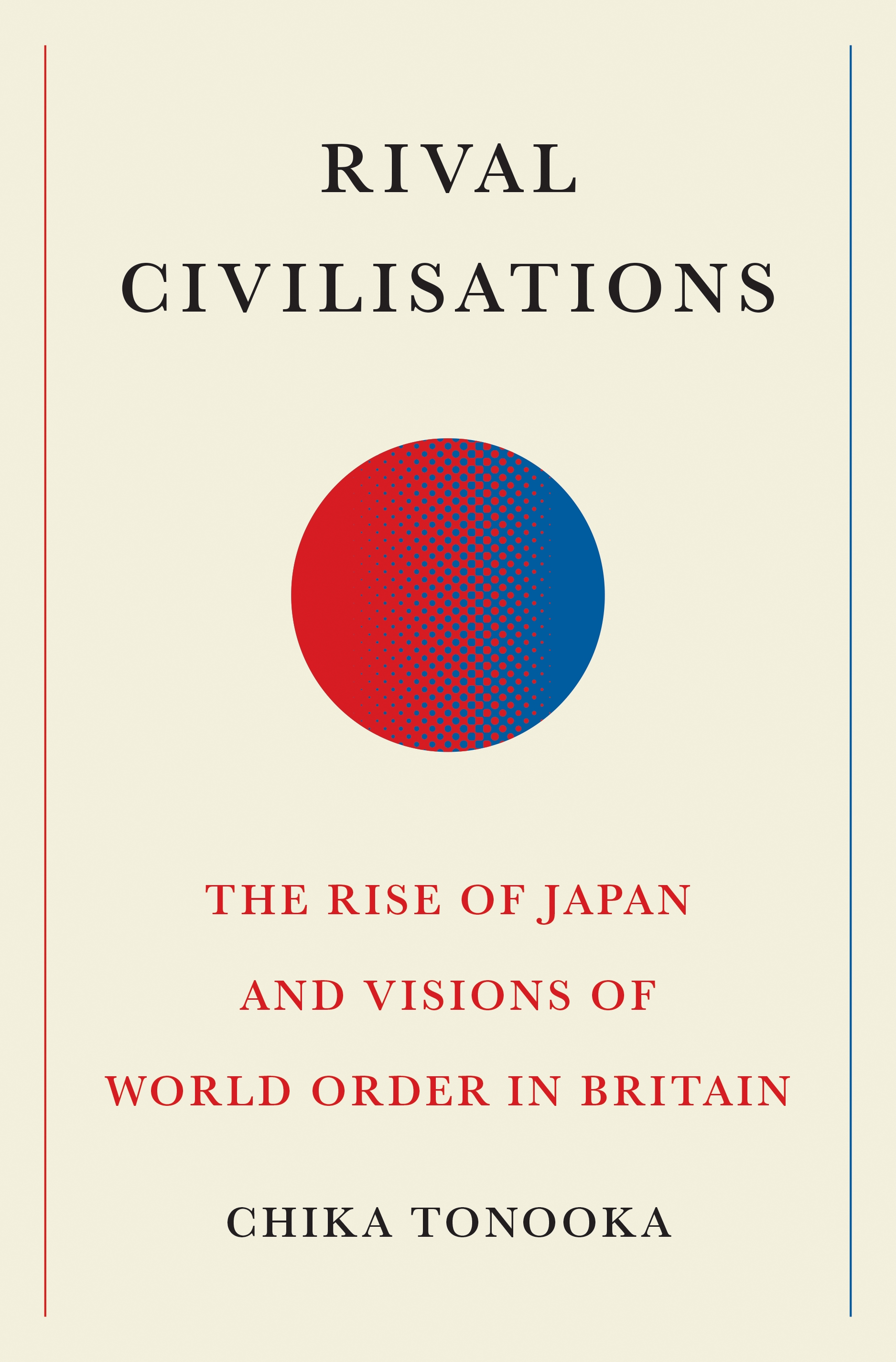
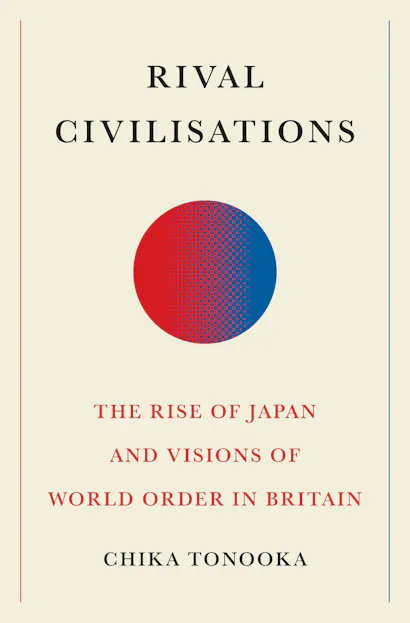
Most historians of nineteenth and twentieth century Europe point to the persistence of racialised and hierarchical views of non-Europeans as 鈥渦ncivilised.鈥� Yet these accounts overlook the profound intellectual impact of what contemporaries called the 鈥渁wakening of Asia.鈥� In Rival Civilisations, Chika Tonooka shows how the rise of Japan after 1905 compelled British intellectuals to rethink fundamental questions about world order and human difference. Juxtaposing Japanese and British sources, Tonooka offers an innovative history of British Eurocentrism鈥攊ts ebbs and flows and emergent pluralist alternatives鈥攖hrough the lens of British debates on Japan.
Tonooka describes how British intellectuals and commentators grappled with such issues as whether civilisation was singular or plural; whether the civilising mission in Asia might be more successfully undertaken as the 鈥測ellow man鈥檚 burden鈥�; whether non-Christians could be moral; and whether a world converging along Western lines was likely and even desirable. Even at the Empire鈥檚 peak, British thinkers began to grasp that Britain could no longer take its civilisational preeminence for granted. But Tonooka also considers what these debates on Japan missed, arguing that British civilisational discourse consistently overlooked what she demonstrates to be the paradoxical nature of global modernity. As a result, these British blind spots repeatedly foreclosed anticipations of critical world political challenges that lay ahead. Her original and rigorous analysis will enable readers to identify analogous blind spots over the rise of China and its consequences for the global order.
Chika Tonooka is director of studies in history and politics at Pembroke College, Cambridge, and an affiliated lecturer in the Faculty of History at the University of Cambridge.
“This is a major contribution, and one can easily see Rival Civilisations as a model that other scholars could follow with similar studies. The study is empirically rich and analytically ambitious. A particular strength is its global history framing. Every chapter adds fascinating aspects to the larger story.”—Sebastian Conrad, author of What Is Global History?
“Ambitious and brilliantly executed. Through her scrupulous study of British ideas of Japan, Tonooka touches upon the foundational questions of our understanding of the past. A significant scholarly contribution.”—Or Rosenboim, author of The Emergence of Globalism
“In this vital book, Chika Tonooka reminds us that how we think about world orders is intimately entangled with how we imagine disorder—and that these visions involved looking at friends, allies and rivals. Other societies function like mirrors for envisioning one’s own. In Rival Civilisations, we see the full mirror effects of an ascending Japan shaping an anxious, sunsetting British empire. The major thinkers of British imperialism at its zenith looked at Japan to rethink civilisation, world order, and their place in world history. This is a remarkable feat of global intellectual history.”—Jeremy Adelman, author of The Capitalist Era
“How can much-debated British international thought be reintegrated into a global and transimperial terrain? Chika Tonooka’s meticulous, virtuously restrained yet distinctly provocative study speaks directly to this urgent question. Her illuminating formulation of ‘rehistoricising Europe’ convincingly moves us to reimagine a unified framework to narrate Western and non-Western ideas in dialogue."—Tomohito Baji, University of Tokyo
“Tonooka does global history as it should be. Rather than simply ‘covering’ a part of the world outside the Western ‘core,’ she shows how encounters between Britain and a rising Japan compel a European society to rethink itself while inspiring global historians to ask new questions.”—Sheldon Garon, 快色直播 University
“Based on years of rigorous research, Chika Tonooka’s erudite, eloquent, and elegantly crafted study will reshape our understanding of the world order in the heyday of empire. She shows that Europe’s hegemony in the global order was considered rather fragile, as Western contemporaries, rather than indulging in fantasies of their own civilisational superiority, were increasingly anxious about Asia’s growing power. A magnificent feat of scholarship.” —David Motadel, London School of Economics
This publication has been produced to meet accepted Accessibility standards and contains various accessibility features including concise image descriptions, a table of contents, a page list to navigate to pages corresponding to the print source version, and elements such as headings for structured navigation. Appearance of the text and page layout can be modified according to the capabilities of the reading system.
Accessibility Features
-
WCAG v2.2
-
WCAG level AA
-
Table of contents navigation
-
Single logical reading order
-
Short alternative textual descriptions
-
Print-equivalent page numbering
-
Landmark navigation
-
Index navigation
-
Epub Accessibility Specification 1.1
-
ARIA roles provided
-
All non-decorative content supports reading without sight
-
No known hazards or warnings