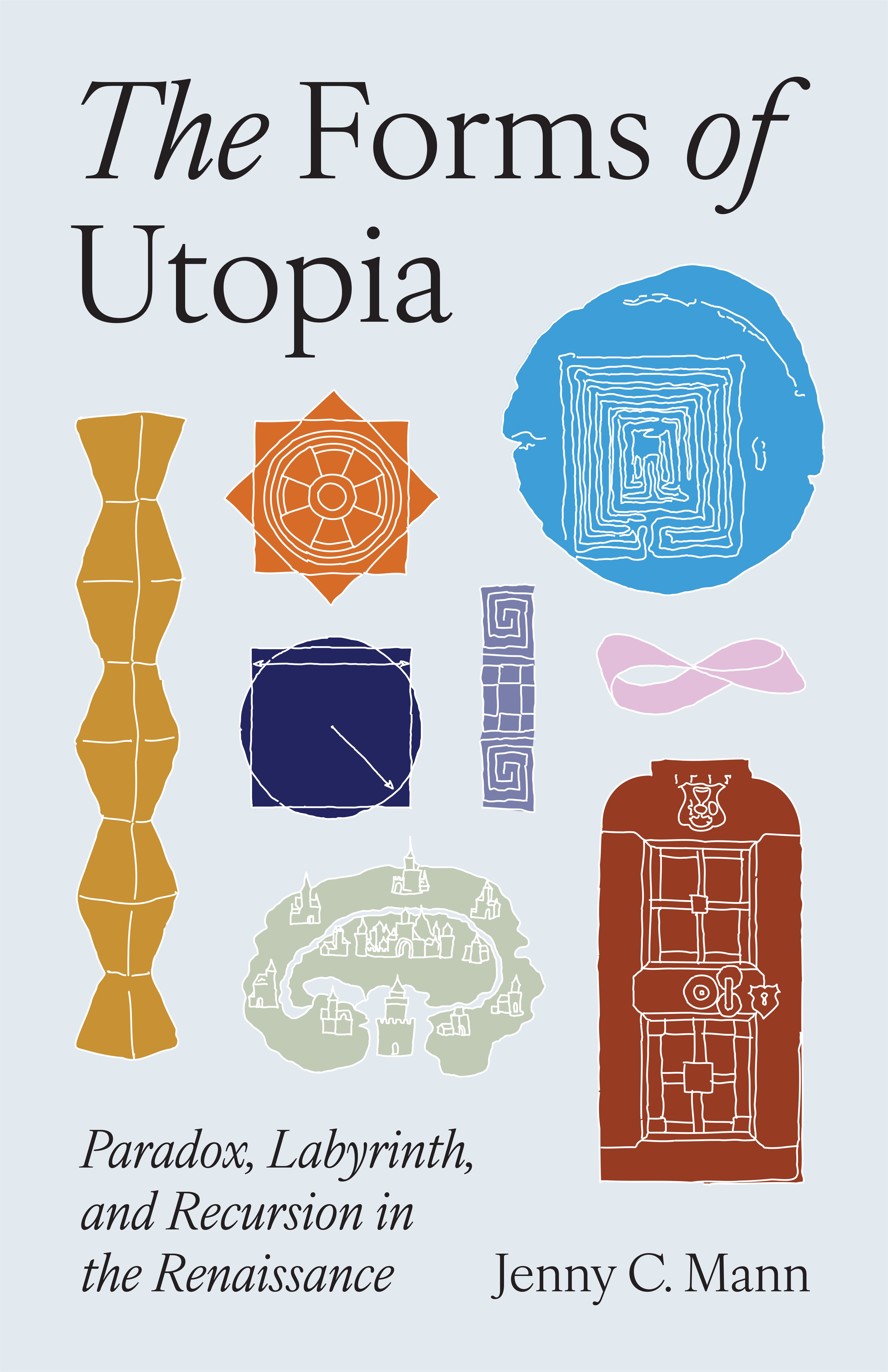
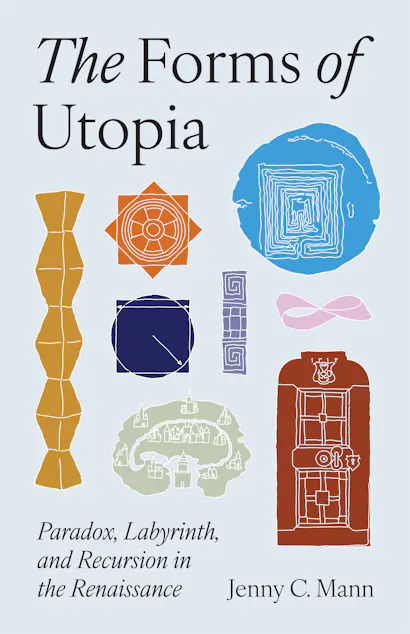
The Forms of Utopia: Paradox, Labyrinth, and Recursion in the Renaissance
Hardcover
Paperback
ebook (EPUB via app)
- Sale Price:
- $24.50/拢21.00
- Price:
-
$35.00/拢30.00 - ISBN:
- Published:
- Oct 27, 2026
- Copyright:
- 2026
- 17 b/w illus.
30% off with code PUP30
ebook (PDF via app)
-
Audio and ebooks (EPUB and PDF) purchased from this site must be accessed on the
快色直播 app. After purchasing, you will receive an email with
instructions to access your purchase.
About audio and ebooks - Request Exam Copy
In this ingenious and provocative book, Jenny Mann asks us to shift our understanding of utopia from its politics to its form. Beginning with Thomas More鈥檚 Utopia (1516), one of the most influential books of all time, Mann shows that utopia鈥檚 recursive patterns鈥攊ts frames, folds, knots, meanders, and turns鈥攅nable the perpetual invention of limitless artificial worlds.
Mann demonstrates how paradox, labyrinth, and recursion, in the hands of More, William Shakespeare, and Margaret Cavendish, become techniques of utopian invention. Drawing on concepts from logic and mathematics, including the Liar鈥檚 Paradox and the conundrum of squaring the circle, to make sense of utopia鈥檚 impossible geometries, she offers fresh and illuminating considerations of More鈥檚 Utopia, Shakespeare鈥檚 The Tempest, and Cavendish鈥檚 The Blazing World, each representing a different form of utopia. These sections are framed by interludes that feature an artwork or artifact鈥攁n intarsia-paneled door, a turf maze, a silver coin鈥攖hat materially expresses an element of utopia鈥檚 puzzling structure. To study utopia, she argues, we must enter its structure and follow the disorienting paths. Utopia works by transforming enclosed spaces鈥攁 book, a play鈥攊nto sites of infinite possibility.
