Must the Sun Set in the West? Japan鈥檚 Stunted Democracy and the American Liberal Hegemony
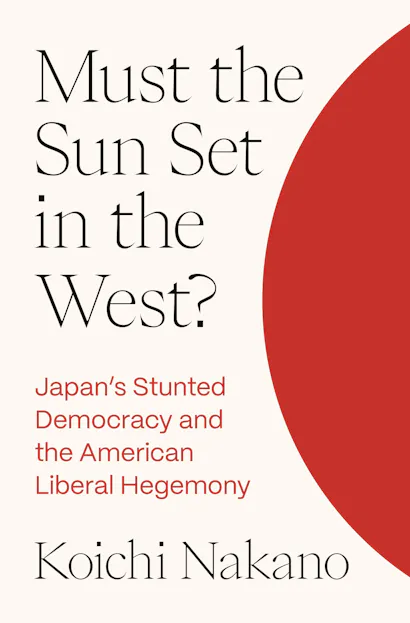
Hardcover
ebook (EPUB via app)
- Sale Price:
- $24.50/拢21.00
- Price:
-
$35.00/拢30.00 - ISBN:
- Published:
- Jan 26, 2027
- Copyright:
- 2027
- 2 tables.
30% off with code PUP30
ebook (PDF via app)
-
Audio and ebooks (EPUB and PDF) purchased from this site must be accessed on the
快色直播 app. After purchasing, you will receive an email with
instructions to access your purchase.
About audio and ebooks - Request Exam Copy
Japan鈥檚 historic pursuit of a full membership in 鈥渢he West鈥� may finally be close to fruition鈥攅ven as the value of such membership seems greatly diminished. In Must the Sun Set in the West?, Koichi Nakano argues that, despite the common understanding that postwar Japan became a democracy thanks to the benevolent patronage of the United States, American interference actually stunted Japanese democracy. Tracing the interplay between American liberal hegemonic projection in East Asia and Japan鈥檚 efforts to achieve full-fledged Western status, Nakano examines the racist (and sexist) roots of the elitist theory of democracy propagated by the American political and academic establishments and its impact on postwar Japan.
Nakano traces the evolution of the elitist project through its various stages鈥攍iberal-internationalist 鈥渞ace development,鈥� anticommunist/liberal 鈥渕odernization theory,鈥� and neoliberal-globalist 鈥渄emocracy assistance.鈥� He argues that Japan, by virtue of its ambiguous position as almost Western (but not really Western), offers a unique vantage point for analyzing the Western hegemonic strategy. He first examines the encounter between American hegemonic projection and Japan鈥檚 imperialist modernization before World War II, when the American elite granted Japan an 鈥渉onorary white鈥� status. He then turns to the postwar period, examining the ways that democracy in Japan collided with the American hegemonic agenda. By revisiting the white supremacist roots of the elitist theory that equates democracy with an elite-pluralist procedure to create strong leadership鈥攚hich, he points out, is still dominant in political science today鈥擭akano sheds light on the hidden liberal provenance of contemporary democratic backsliding.
