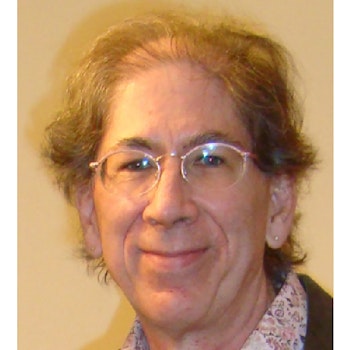
A complete history of Central Eurasia from ancient times to the present day, Empires of the Silk Road presents a fundamental rethinking of the origins, history, and significance of this major world region. In this new edition, which draws on the most recent evidence, Christopher I. Beckwith describes the rise and fall of the great Central Eurasian empires, including those of the Scythians, Attila the Hun, the Turks and Tibetans, and Genghis Khan and the Mongols. He explains why Central Eurasia led the world economically, scientifically, and artistically for many centuries despite invasions by Persians, Greeks, Arabs, Chinese, and others.
Beckwith recounts the Indo-Europeans鈥� migration out of Central Eurasia, their mixture with local peoples, and the resulting development of the Graeco-Roman, Persian, Indian, and Chinese civilizations; he details the basis for the thriving economy of premodern Central Eurasia, the economy’s disintegration following the region’s partition by the Chinese and Russians in the eighteenth and nineteenth centuries, and the damaging of Central Eurasian culture by Modernism; and he discusses the significance for world history of the partial reemergence of Central Eurasian nations after the collapse of the Soviet Union.
Placing the region within the framework of world history, Beckwith provides a new understanding of Central Eurasian states and shows how their people revolutionized Eurasian civilization.
"[Beckwith] suggests in his recent book, Empires of the Silk Road, that 'the most crucial element' of societies all through Central Eurasia . . . was the 'sociopolitical-religious ideal of the heroic lord' and of a 'war band of his friends' that was attached to him and 'sworn to defend him to the death.' This idea, he suggests, affected the organization of early Islam as well as the structure of Tibetan Buddhist devotion. In fact, this 'shared political ideology across Eurasia,' Mr. Beckwith suggests, 'ensured nearly constant warfare.' The region's history is a history of competing empires; trade became part of what was later called the Great Game."鈥擡dward Rothstein, New York Times
"This is no mere survey. Beckwith systematically demolishes the almost universal presumption that the peoples and powers of Inner Asia were typically predatory raiders, and thus supplied themselves by extracting loot and tribute from more settled populations. . . . With his work, there is finally a fitting counterpart to Peter B. Golden's magnificently comprehensive An Introduction to the History of the Turkic Peoples: Ethnogenesis and State Formation in Medieval and Early Modern Eurasia and the Middle East, based on Arabic, Hebrew, Persian, Greek, Latin, and European medieval sources. By reading just two books anyone can now sort out Charlemagne's Avar Ring, the Golden Horde, modern Kazakhs and Uzbeks, ancient Scyths, Borodin's Polovtsian dances (they were Cumans), present-day Turks, Seljuks, Ottomans, early Turks, and Bulghars and Bulgarians, among many less familiar states or nations."鈥擡dward Luttwak, New Republic
"In the process of illuminating this essential piece of the human past, Beckwick constructs a scrupulously researched narrative that is wholly accessible, and demands close attention."鈥擭icholas Basbanes, Fine 快色直播 & Collections
"Erudite and iconoclastic, [Empires of the Silk Road] provides a wealth of new ideas, perspectives, and information about the political and other formations that flourished in that large portion of the world known as Central Eurasia. . . . [A] major contribution to Central Eurasian and world history."鈥擭icola Di Cosmo, Journal of Global History
"This volume is certain to provoke lively discussion across the field."鈥擲cott C. Levi, American Historical Review
"This book demands our attention and will stimulate interest and debate in many circles. The author is to be congratulated on a book that is both thoughtful and provocative in its call for a reassessment of Central Eurasia and its role in world history."鈥擬ichael R. Drompp, Journal of Asian Studies
"A must read for students of world history."鈥擱ichard Foltz, Journal of World History
"Beckwith is the first to have carried off the feat of actually writing a history of this whole expanse of time and space in a way stimulating enough to make the reader think about it from start to finish."鈥擳. H. Barrett, Bulletin of the School of Oriental and African Studies
"The result of a lifetime's work on Central Asia and a complete overturning of many of our preconceptions. . . . Essential."鈥擧ugh Andrew, Glasgow Herald
"Beckwith's arguments are persuasive, and backed by considerable empirical evidence. He is scrupulous about noting where the evidence is murky and noting where further research is needed. Beckwith provides an interesting Central Eurasian perspective on world history. . . . Empires of the Silk Road is work that any scholar who seeks to write about Central Eurasia will need to address closely. It is a benchmark—indeed a high one—for Central Eurasian, and indeed, world history."鈥擳homas D. Hall, Cliodynamics
"Empires of the Silk Road is a major scholarly achievement. This is the first book to provide a comprehensive account of the history of Central Eurasia from the Bronze Age to the present. But it is much more than a simple narrative of events in what is arguably the most important region for the development of civilization during the past four or five millennia. It is an intellectually ambitious undertaking that attempts to account for essential transformations in the cultural, economic, and political life of societies situated both within the Central Eurasian heartland and on its periphery. Beckwith achieves the radical feat of demonstrating how Central Eurasia is actually key for understanding the dynamics of human history and progress throughout antiquity, the medieval period, and the recent past. Above all, and for the first time, he convincingly shows that Central Eurasia was not a sump of poverty-stricken, unremittingly vicious subhumans, but a wellspring of vibrant, energetic, resourceful, enterprising peoples who facilitated communication and change in all directions. In other words, Beckwith turns conventional wisdom on its head and makes Central Eurasia the core of human history, rather than the embarrassing backwater which it is usually portrayed as. Perhaps his greatest contribution is in the powerful, sustained epilogue, where he shatters a whole galaxy of misconceptions about the dreaded 'barbarians.'"—Victor H. Mair, University of Pennsylvania
"Ambitious, provocative, and bristling with new ideas, Empires of the Silk Road will set off sparks. The book's clearly articulated themes are lively and stimulating, and Beckwith's integration of European, Central Asian, and East Asian materials makes this a major work in Eurasian and world history. In range and depth, this readable book is quite unlike any other."—Peter B. Golden, Rutgers University