The Forgotten Pollinators
-
Illustrated by
- Paul Mirocha

Paperback
ebook (EPUB via app)
- Sale Price:
- $28.70/拢24.50
- Price:
-
$41.00/拢35.00 - ISBN:
- Published:
- Jun 22, 2012
- Copyright:
- 1996
- Size:
- 6 x 9 in.
30% off with code PUP30
ebook (PDF via app)
- Sale Price:
- $28.70/拢24.50
- Price:
-
$41.00/拢35.00 - ISBN:
- Published:
- Jun 22, 2012
- Copyright:
- 1996
- Size:
- 6 x 9 in.
30% off with code PUP30
-
Audio and ebooks (EPUB and PDF) purchased from this site must be accessed on the
快色直播 app. After purchasing, you will receive an email with
instructions to access your purchase.
About audio and ebooks - Request Exam Copy
Consider this: Without interaction between animals and flowering plants, the seeds and fruits that make up nearly eighty percent of the human diet would not exist.
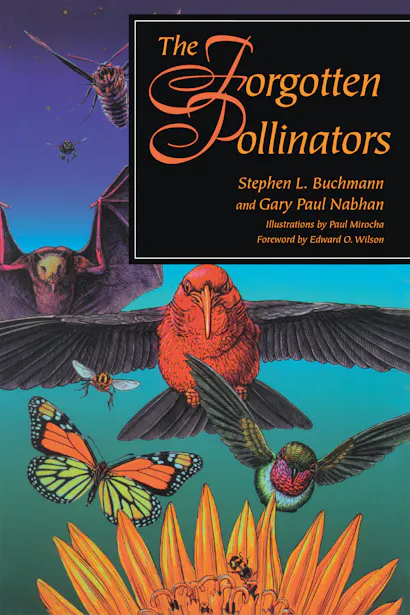
In The Forgotten Pollinators, Stephen L. Buchmann, one of the world’s leading authorities on bees and pollination, and Gary Paul Nabhan, award-winning writer and renowned crop ecologist, explore the vital but little-appreciated relationship between plants and the animals they depend on for reproduction — bees, beetles, butterflies, hummingbirds, moths, bats, and countless other animals, some widely recognized and other almost unknown.
Scenes from around the globe — examining island flora and fauna on the Galapagos, counting bees in the Panamanian rain forest, witnessing an ancient honey-hunting ritual in Malaysia — bring to life the hidden relationships between plants and animals, and demonstrate the ways in which human society affects and is affected by those relationships. Buchmann and Nabhan combine vignettes from the field with expository discussions of ecology, botany, and crop science to present a lively and fascinating account of the ecological and cultural context of plant-pollinator relationships.
More than any other natural process, plant-pollinator relationships offer vivid examples of the connections between endangered species and threatened habitats. The authors explain how human-induced changes in pollinator populations — caused by overuse of chemical pesticides, unbridled development, and conversion of natural areas into monocultural cropland-can have a ripple effect on disparate species, ultimately leading to a 鈥渃ascade of linked extinctions.鈥�