A Guide to Planning for Community Character

ebook (EPUB via app)
- Sale Price:
- $33.60/拢28.00
- Price:
-
$48.00/拢40.00 - ISBN:
- Published:
- Sep 26, 2012
- Copyright:
- 2011
- Size:
- 8.5 x 10 in.
- 220 photos and illustrations
30% off with code PUP30
ebook (PDF via app)
- Sale Price:
- $33.60/拢28.00
- Price:
-
$48.00/拢40.00 - ISBN:
- Published:
- Sep 26, 2012
- Copyright:
- 2011
- Size:
- 8.5 x 10 in.
- 220 photos and illustrations
30% off with code PUP30
-
Audio and ebooks (EPUB and PDF) purchased from this site must be accessed on the
快色直播 app. After purchasing, you will receive an email with
instructions to access your purchase.
About audio and ebooks - Request Exam Copy
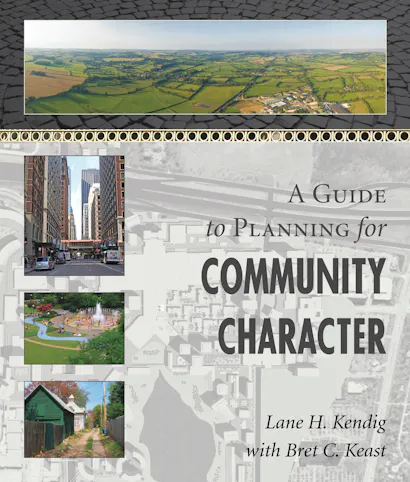
A Guide to Planning for Community Character adds a wealth of practical applications to the framework that Lane Kendig describes in his previous book, Community Character. The purpose of the earlier book is to give citizens and planners a systematic way of thinking about the attributes of their communities and a common language to use for planning and zoning in a consistent and reliable way. This follow-up volume addresses actual design in the three general classes of communities in Kendig’s framework-urban, suburban, and rural.
The author’s practical approaches enable designers to create communities 鈥渨ith the character that citizens actually want.鈥� Kendig also provides a guide for incorporating community character into a comprehensive plan. In addition, this book shows how to use community character in planning and zoning as a way of making communities more sustainable. All examples in the volume are designed to meet real-world challenges. They show how to design a community so that the desired character is actually achieved in the built result. The book also provides useful tools for analyzing or measuring relevant design features.
Together, the books provide a comprehensive treatment of community character, offering both a tested theory of planning based on visual and physical character and practical ways to plan and measure communities. The strength of this comprehensive approach is that it is ultimately less rigid and more adaptable than many recent 鈥渇lexible鈥� zoning codes.