Noninvasive Survey Methods for Carnivores

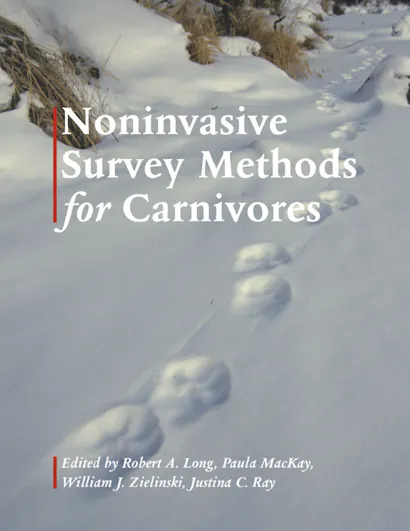
Paperback
ebook (EPUB via app)
- Sale Price:
- $42.70/拢35.00
- Price:
-
$61.00/拢50.00 - ISBN:
- Published:
- Sep 26, 2012
- Copyright:
- 2008
30% off with code PUP30
ebook (PDF via app)
- Sale Price:
- $42.70/拢35.00
- Price:
-
$61.00/拢50.00 - ISBN:
- Published:
- Sep 26, 2012
- Copyright:
- 2008
30% off with code PUP30
-
Audio and ebooks (EPUB and PDF) purchased from this site must be accessed on the
快色直播 app. After purchasing, you will receive an email with
instructions to access your purchase.
About audio and ebooks - Request Exam Copy
The status of many carnivore populations is of growing concern to scientists and conservationists, making the need for data pertaining to carnivore distribution, abundance, and habitat use ever more pressing. Recent developments in 鈥渘oninvasive鈥� research techniques鈥攖hose that minimize disturbance to the animal being studied鈥攈ave resulted in a greatly expanded toolbox for the wildlife practitioner.
Presented in a straightforward and readable style, Noninvasive Survey Methods for Carnivores is a comprehensive guide for wildlife researchers who seek to conduct carnivore surveys using the most up-to-date scientific approaches. Twenty-five experts from throughout North America discuss strategies for implementing surveys across a broad range of habitats, providing input on survey design, sample collection, DNA and endocrine analyses, and data analysis. Photographs from the field, line drawings, and detailed case studies further illustrate on-the-ground application of the survey methods discussed.
Coupled with cutting-edge laboratory and statistical techniques, which are also described in the book, noninvasive survey methods are effi cient and effective tools for sampling carnivore populations. Noninvasive Survey Methods for Carnivores allows practitioners to carefully evaluate a diversity of detection methods and to develop protocols specific to their survey objectives, study area, and species of interest. It is an essential resource for anyone interested in the study of carnivores, from scientists engaged in primary research to agencies or organizations requiring carnivore detection data to develop management or conservation plans.