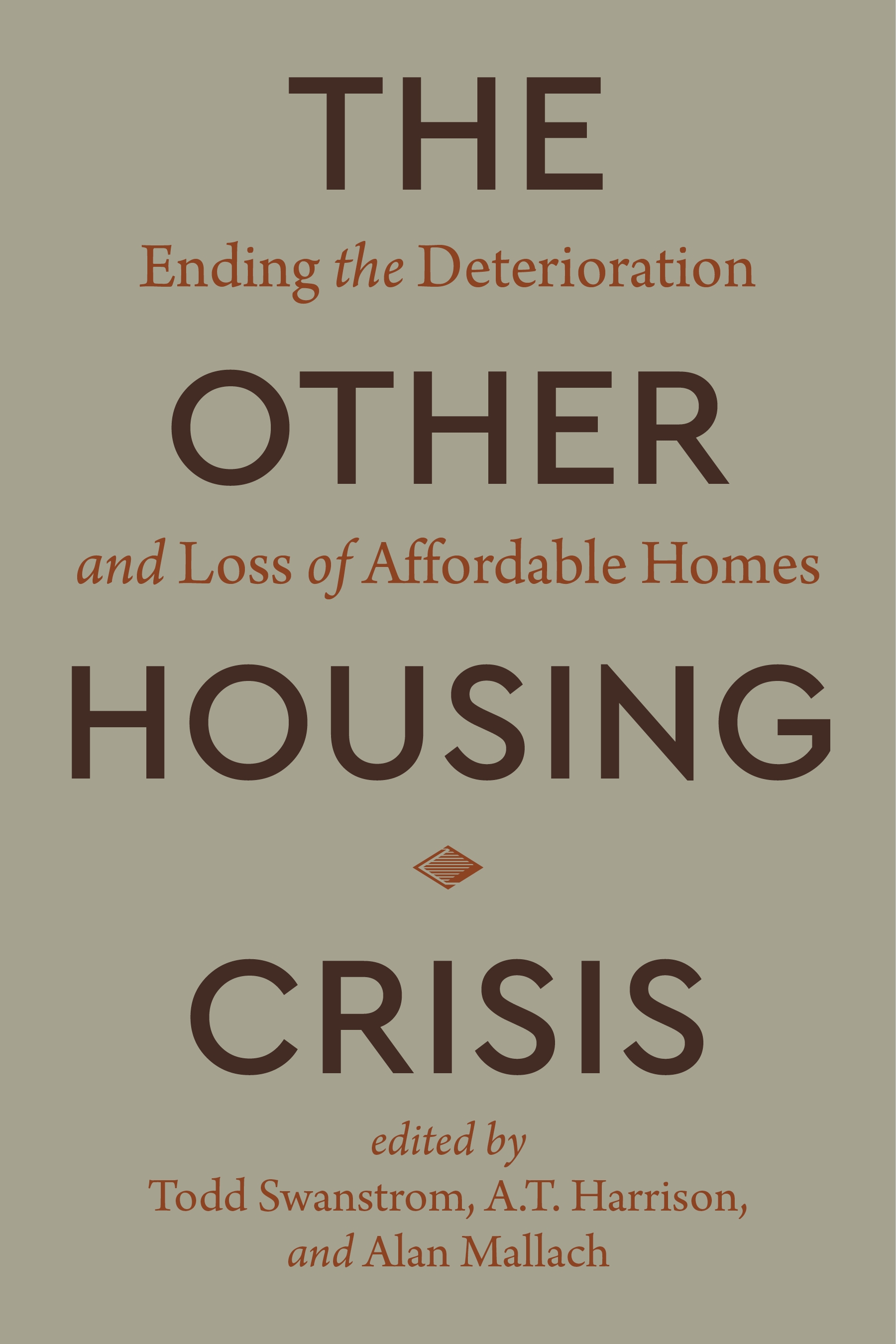
The Other Housing Crisis: Ending the Deterioration and Loss of Affordable Homes
Why fixing America鈥檚 housing crisis requires repairing older homes鈥攁nd not just building new ones

Hardcover
Paperback
ebook (EPUB via app)
- Sale Price:
- $22.40/拢19.60
- Price:
-
$32.00/拢28.00 - ISBN:
- Published:
- Aug 25, 2026
- Copyright:
- 2026
- 16 b/w illus. 28 tables.
30% off with code PUP30
ebook (PDF via app)
-
Audio and ebooks (EPUB and PDF) purchased from this site must be accessed on the
快色直播 app. After purchasing, you will receive an email with
instructions to access your purchase.
About audio and ebooks - Request Exam Copy
The United States is in the throes of a housing crisis, framed by the media as a crisis of affordability. People pay too much for housing鈥攁nd the solution, it seems, is to increase the supply to drive down the cost. But the national conversation on housing affordability ignores the issue of housing quality. Most people find affordable housing not through public subsidies but by purchasing or renting older housing in the private market. For older housing to be affordable, it is almost always in disrepair and/or is in a disinvested neighborhood with low market values. Little noticed by the media, millions of American homeowners and renters live in unsafe and unhealthy housing.
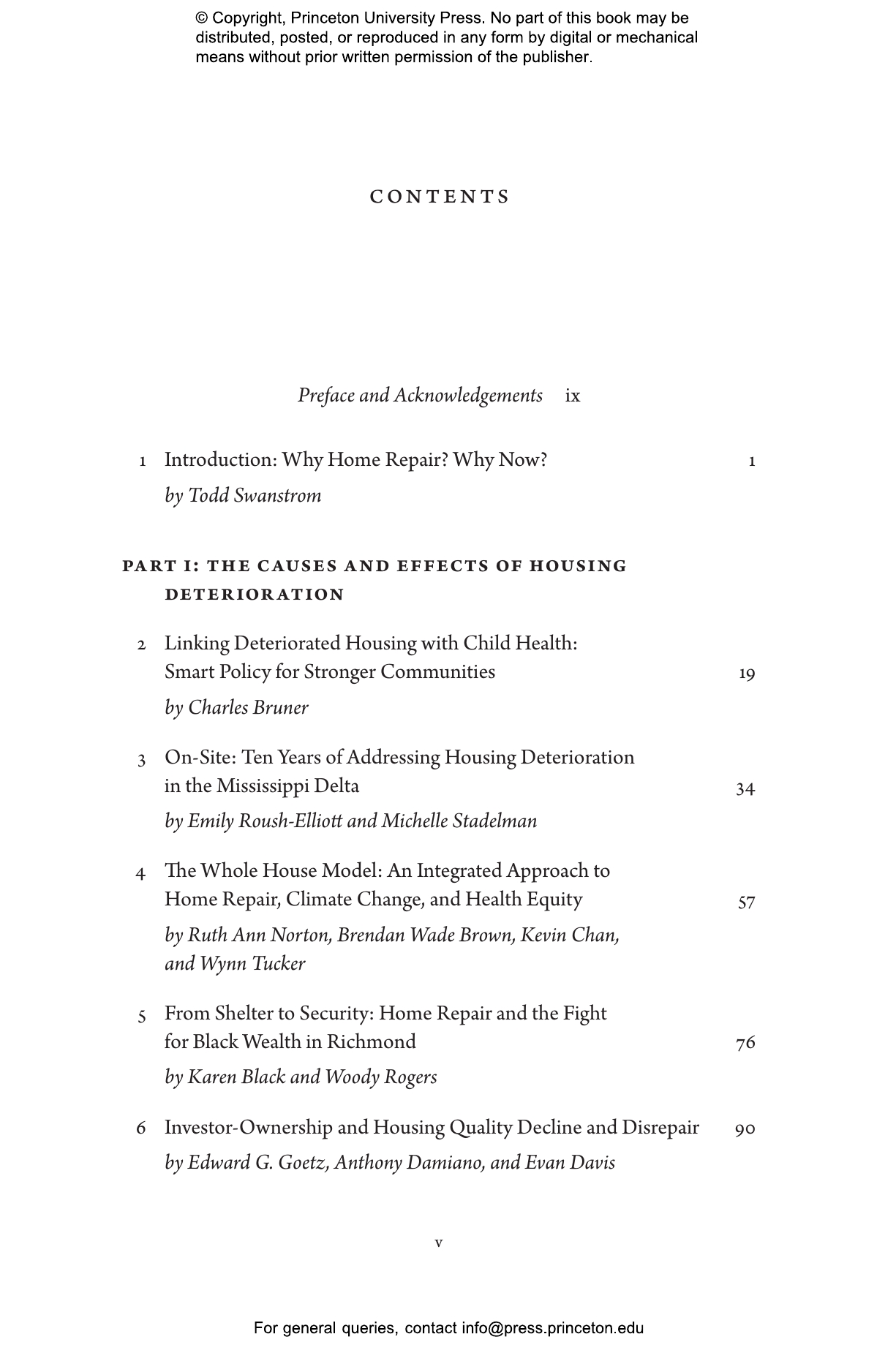
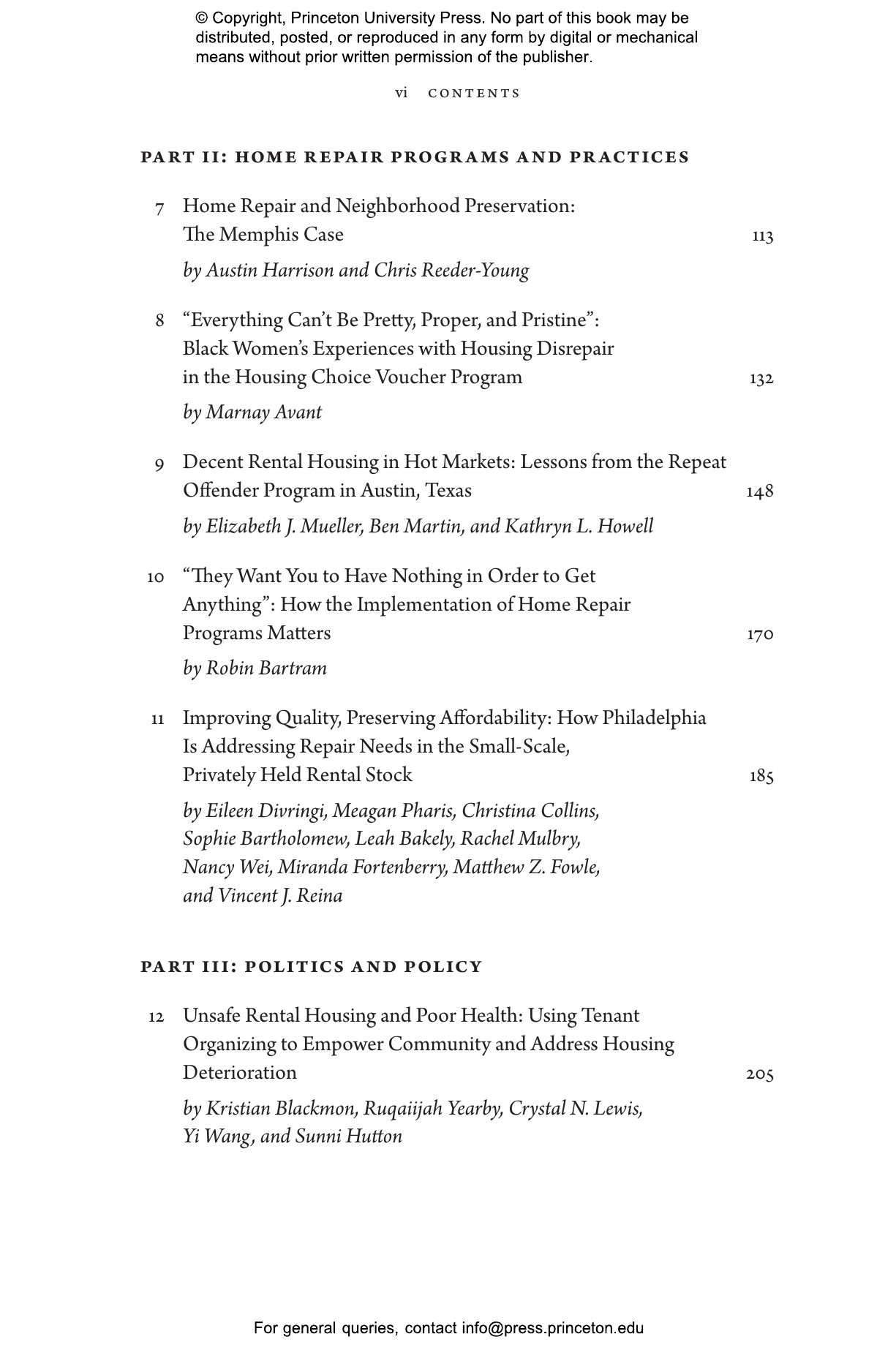
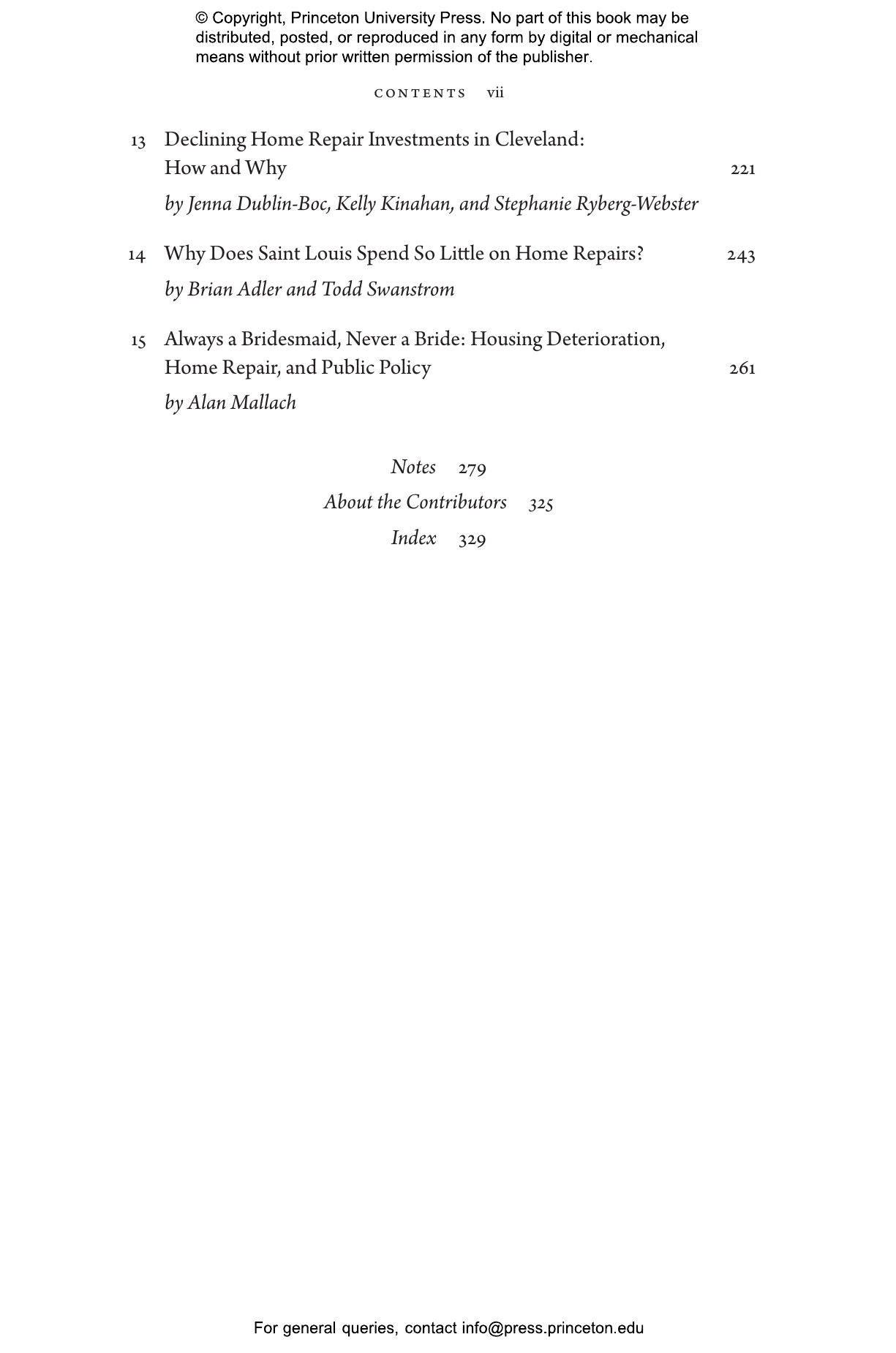
The Other Housing Crisis brings attention to the neglected issue of housing deterioration and makes the case for more investment in home repairs. Contributions by expert researchers and experienced practitioners examine how housing deterioration harms the physical, mental, and financial health of residents and damages the environment. Chapters highlight innovative home repair programs in cities across the country鈥攆rom Austin to Memphis to Philadelphia.
The analysis and recommendations in The Other Housing Crisis will help policymakers and practitioners to curb the loss of affordable housing and place housing deterioration and home repair squarely on the national policy agenda. Addressing America鈥檚 housing crisis is not a matter of either increasing the supply of housing or preserving existing housing. We need to do both鈥攏ow.
