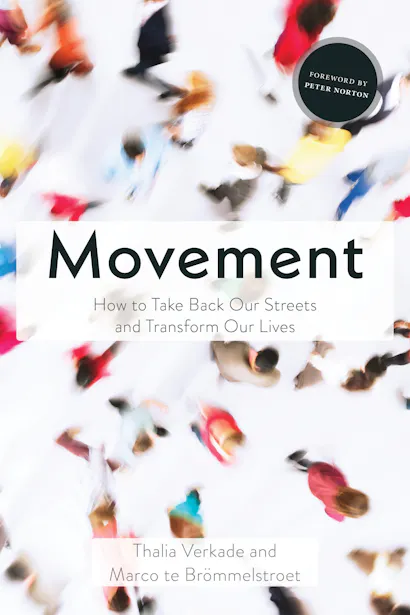
Movement: How to Take Back Our Streets and Transform Our Lives
-
Foreword by
- Peter Norton

Paperback
ebook (EPUB via app)
- Sale Price:
- $24.50
- Price:
-
$35.00 - ISBN:
- Published:
- May 2, 2024
- Copyright:
- 2024
30% off with code PUP30
ebook (PDF via app)
- Sale Price:
- $24.50
- Price:
-
$35.00 - ISBN:
- Published:
- May 2, 2024
- Copyright:
- 2024
30% off with code PUP30
- For sale only in the United States, US Dependencies, and Canada
-
Audio and ebooks (EPUB and PDF) purchased from this site must be accessed on the
快色直播 app. After purchasing, you will receive an email with
instructions to access your purchase.
About audio and ebooks - Request Exam Copy
鈥淭his book will鈥攏o question鈥攎ake you think in new ways. Why have we surrendered our cities to cars? What might it be like to inhabit a space designed for people instead? It鈥檚 exciting and hopeful鈥攖his we can do!鈥�
鈥擝ill McKibben, author of The Flag, The Cross, and the Station Wagon
Almost everywhere in the world, streets are designed for travel at the highest speed, giving precedence to the chunkiest vehicles. We take for granted that the streets outside of our homes are designed only for movement from one point to another. But what happens if we radically rethink how we use these public spaces? Could we change our lives for the better?
In Movement: How to Take Back Our Streets and Transform Our Lives, journalist Thalia Verkade and mobility expert (鈥渢he cycling professor鈥�) Marco te Br枚mmelstroet take a three-year shared journey of discovery into the possibilities of our streets. They investigate and question the choices and mechanisms underpinning how these public spaces are designed and look at how they could be different. Verkade and te Br枚mmelstroet draw inspiration from the Netherlands and look at what other countries are doing, and could do, to diversify how they use their streets and make them safer.
During the pandemic, decision-makers in cities around the world were confronted with the questions of who our streets belong to, how we want to use them, and who gets to decide. Making our communities safer, cleaner, and greener starts with asking these fundamental questions. To truly transform mobility, we need to look far beyond the technical aspects and put people at the center of urban design. Movement will change the way that you view our streets.