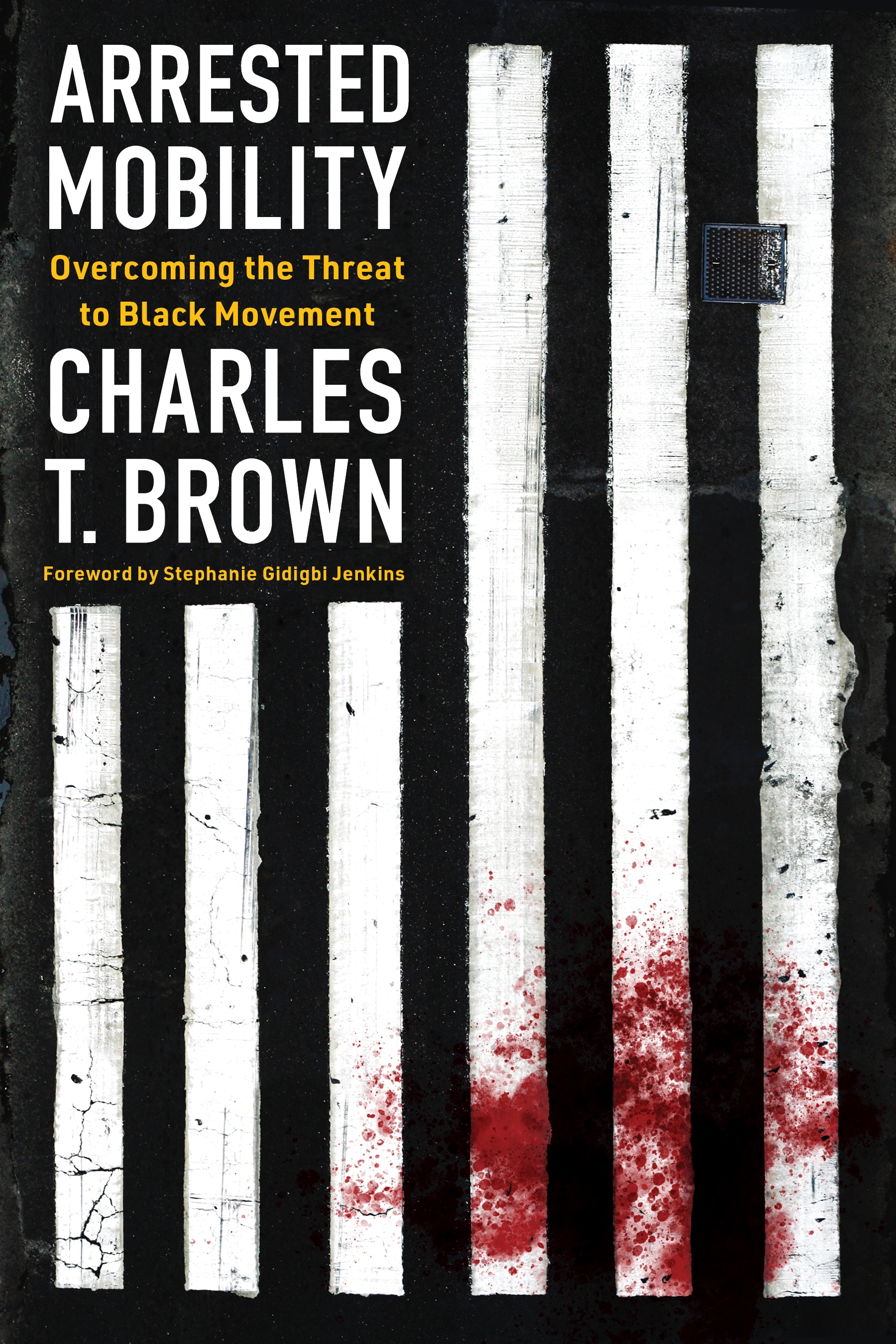
Arrested Mobility: Overcoming the Threat to Black Movement
-
Foreword by
- Stephanie Gidigbi Jenkins

Paperback
ebook (EPUB via app)
- Sale Price:
- $23.80/拢19.60
- Price:
-
$34.00/拢28.00 - ISBN:
- Published:
- May 15, 2025
- Copyright:
- 2025
- Black-and-white images.
30% off with code PUP30
ebook (PDF via app)
- Sale Price:
- $23.80/拢19.60
- Price:
-
$34.00/拢28.00 - ISBN:
- Published:
- May 15, 2025
- Copyright:
- 2025
- Black-and-white images.
30% off with code PUP30
-
Audio and ebooks (EPUB and PDF) purchased from this site must be accessed on the
快色直播 app. After purchasing, you will receive an email with
instructions to access your purchase.
About audio and ebooks - Request Exam Copy
In the US, police conduct millions of traffic stops for reasons unrelated to safety. Study after study confirm that Black drivers experience higher rates of non-safety stops, searches, and use of force than White drivers.
In Arrested Mobility: Overcoming the Threat to Black Movement, Charles T. Brown, founder and CEO of Equitable Cities, examines why mobility is not afforded in the same way to everyone. He argues that the legacy of structural racism and White supremacy has led to disinvestment and over-policing in Black communities and communities of color, thwarting opportunity, as physical mobility and social mobility are intrinsically linked. This experience for Black people around the world is what Brown refers to as arrested mobility.
Mobility embodies freedom and allows people, places, and cities to thrive. In the US, freedom鈥攕ynonymous with national identity鈥攊s so often represented by acts of movement such as walking, cycling, driving a car or traveling to a different city. However, for Black Americans, exercising freedom of mobility continues to mean confronting the harsh reality of White fear, fragility, and violence.
Understanding the causes of arrested mobility, will help us to develop solutions to increase mobility for Black people and other marginalized groups, Brown explains. The conditions society has created have their roots in what Brown calls 鈥淭he Four Ps鈥�: Polity, Policy, Planning, and Policing. He examines the four P鈥檚, drawing from research, his own experience and the experience of other Black Americans. Brown then suggests solutions, some of which are already being implemented in the US.
In Arrested Mobility, Brown shows how un-arresting mobility creates an opportunity not just for a better society for Black people, but for all people. Arrested mobility is detrimental to our society as a whole, not just the people it directly harms. By not providing equitable access to jobs, community resources, and public spaces, we are limiting the potential of a large percentage of our population to participate and contribute to society. Change is possible. We can un-arrest mobility together. Charles T. Brown shows us how.
