The Life-Scale Revolution in European Painting
A study of the radical transformation of scale in European painting 1300-1600

Hardcover
ebook (EPUB via app)
- Sale Price:
- $27.30/拢22.40
- Price:
-
$39.00/拢32.00 - ISBN:
- Published:
- Jan 19, 2027
- 127 b/w illus.
30% off with code PUP30
ebook (PDF via app)
-
Audio and ebooks (EPUB and PDF) purchased from this site must be accessed on the
快色直播 app. After purchasing, you will receive an email with
instructions to access your purchase.
About audio and ebooks - Request Exam Copy
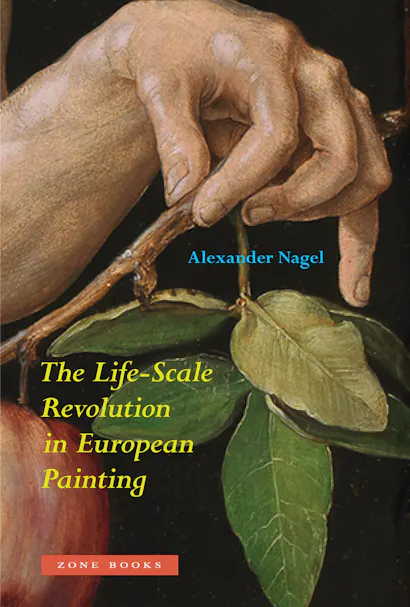
This brief book brings to light an unchronicled revolution in art 鈥� the 鈥渓ife-scale revolution,鈥� which was launched at the end of the fifteenth century, quickly took hold in the sixteenth century, and changed European painting forever. In place of the medieval and early Renaissance systems of scalable images, around 1500 European pictures began to present figures and settings at a scale congruent with the body and world of the viewer. A non-arbitrary scale鈥攍ife scale鈥攂ecame a new foundation for painting. All over Europe, painting of all kinds, from portraits and biblical and mythological subjects to genre scenes and still lifes, learned to engage viewers in a common language of life scale. This is not to say that from 1500 all paintings were made according to the new convention, but that life scale became a new standard with organizing force for painting generally, all the way through the nineteenth century.
Pictures at life scale are a generative paradox 鈥� self-proclaimed fictions in framed pictures, they nonetheless claim a continuity with the conditions of our perception of the world. Analyses of individual works by artists as diverse as Leonardo da Vinci, D眉rer, Raphael, Titian, Rubens, Reni, and Vel谩zquez explore the profound philosophical, anthropological, and social-political implications of the turn to life-scale painting. 鈥淎s-if鈥� pictorial extensions and warpings of our perceptual ecology, life-scale pictures offer parallel worlds. They model our interaction with the world, but they do so strangely, slowing us down, turning perception into performance and self-reflection, prompting intuitions about how inhabiting the world in and through our bodies shapes our relation to each other and to our environment. Life-scale pictures addressed individual viewers, but in generalized form, now as representative members of what would eventually be called a 鈥減ublic.鈥�