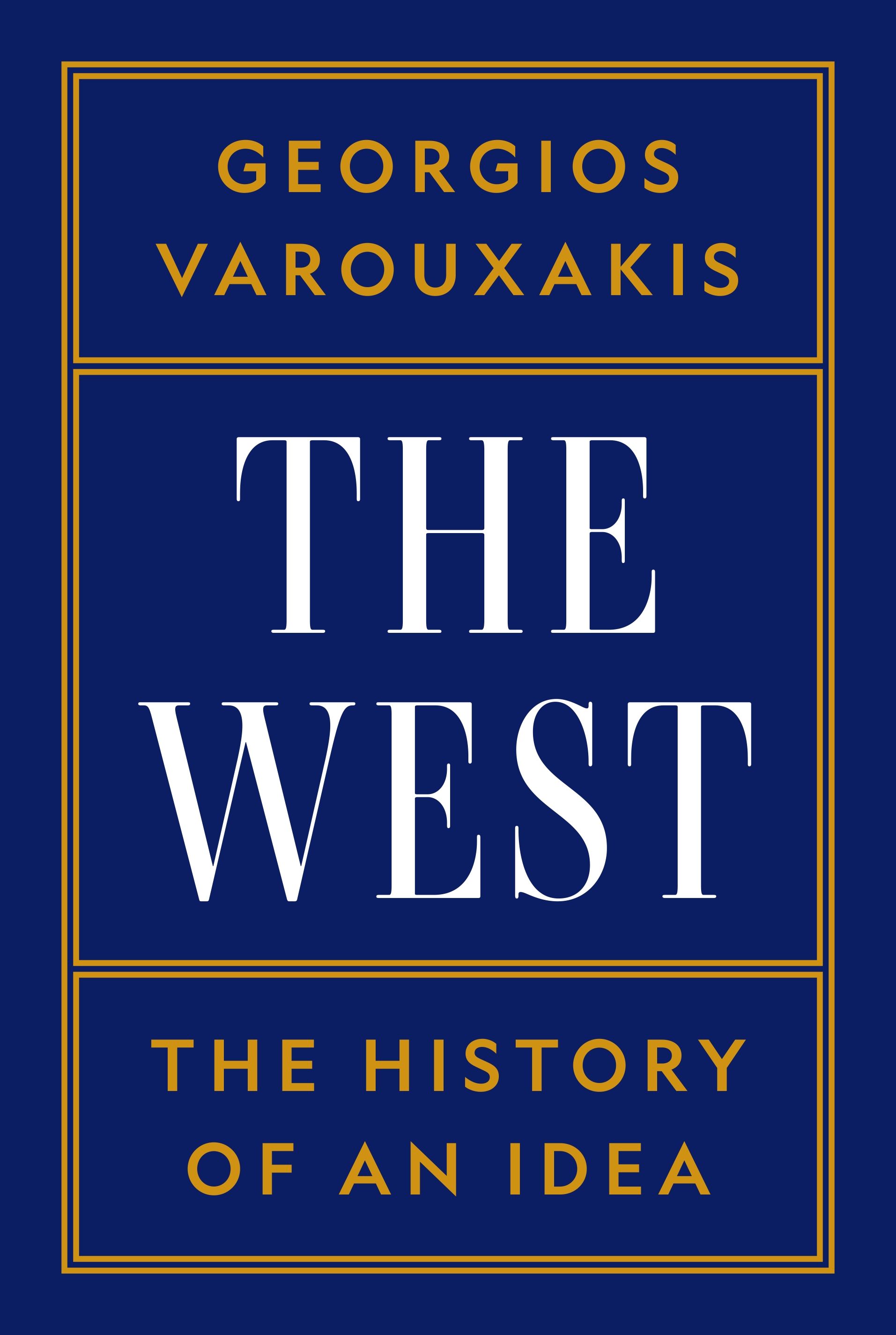
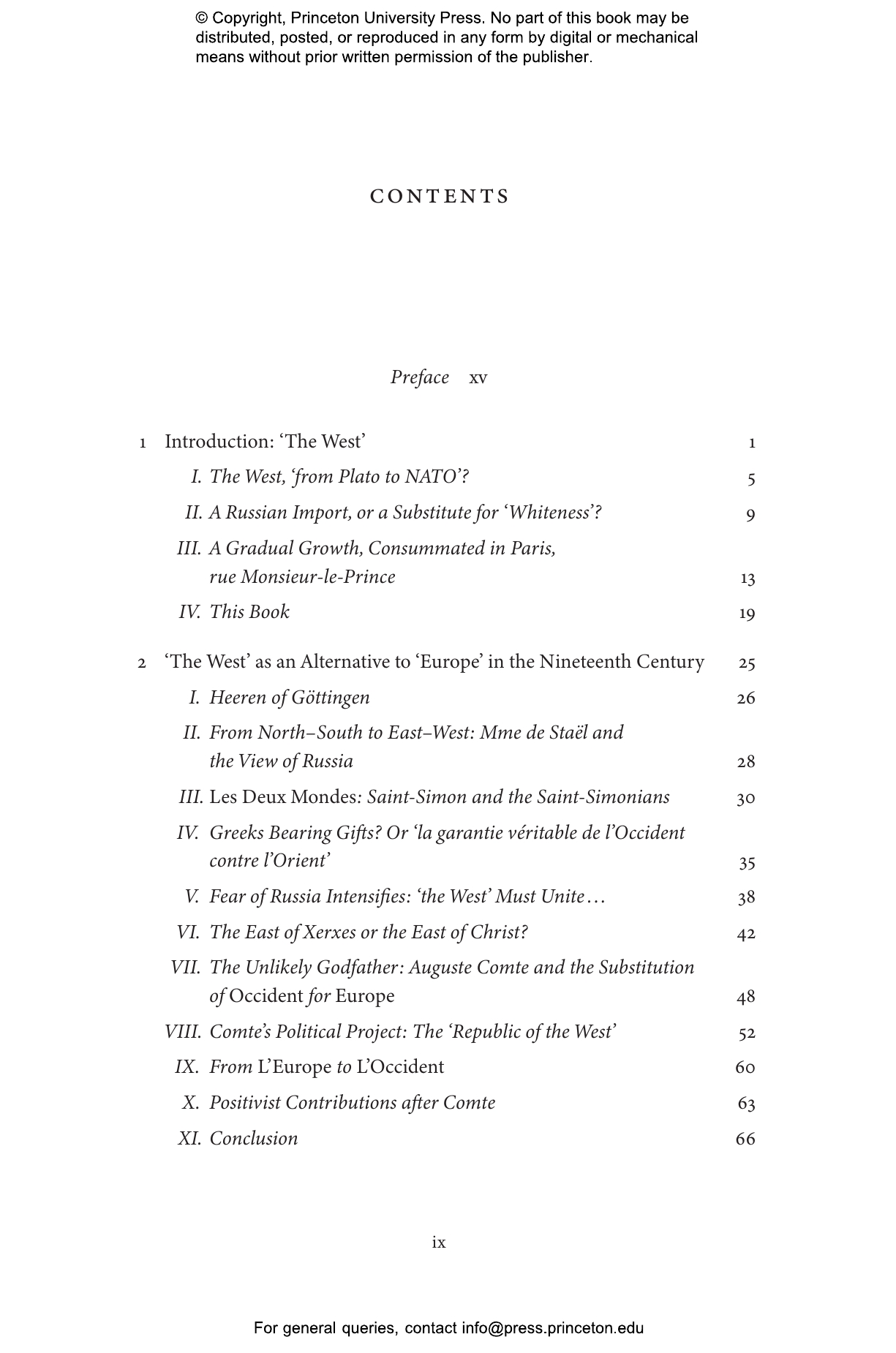
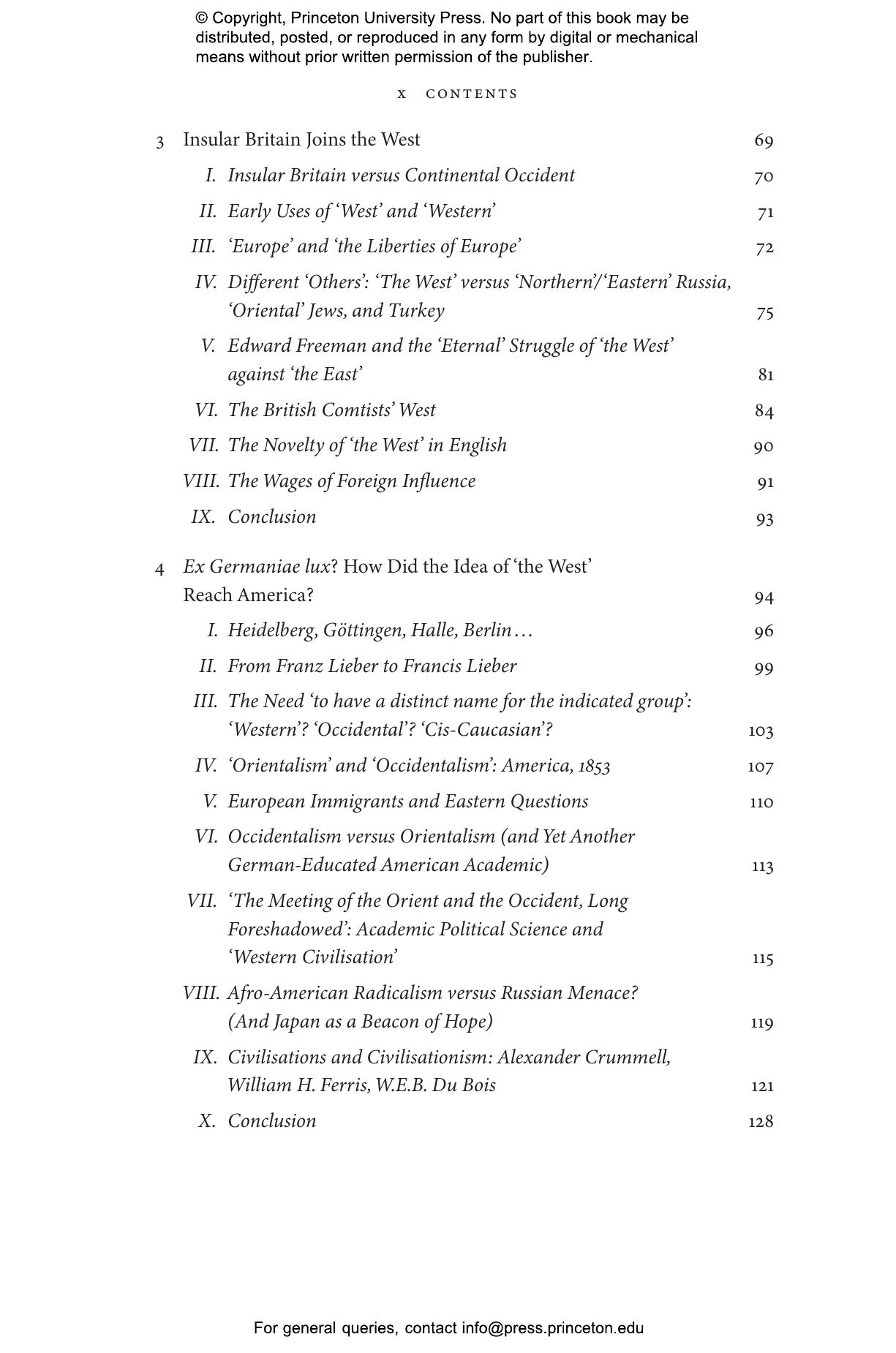
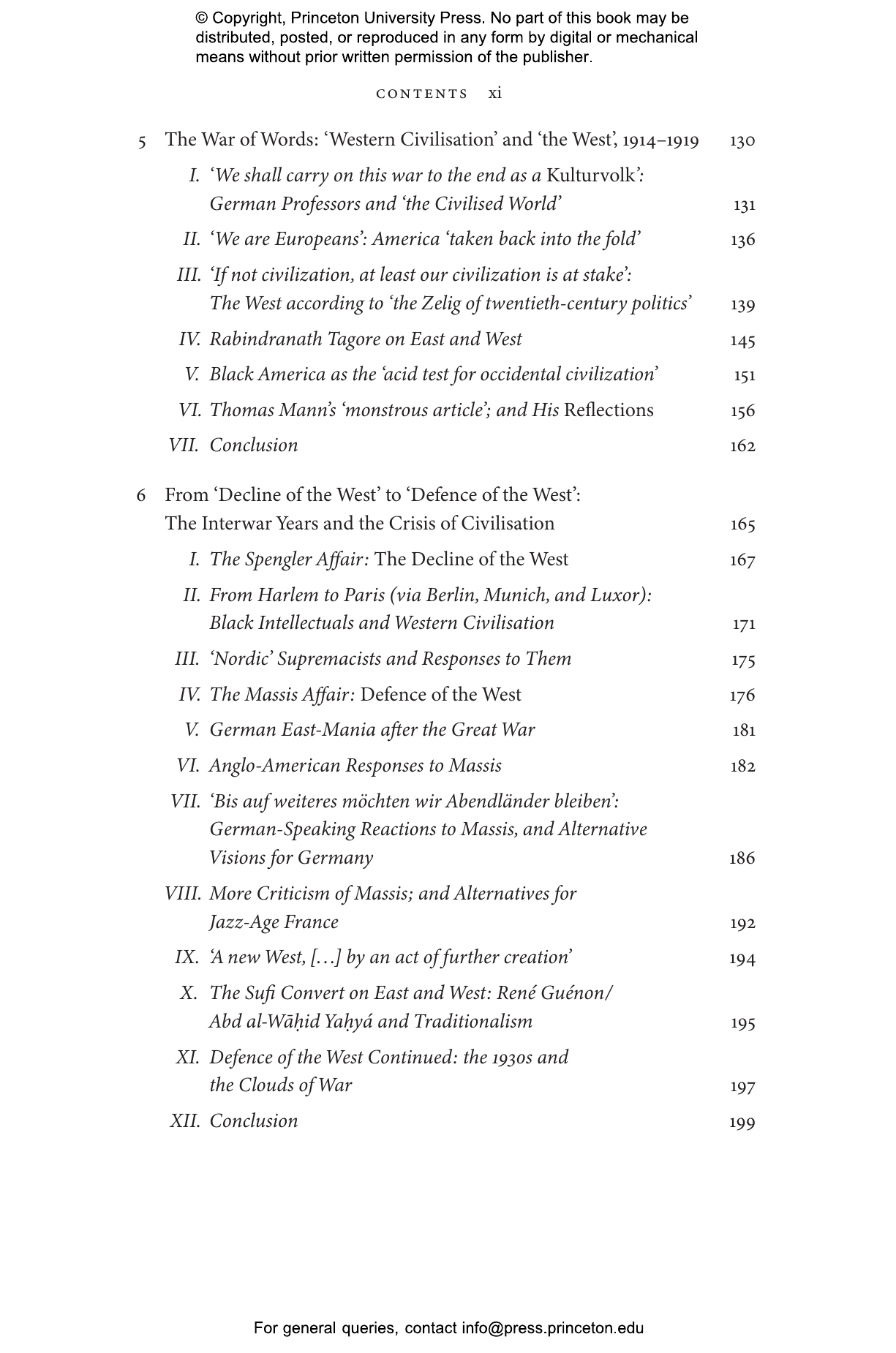
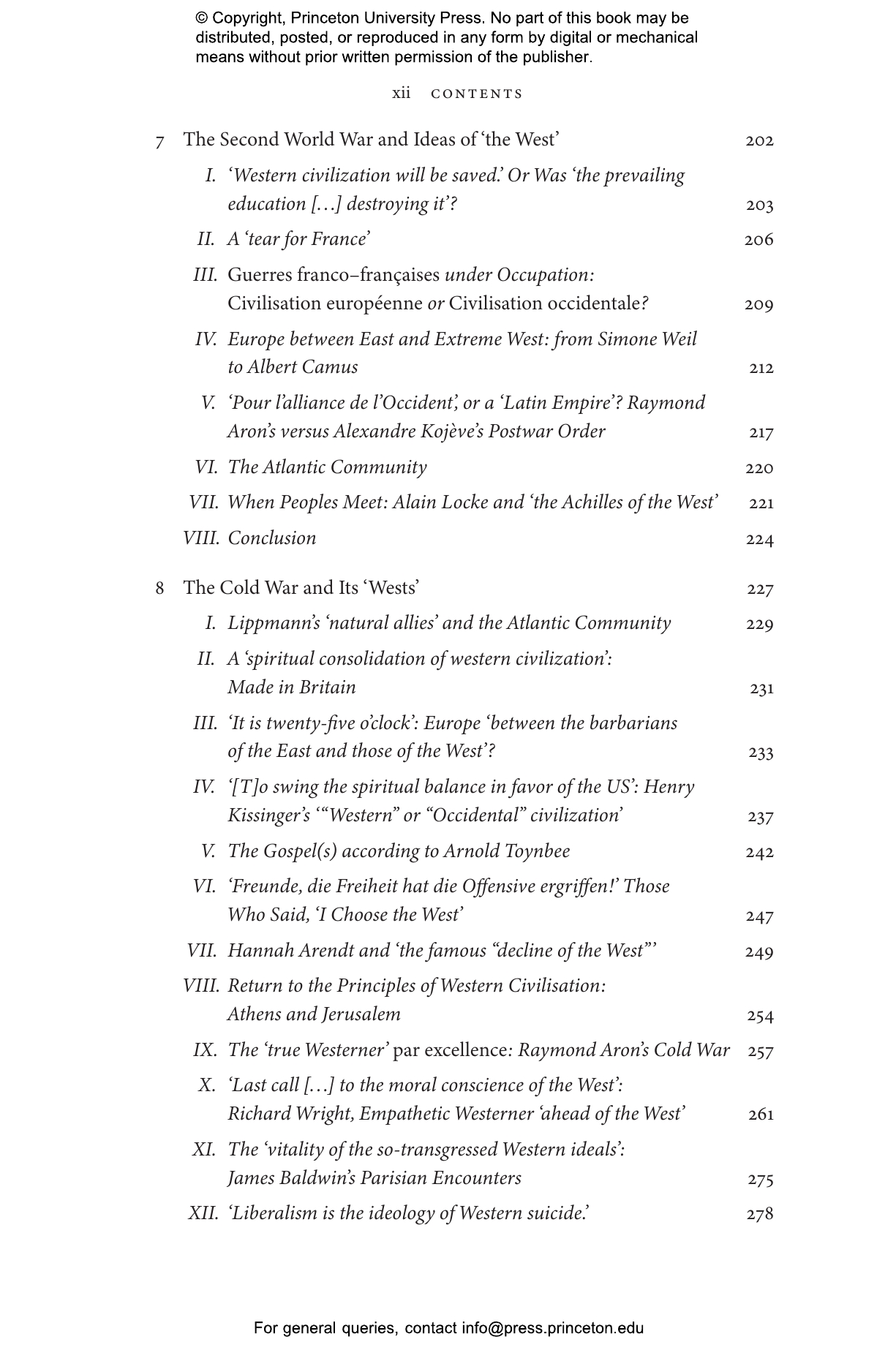
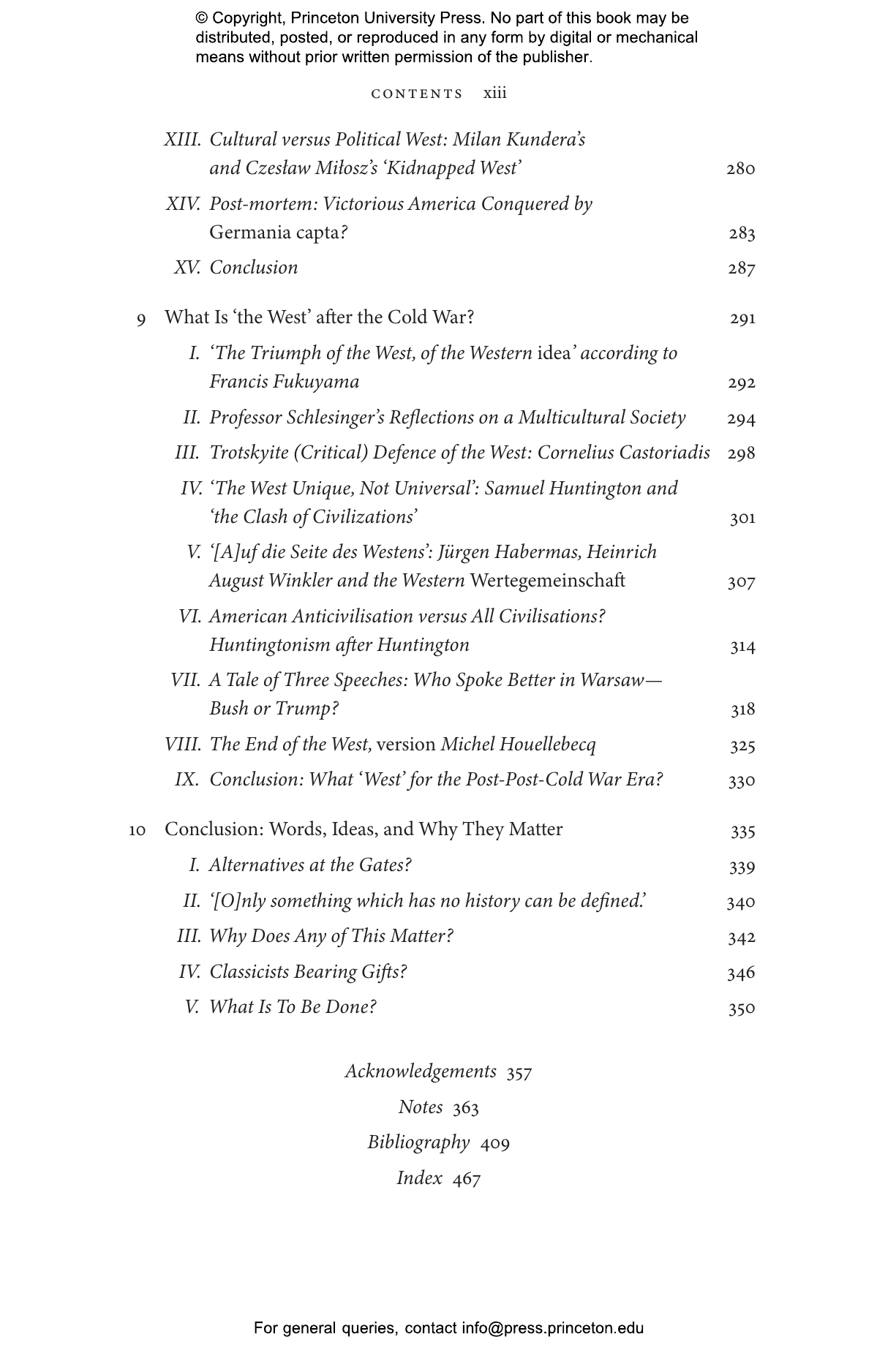
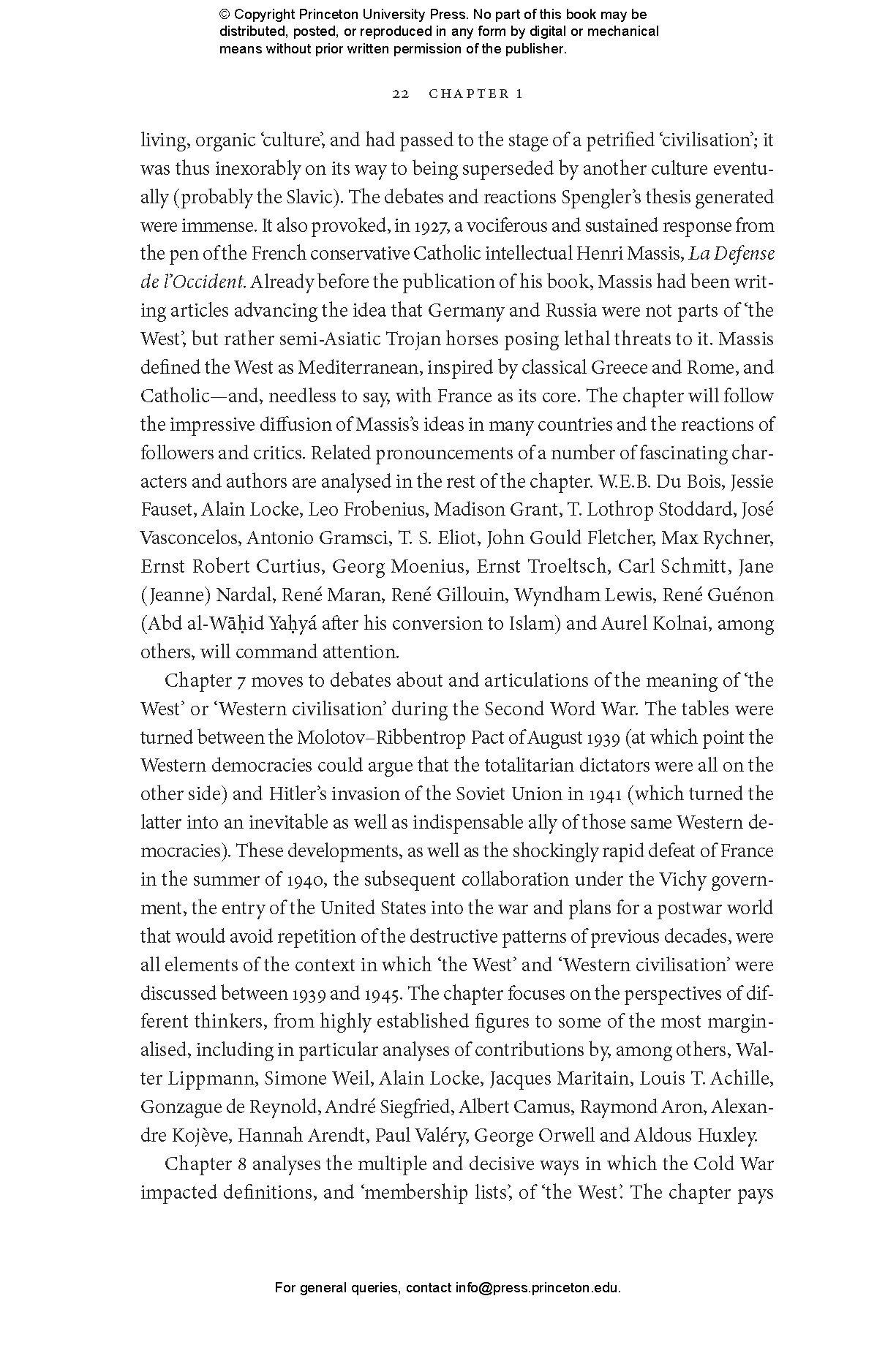
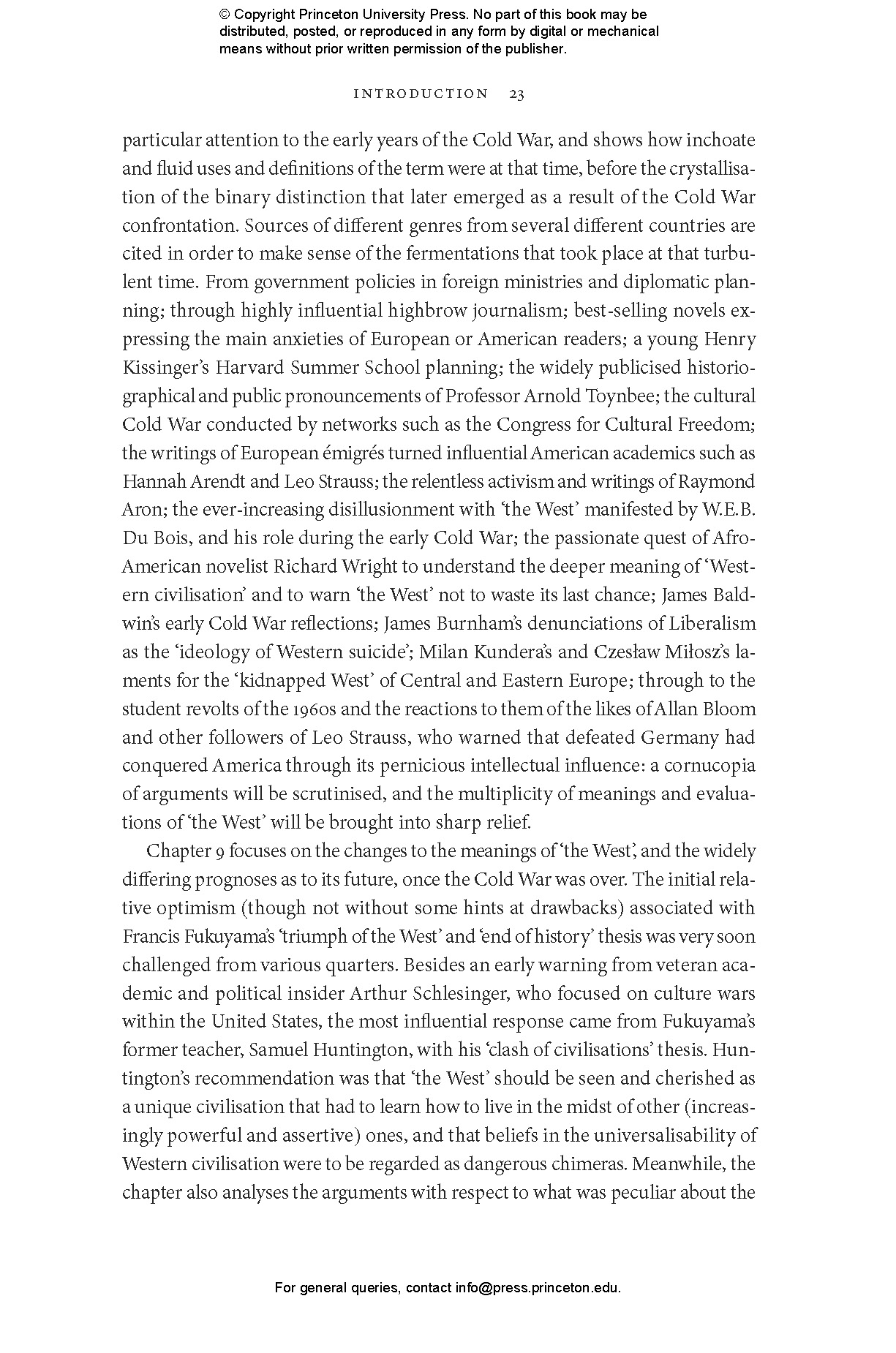
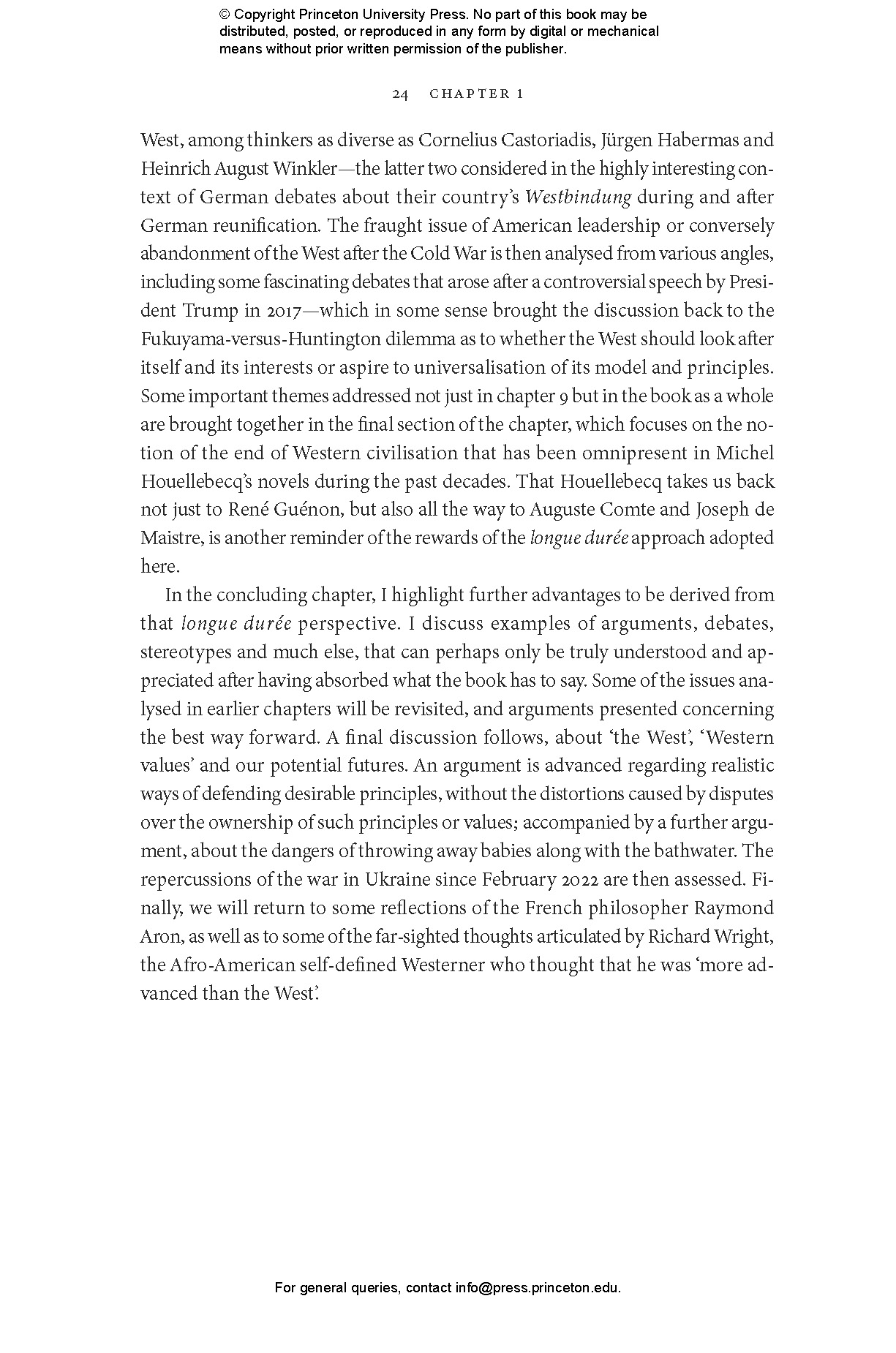
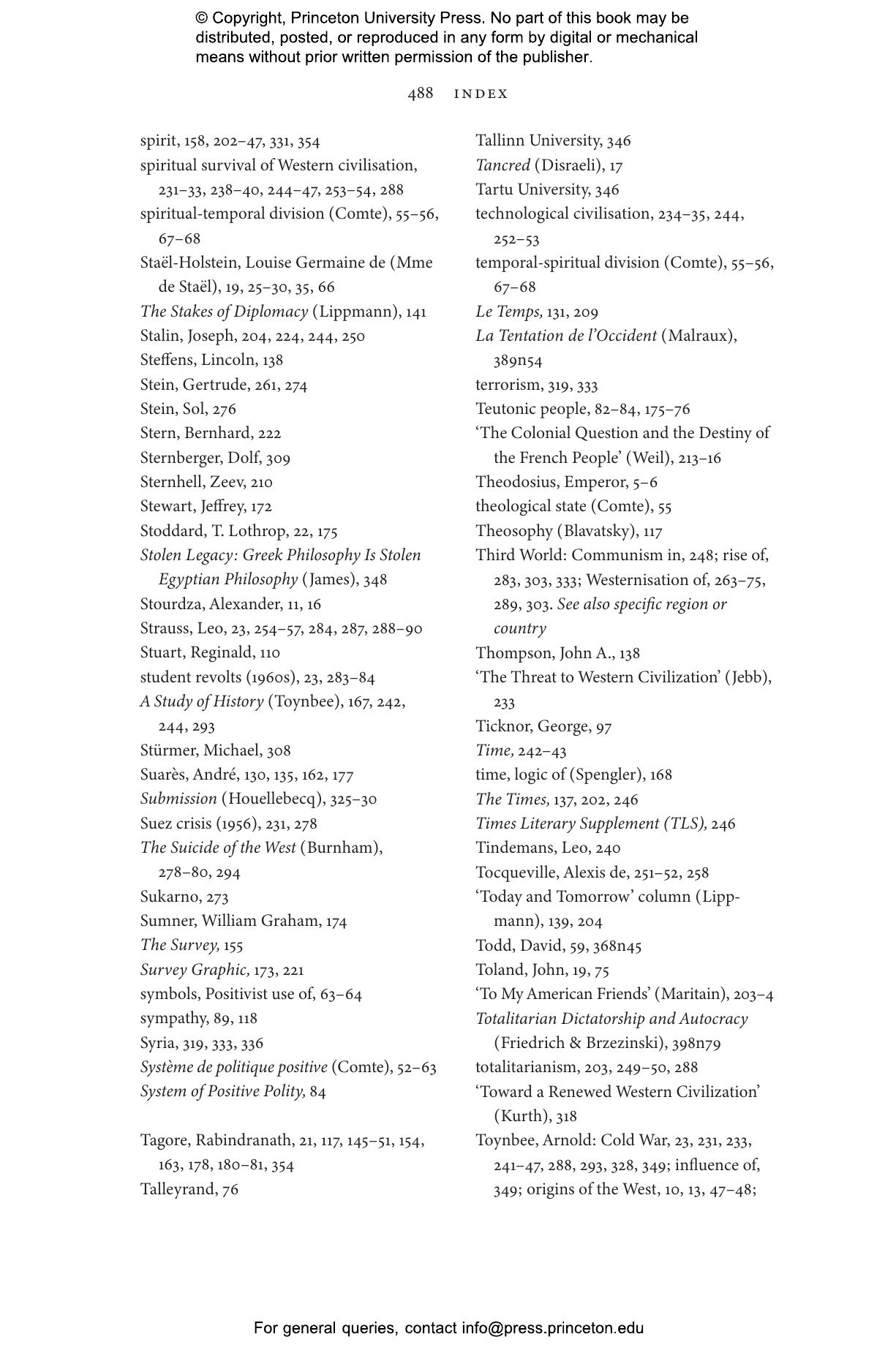
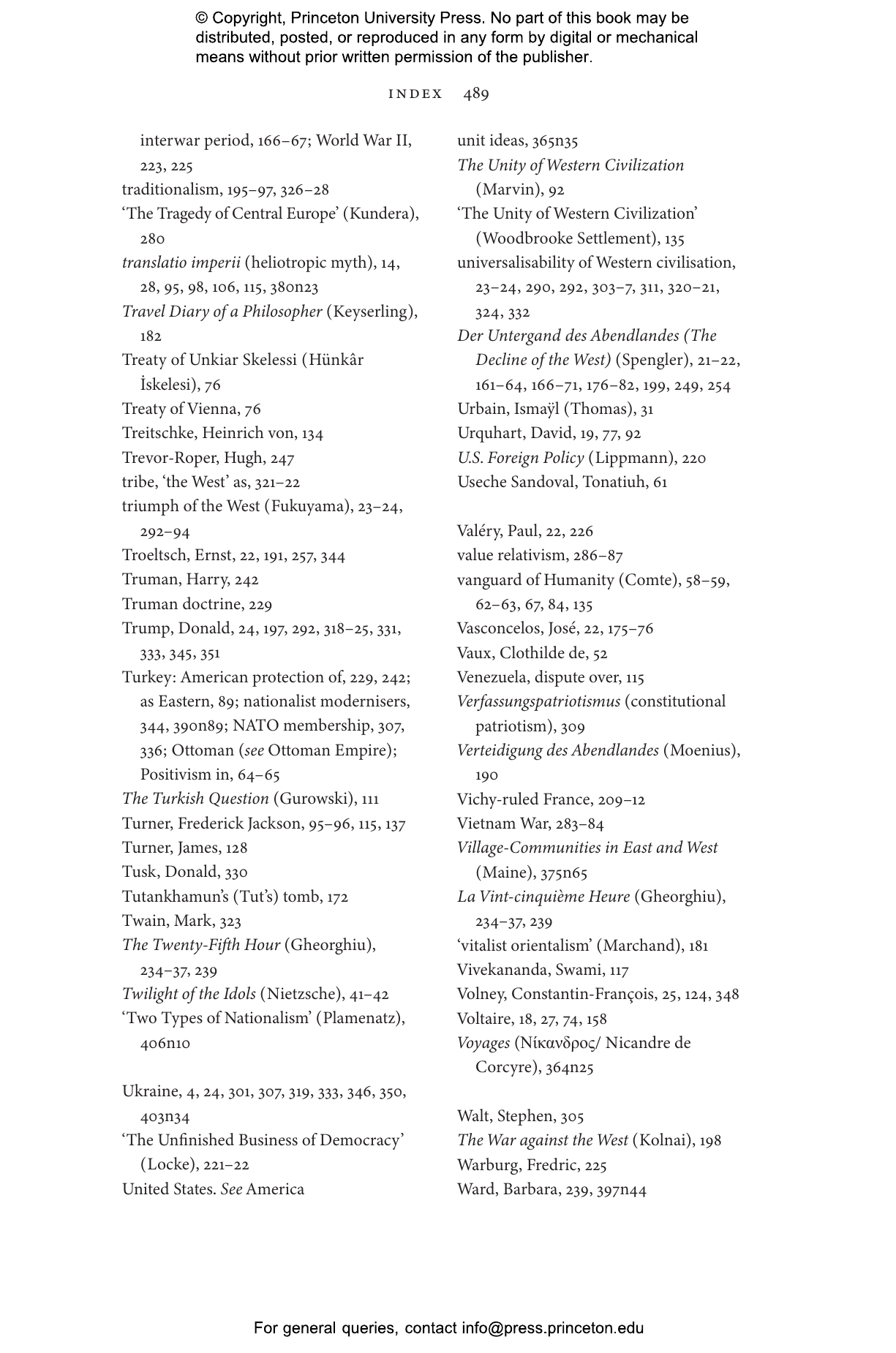
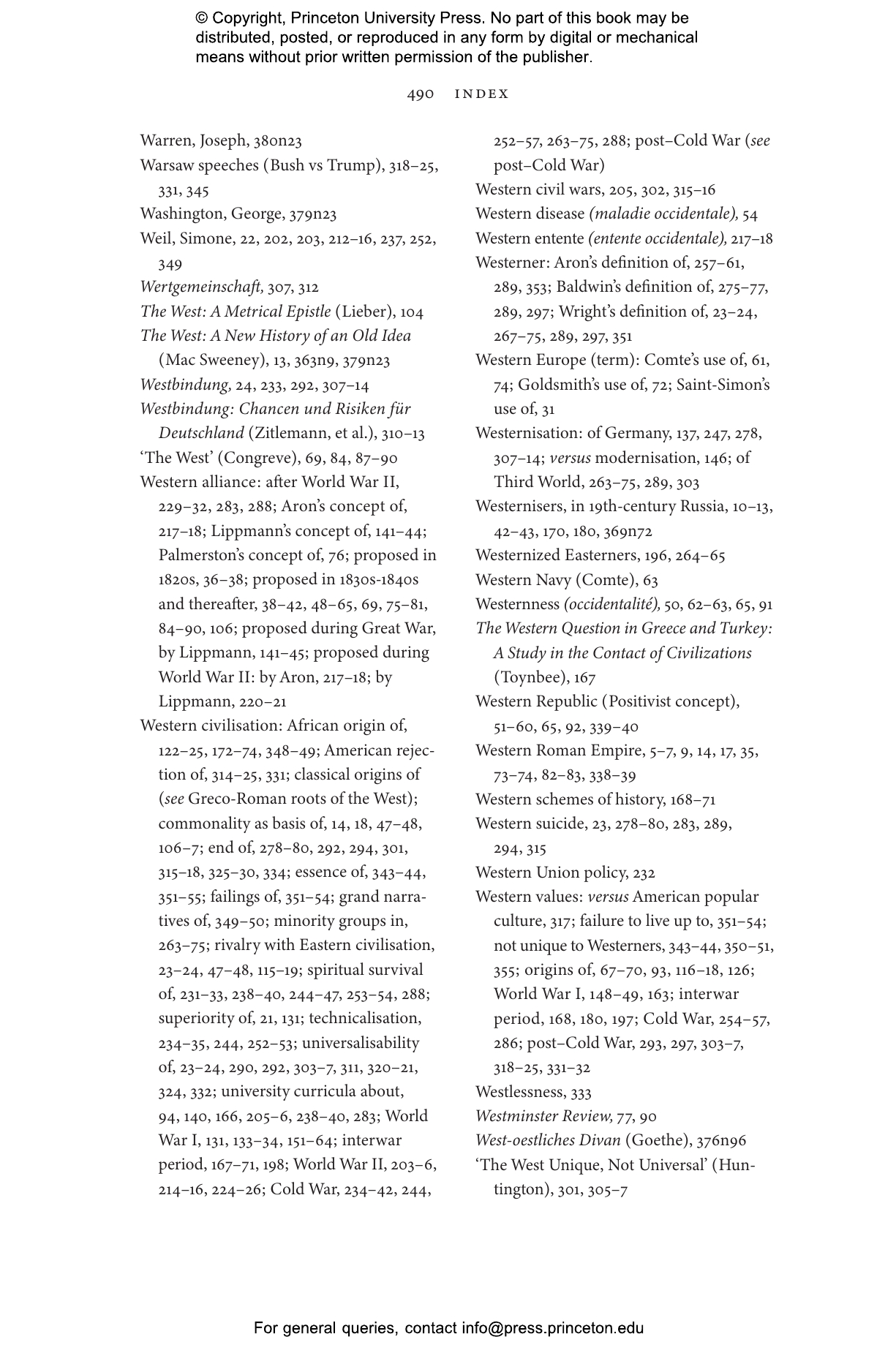
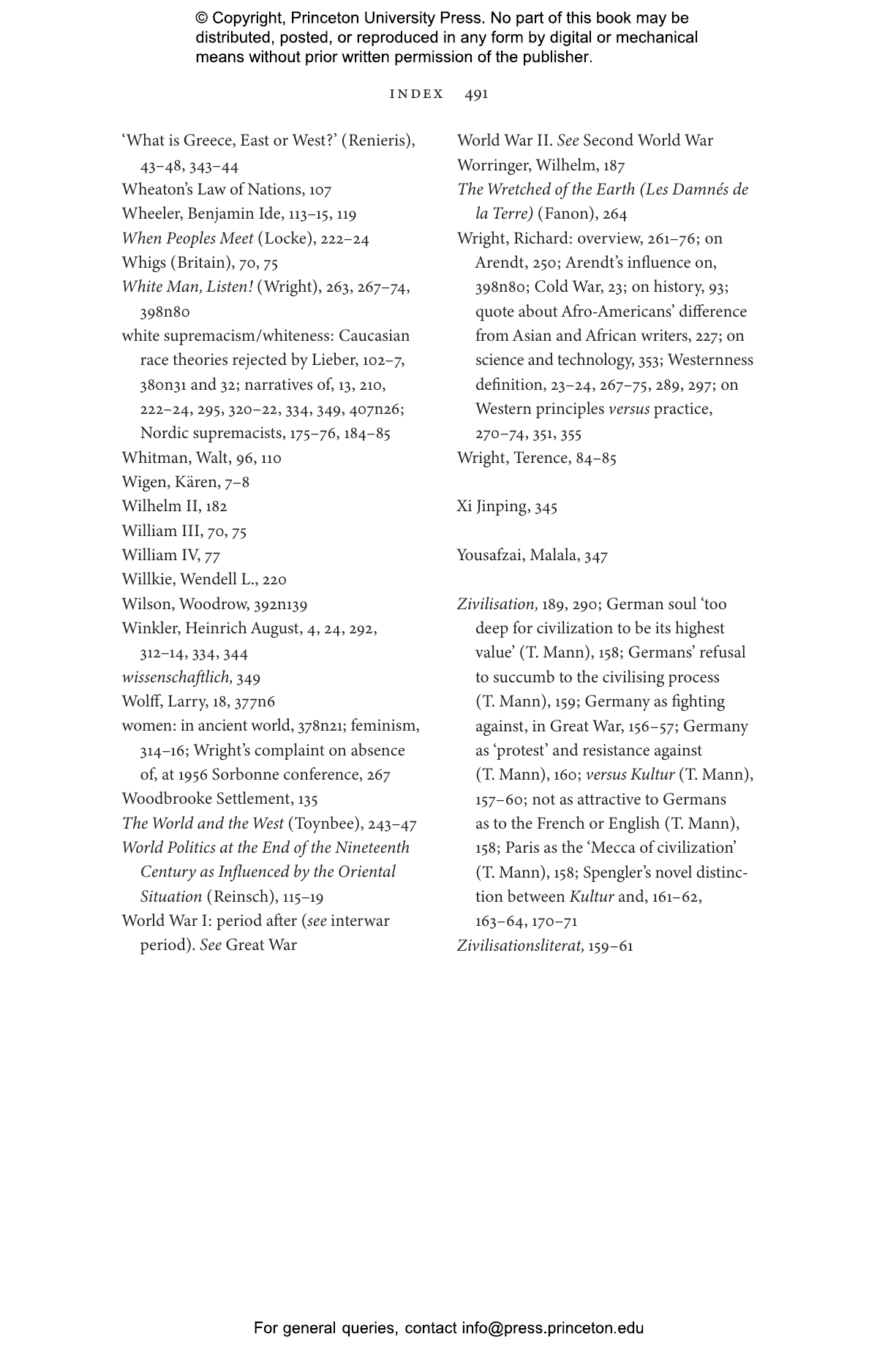
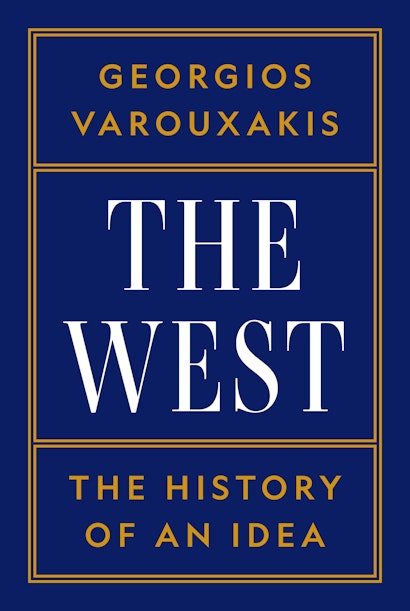
How did 鈥渢he West鈥� come to be used as a collective self-designation signaling political and cultural commonality? When did 鈥淲esterners鈥� begin to refer to themselves in this way? Was the idea handed down from the ancient Greeks, or coined by nineteenth-century imperialists? Neither, writes Georgios Varouxakis in The West, his ambitious and fascinating genealogy of the idea. 鈥淭he West鈥� was not used by Plato, Cicero, Locke, Mill, or other canonized figures of what we today call the Western tradition. It was not first wielded by empire-builders. It gradually emerged as of the 1820s and was then, Varouxakis shows, decisively promoted in the 1840s by the French philosopher Auguste Comte (whose political project, incidentally, was passionately anti-imperialist). The need for the use of the term 鈥渢he West鈥� emerged to avoid the confusing or unwanted consequences of the use of 鈥淓urope.鈥� The two overlapped, but were not identical, with the West used to differentiate from certain 鈥渙thers鈥� within Europe as well as to include the Americas.
After examining the origins, Varouxakis traces the many and often astonishingly surprising changes in the ways in which the West has been understood, and the different intentions and consequences related to a series of these contested definitions. While other theories of the West consider only particular aspects of the concept and its history (if only in order to take aim at its reputation), Varouxakis鈥檚 analysis offers a comprehensive account that reaches to the present day, exploring the multiplicity of current, and not least, prospective future meanings. He concludes with an examination of how, since 2022, definitions and membership of the West have been reworked to consider Ukraine, as the evolution and redefinitions continue.
Awards and Recognition
- A Financial Times Best Book of the Year
- A Spectator Book of the Year
- A Foreign Affairs Best Book of the Year
- One of The Critic's Best Non-Fiction 快色直播 of the Year
- A Tablet Book of the Year
- One of Jacobin's 快色直播 of the Year
- One of Engelsberg Ideas' 快色直播 of the Year
- A History Workshop Radical Read
"In The West: The History of an Idea, Georgios Varouxakis tells this story with wit, insight, and erudition. It is our great fortune that the first comprehensive history of the idea of the West is also, for the foreseeable future, the best. Anyone with ideas on the subject will be well advised to read it closely and keep it within reach."鈥擸uri Slezkine, New York Review of 快色直播
"Illuminating. . . . As talk of the West is once again resurgent, Varouxakis’s book offers the best guide to understanding the meaning of this deeply elusive idea."鈥�Jacobin
"Georgios Varouxakis’s history of the idea of the West. . . is enormously illuminating."鈥擧ans Kundnani, Times Literary Supplement
"The West is a monumental achievement of scholarship. Its chief contribution is its decentering of imperial and racial paradigms, which have become politicized and turned into stale orthodoxies that have led to distortions in historical understanding."鈥擬ax Skj枚nsberg, Law & Liberty
"A seriously impressive piece of intellectual history."鈥擭ick Spencer, The Spectator
"This book will serve as a salutary reminder of how recent our ideas about the ancient past can really be and how deceptively complex are the ties that bind us with it."鈥擬ark Mazower, Financial Times
"[A] masterful study."鈥擥. John Ikenberry, Foreign Affairs
"Georgios Varouxakis has written a much-needed book: The West: The History of an Idea. . . . The kaleidoscope of quotations in his book testifies to a Herculean scholarly effort."鈥擩aroslaw Kuisz, Foreign Policy
"A deeply erudite yet highly readable work that lays many myths to rest. Varouxakis may have written the most original history book of the year."鈥擠aniel Johnson, 罢丑别听颁谤颈迟颈肠
"[The West] is a model of intellectual history, tracing the idea of the West from its surprising origins, through two centuries of shifting sands, to the current (but hardly unique) crisis, without ever unduly praising or burying the phenomenon. A cool intellectual breeze for an overheated debate."鈥擭ick Spencer, The Tablet
"Georgios Varouxakis’s rigorously analytical The West . . . offers an antidote to unnuanced, polarised geopolitical thinking."鈥擫ucasta Miller, The Spectator
"What does ‘the West’ name? What, if anything, are Western values? . . . . [Varouxakis] avoids the shouting and answers in an original and rewarding way."鈥擡dmund Fawcett, Political Quarterly
"[A] massive scholarly accomplishment."鈥擣erenc聽Laczo, Modern Intellectual History
"Georgios Varouxakis’s The West: The History of an Idea is a genealogy of this elusive concept. . . . What makes Varouxakis's study so timely is that he carries this story forward to the present. . . . By situating ‘the West’ as a historical invention rather than a civilizational given, Varouxakis's book provides both a corrective and a warning."鈥擡tan Nechin, Haaretz
"A monumental endeavour that sets an incredible example for what rigorous scholarship can still manage to achieve."鈥擧uzaifa Omair Siddiqi, The Wire
"Meticulously researched, engaging, and sometimes bewildering."鈥擜ndrew Kaufmann, Mere Orthodoxy
"Reader[s] will be fascinated by [Varouxakis’] account of how the definition and membership of the “West” has changed over time."鈥擬atthew Partridge, Money Week
"[The West] brilliantly sums up the twists and turns of how Europe has defined itself and others over two thousand years. . . . [A] very erudite book."鈥擣rancis Ghiles, Arab Weekly
"A Brilliant, Illuminating Discussion on the Concept of ‘the West. …an impressive work…. It’s a timely work about the future of a most important heritage."鈥擠ustin Bass, The Epoch Times
"’I feel you!’ was my first thought on reading of Varouxakis’ uncertainties about his own borderline East-West identity. … Varouxakis’s survey is born of an urge to escape geographical determinism, and to instill, accordingly, a suspicion of terms (not only ‘the West’, but also the ‘Global South’) that might imply such determinism. … Though he is implicitly in favor of what he describes as ‘so-called “Western values”’…he argues against such values ‘being in any way owned by “Western” peoples.’… One can only agree."鈥擮ksana Forostyna, European Review of 快色直播
"In contrast to the often classic-heavy literature in the field of ‘history of international thought’, Georgios Varouxakis shows a knowledgeable affection for second-tier authors. …who would have thought of impressive intellectuals such as the Greek philosopher of history Markos Renieris, the founding father of US political science Francis (Franz) Lieber and the African-American philosopher Alain LeRoy Locke, or the convert to Islam Ren茅 Gu茅non, who was equally appreciated by Steve Bannon and Aleksandr Dugin? … the book deserves broad attention."鈥擩眉rgen Osterhammel, Sehepunkte: Rezensionsjournal f眉r die Geschichtswissenschaften
"It is … valuable that Varouxakis shows that the concept of ‘West’ in modern times did not grow out of colonial or imperialist notions, but exactly the opposite…. It is not only interesting as a historical curiosity but as a potential compass for a future understanding of the concept. …Varouxakis nuances the concept by skilfully mixing impressions and ideas about the West from non-Western thinkers."鈥擬artin Gelin, Dagens Nyheter
"No review. . .of The West: The History of an Idea can do justice to the intellectual breadth and depth of this book. Anyone who wants to engage with the history of European ideas must read this book."鈥擟hristoph Nick, Literatur Review
"Immensely erudite."鈥擩eremy Jennings, Engelsberg Ideas
"Highly recommended."鈥�Choice Reviews
"This is an important book. . . . The book’s principal achievement lies not so much in uncovering the ambiguities and contradictions of the idea of the West—although it does this as well—as in drawing attention to a foundation that perhaps makes the idea unique."鈥擡fraim Podoksik, European Legacy
"[An] engaging and very detailed genealogy."鈥擜nthony Pagden, Literary Review
"Varouxakis’s book is an indispensable compendium for the history of the West as a concept, the meanings it has acquired since the nineteenth century, and the authors who elaborated them."鈥擜ntonis Liakos, Journal of Modern Greek Studies
“Georgios Varouxakis’s rich tapestry of a book draws on a vast array of thinkers—including Greeks, Russians and African Americans—to show that even since the 1820s, the concept of ‘the West’ has never been stable. From policymakers to teachers of ‘Western civ,’ anyone tempted to use this term ought to read this beautifully written and remarkably learned volume.”—Suzanne Marchand, author of Porcelain: A History from the Heart of Europe
“Georgios Varouxakis’s fascinating study is a brilliant intervention into an urgent debate. With subtlety, eloquence and historical rigour, the author recovers the meaning and value of ‘the West,’ spanning the period from the 1820s to the present. Written with passion and authority, it is a field-defining piece of scholarship.”—Richard Bourke, author of Hegel’s World Revolutions
“Georgios Varouxakis has written a formidable book on a politically significant and an emotionally charged idea. In writing, as he rightfully claims, the full intellectual history of the idea of the West, he has produced a classic that will be difficult to match, replicate or surpass.”—Jyotirmaya Sharma, author of Elusive Nonviolence: The Making and Unmaking of Gandhi’s Religion of Ahimsa
“Think ‘the West’ was invented to defend empire or whiteness? That it came from Britain or the wider Anglosphere in the 1890s? Think again. With erudition and originality, Georgios Varouxakis’s revisionist conceptual genealogy of ‘the West’ surprises and persuades in equal measure.”—David Armitage, author of Civil Wars: A History in Ideas