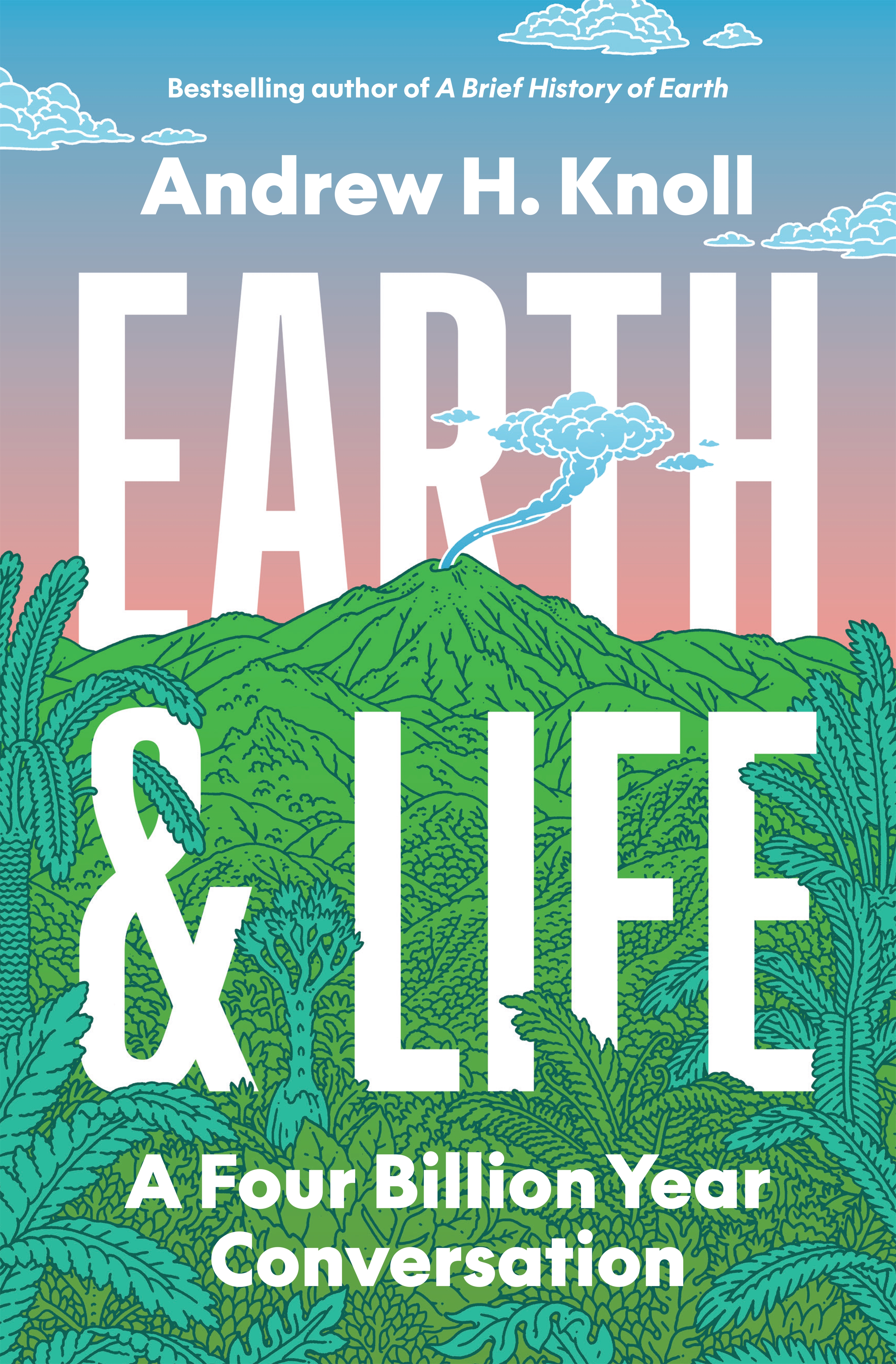
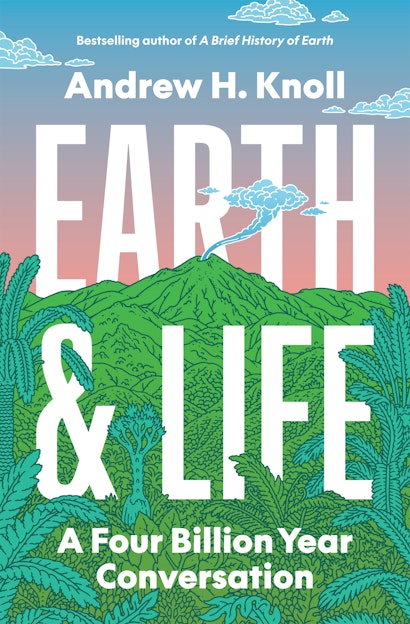
How did the world as we know it鈥攆rom the soil beneath our feet to the air we breathe and the life that surrounds us鈥攃ome to be? Geologists have proposed one set of answers while biologists have proposed another. Earth and Life is the first book to reveal why we need to listen to both voices鈥攖he physical and the biological鈥攖o understand how we and our planet became possible.
In this captivating book, Andrew Knoll traces how all life is sustained by Earth鈥檚 geological and atmospheric dynamics, and how life itself shapes the physical environment. Taking readers on a thrilling journey across four billion years of Earth history, he shows how Earth and life interact to cycle the very elements of life from rocks, water, and air, and how these and related processes control our climate, regulate our atmosphere, and support the diversification of life-forms great and small. Along the way, Knoll explains how we can draw on this history as we navigate the challenges of the Anthropocene, and how it can aid our search for life elsewhere in the universe.
Blending cutting-edge science with illuminating insights from a leading expert, Earth and Life explains how this ongoing interplay holds vital lessons for us today as humanity becomes an increasingly major voice in the conversation.
"This book’s significance is, in my opinion, threefold. First, it raises public consciousness about the coevolution and coupled processes of Earth and life-forms. Second, it outlines some big questions in geobiology that need further research. And third, the book highlights Earth’s precious and privileged place as a living planet and debunks the notion that we can easily colonize Mars. . . . Earth and Life presents a geoscience that is both vivid and vital for today's conversations about humanity's relationship with Earth."鈥擱asoul Sorkhabi, Science
"A stimulating primer on how interactions between the planet's physical environment and living beings have shaped the world throughout time. . . . Knoll does an impressive job of lucidly explaining both geological and biological processes, providing necessary background without being pedantic. Readers will be informed and entertained."鈥�Publishers Weekly
"A welcome look at the Earth as a single system of countless moving parts."鈥�Kirkus Reviews
"[A] delightful work. . . . Knoll’s long experience as a teacher – most recently, as the Fisher Professor of Natural History at Harvard University – is evident in every page of the book, both in his delight in the subject matter and his desire to share his joy with others. As well as being informative, it is also introspective, humorous, and at times personal. Earth and Life is well worth reading for anyone who wants to know how we got here – and what might come next."鈥擩an Lee, Earth.org
"Knoll introduces the reader to the field of geobiology, a melting pot of disciplines, through his personal and professional experiences. . . . Therefore, composing a coherent narrative about life and Earth’s four-billion-year conversation requires imagination, skill, tenacity and comfort with a lack of certitude. The best historians recognize that they are storytellers, embracing fresh evidence as it becomes available and revising their interpretations accordingly. Knoll is one of them. . . . He exposes the reader to the drama of the discipline: the intrepid qualities of geobiologists, their differences in opinion, their passionate debates."鈥擠ianne K. Newman, Nature
“A tour de force. Weaving together the two greatest stories on Earth—the evolution of life and of the planet itself, Andrew Knoll reveals the dynamic dialogue that created our world. There is grandeur in this new and hard-earned view. You will never look at our planet—or others—in the same way.”—Sean B. Carroll, author of A Series of Fortunate Events and The Serengeti Rules
“This book is described as a conversation, and that is indeed what it is: a jovial, engaging, witty, and enlightening fireside chat with one of the world’s eminent experts on the evolution of life and how Earth has changed over time. It feels like banter with a friend, but by the end of it, you’ll come to appreciate how life and Earth have been intertwined for four billion years, and what that means for our present, and our future.”—Steve Brusatte, New York Times bestselling author of The Rise and Fall of the Dinosaurs
“A vital guide to the intimate interplay between geology and biology over Earth’s history. Knoll tells an utterly compelling story of how life itself draws the elements needed from the fabric of the planet around it, and how the thriving world as we know it became possible.”—Lewis Dartnell, author of Origins: How the Earth Shaped Human History
“A world leader in his field for decades, Knoll provides a rigorous insider’s perspective grounded in his personal journey and stitched through every chapter. Readers will be entertained and left with a rich understanding of the intertwined evolution of Earth and its life over billions of years.”—Timothy Lyons, University of California, Riverside
“In his ambitious new book, Knoll describes the steadily maturing field of geobiology, which examines the interactions between our planet Earth and its biota. The biota are clearly dependent on planetary characteristics that enhance its habitability; yet, the planet itself is increasingly being influenced by the biota, including humans, and not all of these interactions are necessarily beneficial. Although the main part of the book is devoted to describing Earth’s long prehuman history—where the author is an acknowledged expert—the final chapters reveal his concerns about where we are currently heading. Knoll’s writing is clear and accessible and should appeal to a wide range of audiences.”—James F. Kasting, author of How to Find a Habitable Planet