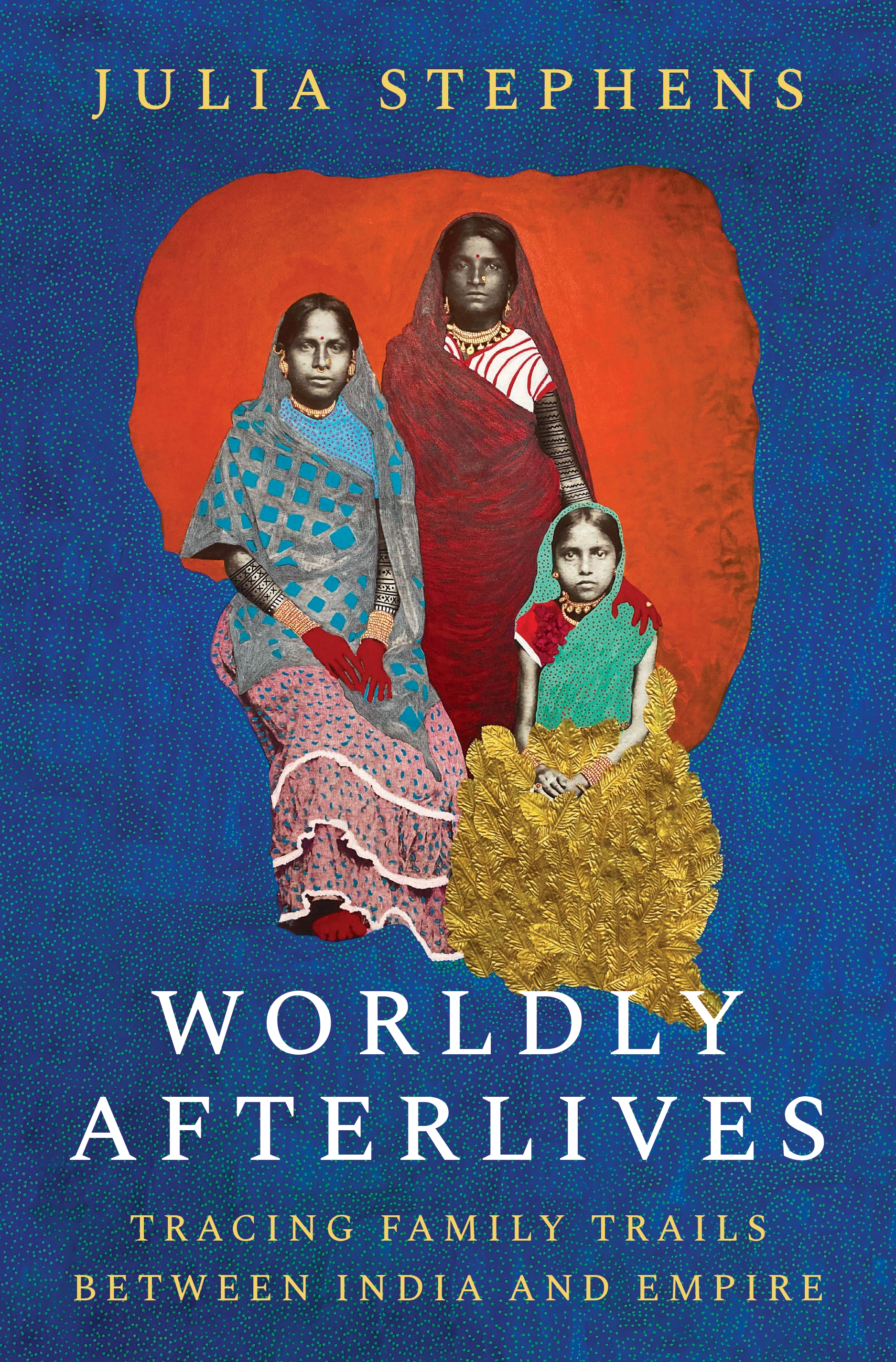
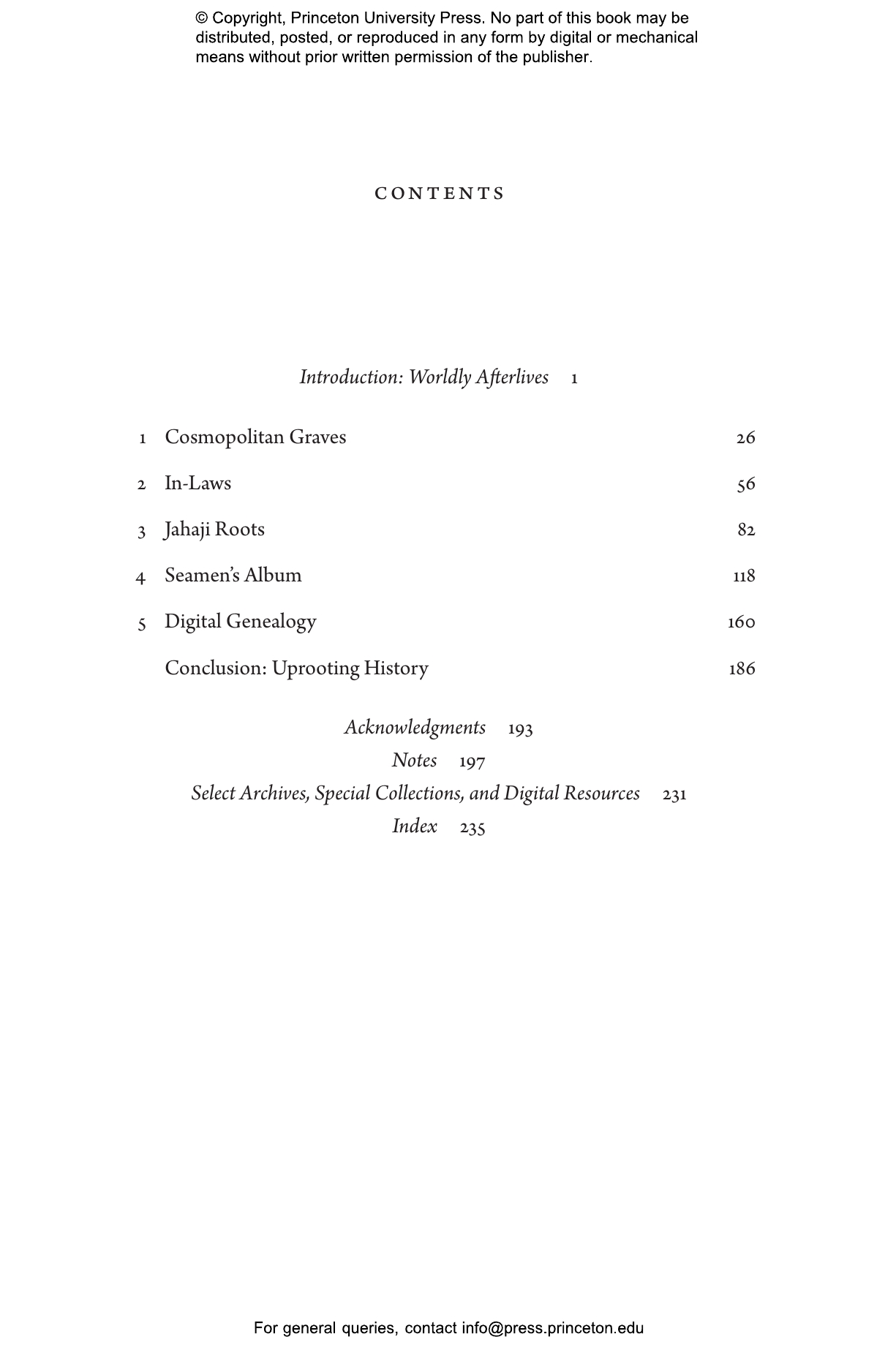
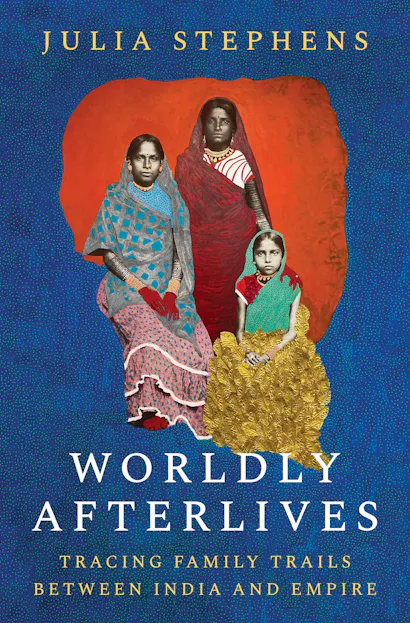
Indian migrants provided the labor that enabled the British Empire to gain control over a quarter of the world鈥檚 population and territory. In the mid-1800s, the British government began building an elaborate bureaucracy to govern its mobile subjects, issuing photo IDs, lists of kin, and wills. It amassed records of workers鈥� belongings such as handwritten IOUs, crumpled newspaper clippings, and copper bangles. Worldly Afterlives uses this trove of artifacts to recover the stories of the hidden subjects of empire.
Navigating the remains of imperial bureaucracy鈥攊n archives scattered across Asia, Africa, the Middle East, and the Americas鈥擩ulia Stephens follows migrant families as they traverse the Indian Ocean and the British Empire. She draws on in-depth interviews to show how the histories of empire reverberate in the present through the memories and experiences of their descendants, who collected their own remnants of empire in albums and curio cabinets. We encounter women, subaltern migrants, and people of mixed heritage whose family stories upend ethnonationalist and patriarchal approaches to studying Asian diasporas. What emerges is a social history of Indian migration and a political history of British imperial governance, one that offers a new methodological approach to the historian鈥檚 craft.
Spanning archives, family collections, cemeteries, online ancestry records, and social media, Worldly Afterlives breaks down boundaries that separate academic, amateur, and public history to open new conversations about the ongoing legacies of empire.
Awards and Recognition
- Winner of the Frances Richardson Keller-Sierra Award, Western Association of Women Historians
- Winner of the NCPH Book Award, National Council on Public History
- Honorable Mention for the Jerry H. Bentley Book Prize, World Historical Association
"A richly textured account of migration, memory, and identity, reminding us of how the movements of the past continue to reverberate in the present."鈥擯rarthana Prakash, Asian Review of 快色直播
"A rich and personal insight into the family histories of the global South Asian diaspora. . . . [Wordly Afterlives] is well grounded in important theoretical ideas around diaspora, memory, family and the archive, while Stephens writes in a highly accessible manner."鈥擲umita Mukherjee, Journal of Indentureship and its Legacies
"At once social history and methodological intervention, [Worldly Afterlives] offers a quietly powerful meditation on how imperial governance continues to shape memory and belonging."鈥�Indulge Magazine
“Through an innovative and capacious approach in archives that includes photographs, oral histories, Facebook pages, Instagram posts, and more conventional official documents, Stephens’s Worldly Afterlives shows how migrants from the Indian subcontinent spread across the world, forming new genealogies and attachments and documenting their rich and complicated lives. A brilliant model for multimedia research and an inspiring example of how historians can write about families now.”—Durba Ghosh, author of Sex and the Family in Colonial India: The Making of Empire
“This hauntingly beautiful book traces family histories and journeys across the Indian Ocean world and beyond. Drawing on photographs, fabrics, albums, and keepsakes alongside voluminous archival research, Worldly Afterlives weaves new and capacious feminist understandings of diaspora, family, and archive—a marvel of method, materiality, and global migrations.”—Isabel Hofmeyr, author of Dockside Reading: Hydrocolonialism and the Custom House
“Worldly Afterlives is an inspiring model of diasporic history writing. Stephens creates a meticulous, multi-sited, and layered archival study that draws on oral histories, family archives, haunted landscapes, and treasured objects to chart family memories. In a history that centers the dynamic role of women, Stephens’s writing is as affective as it is empirical. Worldly Afterlives is expansive in geographical reach and illustrious in imagination. A beautiful creation.”—Renisa Mawani, author of Across Oceans of Law: The Komagata Maru and Jurisdiction in the Time of Empire
“Stephens masterfully draws on documents, photographs, and heirlooms to construct a world where memories of departures, arrivals, and returns haunt the daily lives of people and their quest to reconstruct their family histories of mobility and immobility across the world. Appealing to scholars of migration and diaspora and roots researchers, Worldly Afterlives is a veritable triumph in narrative writing.”—Kalyani Ramnath, author of Boats in a Storm: Law, Migration, and Decolonization in South and Southeast Asia, 1942–1962
“A remarkably broad and wide-ranging tour de force, Worldly Afterlives traces the mobile and intermixed histories of South Asian migrants across several generations. By doing so, the book supersedes the bounds of the Indian Ocean to become a truly global history.”—Nurfadzilah Yahaya, author of Fluid Jurisdictions: Colonial Law and Arabs in Southeast Asia