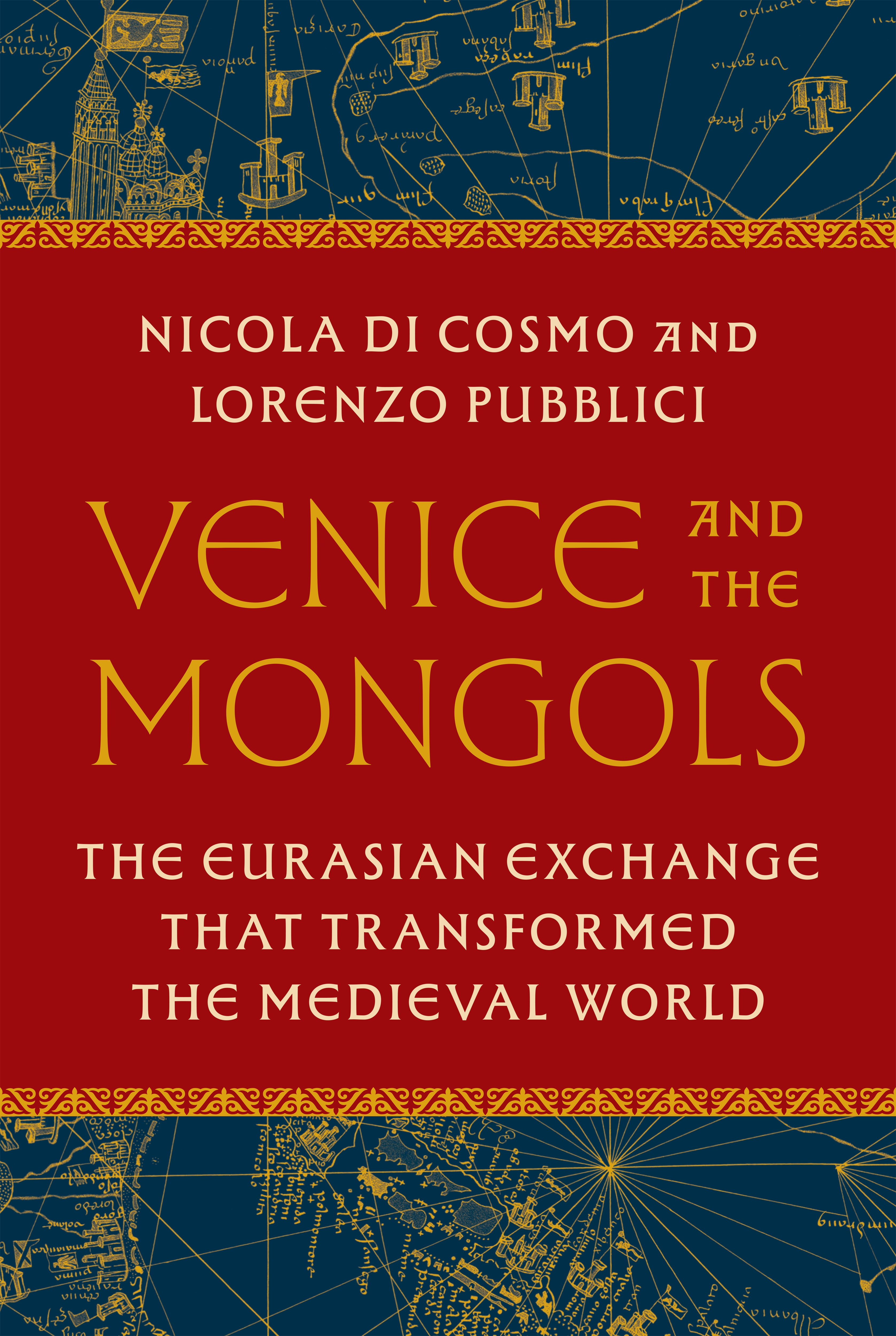
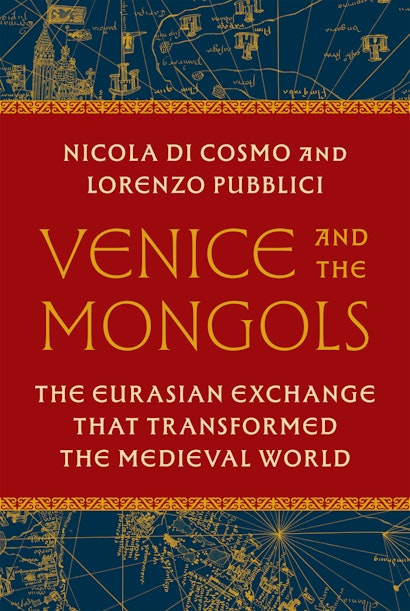
In the mid-thirteenth century, Europe was shaken by the Mongol invasions. Realizing the immense potential for accessing remote markets in the East, Venetian merchants, diplomats, and seafarers established far-flung commercial networks with the Mongol Empire. Venice and the Mongols tells the story of this dynamic new era in world history, one that saw one of the most advanced maritime powers of the age bridge East and West in a new global marketplace created by the Mongol conquests.
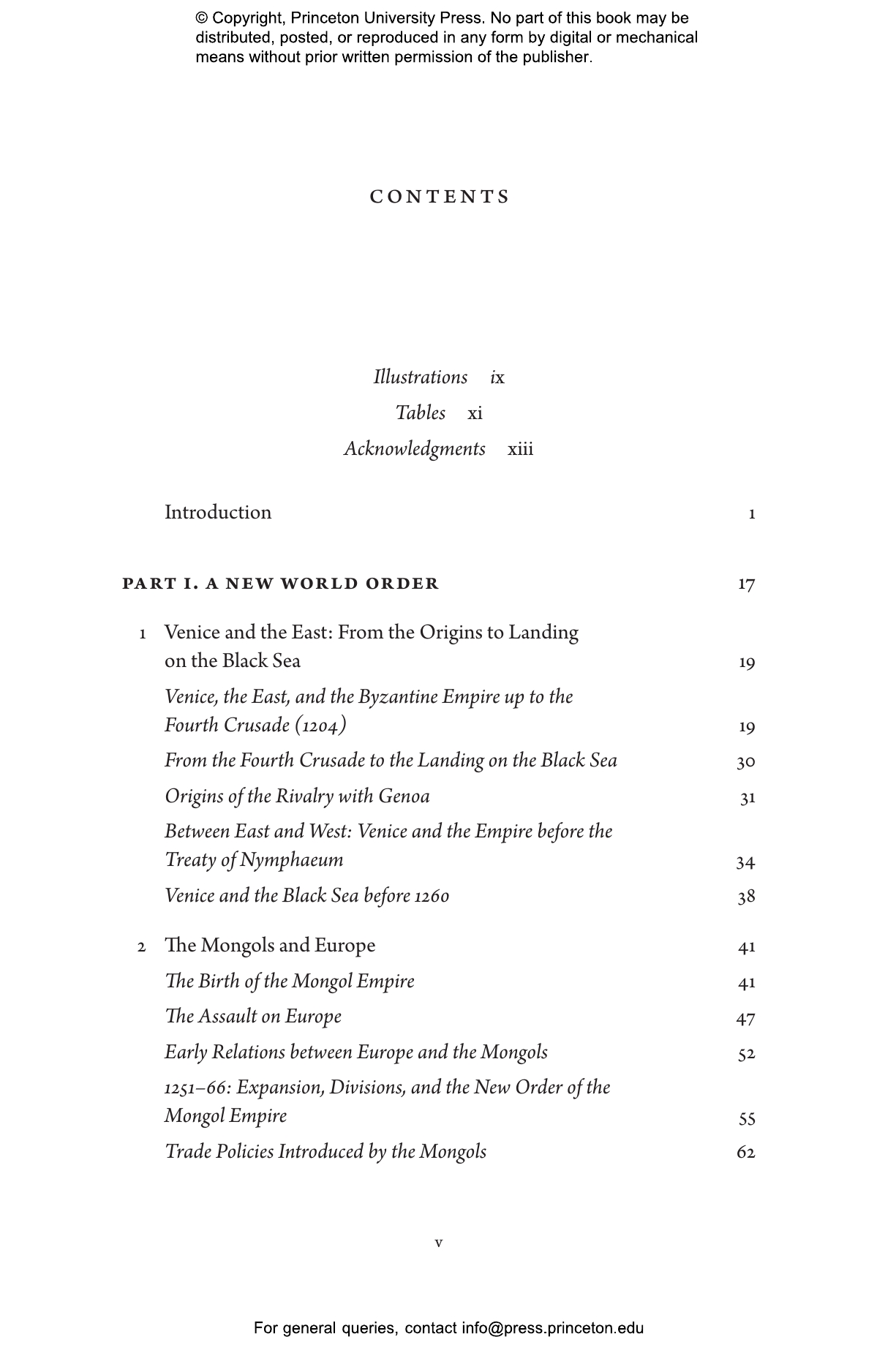
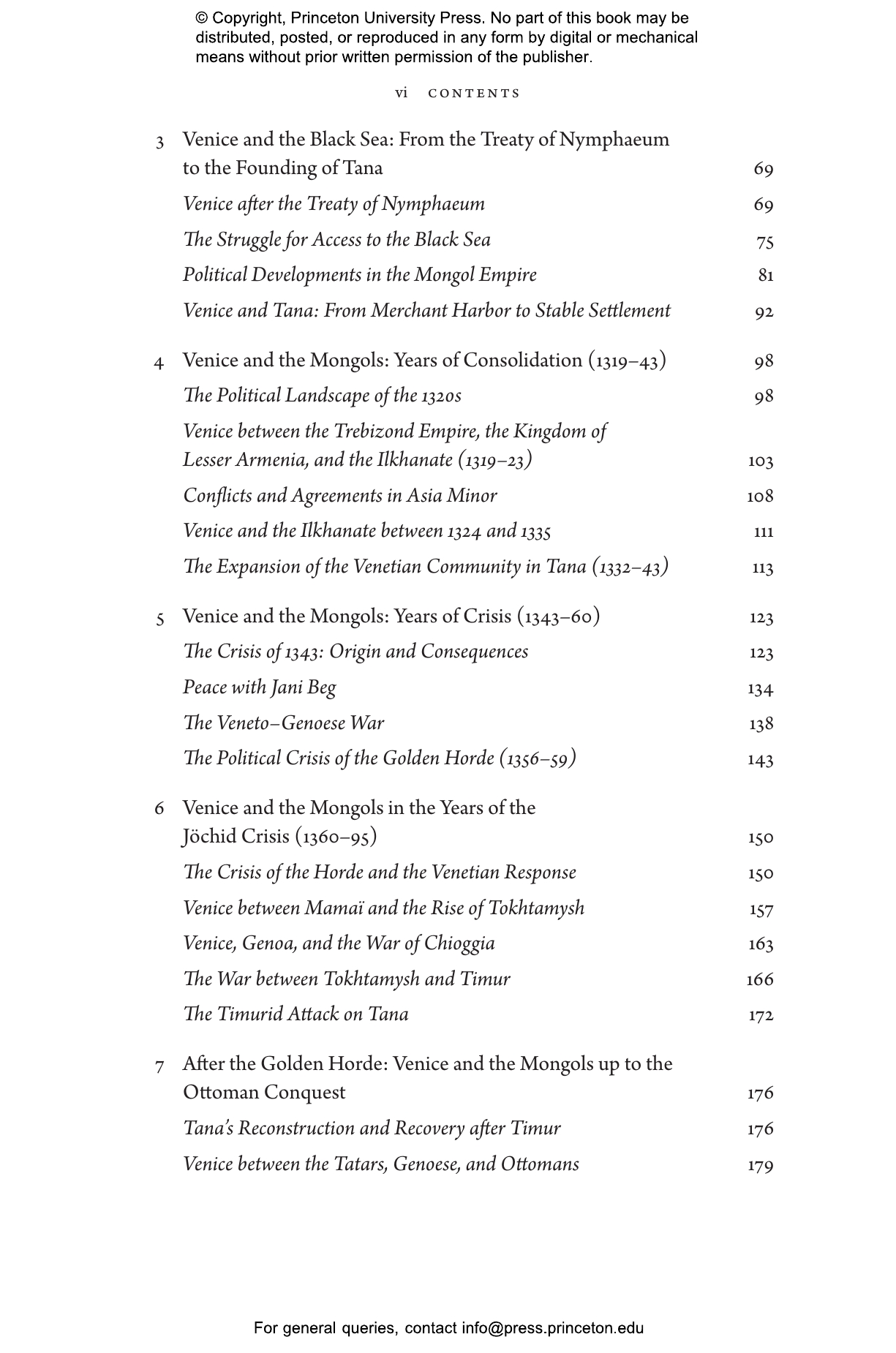
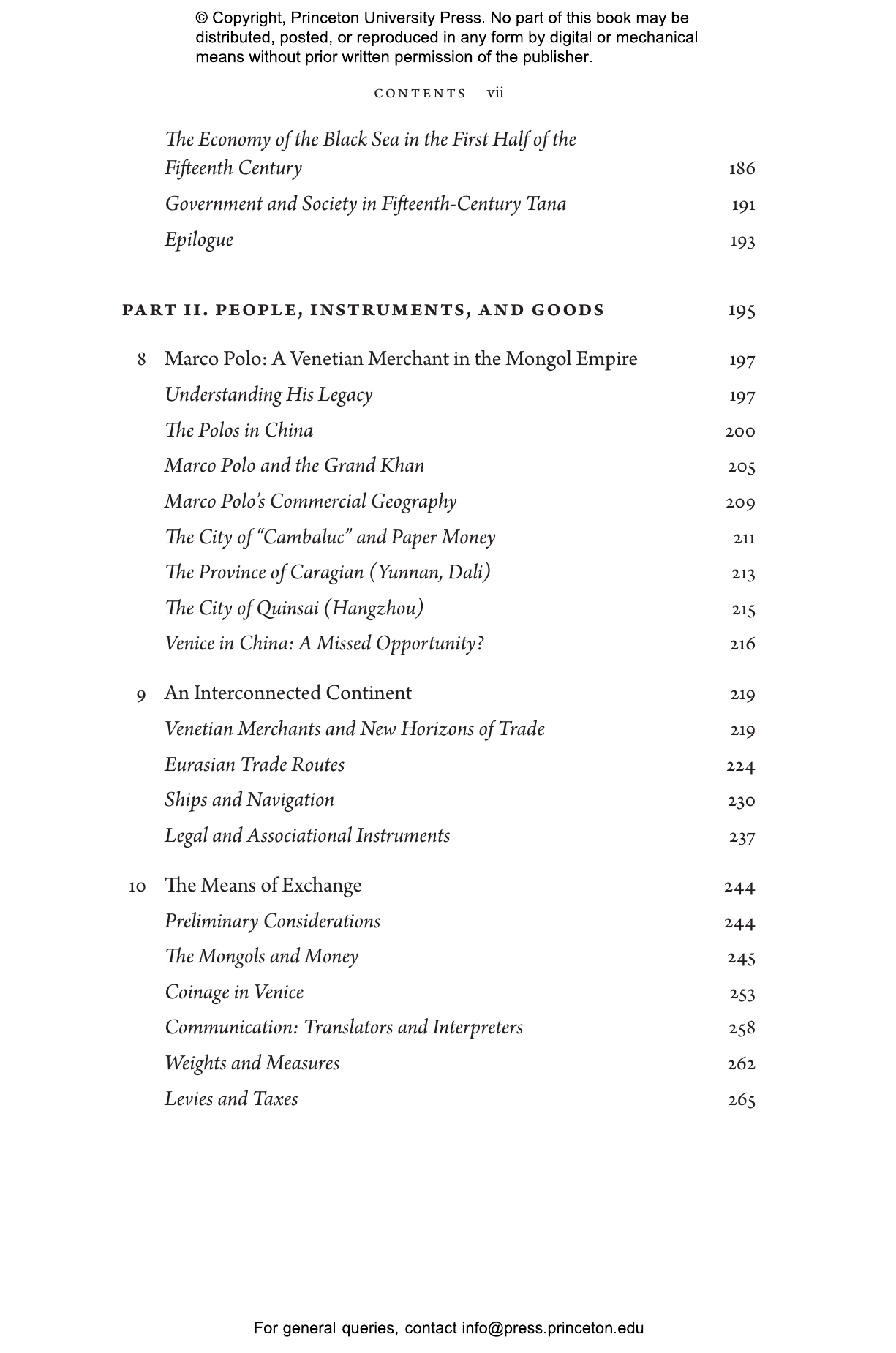
In a panoramic narrative spanning nearly two centuries, Nicola Di Cosmo and Lorenzo Pubblici describe how Mongolian support of European merchants allowed for the exchange of goods and ideas across their vast empire, and how cooperation with the khans enabled the Venetian city-state to trade safely, grow its influence, and expand its territory eastward while opening Europe to new markets. Di Cosmo and Pubblici shed light on trade practices, legal structures, and cultural relations, and share new perspectives on Marco Polo鈥檚 travels in Mongol-controlled territories. They examine Venetian strategies in the face of Mongol and Genoese rivalry and show how the city-state adapted to the challenges posed by the decline of Mongol authority and the ascendance of the Ottomans in the latter half of the fourteenth century.
Blending vivid storytelling with rich archival research, Venice and the Mongols challenges conventional perspectives on the Mongols as mere agents of destruction and shows how Venice ushered in a new era of commerce and diplomacy in an interconnected medieval world.
Nicola Di Cosmo is the Luce Foundation Professor in East Asian Studies at the Institute for Advanced Study in 快色直播. His books include Ancient China and Its Enemies: The Rise of Nomadic Power in East Asian History. Lorenzo Pubblici is professor of premodern central Asian history and cultures at the University of Naples L’Orientale. His books include Mongol Caucasia: Invasions, Conquest, and Government of a Frontier Region in Thirteenth-Century Eurasia (1204–1295).
“Masterful. Di Cosmo and Pubblici lucidly demonstrate the interconnectedness of medieval Eurasia through the exploration of the commercial and diplomatic relationships between two medieval states. With deft scholarship and multiple approaches, they provide a monumental study. This is history done right.”—Timothy May, author of The Mongol Conquests in World History
“This book offers the first comprehensive reconstruction of Venice’s engagement with the Mongol world, from the onset of the Mongol moment to the Ottoman conquest of Crimea. Drawing on rich archival sources and recent scholarship, Di Cosmo and Pubblici compellingly trace the emergence of a genuinely global economic system that fused Mongol ambitions, institutions, and monetary innovations with Venetian commercial expertise. A major contribution.”—Michal Biran, author of Chinggis Khan
“The thirteenth-century Mongol conquests brought a vast proportion of Asia under the sway of a single dynasty, and the Italian mercantile cities were not slow to capitalize on the fresh opportunities offered by this situation. Venice and the Mongols provides an authoritative and insightful view of the city’s dealings with a world that extended from the eastern Mediterranean to the South China Sea and throughout the era from the Fourth Crusade down to the Ottoman annexation of Crimea.”—Peter Jackson, author of From Genghis Khan to Tamerlane: The Reawakening of Mongol Asia
“Di Cosmo and Pubblici describe the Mongols’ support for commerce and its significance in their relations with Venice. Venice and the Mongols not only illuminates the economic and political connections between the Italian city-state and the conquerors from the East but also offers vivid portraits of merchants like Marco Polo and rulers such as Kublai Khan.”—Morris Rossabi, author of Khubilai Khan: His Life and Times
“A new page of globalization was written when the merchants of Venice hooked up with the conquerors of Mongolia. Nicola Di Cosmo and Lorenzo Pubblici tell the story that gave us Marco Polo, a continent-wide silver standard, and an image of the mythic East that endured long after the Mongol Empire and the Venetian hegemony faded.”—Christopher P. Atwood, author of The Rise of the Mongols: Five Chinese Sources