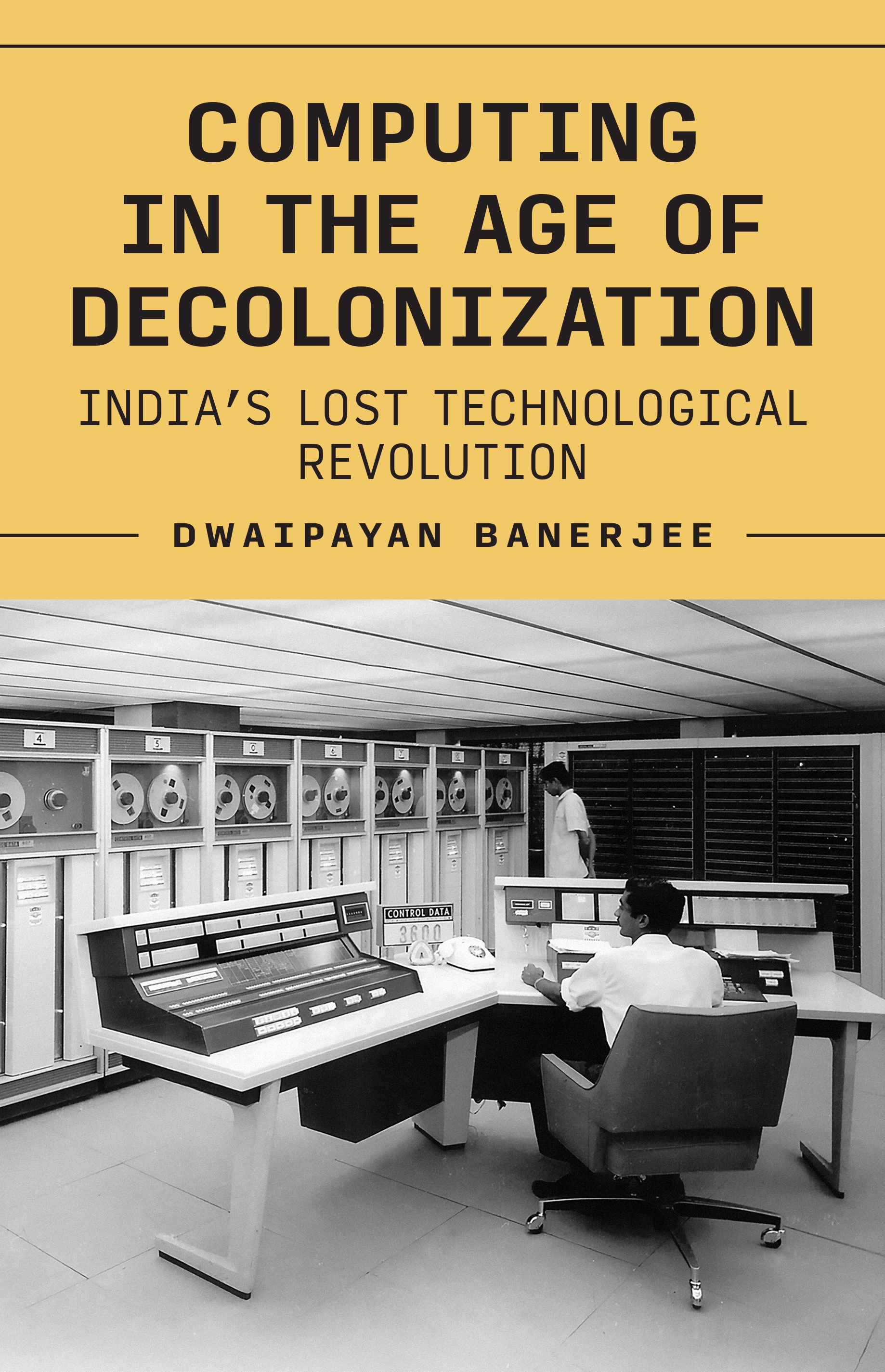
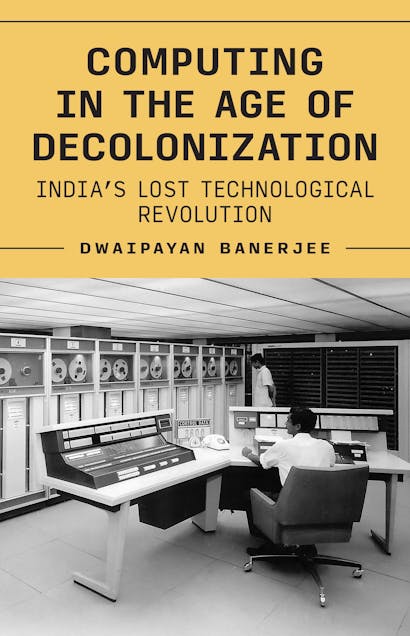
India today is widely recognized for producing world-class tech talent and Silicon Valley leaders, yet captures only a fraction of the global tech industry鈥檚 profits, primarily providing skilled but inexpensive labor for Western corporations. Computing in the Age of Decolonization uncovers the overlooked history behind this paradox, tracing India’s ambitious but ultimately thwarted drive to build a self-reliant computing industry from the 1950s to the 1980s.
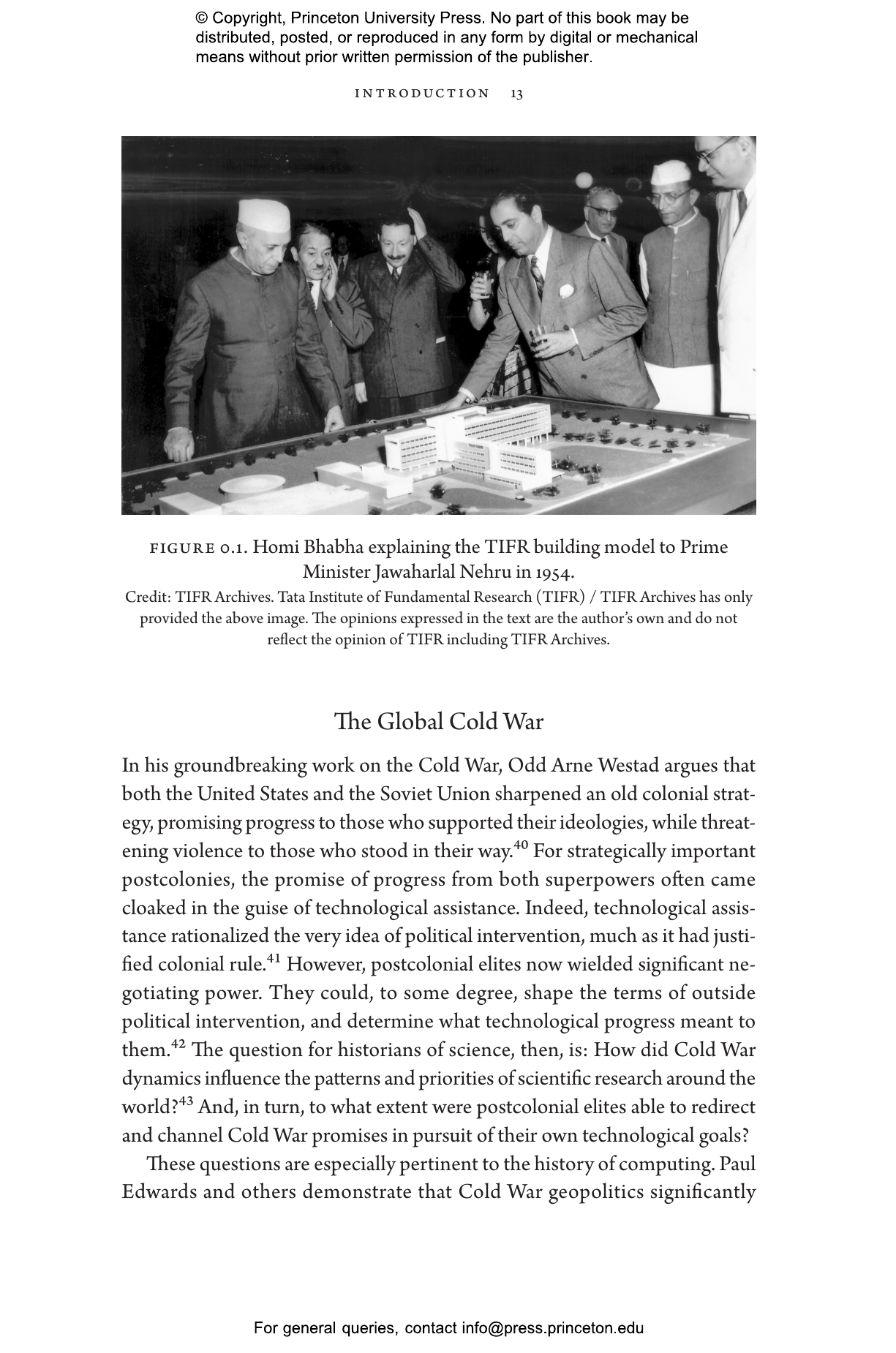
After independence in 1947, Indian scientists and policymakers at institutions such as the Tata Institute of Fundamental Research saw computing as central to national sovereignty, economic growth, and scientific advancement. Through projects such as the groundbreaking TIFRAC computer and the decisive expulsion of IBM, they aimed for technological independence. But almost immediately, these initiatives faced powerful political and economic headwinds. Indian computer scientists grappled with Cold War politics, international trade imbalances, US corporate monopolies, and strategic decisions by India’s technocratic elite, who favored profitable technical services over costly investments in research and manufacturing.
In narrating this lost future, Computing in the Age of Decolonization shows that genuine technological independence requires more than technical expertise鈥攊t demands addressing enduring political and social structures rooted in colonial legacies. As global struggles over technology intensify, this book reveals how historical pathways continue to shape contemporary battles for technological and economic sovereignty.
Dwaipayan Banerjee is associate professor in the Program in Science, Technology, and Society at the Massachusetts Institute of Technology. He is the author of Enduring Cancer: Life, Death, and Diagnosis in Delhi and the coauthor of Hematologies: The Political Life of Blood in India.
"This is more than a story of bad decisions and lost opportunities. For Banerjee, it’s a cautionary tale about the enduring effects of empire: the long psychological reach of providing cheap labor and raw materials for two centuries while the colonizers reaped the real profits."鈥擜ngela Saini, Los Angeles Review of 快色直播
"[A] fascinating study."鈥擯ratap Bhanu Mehta, Foreign Affairs
"Dwaipayan Banerjee’s Computing in the Age of Decolonization: India’s Lost Technological Revolution tells a compelling history of a newly independent India, struggling to define itself as a sovereign nation after casting off Britain’s colonial rule from the late 1940s to the mid-1970s."鈥擳racie Farrell, International Journal of Asian Studies
"This marvelous book, written with clarity and verve by Dwaipayan Banerjee . . . excavates the history of India’s computing industry to offer a persuasive explanation that centers political and economic factors as much as technological ones."鈥擭ikhil Menon, Issues in Science and Technology
“How did India, a vast incubator of computing talent, fail to realize its postcolonial dreams of technological sovereignty? Banerjee’s sobering answer to digital triumphalism traces the doomed struggle between global capital and India’s fledgling policy institutions. To break out of the cycle of dependency, Banerjee convincingly argues, India needs social transformation, not more expertise.”—Sheila Jasanoff, Harvard University
“The uneven global development of digital technology was a feature, not a bug. With his scrupulous accounting of ultimately failed Indian efforts to secure technological sovereignty in the wake of independence, Dwaipayan Banerjee joins the best recent accounts of computing worldwide and transforms how we think through diverse national trajectories through the Cold War and beyond. Demonstrating how American technological predominance rested upon underdevelopment elsewhere, Computing in the Age of Decolonization will be essential to all future histories and the political economies of information technologies.”—Matthew L. Jones, 快色直播 University
“A powerful account of the early years of computing in India and the lost opportunity of technical innovation as scientists worked to change the course of global technical futures. Brilliant and narratively compelling, Computing in the Age of Decolonization is an innovative history that recasts the geopolitics of global computing and fundamentally transforms the origins of our technological present.”—Durba Mitra, author of Indian Sex Life: Sexuality and the Colonial Origins of Modern Social Thought
“Well-written and original. Banerjee adds depth to the history of computing, beautifully weaving together different genealogies of science and technology in India.”—Amit Prasad, Georgia Institute of Technology