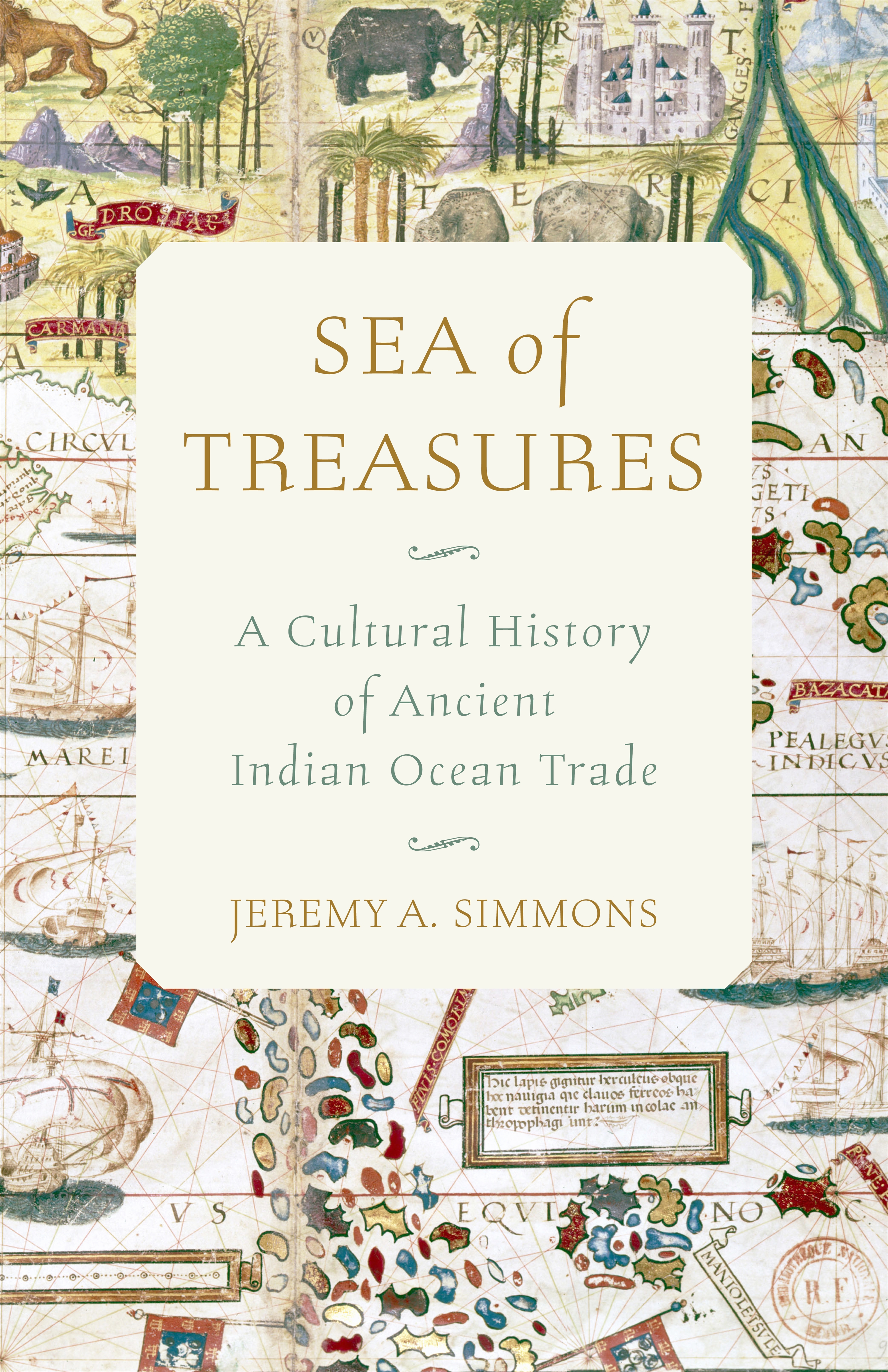
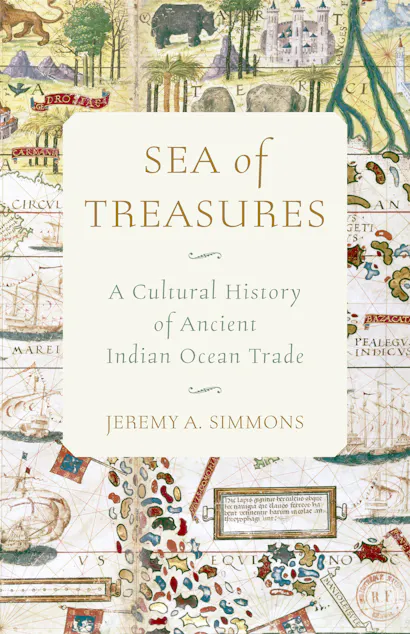
The ancient world was a far more interconnected place than is often assumed. Maritime routes across the Indian Ocean, by no means peripheral, made these connections possible. In Sea of Treasures, Jeremy Simmons puts forth an entirely new perspective on Indian Ocean commerce, starting with commodities of trade and the patterns of consumption that resulted from their importation. Looking beyond the mechanics of long-distance travel or the economics of 鈥淚ndo-Roman鈥� exchange, Simmons considers the consequences of objects in motion: how Indian Ocean imports shaped the lives of humans throughout the wider ancient world. In his exploration of textual and archaeological sources from both the Mediterranean basin and the Indian subcontinent, he traces a series of sensuous and intellectual engagements that entangled people and things both tangible and intangible, from spices, coins, and gemstones to information and artistic style.
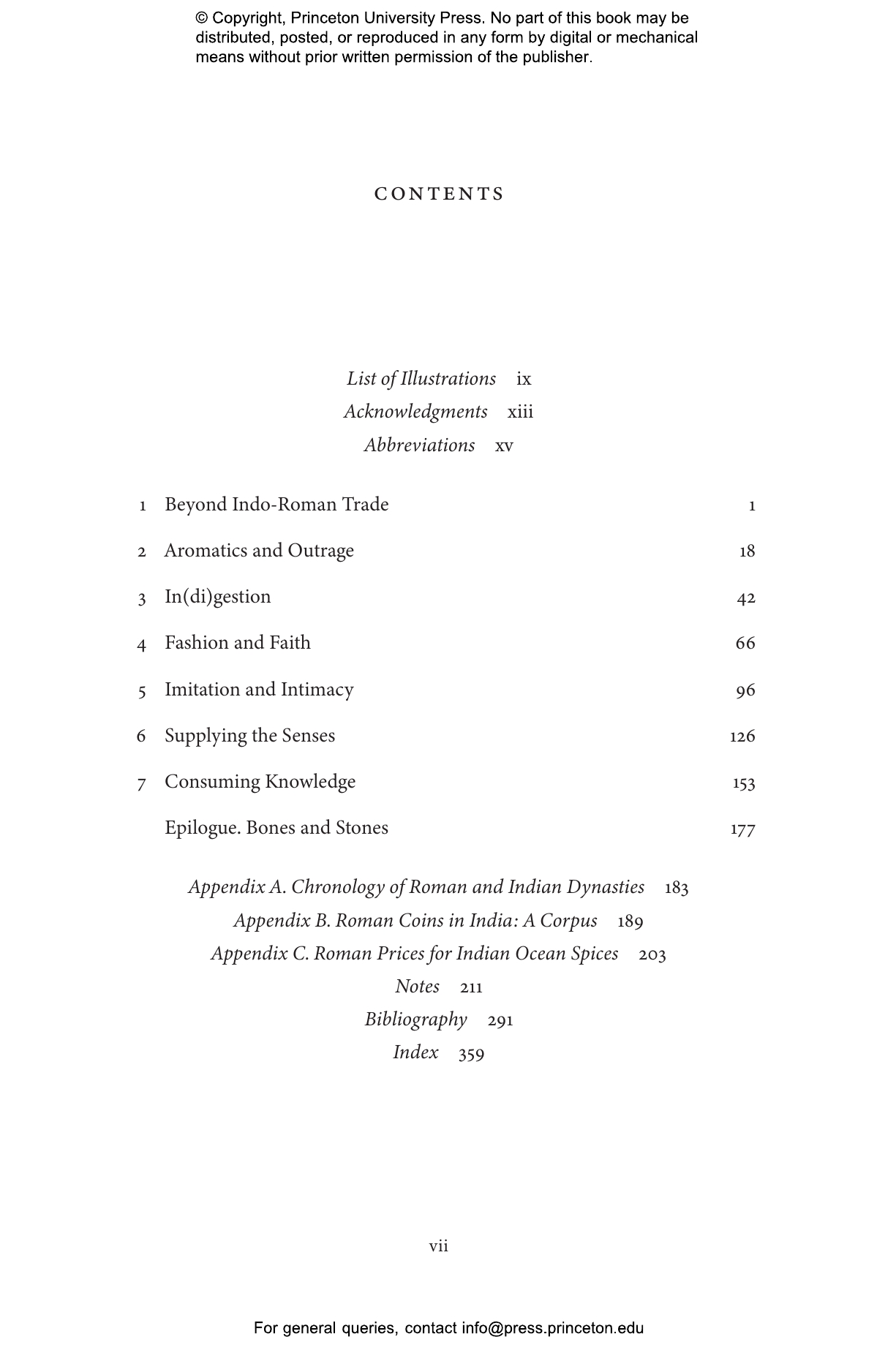
Each chapter addresses a different encounter and its experiential effects, including Roman outrage at Indian Ocean products; ingestion of consumables such as spices and alcohol; adornment and its sociocultural value; indirect exposure to luxury goods and the proliferation of imitations; and elite access to knowledge about treasured commodities. Drawing on theoretical discussions relating to objects, their material composition, and their roles in human activity, Simmons offers a cultural history of Indian Ocean trade through a holistic understanding of consumption. By interrogating long-held assumptions about Mediterranean dominance in Indian Ocean trade, Simmons expands our understanding of a global Afro-Eurasian world鈥攐ne that afforded relationships with an ever-widening array of things.
"Challenging familiar narratives of Roman centrality, [Sea of Treasures] presents a richly interconnected Afro-Eurasian world linked as much by fascination as by commerce."鈥�Indulge Magazine
"Accessible. . . . Simmons distills a panoply of sources to reveal what Adam Smith noted in 1776, that 'the propensity to truck, barter, and exchange one thing for another is common to all men.' Then as now, we are all richer for it."鈥擩ames Herndon, Asian Review of 快色直播
“Through vigorous, creative thinking, Simmons wrestles with a glittering array of objects, odors, sensations, and tastes that comprised an entangled ancient world, moving beyond banal assertions of connectivity and the seductive mirage of ‘Indo-Roman’ trade. This is what the study of global antiquity can achieve with the right combination of languages, skills, and good sense.”—Josephine Quinn, author of How the World Made the West: A 4,000 Year History
“From Hadrian's Wall to Sri Lanka, Simmons reconstructs a connected world brought together by the combined ingenuity of kings and merchants living around the Indian Ocean and beyond it. This is a bold and compelling new vision of how desires, tastes, and ambitions wove together Romans and Greeks, Egyptians and Kushans, Tamils and many, many other peoples.”—Greg Woolf, author of The Life and Death of Ancient Cities: A Natural History
“Drawing on an impressive array of sources, this book makes a major intervention through its nuanced discussion of the consumption of commodities that moved across the Indian Ocean, their sensory impact, the reactions and anxieties they provoked, and how they changed the lives of people in an interconnected Afro-Eurasian world.”—Upinder Singh, author of Political Violence in Ancient India
“In this extensively researched book, Simmons makes use of a fresh and compelling consumer perspective to understand the extensive trade networks that democratized access to far-flung goods. He deftly engages with literary sources from the Indian subcontinent and the Greco-Roman Mediterranean to understand the meaning and attraction of perfumes, foods, textiles, wine, and gems—and how they transformed into items of desirable exotica.”—Monica L. Smith, University of California, Los Angeles
“A valuable addition to the field, this provocative and engaging book is distinctive in its focus on commodities and the ways in which they inform human activity, relationships, and senses of self.”—Matthew Cobb, author of Rome and the Indian Ocean Trade: From Augustus to the Early Third Century
“This book is ambitious, tackling in a novel way a subject that has seen much discussion in recent years. Simmons’s range is impressive, and the rich combination of sources drawn from the Roman world and from the Indian subcontinent is the product of deep and wide study.”—Astrid Van Oyen, author of The Socio-Economics of Roman Storage: Agriculture, Trade, and Family