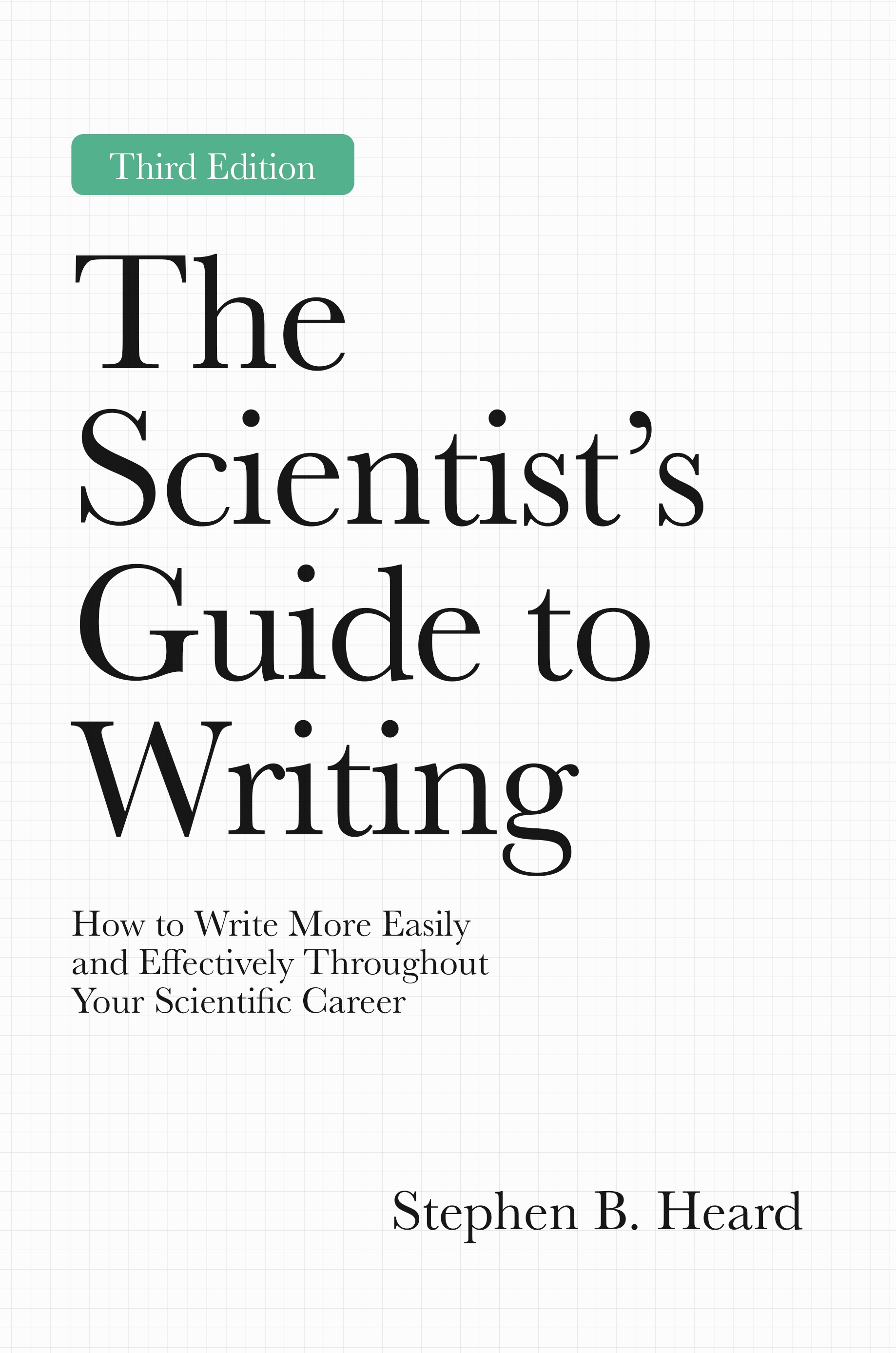
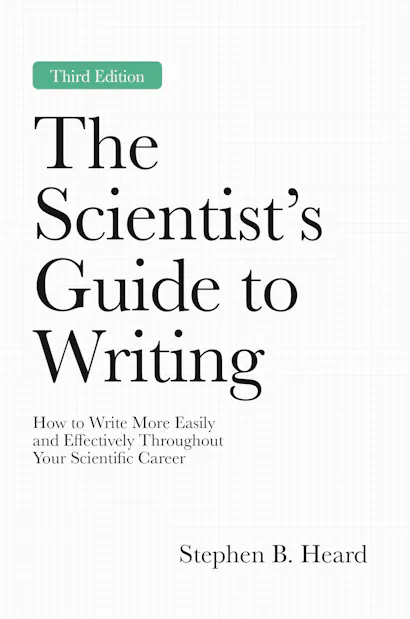
The Scientist鈥檚 Guide to Writing explains the essential techniques that students, postdocs, and early-career scientists need to write more clearly, efficiently, and easily. Now in its third edition, this incisive primer offers practical advice on a host of topics, from maintaining writing momentum to structuring a scientific paper, revising a first draft, reading effectively, handling citations, responding to peer reviews, and choosing the right journal for your research. The ability to write clearly is critical to any scientific career. This book shows scientists how to become better writers so that their ideas have the greatest possible impact.
- Features a new chapter on AI writing tools that discusses the benefits and pitfalls of using LLMs as well as the legal, ethical, and professional implications scientists need to consider before working with them
- Provides expanded coverage of preprinting and predatory journals, humor and cultural references in titles, graphical abstracts, and managing very large coauthorship teams
- Offers detailed guidance on submission, review, revision, and publication
- Shares invaluable advice on reporting statistical results, dealing with conflicting peer reviews, writing with English as an additional language, and more
- Encourages habits that improve motivation and productivity
- Includes a wealth of exercises along with numerous new literature citations to support the discussions in the book
Stephen B. Heard is professor of biology at the University of New Brunswick in Canada. He is the author of Charles Darwin’s Barnacle and David Bowie’s Spider: How Scientific Names Celebrate Adventurers, Heroes, and Even a Few Scoundrels and (with Bethann Garramon Merkle) Teaching and Mentoring Writers in the Sciences: An Evidence-Based Approach.
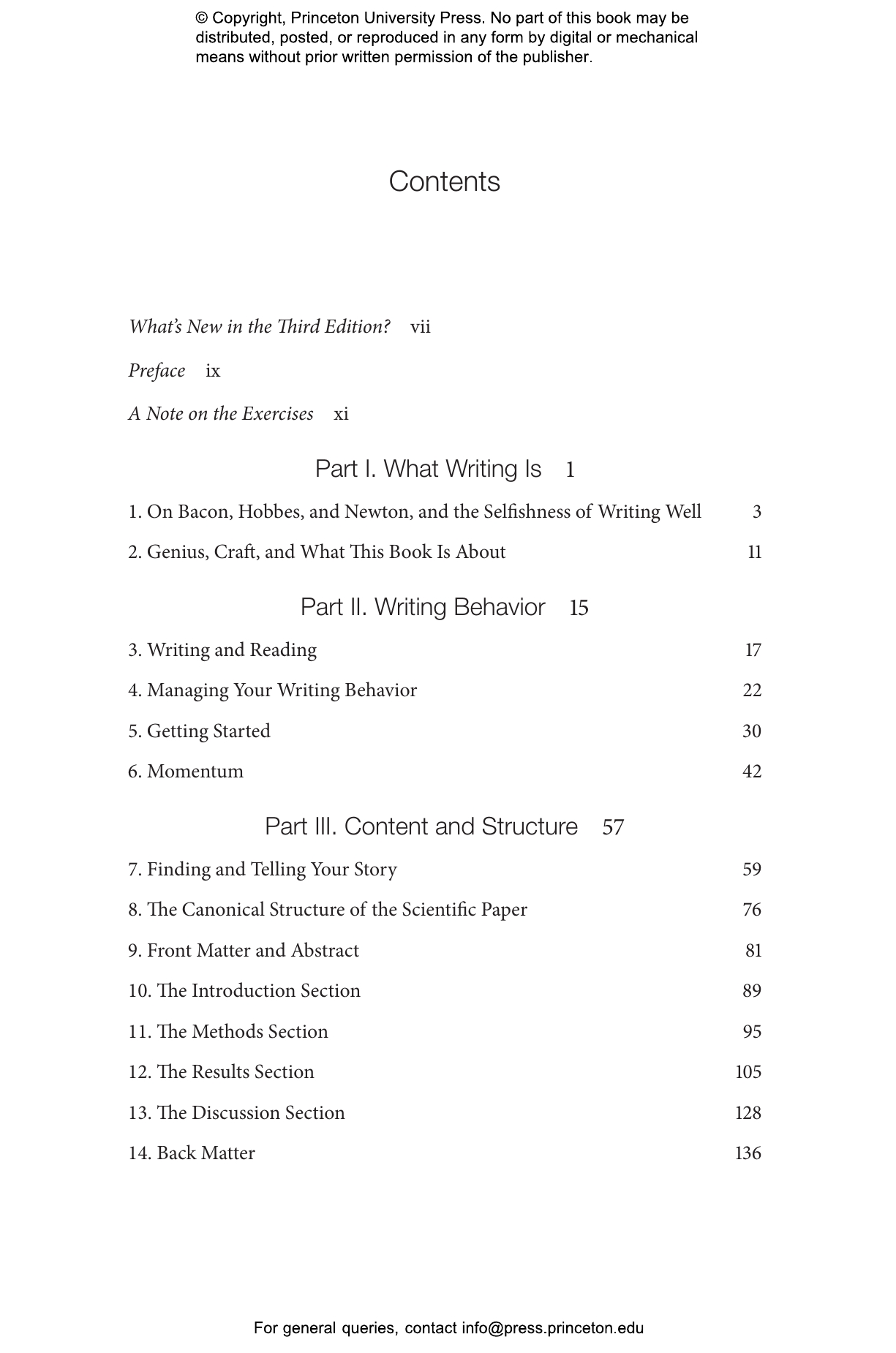
- What鈥檚 New in the Third Edition?
- Preface
- A Note on the Exercises
- Part I. What Writing Is
- 1. On Bacon, Hobbes, and Newton, and the Selfishness of Writing Well
- 2. Genius, Craft, and What This Book Is About
- Part II. Writing Behavior
- 3. Writing and Reading
- 4. Managing Your Writing Behavior
- 5. Getting Started
- 6. Momentum
- Part III. Content and Structure
- 7. Finding and Telling Your Story
- 8. The Canonical Structure of the Scientific Paper
- 9. Front Matter and Abstract
- 10. The Introduction Section
- 11. The Methods Section
- 12. The Results Section
- 13. The Discussion Section
- 14. Back Matter
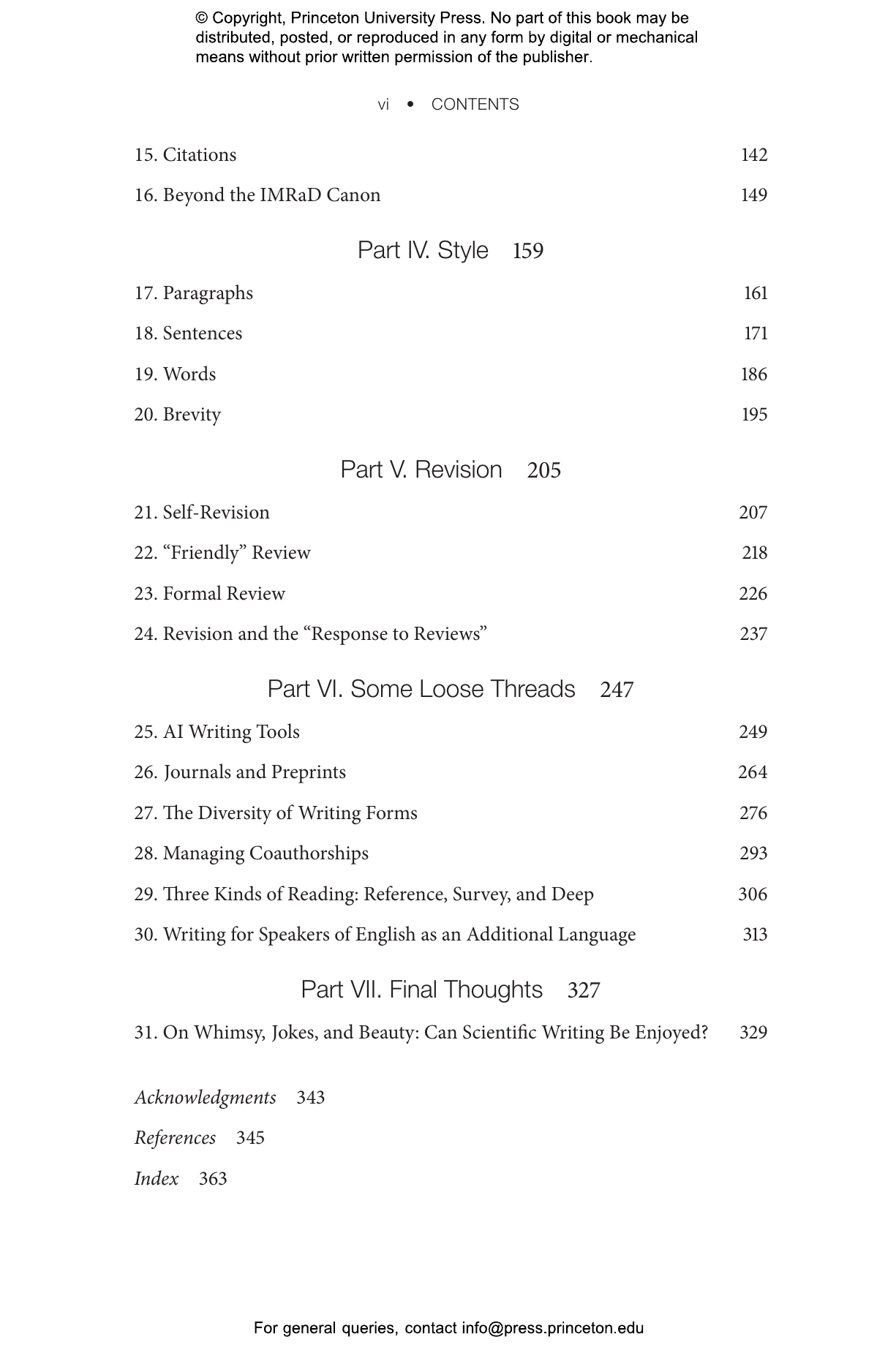
- 15. Citations
- 16. Beyond the IMRaD Canon
- Part IV. Style
- 17. Paragraphs
- 18. Sentences
- 19. Words
- 20. Brevity
- Part V. Revision
- 21. Self-Revision
- 22. 鈥淔riendly鈥� Review
- 23. Formal Review
- 24. Revision and the 鈥淩esponse to Reviews鈥�
- Part VI. Some Loose Threads
- 25. AI Writing Tools
- 26. Journals and Preprints
- 27. The Diversity of Writing Forms
- 28. Managing Coauthorships
- 29. Three Kinds of Reading: Reference, Survey, and Deep
- 30. Writing for Speakers of English as an Additional Language
- Part VII. Final Thoughts
- 31. On Whimsy, Jokes, and Beauty: Can Scientific Writing Be Enjoyed?
- Acknowledgments
- References
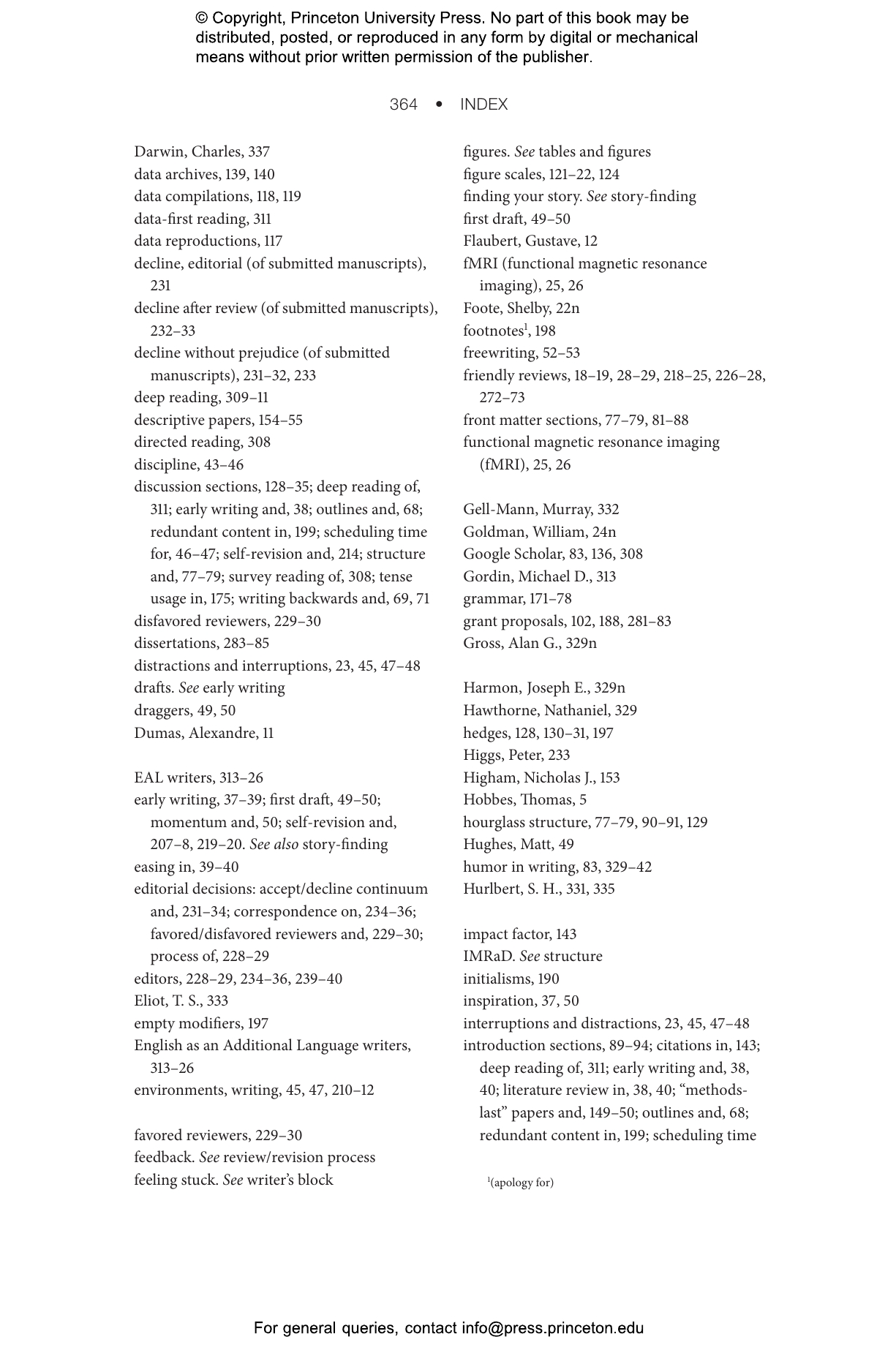
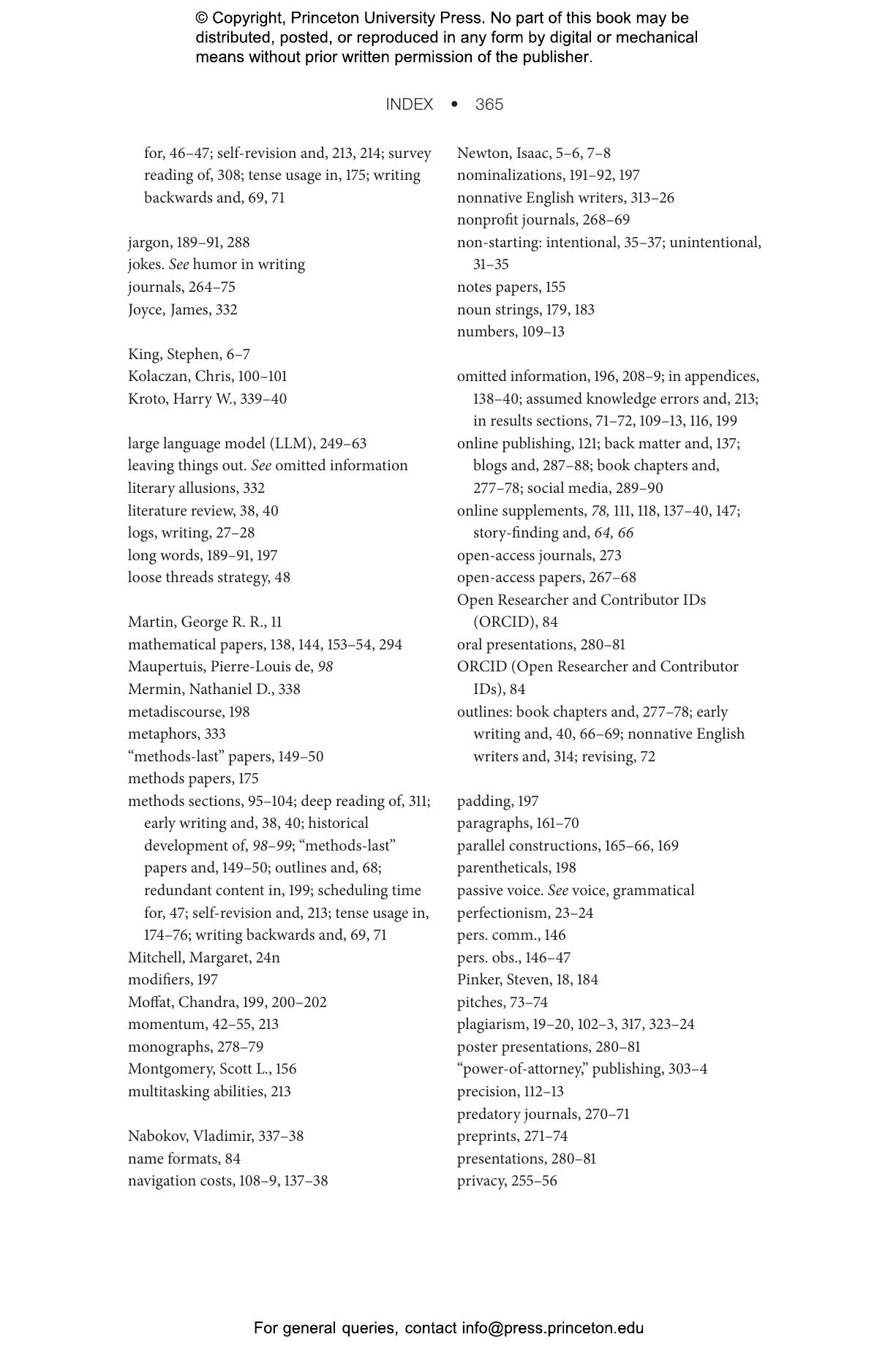
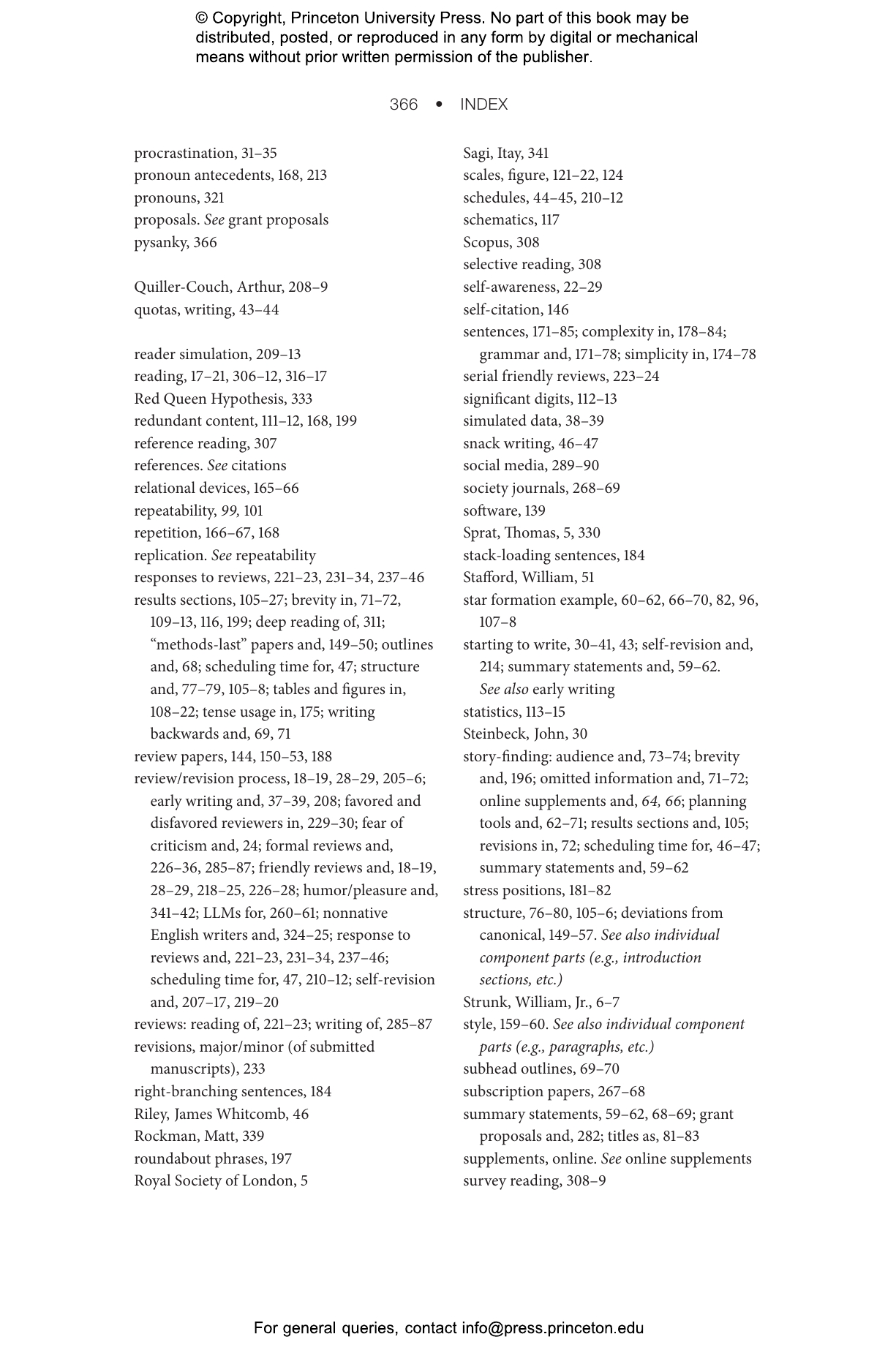
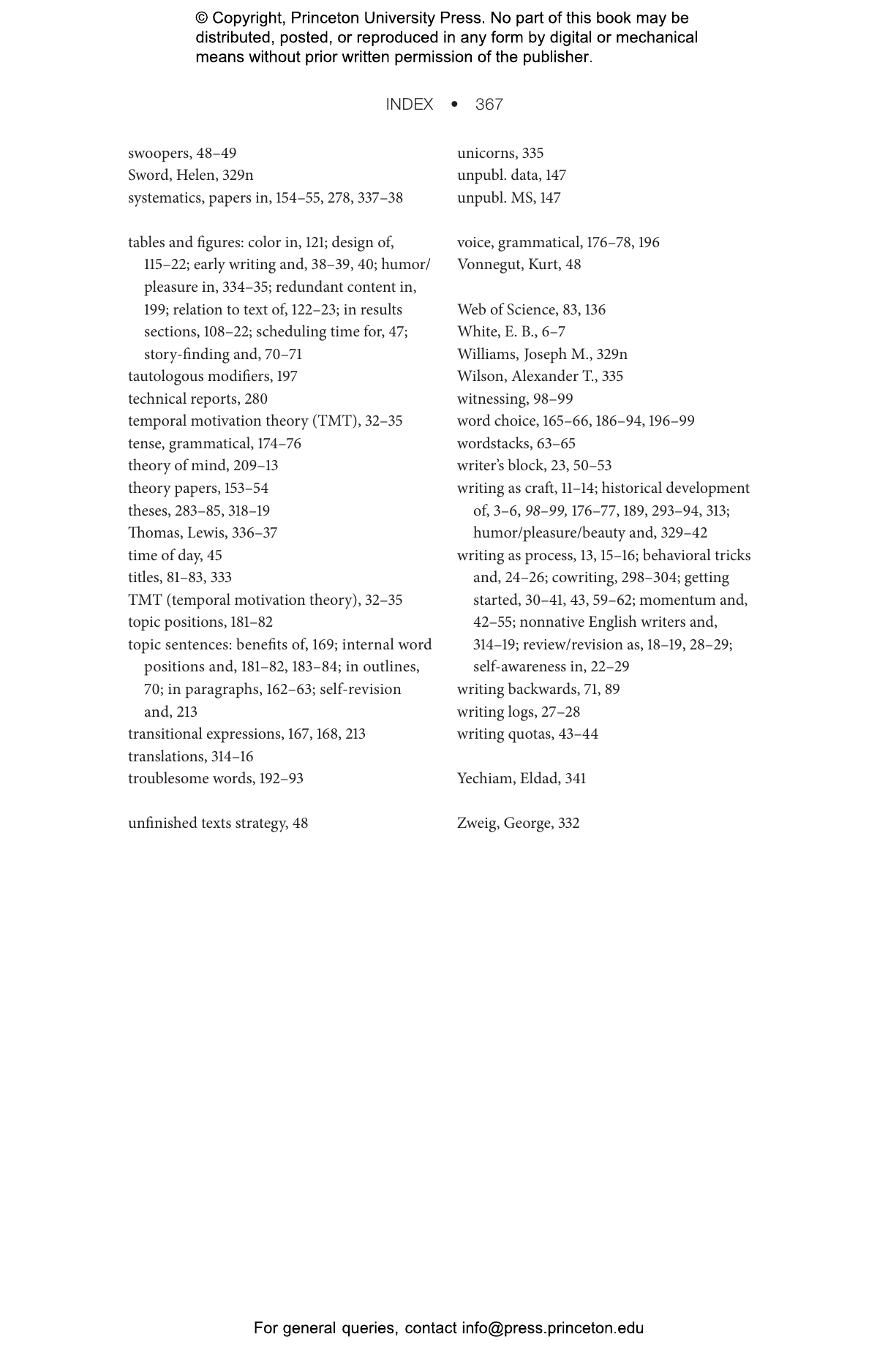
- Index
“The Scientist’s Guide to Writing is a practical, hands-on guide that will help you develop a healthy and effective writing practice. It’s also an inspiring love letter to science and the written word that will remind you why writing matters. I’ve watched the warm, wise advice in this book demystify writing and give students confidence to share their science powerfully and with care for their reader. Plus, it’s funny and full of good life advice. The world would be a better place if every scientist read this book!”—Kimberly Nicholas, author of the Los Angeles Times bestseller Under the Sky We Make: How to Be Human in a Warming World
“This book is a handy reference guide that offers excellent and well-grounded advice about scientific writing. For less experienced writers, and for students in scientific writing courses, this book provides the structure and scaffolding necessary for solid communication. For those of us who have more experience, the accumulation of helpful tips and perspectives is like having a talented friend sitting next to you as you’re working on your project.”—Terry McGlynn, author of The Chicago Guide to College Science Teaching
“This book does a great job of providing readers with the tools needed to make writing easier and more effective by focusing on the process and developing the habit of writing. As a consequence, this is a great guide for graduate students, and will also be helpful to scientists who are looking for ways to improve their writing, and get more of it done.”—Dianna K. Padilla, Quarterly Review of Biology
“Heard’s book is both a delight to read and highly informative. . . . I recommend Stephen Heard’s book to anyone, not just to scientists who choose to improve their academic writing.”—Stephen K. Donovan, Journal of Scholarly Publishing