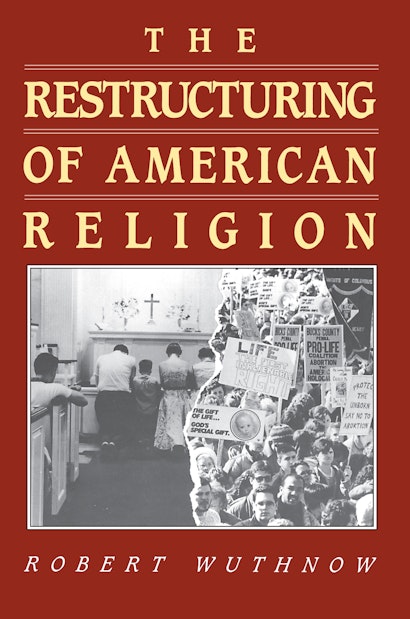
In this book, Robert Wuthnow gathers a vast amount of information into a narrative that answers numerous questions about the clash of religion and politics in the United States during the postwar era. In particular, he deciphers the growing polarization of religious liberals and religious conservatives, a serious division that generated conflicting claims about religion鈥檚 public role. While doing so, he reveals much about the character of American life more broadly.
This period witnessed the declining significance of denominationalism and the growth of hundreds of new special purpose groups representing more narrowly defined religious interests. Major denominations suffered serious membership losses, and conservative forces abandoned earlier separatist strategies and forged a significant cross-denominational movement.
Beginning by reconstructing the social and cultural milieu of religion in the immediate postwar period, Wuthnow goes on to trace the impact of concurrent developments such as the sharp growth in higher education, the expansion of the bureaucratic welfare state, and the unrest of the 1960s. The Restructuring of American Religion concludes by placing these changes in an interpretive framework that provides enduring insights into today鈥檚 conflicts between church and state.
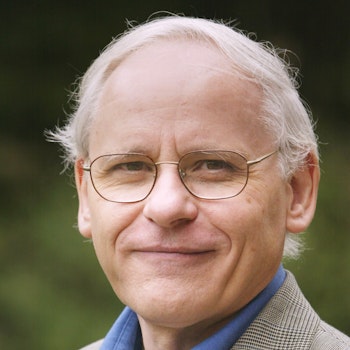
Robert Wuthnow鈥痠s a fellow of the American Academy of Arts and Sciences, a fellow of the American Philosophical Society, a Guggenheim Fellowship recipient, former president of the Society for the Scientific Study of Religion, and the recipient of numerous awards for his scholarly work. He is the author of Why Religion Is Good for American Democracy and What Happens When We Practice Religion? Textures of Devotion in Everyday Life (both 快色直播) and many other books.
"Illuminates great reaches of society beyond the confines of cathedral and chapel, tabernacle and temple. . . . So mountainous is the factual material on such a myriad of subjects and so thoughtful are the author's interpretations, grounded in a mastery of social science theory, that one can only be grateful for this brilliant examination of the public dimensions of religious culture."鈥�American Historical Review
"[The Restructuring of American Religion] is the most expansive and one of the most profound inquiries into the condition of American religious structure since World War II. . . . To carry on debates about this structure now without reference to Wuthnow would be to attempt to track a landscape of near-chaos without using the best available road map and set of markers. It is likely that we will be citing 'Wuthnow' as we have been referring eponymically to major interpretations of 'Herberg' or 'Berger' or 'Bellah.'"鈥擬artin Marty, Religious Studies Review
"This book is the most significant interpretation of recent American religious history available."鈥擩ohn M. Mulder, Theology Today
"An extremely penetrating, nuanced, and largely convincing account of what is really happening to American religion鈥攁n account worthy of comparison with, say, Herberg's Protestant-Catholic-Jew, or H. Richard Niebuhr's The Social Sources of Denominationalism, although Wuthnow's argument ultimately supersedes both."鈥擶ilfred M. McClay, Commentary