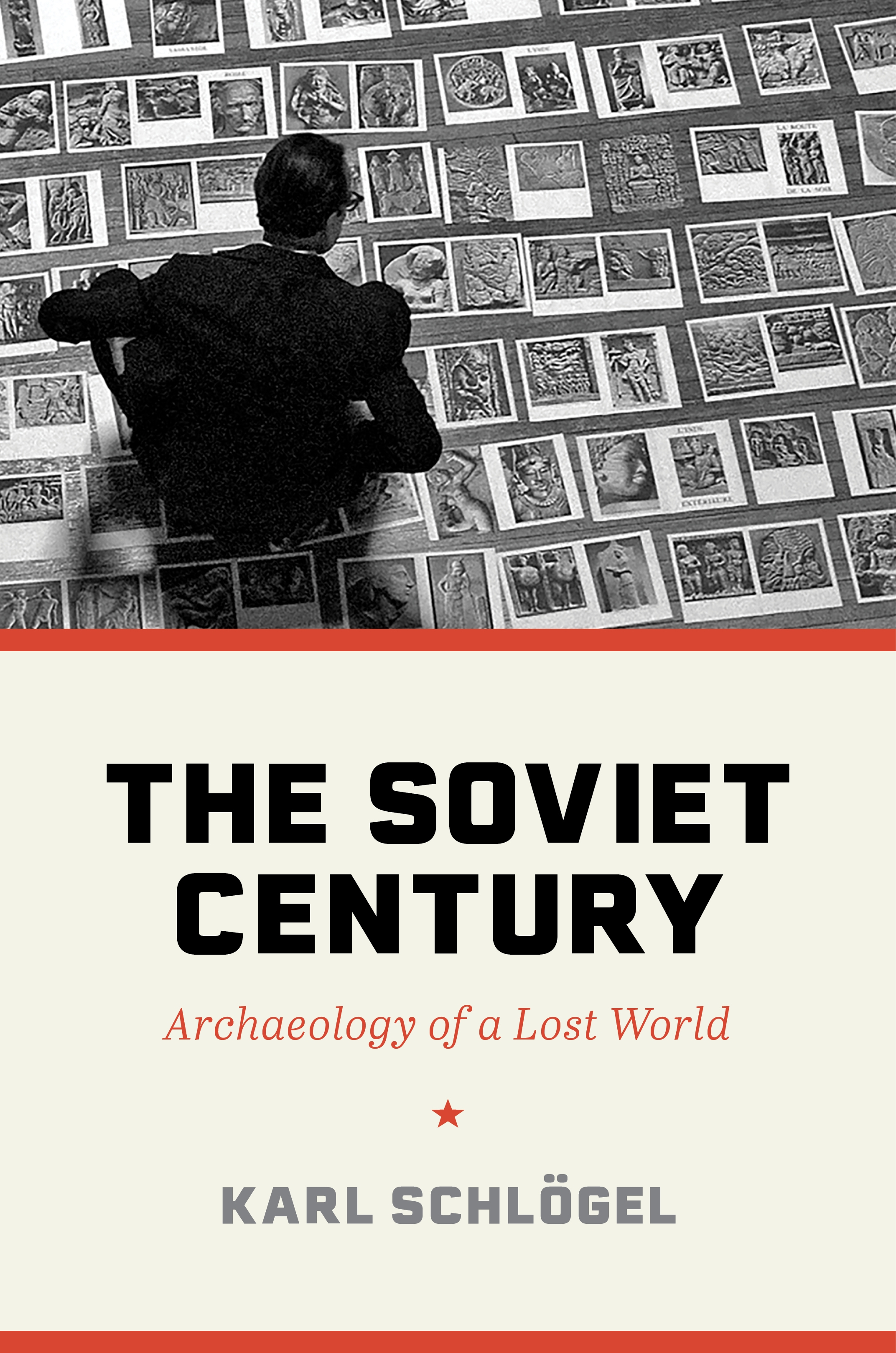
The Soviet Union is gone, but its ghostly traces remain, not least in the material vestiges left behind in its turbulent wake. What was it really like to live in the USSR? What did it look, feel, smell, and sound like? In The Soviet Century, Karl Schl枚gel, one of the world鈥檚 leading historians of the Soviet Union, presents a spellbinding epic that brings to life the everyday world of a unique lost civilization.
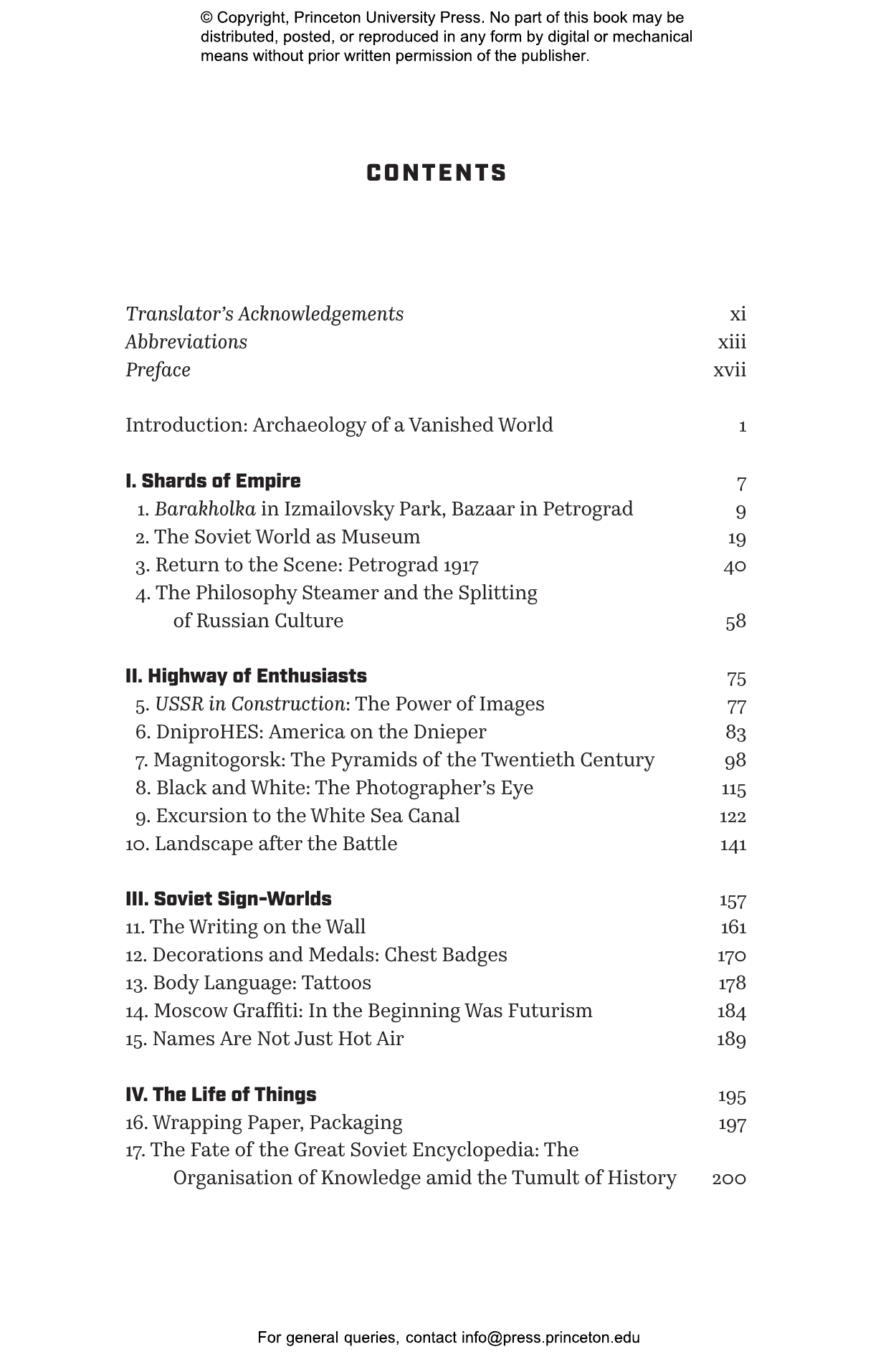
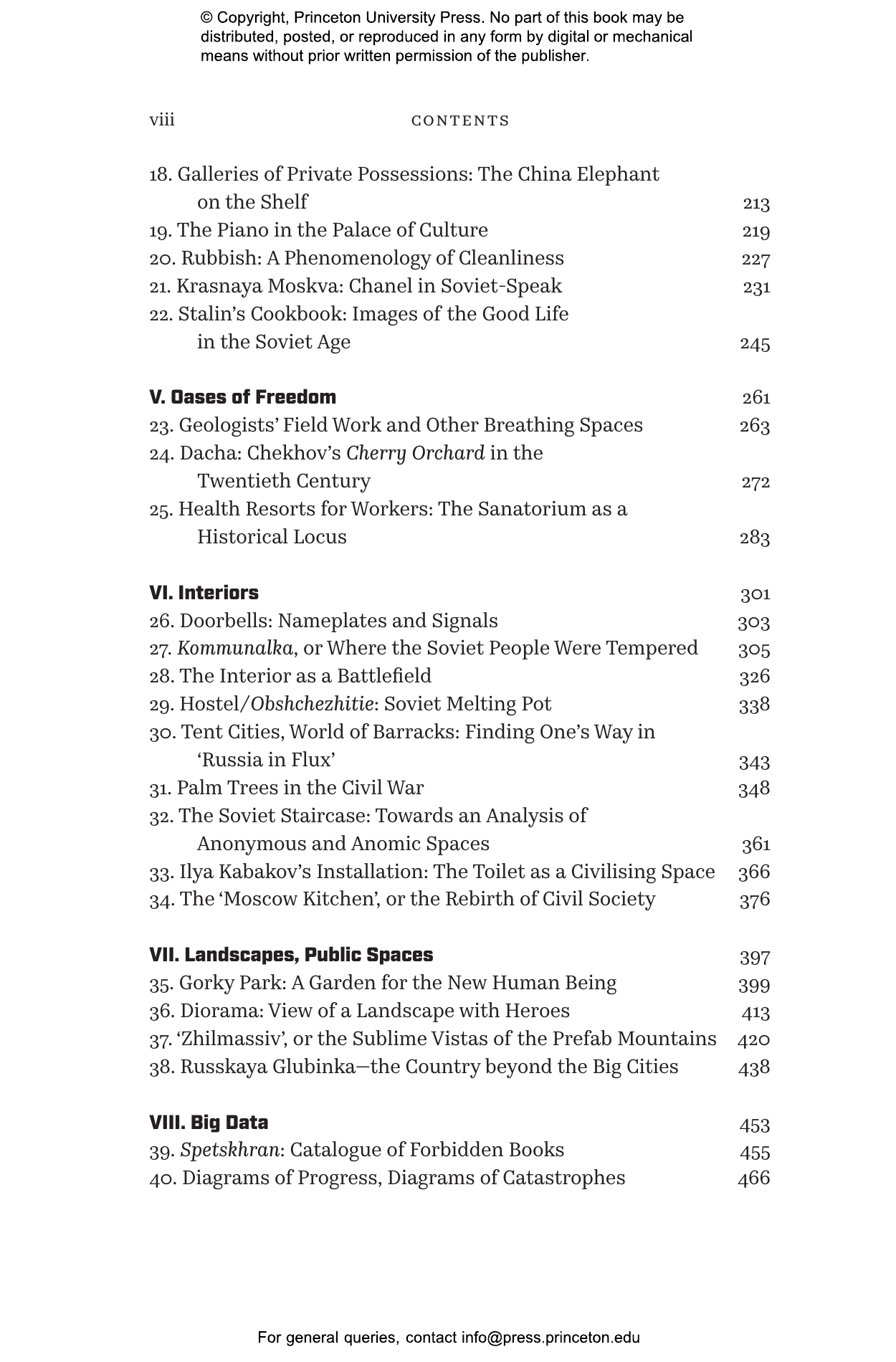
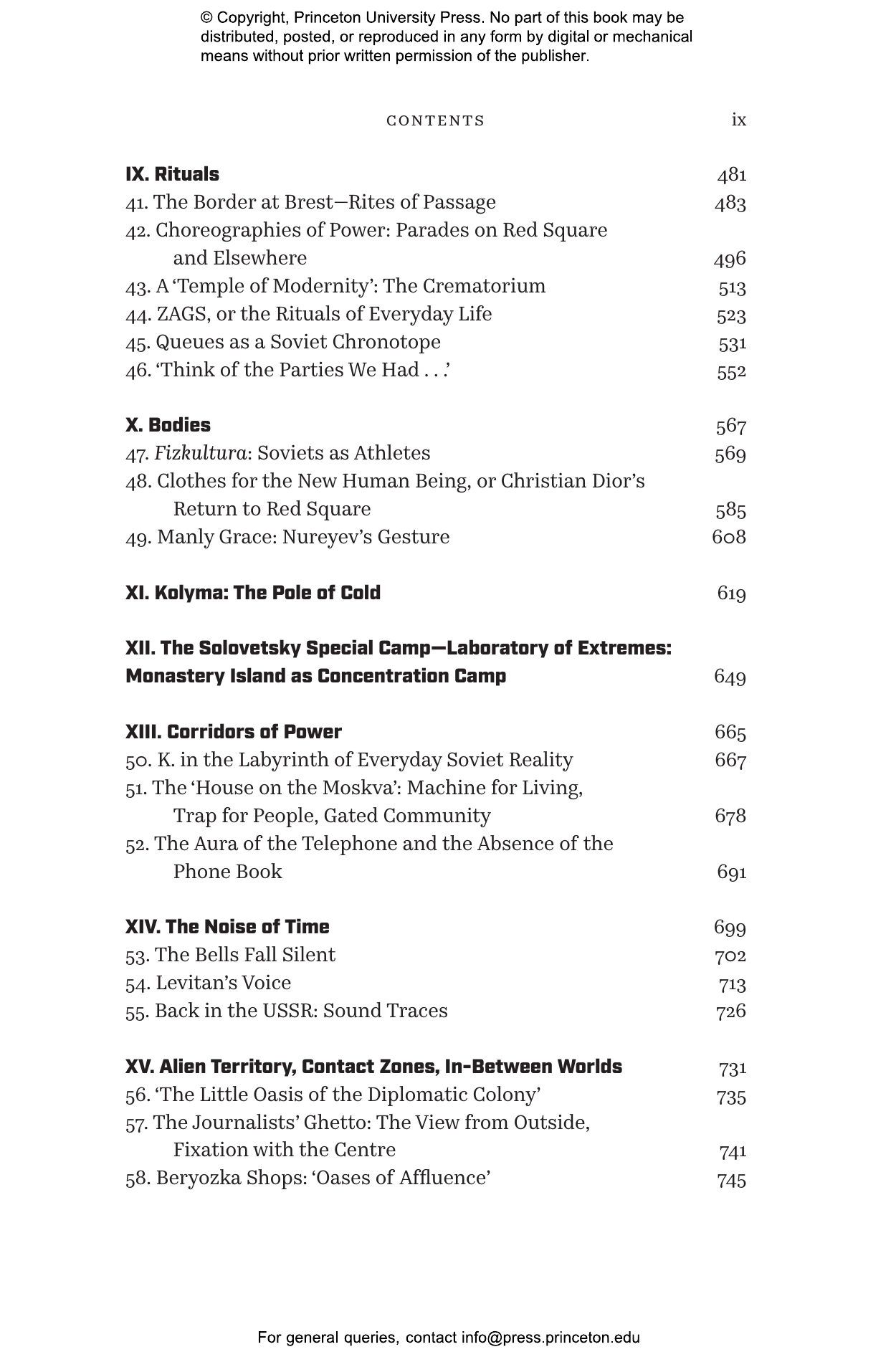
A museum of鈥攁nd travel guide to鈥攖he Soviet past, The Soviet Century explores in evocative detail both the largest and smallest aspects of life in the USSR, from the Gulag, the planned economy, the railway system, and the steel city of Magnitogorsk to cookbooks, military medals, prison camp tattoos, and the ubiquitous perfume Red Moscow. The book examines iconic aspects of Soviet life, including long queues outside shops, cramped communal apartments, parades, and the Lenin mausoleum, as well as less famous but important parts of the USSR, including the Great Soviet Encyclopedia, the voice of Radio Moscow, graffiti, and even the typical toilet, which became a pervasive social and cultural topic. Throughout, the book shows how Soviet life simultaneously combined utopian fantasies, humdrum routine, and a pervasive terror symbolized by the Lubyanka, then as now the headquarters of the secret police.
Drawing on Schl枚gel鈥檚 decades of travel in the Soviet and post-Soviet world, and featuring more than eighty illustrations, The Soviet Century is vivid, immediate, and grounded in firsthand encounters with the places and objects it describes. The result is an unforgettable account of the Soviet Century.
Awards and Recognition
- A Financial Times Best Summer Book
- A Financial Times Best Book of the Year- History
- A BBC History Magazine Book of the Year
- A Seminary Co-Op Notable Book of the Year
- A Telegraph Book of the Year
"An impressively evocative look at material life in the USSR, from gulags and the planned economy to Red Moscow perfume and the Soviet toilet — a “lost civilisation” of utopian fantasy and unbridled terror."鈥�Financial Times
"Who else could have a whole chapter on Soviet-era doorknobs? This is a fascinating book about the material loose ends, the pamphlets, the clothes, the non-existent phone books, the shop signs, the chest medals, and the bric-a-brac — among many other items — of the Soviet Union. . . . This is in my view one of the better books for understanding the Soviet Union."鈥擳yler Cowen, Marginal Revolution
"In a work of remarkable range and quality, Karl Schl枚gel explores the everyday life and material culture of the Soviet Union in ways that show the communist experiment in a compellingly fresh light. One of the most innovative books on Soviet history to appear since the state’s collapse in 1991."鈥擳ony Barber, Financial Times
"The Soviet Century . . . presents history in a novel way, showcasing customs and traditions, values and artefacts, that offer many poignant insights and helps readers understand the Russian psyche today. . . . It’s a fascinating, multi-faceted read that both takes historical stock and zooms in on miniature details."鈥擩ana Bakunina, Financial Times
"His focus is not on the foreign relations or domestic crises of Soviet rule but on outward appearances: the look, the smell, the sounds of everyday life. Based on decades of research and an intimate knowledge of history and culture, ‘The Soviet Century’ is a fascinating chronicle of a not-so-distant era."鈥擩oshua Rubenstein, Wall Street Journal
"Schl枚gel’s book is ingenious – thrilling, even – introducing readers to a [sic] extraordinary array of things that rarely find a place in history books: tattoos, wrapping paper, the place of pianos, and nameplates on apartments and houses."鈥擯eter Frankopan, BBC History Magazine
"Schl枚gel – assisted by his excellent translator, Rodney Livingstone – is an eloquent writer and a captivating travel guide around this Soviet “lost world”."鈥擲tephen Lovell, Times Literary Supplement
"A detailed examination of the relics of ordinary communist life. Perfect for dipping into."鈥擣red Studemann, Financial Times
"Karl Schl枚gel . . . and his wonderful noticing of things and how they sit in space is on full display in the 900-plus pages of The Soviet Century. Schl枚gel variously calls his book an archaeology, an exhibition, and a museum of the Soviet 鈥�'ifeworld.' Its focus on the things of everyday life makes it, in his view, not an 'encyclopedia of banalities鈥�'(a phrase used by the Russian historian Natalia Lebina about her own history of everyday life) but rather 'an encyclopedia of fundamentals.' Just about everything memorable and (to a Westerner) odd about Soviet everyday life is there."鈥擲heila Fitzpatrick, Foreign Policy
"[A] magnum opus. . . . This invaluable study casts a lost world in a new light."鈥�Publishers Weekly (Starred review)
"Who knew that, apart from his experiments with dogs, Ivan Pavlov wrote a preface concerning nutrition for a bestselling Soviet cookbook? That’s one of just many oddments Schl枚gel assembles in this utterly absorbing tour through the material goods that defined the Soviet era, from pulpy wrapping paper to the medals veterans wore, from canned goods to perfume and tchotchkes and everything in between. . . . A superb blend of social history and material culture, essential for students of 20th-century geopolitics."鈥�Kirkus Reviews (Starred review)
"A pinnacle in Soviet studies. . . . A splendid book."鈥�Library Journal (Starred review)
"Formidable. . . . The emergence of this book in our intellectual landscape is timely, as we seek to better understand Russia in an era when systematic political, economic, social, and even cultural approaches have failed to explain or predict the current resurrection of the 'Soviet Leviathan.' Indeed, perhaps 'the devil is hidden in the details,' and by diving yet again into these minute but culturally rich details of Soviet banal routine, spiritual life, and rituals, we can make a step forward in our comprehension of why the dark side of 'Soviet civilization' keeps reemerging again and again."鈥擮ksana Ermolaeva, EuropeNow (Editor's pick)
"Nine hundred pages in length and wonderfully illustrated throughout. . . .It is a welcome and unique contribution to Soviet studies."鈥擲teven Andrew, Morning Star
"A work of deep scholarship and significant breadth about a relatively brief period of recent history when it seemed that there might be an alternative economic system to capitalism."鈥擩oseph Brady, Society
"Extremely timely and utterly indispensable."鈥擵itali Vitaliev, Engineering and Technology
"The wealth of this book cannot be sufficiently explored within the limits of a review. Gibbonian in scale, it is a veritable cornucopia of jewels. “In Russia, radical changes and catastrophic experiences occur in their pure form,” Schl枚gel states. Reading his chronicle of this massive churn in all its sensory whimsies, we gain fresh insights into the lost world of the Soviet Union."鈥擯rasenjit Chowdhury, Hindustan Times
"A terrific book – eye opening, captivating and wholly revealing."鈥擠avid Marx, David Marx Book Reviews
"An extraordinary book. . . .When future historians pick up today’s pieces in their search for greater historical understanding of our own present, they will find in The Soviet Century an elegant example of how we might knit them together with nuance, empathy, expertise, and a deep humanity."鈥擝rigid O鈥橩eefe, Ab Imperio 鈥嬧�嬧�嬧�嬧�嬧�嬧��
"Reading Karl Schl枚gel’s The Soviet Century is to enter a conversation with an intelligent and probing mind, a scholar who wears his learning lightly and one who, practising cultural history at its most daring and exciting, shuns academic jargon. . . . Excellently translated into English, this is a book to be savoured in small chunks, to ponder over and return to. There are exceptional lyrical passages and brilliant generalisations."鈥擬ark Gamsa, Europe-Asia Studies
"Fascinating. . . . The scholarship of the work is evident throughout, but 'The Soviet Century' is both more powerful and more subtle than a typical work of scholarship. At its heart, it’s a gigantic, heartfelt elegy, one of the most stunning tributes ever paid to the Soviet Union."鈥擲teve Donoghue, Big Canoe News
“If the past is a foreign country, The Soviet Century is a unique travelogue from one of the world’s most innovative observers of urban space and material culture. Karl Schl枚gel’s scholarly Baedeker is the culmination of a lifetime of study, travel, and thought. It guides us across nothing less than a continental empire and a century of upheaval. But Schl枚gel’s greatest accomplishment is to connect stunningly eclectic new detail to the big picture, allowing us to see and feel a lost civilization anew.”—Michael David-Fox, Georgetown University
“Karl Schl枚gel has created a rich and fascinating mosaic of Soviet culture focusing on the manifold sensory qualities and experiences of everyday life. His insatiable curiosity leads him to wide panoramas and meaningful closeups of a culture that lives on in histories, memories, and appropriations.”—Joes Segal, The Wende Museum
“From the voice of Stalin’s favorite radio announcer to Kolyma’s vast system of Gulag camps, and from Red Army soldier graffiti to the Red October piano factory, Karl Schl枚gel’s The Soviet Century describes a vast culture that was by turns hope-inspiring and harrowing. A unique, immensely readable book!”—Jan Plamper, University of Limerick
“A museum of the totality of Soviet life would be impossible, but Karl Schl枚gel’s vividly written panorama comes close. With clarity and dry wit, Schl枚gel digs up the Soviet Union’s daily routines, rituals, landscapes, spaces, objects, and values to reveal how the empire’s reach could be both terrifyingly deep and astonishingly shallow.”—Yuliya Komska, author of The Icon Curtain: The Cold War’s Quiet Border
“The Soviet Century is a great monument to the vanished Soviet world. Rich, witty, and entertaining, the book offers a comprehensive textual museum that is all the more important because no such real-life museum exists in Russia or elsewhere, and I doubt that it will be created anytime soon. The more difficult it is to go to the White Sea Canal, the Lenin Mausoleum, or a Russian dacha, the more enjoyable is this book.”—Alexander Etkind, Central European University