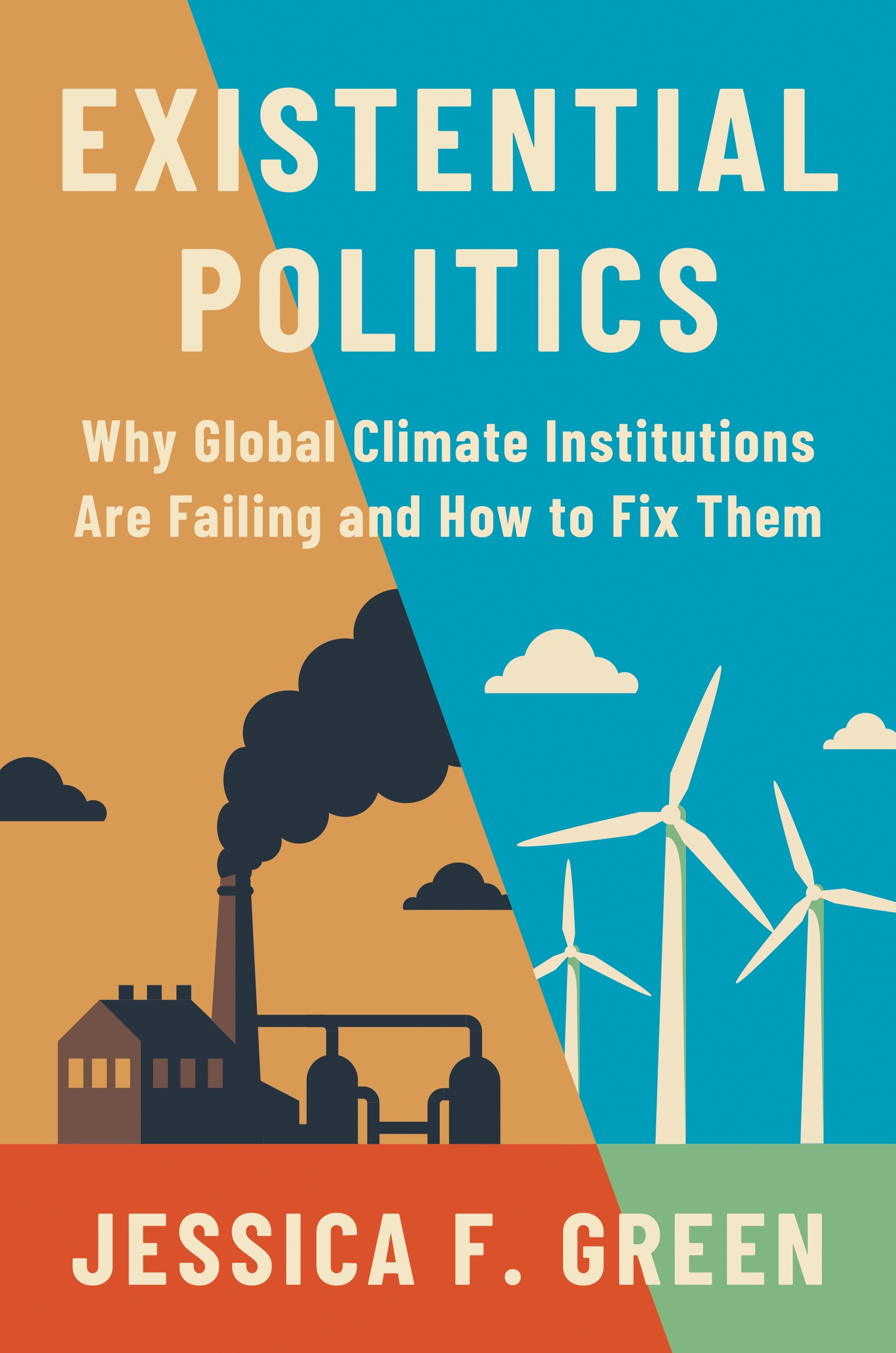
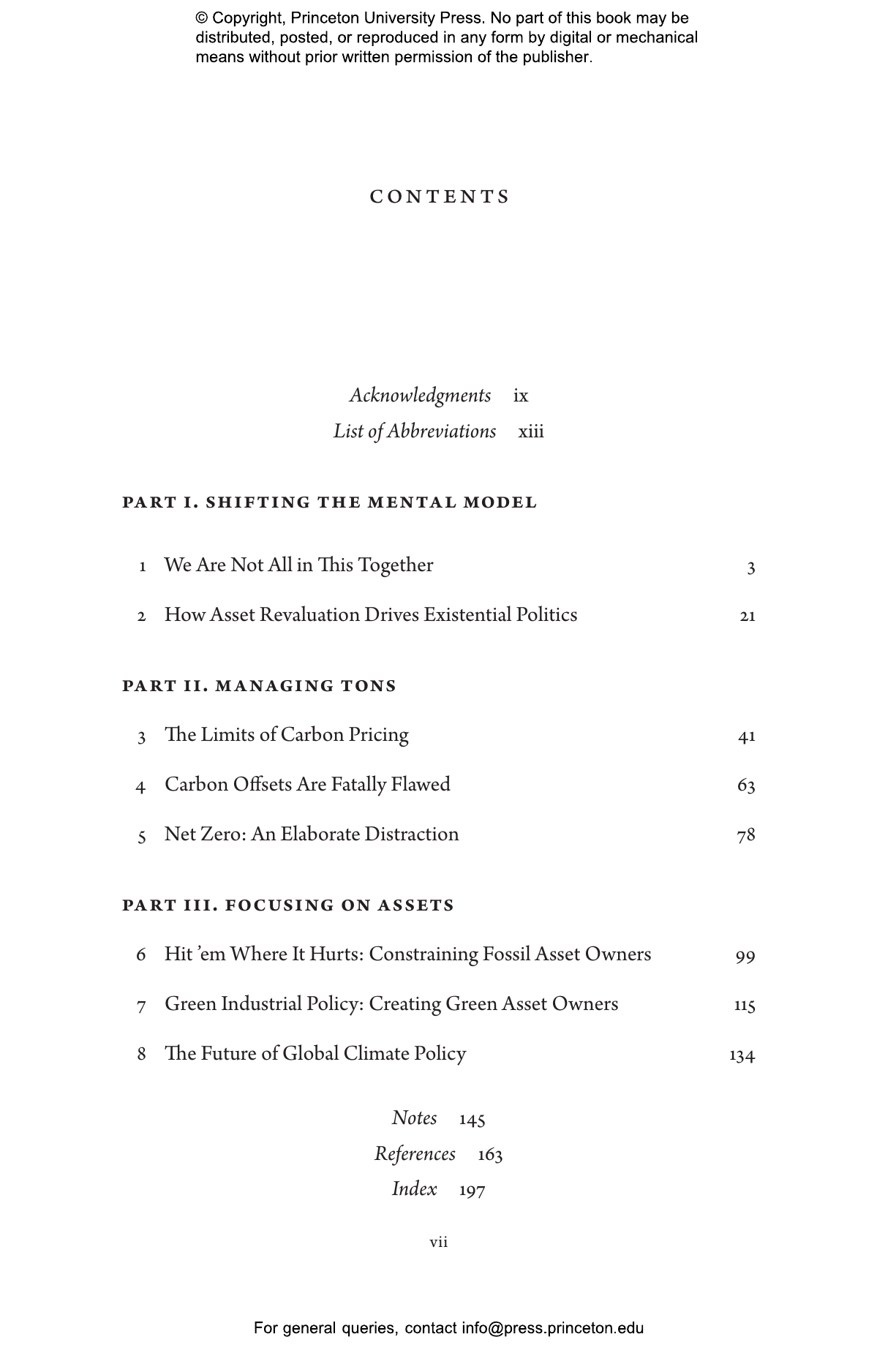
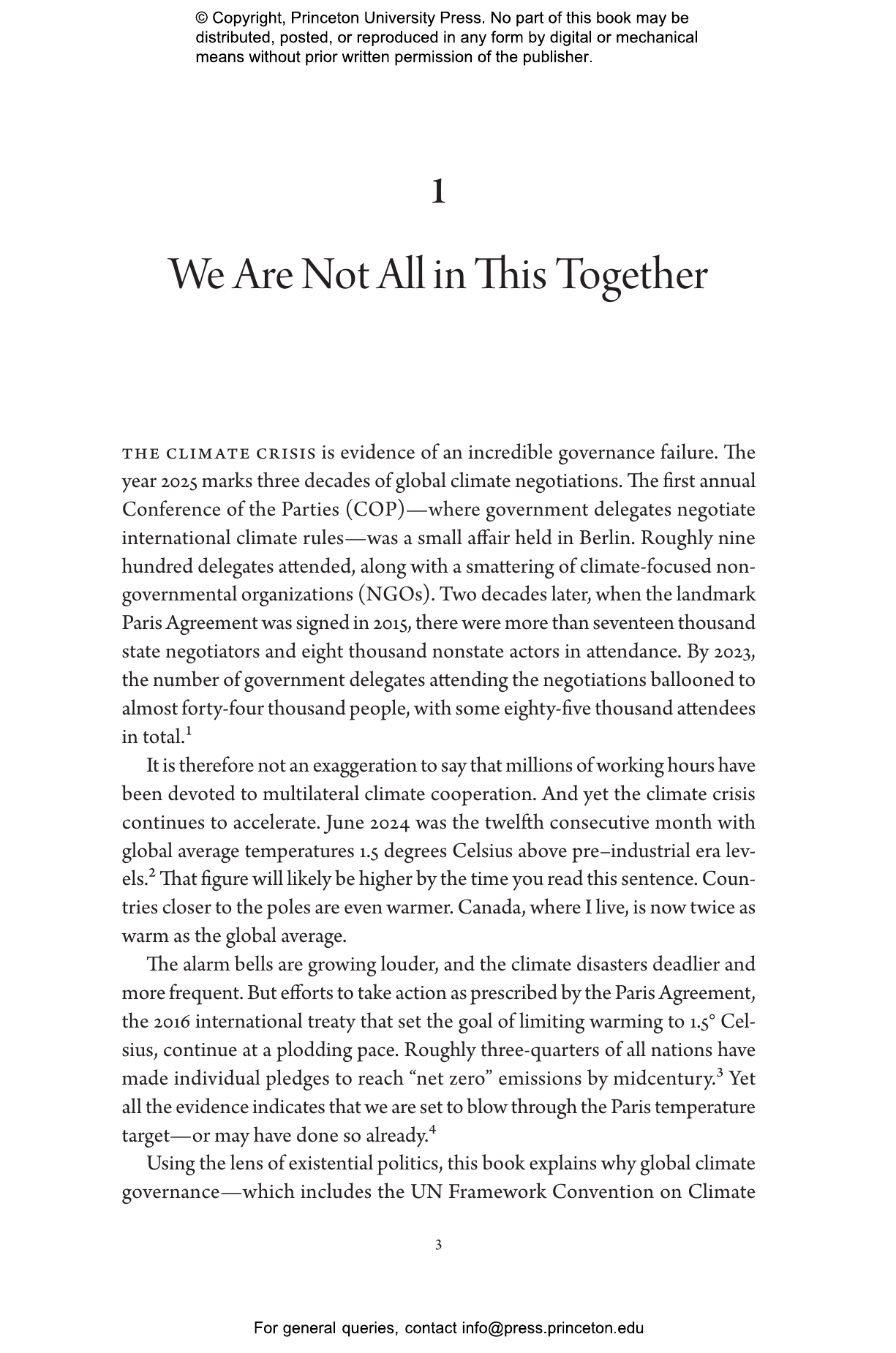
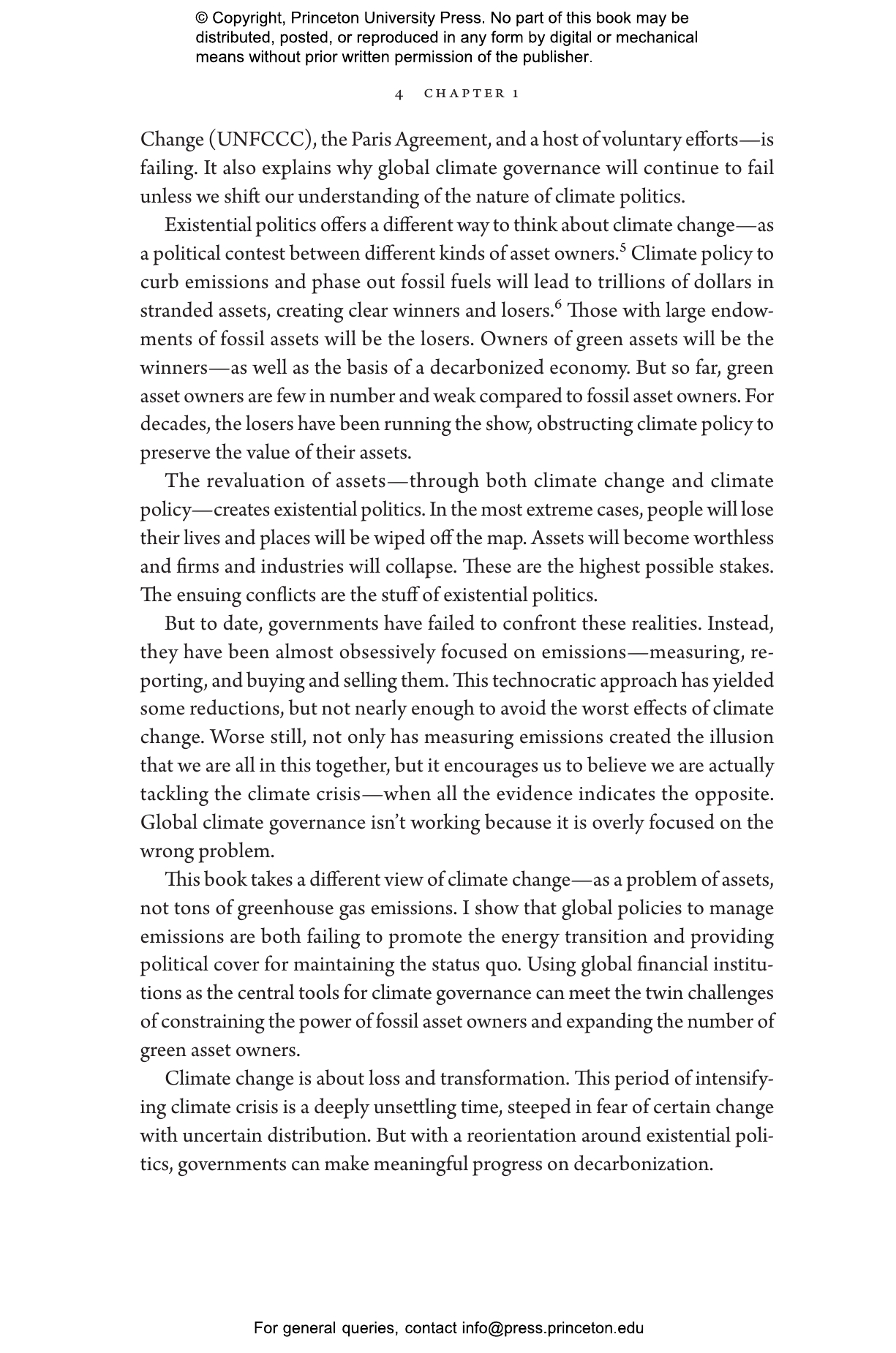
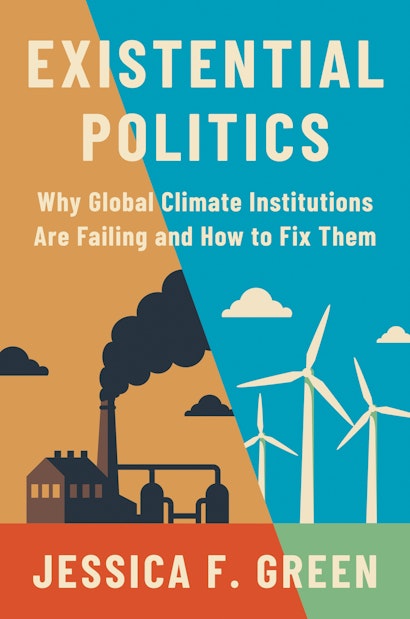
It鈥檚 no secret that the Paris Agreement and voluntary efforts to address climate change are failing. Governments have spent three decades crafting international rules to manage the climate crisis yet have made little progress on decarbonization. In Existential Politics, Jessica Green explains why this is unsurprising: governments have misdiagnosed the political problem of climate change, focusing relentlessly on measuring, reporting, and trading emissions. This technical approach of 鈥渕anaging tons鈥� ignores the ways that climate change and climate policy will revalue assets, creating winners and losers. Policies such as net zero, carbon pricing, and offsets all cater to the losers鈥攐wners of fossil assets.
Ultimately, Green contends, climate change is a political problem. Climate politics should be understood as existential鈥攃reating conflicts that arise when some actors face the prospect of the devaluation or elimination of their assets or competition from the creation of new ones. Fossil asset owners, such as oil and gas companies and electric utilities, stand to lose trillions in the energy transition. Thus, they are fighting to slow decarbonization and preserve the value of their assets. Green asset owners, who will be the basis of the decarbonized economy, are fewer in number and relatively weak politically.
Green proposes using international tax, finance, and trade institutions to create new green asset owners and constrain fossil asset owners, reducing their clout. Domestic investments in green assets, facilitated by global trade rules, can build the political power of green asset owners.
Jessica F. Green is Professor in the Department of Political Science and in the School of the Environment at the University of Toronto.
"[Existential Politics] provides a fascinating departure from conventional wisdom on how to address climate change, and delves into areas that many climate specialists are unlikely to be familiar with. . . . For those interested in multilateral politics, it is a solid and well-structured book with a well-set-out argument."鈥擩an Lee, Earth.Org
"Green’s important contribution is more of a provocation than a verdict—to bring attention to the fundamental issues underpinning the obstruction of effective climate policy. Green’s industrial policy is the most convincing avenue, in a world shifting towards energy abundance rather than energy transition."鈥擹issis Marmarelis, International Affairs
"We cannot understand the climate crisis without recognizing that it is a material struggle. As Jessica Green's insightful, searing book shows, climate action creates winners and losers. Continuing to fixate on counting up emissions without a political plan to break the power of the fossil fuel industry only benefits polluters. This is a must-read for anyone interested in understanding how we can tackle this existential problem."—Leah C. Stokes, University of California, Santa Barbara
“The power of Jessica Green’s approach is that she shows us why the struggle between asset owners is existential and why if we want to really impact climate change, we need to attend directly to the value of assets themselves. If green assets gain value, carbon assets fall in value. This gives us a politics where the revaluation of assets effectively determines whose way of life gets to survive—an existential, all-or-nothing struggle.”—Mark Blyth, Brown University
“Slashing humanity’s impact of industry on the climate will, if successful, transform the economic pecking order. Some industries will become a lot more valuable; others will see their asset values collapse. Jessica Green shows how climate policy from the global to the local levels must be transformed to focus more squarely on asset revaluation. While pragmatic and creative, her sweeping study has radical implications for the future of economic and political power.”—David G. Victor, coauthor of Fixing the Climate
“This is a compelling book that makes a forceful and normatively important intervention in debates over climate politics. It will generate serious debate and become a touchpoint in the ongoing global conversation on the climate crisis.”—Matto Mildenberger, University of California, Santa Barbara