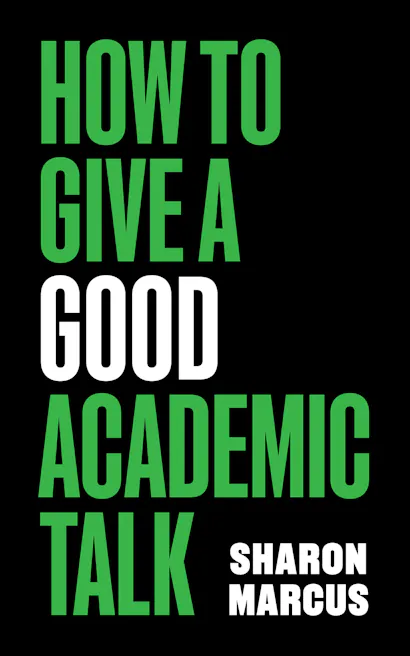
This book is for anyone in academia who will ever have to give a talk鈥攚hich is just about everyone in academia. Presenting research is one of the most important tasks academics undertake, but few receive formal training in effective public speaking. In How to Give a Good Academic Talk, Sharon Marcus fills this gap, offering a practical, research-informed guide to an activity that can challenge even seasoned scholars. Marcus, who has given many academic talks in her career鈥攁nd listened to even more鈥攂lends insights from learning and cognitive science, communications, rhetoric, and performance theory with her own seasoned judgment and firsthand observation to provide a pragmatic repertoire of dos and don鈥檛s.
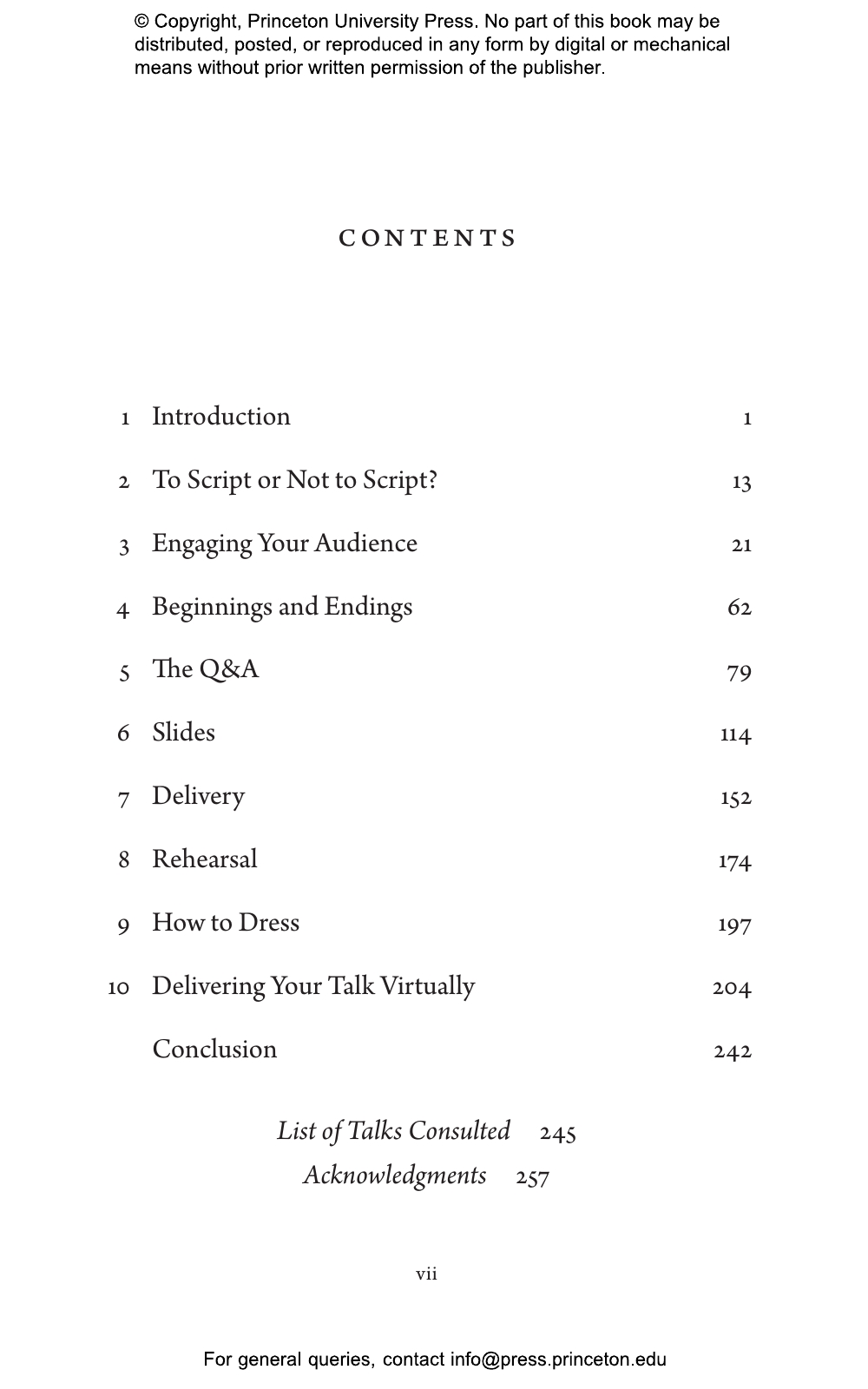
Each chapter addresses a central component of successful presentations, illustrated with examples drawn from a wide variety of academic talks, many available online. Marcus鈥檚 cross-disciplinary perspective allows her to identify elements that all good academic talks have in common, while remaining attentive to field-specific norms. She defines what an academic talk is and isn鈥檛, and identifies its most important and challenging task: engaging the audience. How to Give a Good Academic Talk covers the beginnings and endings of talks, Q&A sessions, the design and use of slides, delivery, rehearsals, video conferencing platforms鈥攁nd even offers wardrobe advice. Marcus鈥檚 essential guide equips academics to communicate their ideas with confidence, precision, and intellectual generosity.
Sharon Marcus is the Orlando Harriman Professor of English and Comparative Literature at Columbia University. She is the author of Apartment Stories, Between Women (快色直播), and The Drama of Celebrity (快色直播), and is a founding editor of Public 快色直播. Her writing has appeared in The New York Times Book Review, The Wall Street Journal, the London Review of 快色直播, and other publications.
"Sharon Marcus nailed it. This is a book you buy several copies of: one for yourself, some for your friends (hoping they don’t take it the wrong way), and one to slip discreetly under the office door of that guy who really, really needs to hear Marcus’s message."—Daniel Immerwahr, New York Times bestselling author of How to Hide an Empire
“Sharon Marcus knows what it takes to give a good talk, and she comes straight at you with it. She is as clear as she wants you to be. Follow her advice. Her taste is great.”—Steven Strogatz, New York Times bestselling author of Infinite Powers: How Calculus Reveals the Secrets of the Universe
“How to Give a Good Academic Talk is an enjoyable read. The writing is clean and engaging, the structure is logical and intuitive, and the frequent use of memorable metaphors, examples, and mini case studies makes it relevant, practical, and accessible to anyone in the sciences in addition to the humanities and social sciences.”—Brandon Ogbunu, Yale University
“Academics spend much of our lives giving and listening to talks, but we know very little about what makes a good one. Sharon Marcus has filled that gap with a book that guides scholars across fields. Seasoned academics will buy this book for students but end up reading it themselves: there’s something for everyone in Marcus’s assurance that any scholar who cares about something can make an audience care, too.”—Leah Price, author of What We Talk About When We Talk About 快色直播
“Like a good academic talk, this book is sharp, incisive, well-paced, and engaging. Sharon Marcus offers wise and witty advice based on expert interviews and her experience attending hundreds of lectures in all disciplines. How to Give a Good Academic Talk is an indispensable guide for anyone wishing to communicate their ideas more effectively. It is also a generous take on academics and their rituals.”—Heather Love, author of Underdogs and Feeling Backward
“Marcus demystifies several key elements of an academic talk including organization and structure, slide design, speaking and movement, rehearsing, Q&A, and more. An early career scholar, or really any scholar—especially social scientists—will walk away with actionable tips and next steps to improve their presentations.”—Benjamin Noble, University of California, San Diego