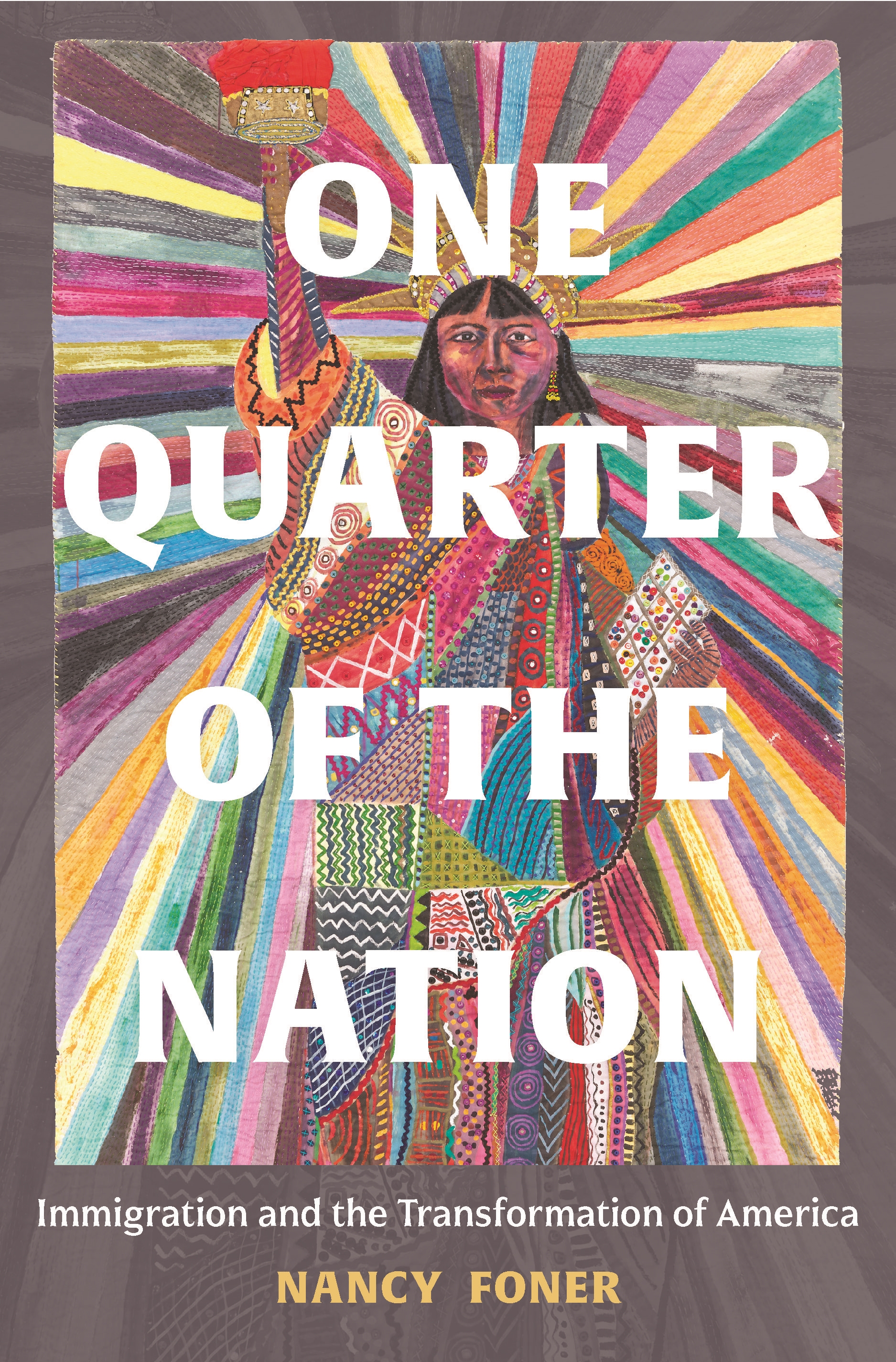
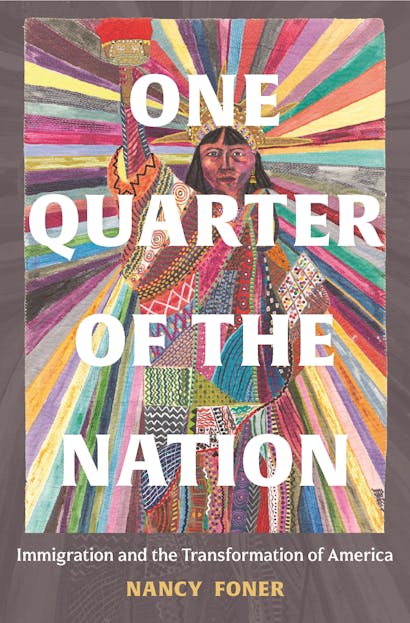
The impact of immigrants over the past half century has become so much a part of everyday life in the United States that we sometimes fail to see it. This deeply researched book by one of America鈥檚 leading immigration scholars tells the story of how immigrants are fundamentally changing this country.
An astonishing number of immigrants and their children鈥攏early eighty-six million people鈥攏ow live in the United States. Together, they have transformed the American experience in profound and far-reaching ways that go to the heart of the country鈥檚 identity and institutions.
Unprecedented in scope, One Quarter of the Nation traces how immigration has reconfigured America鈥檚 racial order鈥攁nd, importantly, how Americans perceive race鈥攁nd played a pivotal role in reshaping electoral politics and party alignments. It discusses how immigrants have rejuvenated our urban centers as well as some far-flung rural communities, and examines how they have strengthened the economy, fueling the growth of old industries and spurring the formation of new ones. This wide-ranging book demonstrates how immigration has touched virtually every facet of American culture, from the music we dance to and the food we eat to the films we watch and books we read.
One Quarter of the Nation opens a new chapter in our understanding of immigration. While many books look at how America changed immigrants, this one examines how they changed America. It reminds us that immigration has long been a part of American society, and shows how immigrants and their families continue to redefine who we are as a nation.
"A succinct, positive look at the great benefits, both historically and currently, of embracing immigration."鈥�Kirkus Reviews, starred review
"A timely and important work. . . . Each chapter can stand alone in its analytic and empirical acumen; taken holistically, the book provides a primer on the state of immigration since 1965. . . . Rarely has the big picture about American immigration been communicated in such a straightforward and enlightening way."鈥擱obert Adelman, Contemporary Sociology
"[One Quarter of the Nation] fills an important gap in the literature on immigration. . . . Required reading for those interested in understanding why immigration is such a politically and culturally sensitive issue."鈥擡milio A. Parrado, American Journal of Sociology
"One Quarter of the Nation . . . explains how [immigrants and their children] have changed local economies, communities, and politics for the better."鈥擜lison Beard, Harvard Business Review
"Packed with compelling data about how immigrants are transforming the American cultural and economic landscape, the book is a fast and engaging read."鈥擬aileen Hamto, Seattle Book Review
"A far-ranging look at how immigrants and their children—nearly 86 million people in all—have transformed America."鈥�University of Chicago Magazine
"This well-written and highly accessible book is a valuable contribution to the scholarship on immigration. Its deep historical standpoint and its impressive synthesis of research on current patterns and trends provides an insightful analysis of how immigration is transforming America."鈥擩ohn Iceland, Journal of Interdisciplinary History
"Foner sketches the landscape of American society since the 1965 Immigration and Nationality Act abolished national-origins quotas in the US immigration system, leading to increased diversity."鈥�Christian Century
"Foner's synthetic account . . . sift[s] through and make[s] sense of the vast body of research that has been produced in recent decades. . . . A richly documented and engaging overview."鈥擯eter Kivisto, Sociological Forum
"A succinct, accessible overview of how immigrants have transformed the country since the 1965 Immigration and Nationality Act."鈥�Choice Reviews
"A remarkable book. . . . A tour d’horizon of the twenty-first-century influences of immigration on American society."鈥擱ichard Alba, Patterns of Prejudice
"One Quarter of the Nation is a timely and important work. . . . Rarely has the big picture about American immigration been communicated in such a straightforward and enlightening way."鈥擱obert M. Adelman, Contemporary Sociology
"In addition to being an excellent survey of the field for scholars, One Quarter of the Nation would be an excellent text for college students and also for book clubs devoted to following national issues. It is clearly written and provides a multidisciplinary and up to date assessment of the impacts of immigration."鈥擟harles Hirschman, Ethnic and Racial Studies
"One Quarter of the Nation is an elegantly written, broad overview of American immigration since 1965. . . . This timely and powerful work is well situated for classroom use."鈥擪urt E. Kinbacher, Journal of American History
鈥淢ost studies of immigration focus on how immigrants became Americans (or didn鈥檛). Foner looks instead at how immigrants changed America itself鈥攊ts racial landscape, its cities, the labor market, its culture鈥攅specially in the past fifty years. This is a smart and readable synthesis of cutting-edge scholarship with a fresh analysis.鈥濃�擬ae Ngai, Columbia University
鈥淔oner delivers a masterful synthesis of immigration as at once constitutive and transformative of the American experience. This empirically rich, conceptually sophisticated, and beautifully written book should be required reading for every engaged citizen seeking enlightenment on one of our country鈥檚 defining issues.鈥濃�擬arcelo M. Su谩rez-Orozco, editor of Humanitarianism and Mass Migration
鈥淔oner masterfully shows how immigrants and their children dynamically transformed American society after 1965. Yet in diversifying America鈥檚 culture and society, immigration has also widened the country鈥檚 political divisions, creating a nation very much in flux. Foner鈥檚 penetrating analysis offers an indispensable guide to understanding America鈥檚 uncertain future.鈥濃�擠ouglas S. Massey, coauthor of Climbing Mount Laurel: The Struggle for Affordable Housing and Social Mobility in an American Suburb
鈥淚n this beautifully written, wide-ranging book, Foner turns the usual focus on immigration around, asking how immigration is transforming America. Her perceptive story is an optimistic one that shows how immigrants are bringing new energy and ideas to our neighborhoods, popular culture, and economy. Required reading for every American.鈥濃�擬ary C. Waters, Harvard University