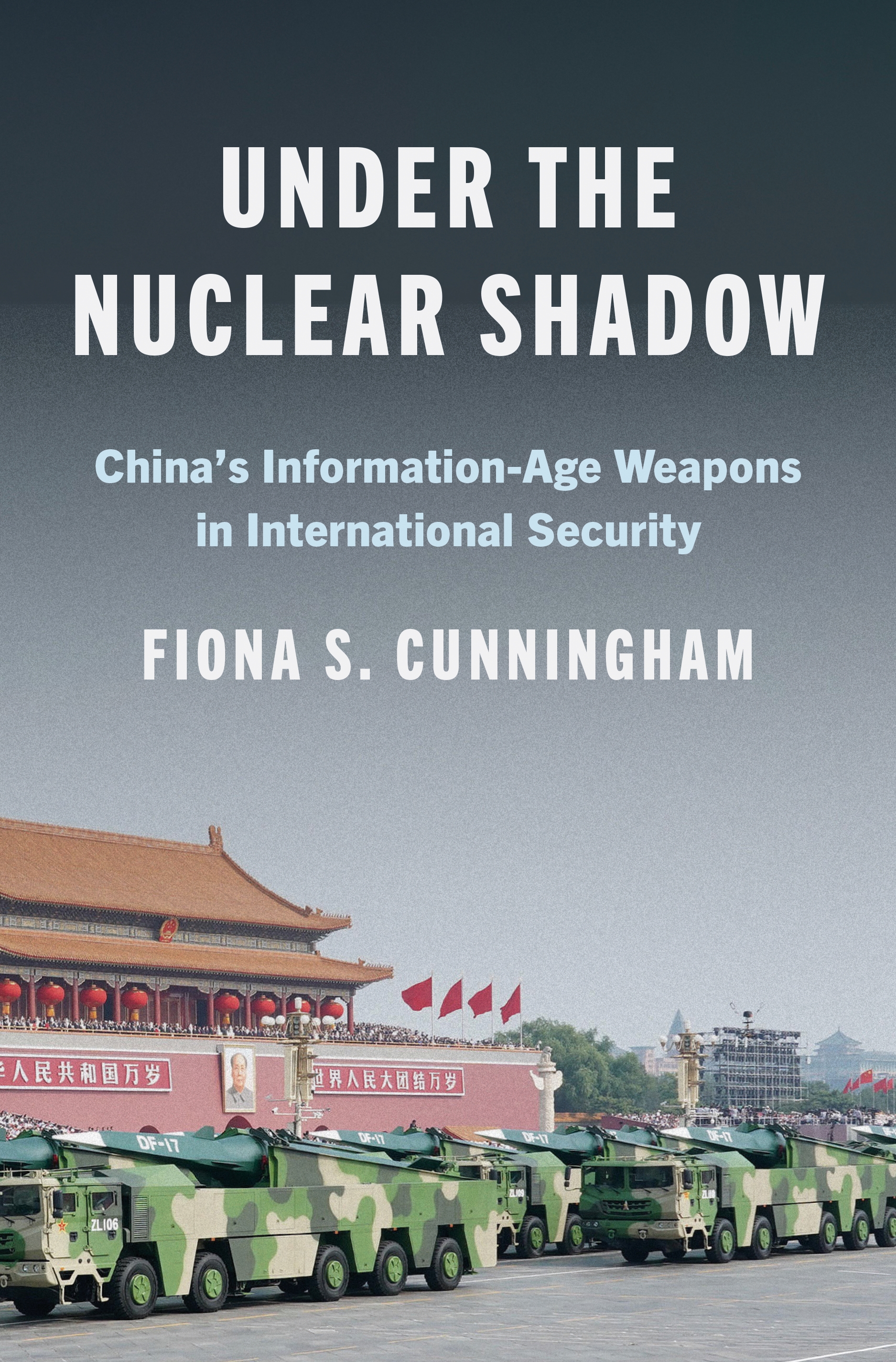
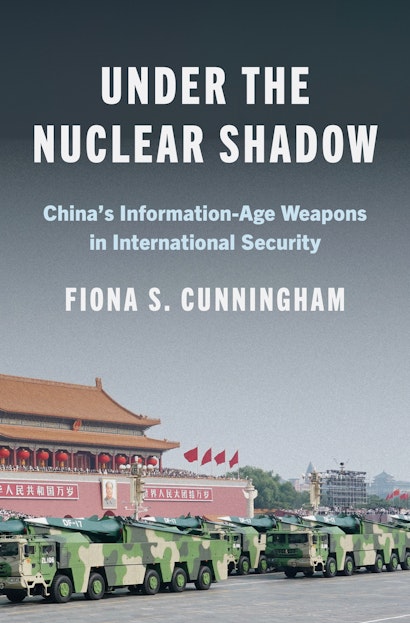
How can states use military force to achieve their political aims without triggering a catastrophic nuclear war? Among the states facing this dilemma of fighting limited wars, only China has given information-age weapons such a prominent role. While other countries have preferred the traditional options of threatening to use nuclear weapons or fielding capabilities for decisive conventional military victories, China has instead chosen to rely on offensive cyber operations, counterspace capabilities, and precision conventional missiles to coerce its adversaries. In Under the Nuclear Shadow, Fiona Cunningham examines this distinctive aspect of China鈥檚 post鈥揅old War deterrence strategy, developing an original theory of 鈥渟trategic substitution.鈥� When crises with the United States highlighted the inadequacy of China鈥檚 existing military capabilities, Cunningham argues, China pursued information-age weapons that promised to rapidly provide credible leverage against adversaries.
Drawing on hundreds of original Chinese-language sources and interviews with security experts in China, Cunningham provides a rare and candid glimpse from Beijing into the information-age technologies that are reshaping how states gain leverage in the twenty-first century. She offers unprecedented insights into the trajectory of China鈥檚 military modernization, as she details the strengths and weaknesses of China鈥檚 strategic substitution approach. Under the Nuclear Shadow also looks ahead at the uncertain future of China鈥檚 strategic substitution approach and briefly explores too how other states might seize upon the promise of emerging technologies to address weaknesses in their own military strategies.
"An exposition on how China’s nuclear policy has evolved alongside its non-nuclear capabilities. . . . [Cunningham] offers the most thorough analysis to date of a key shortcoming in China’s nuclear posture: that the high threshold for nuclear use renders nuclear weapons a blunt and ineffective instrument for escalating conventional conflict without risking catastrophe."鈥擳ong Zhao, China 快色直播 Review
"Cunningham’s timely book is a penetrating and unique look at the Chinese endeavor, offering deep insight into the three types of weapons. . . . Every China watcher worth their salt will find immense value in Cunningham’s book."鈥擝en Buchanan, Political Science Quarterly
"A nuanced analysis. . . . Under the Nuclear Shadow is an essential resource for those seeking insight into China’s military posture and the impact of emerging capabilities on strategic escalation management. The evolving landscape of China’s nuclear arsenal, advancements in cyber technology, and the pivotal role of IT infrastructure in both civilian and military sectors make this book particularly relevant."鈥擪amil Bojarski, Binding Hook
"Under the Nuclear Shadow is a critical contribution to understanding the rationales informing China’s military force posture and evolving approach to deterrence. . . . [T]his work raises critical questions as the Chinese military looks to the future of power and warfare."鈥擡lsa B. Kania, Arms Control Today
"Through an analysis of internal debates and decision-making processes, the book offers a nuanced understanding of China’s evolving strategic approach. . . . [S]cholars and policy-makers should read this book, the former to broaden their intellectual horizons and the latter to develop new approaches to dealing with China."鈥擱abia Akhtar, International Affairs
"Underpinning the theoretical and conceptual contribution of Under the Nuclear Shadow is an enormous amount of empirical research and telling detail. . . . [It] is highly recommended for scholars of China’s approach to national security, nuclear weapons, information-age weapons, and its rivalries with other great powers."鈥擯eter Dombrowski, Naval War College Review
"[Under the Nuclear Shadow] reframes the study of Chinese military strategy and enriches theoretical debates about deterrence in the information age."鈥擯awan Damodar Amin, Pacific Affairs
"[An] excellent book. . . . Highly recommended."鈥�Choice
“Using often hard-to-find PRC texts, and interviews with credible PRC interlocutors, Cunningham delivers a granular understanding of the evolution of China’s missile, information, and counter-space forces. She makes a sophisticated case that a local war problem, Taiwan, rather than a coherent grand strategy for global hegemony, may be driving this modernization.”—Alastair Iain Johnston, Harvard University
“This is an important book. Cunningham presents a powerful theory with major implications for China’s military posture and U.S.-China competition. Her careful and painstaking qualitative work paints a vivid and compelling portrait of Chinese strategic thinking.”—Joshua Rovner, American University
“Drawing on a stunning array of new sources, Fiona Cunningham offers deep insight into China’s military modernization and nuclear strategy. Her brilliant, fascinating book is essential reading for anyone seeking to understand emerging technologies, the U.S.-China relationship, and the future of war.”—Caitlin Talmadge, Massachusetts Institute of Technology
“This book accomplishes a magisterial set of tasks. The book addresses key strategic aspects of China’s military modernization in a systematic fashion. The empirical sections are thoroughly researched and incorporate a breathtaking number of superb sources. Given the increasingly closed nature of China, this material will not be surpassed for a long while. There is no comparable book.”—Christopher Twomey, Naval Postgraduate School