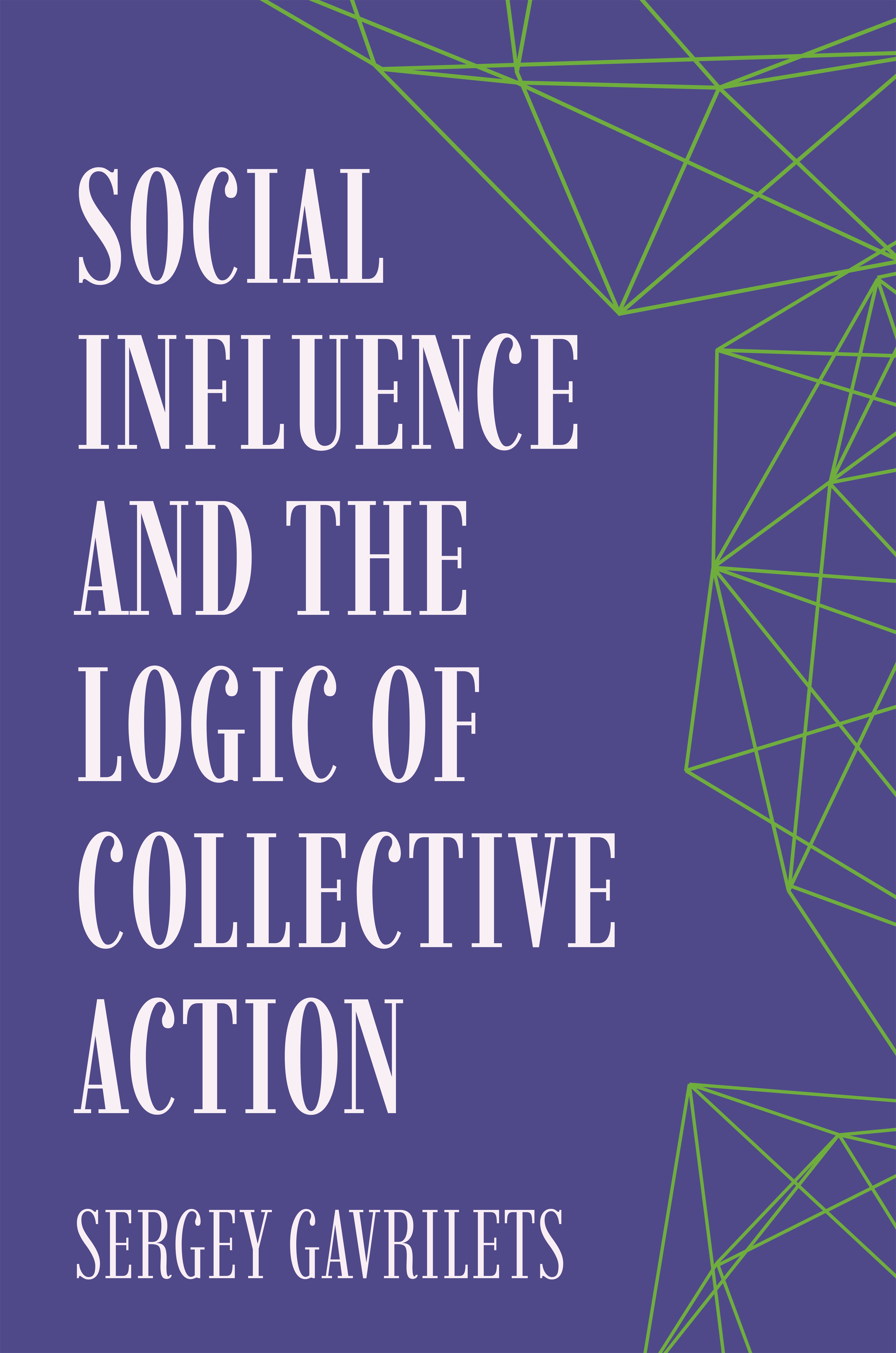
Collective action has been a fundamental aspect of human societies throughout history, from building irrigation systems and defenses in Neolithic times to coordinated disaster relief and scientific collaborations today. In this book, Sergey Gavrilets explains when and why groups of people cooperate, presenting a quantitative framework that unifies game theory with models of social influence, cognition, and individual and cultural variation. He shows how humans鈥� deep susceptibility to social influence鈥攇rounded in evolutionary need to cooperate and learn from peers, reinforced by deference to parents and elders, and extended to cultural, religious, and political leaders鈥攕hapes norms, beliefs, and collective outcomes.
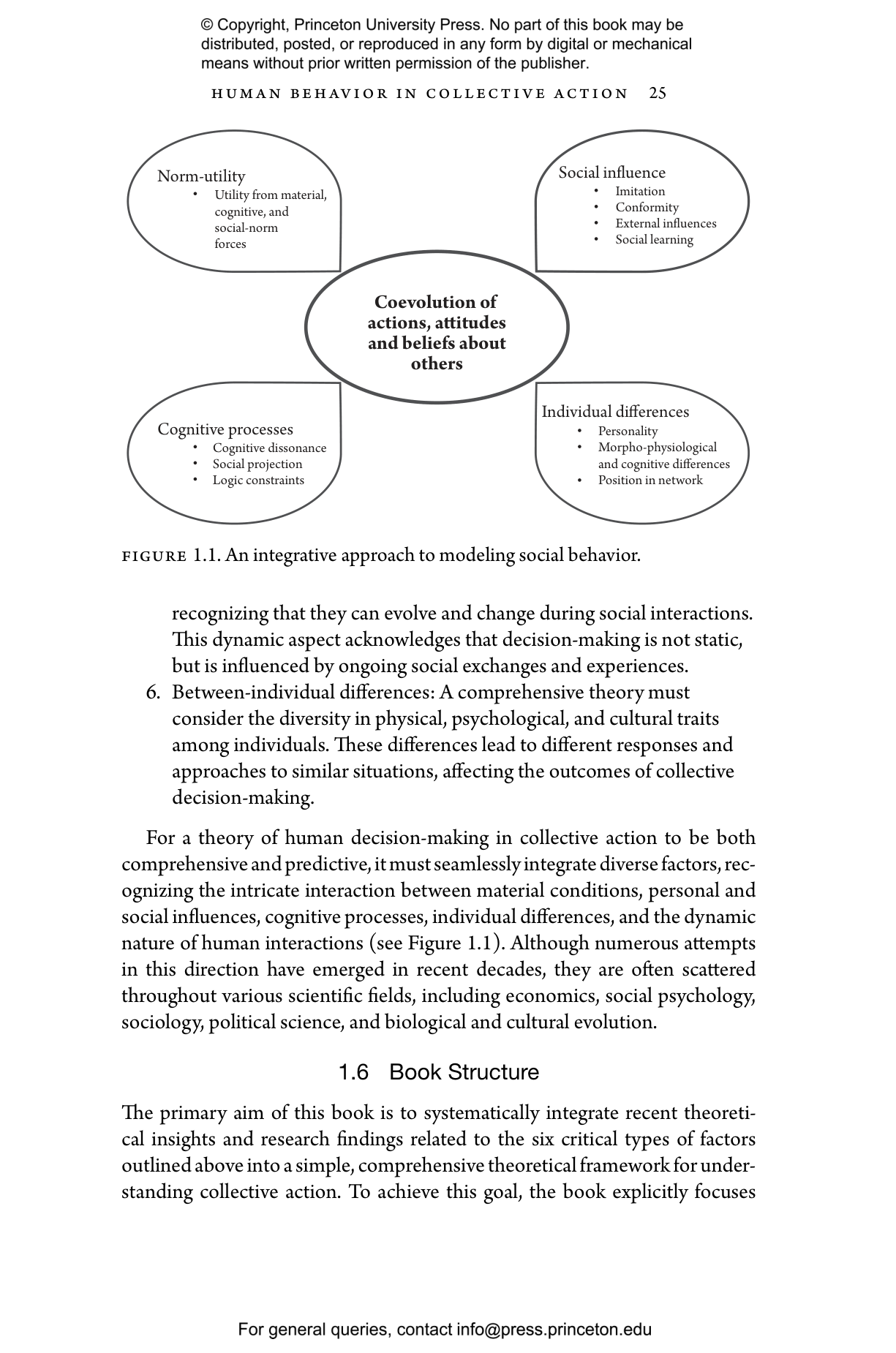
Integrating previously separate literatures, Gavrilets introduces explicit dynamics for norms and beliefs, quantifies the effects of individual and cultural differences, and tests predictions across societies. Drawing on formal, data-based mathematical modeling supported by behavioral experiments and studies of online behavior, he concludes that successful collective action depends on six interacting forces: material payoffs, personal norms and attitudes, social influence, cognition, evolving social norms and beliefs about others, and individual and cultural differences. Lasting cultural change, he argues, depends on norms and institutions that shape behavior through persuasion, nudging, and enforcement. Gavrilets translates this theory into practical, testable strategies for policy and design, including targeted messaging, dynamic norms, and culturally sensitive approaches, and connects it to broader theories of behavior change.
Sergey Gavrilets is Distinguished Professor of Ecology and Evolutionary Biology and Mathematics at the University of Tennessee Knoxville. He is the author of Fitness Landscapes and the Origin of Species (快色直播).
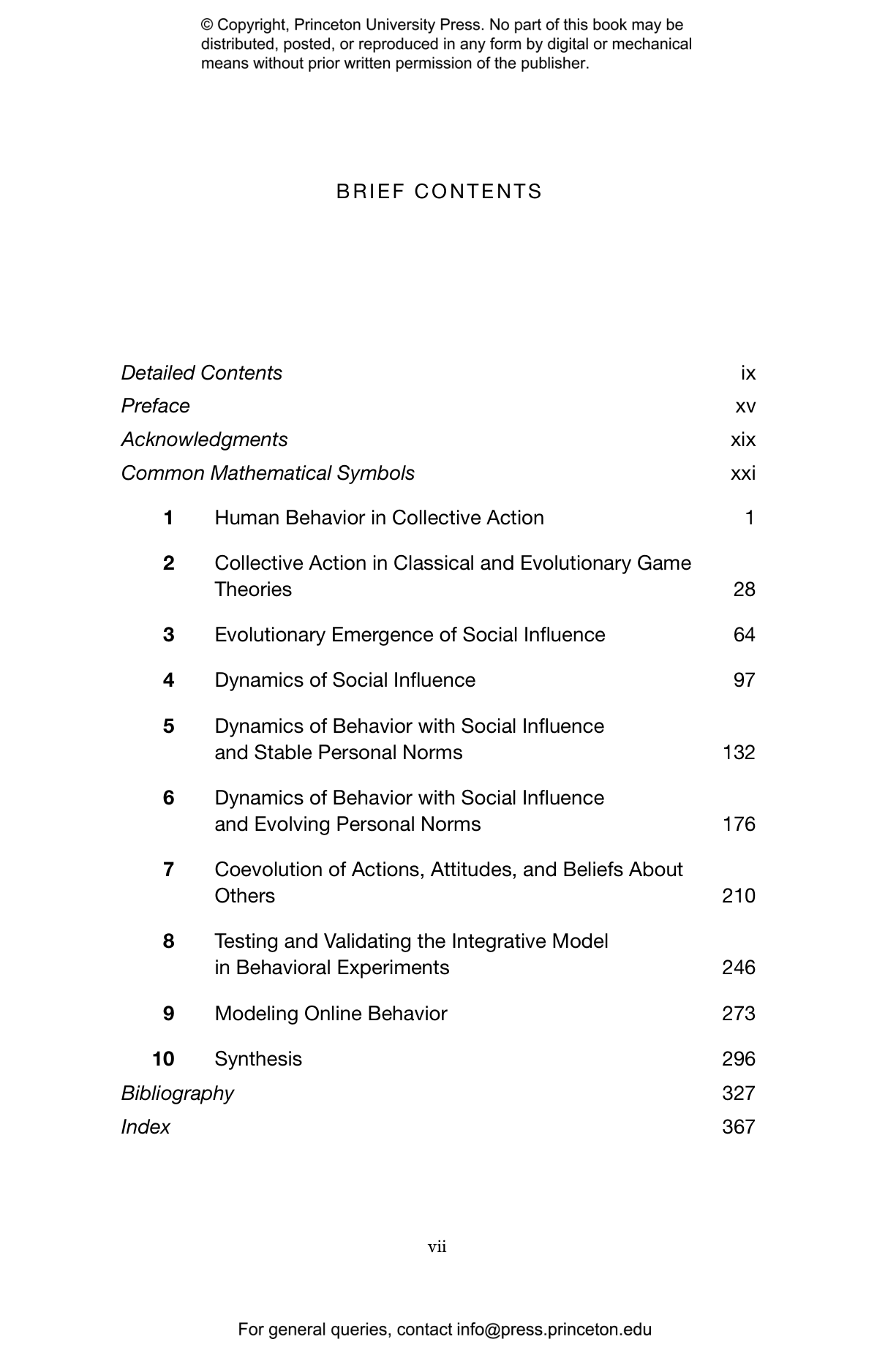
- Preface
- Acknowledgments
- Common Mathematical Symbols
- 1 Human Behavior in Collective Action
- 1.1 Objectives, Outcomes, and Obstacles in Collective Action
- 1.2 Biological Roots of Human Sociality
- 1.3 Forces Involved in Collective Action
- 1.3.1 Human Motivation
- 1.3.2 Material Costs and Benefits
- 1.3.3 Attitudes, Personal Norms, and Morality
- 1.3.4 Social Influence
- 1.3.5 Cognitive Processes
- 1.3.6 Beliefs and Belief Dynamics
- 1.3.7 Between-Individual Differences
- 1.4 Building a Theory of Collective Action
- 1.4.1 Philosophical Inquiry into Collective Action
- 1.4.2 Classical Game Theory
- 1.4.3 Evolutionary Game Theory
- 1.4.4 Behavioral Economics
- 1.4.5 Gaps in Collective Action Theory
- 1.5 A Need for a Unified Model of Collective Action
- 1.6 Book Structure
- 2 Collective Action in Classical and Evolutionary Game Theories
- 2.1 Social Dilemmas and Nash Equilibria
- 2.1.1 Prisoner鈥檚 Dilemma
- 2.1.2 Volunteer鈥檚 Dilemma
- 2.1.3 Linear Public Goods Game
- 2.2 Mancur Olson鈥檚 鈥淭he Logic of Collective Action鈥� (1965)
- 2.3 Evolutionary Game Theory
- 2.4 Collective Action Problems
- 2.4.1 Public Goods Production
- 2.4.2 Resource Exploitation
- 2.4.3 Collective Risk Avoidance
- 2.5 Between-Group Conflicts
- 2.6 Effects of Between-Individual Differences
- 2.7 Coordination Within Groups
- 2.8 Factors Maintaining Cooperation
- 2.8.1 Real-Life and Behavioral Experiments
- 2.8.2 Punishment
- 2.8.3 Extending Theory
- 2.9 Summary and Conclusions
- 3 Evolutionary Emergence of Social Influence
- 3.1 Population Genetic Modeling
- 3.2 Unbiased Social Learning
- 3.2.1 Infinite State 饾憞-Cycle Environment
- 3.2.2 Two-State 饾憞-Cycle Environment
- 3.2.3 Infinite-State Random Environment
- 3.2.4 Competition of Types Relying on Innate, Individually Learned, and Socially Learned Behaviors
- 3.3 Biased Social Learning
- 3.3.1 Conformist Bias in Learning
- 3.3.2 Payoff Bias in Learning
- 3.4 Evolution of Personal Norms and Social Norm Internalization
- 3.4.1 Socialization
- 3.4.2 Assortment and Kantian Preferences
- 3.4.3 The Evolution of Personal Standards Into Social Norms
- 3.4.4 Inculcation
- 3.4.5 Personal Norms and Conformity
- 3.5 Summary and Conclusions
- 4 Dynamics of Social Influence
- 4.1 Discrete Opinion Space
- 4.1.1 Culture as an Infection
- 4.1.2 Complex Contagions
- 4.1.3 Population Genetics-Type Models
- 4.2 Continuous Opinion Space
- 4.2.1 DeGroot Model
- 4.2.2 Heterogeneity in Personality Traits
- 4.2.3 Heterogeneity in Social Partners
- 4.2.4 Effects of Homophily, Repulsion, and Biased Assimilation
- 4.2.5 Authorities and Hubs
- 4.2.6 The Dynamics of Social Power
- 4.2.7 Effects of Latent Preferences and Authority
- 4.2.8 Multi-Dimensional Opinions and Logic Constraints
- 4.2.9 Utility Functions and Stochasticity
- 4.3 Summary and Conclusions
- 5 Dynamics of Behavior with Social Influence and Stable Personal Norms
- 5.1 Rashevsky Model
- 5.2 Schelling鈥揋ranovetter Model
- 5.3 Dynamic Norms
- 5.4 Norm-Utility Approach
- 5.4.1 Spread of Social Unrest
- 5.4.2 Tipping at Restaurants
- 5.4.3 Academic Journal Review Process
- 5.4.4 Linear Public Goods Game
- 5.4.5 Sanctioning in Culturally Tight and Loose Societies
- 5.4.6 Breaking Injunctive Social Norms
- 5.4.7 Norms and Metanorms in a Collective Action
- 5.4.8 Culture Wars
- 5.5 Summary and Conclusions
- 6 Dynamics of Behavior with Social Influence and Evolving Personal Norms
- 6.1 Immoral Behavior and Cognitive Dissonance
- 6.1.1 Rational Choice Approach
- 6.1.2 Coevolution of Actions and Beliefs
- 6.2 The Granovetter Model with Evolving Thresholds
- 6.3 Cultural Integration
- 6.3.1 Cultural Integration in Partially Segregated Populations
- 6.3.2 Cultural Integration and Polarization on Networks
- 6.4 Linear Public Goods Game
- 6.5 Collective Behavior in Heterogeneous Groups
- 6.6 Political Polarization
- 6.7 Effects of Inculcation and Propaganda
- 6.7.1 Food-Sharing in Small-Scale Societies
- 6.7.2 Political Protests
- 6.8 Summary and Conclusions
- 7 Coevolution of Actions, Attitudes, and Beliefs About Others
- 7.1 The Integrative Model
- 7.1.1 Dynamics and Equilibria
- 7.1.2 Generalization and Implications
- 7.2 Pluralistic Ignorance, Spirals of Silence, Preference Falsification, and Cultural Evolutionary Mismatch
- 7.2.1 Model
- 7.2.2 Parameters and Initial Conditions
- 7.2.3 Model Predictions and Their Interpretation
- 7.3 Differences Between the Two Approaches
- 7.4 Summary and Conclusions
- 8 Testing and Validating the Integrative Model in Behavioral Experiments
- 8.1 Experimental Approach
- 8.2 Estimation
- 8.3 Results
- 8.3.1 Common Pool Resource Experiments
- 8.3.2 Collective Risk Experiments
- 8.3.3 Comparison of the CPR and CR Experiments
- 8.4 Summary and Conclusions
- 9 Modeling Online Behavior
- 9.1 Online Actions, Beliefs, Payoffs, and Social Influence
- 9.2 Epidemiological Models
- 9.3 User Behavior and Content Interaction
- 9.4 Temporal Dynamics and Social Influence
- 9.5 Vaccination and Opinion Formation
- 9.6 Effects of Feedback
- 9.7 Political Polarization
- 9.8 Spirals of Silence
- 9.9 Battle for the Minds
- 9.10 Summary and Conclusions
- 10 Synthesis
- 10.1 Theoretical Insights and Their Implications
- 10.1.1 Social Influence
- 10.1.2 Relative Weights of Different Factors
- 10.1.3 Cognitive Processes
- 10.1.4 Individual Differences
- 10.1.5 Social Network Structure
- 10.1.6 Personal and Social Norms
- 10.1.7 Some Fascinating Manifestations of Collective Beliefs and Behaviors
- 10.1.8 Cultural Tightness-Looseness
- 10.1.9 Cooperation
- 10.1.10 Online Behavior
- 10.2 Data Analysis and Interpretation
- 10.3 Policy and Practical Applications
- 10.3.1 Connections with Behavior Change Theories
- 10.3.2 Fostering Behavioral Change and Collective Action
- Bibliography
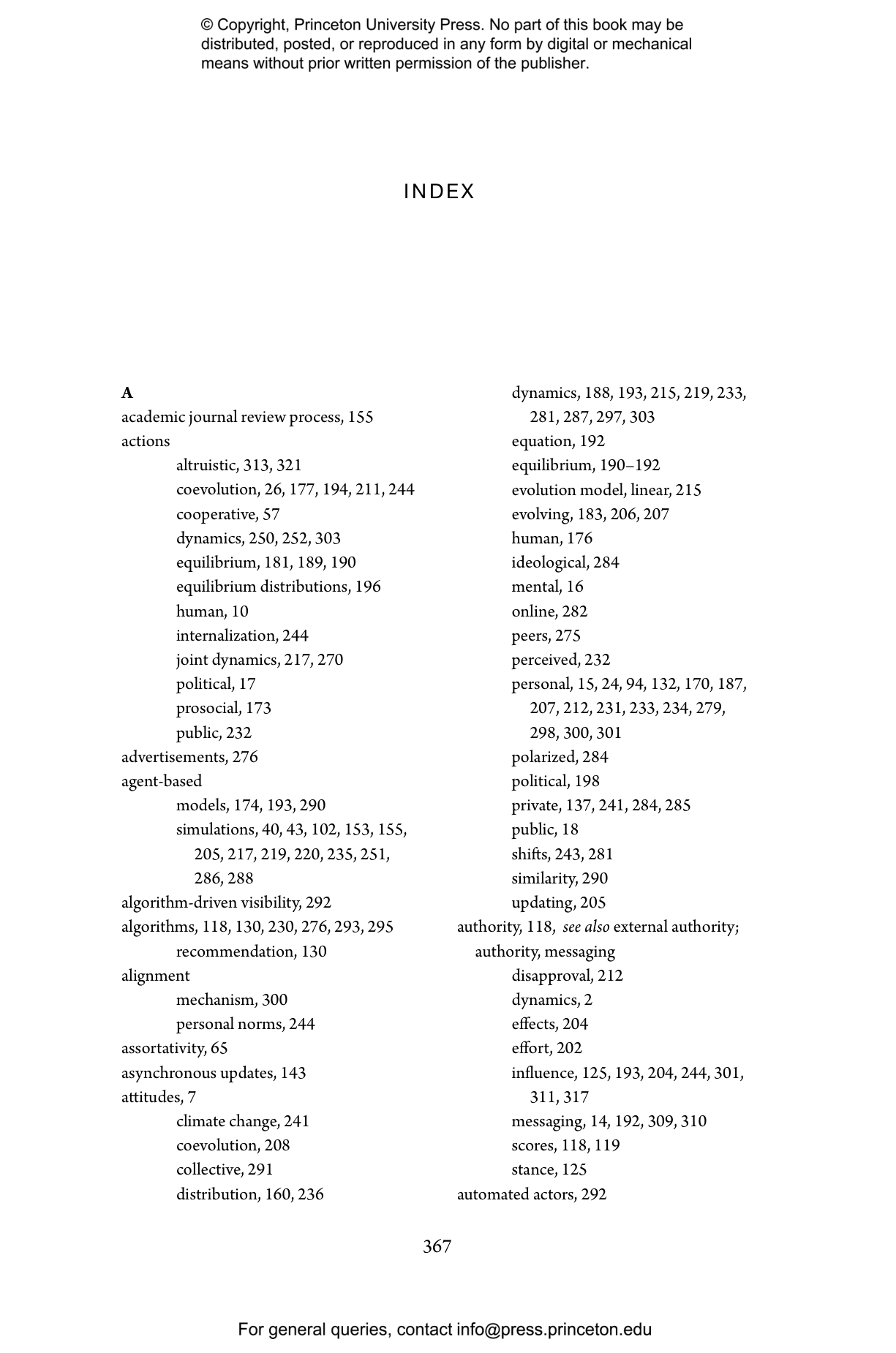
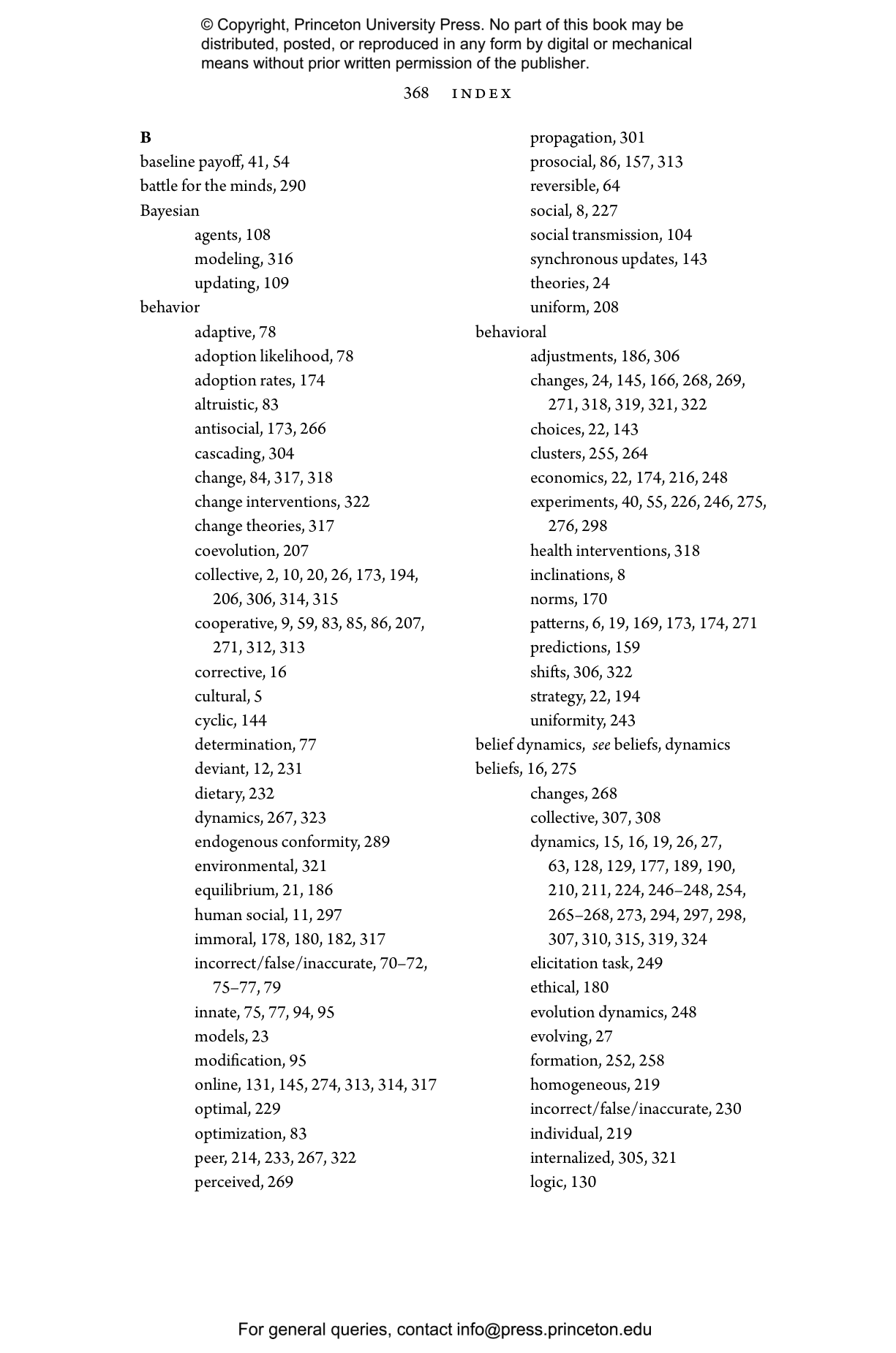
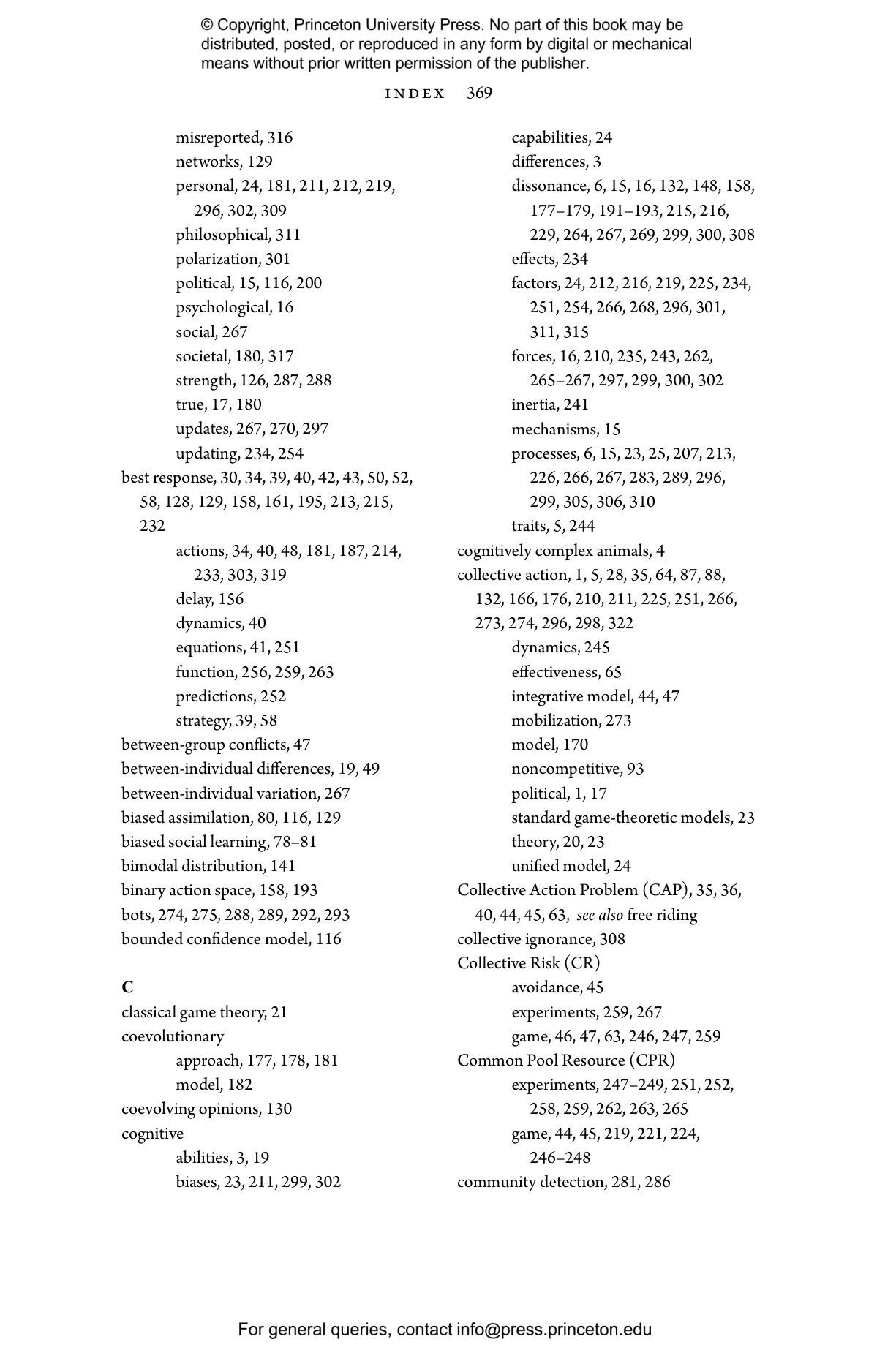
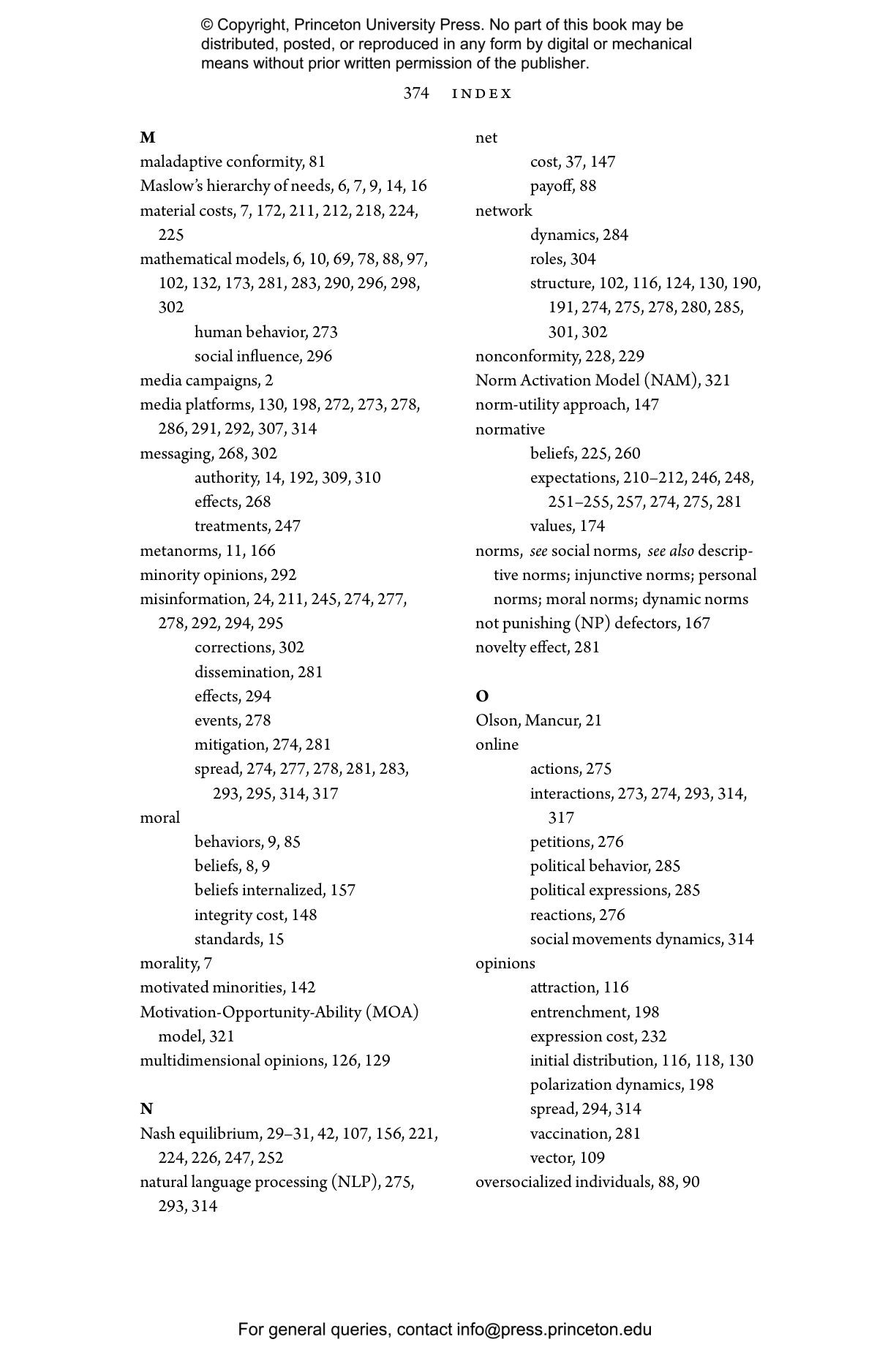
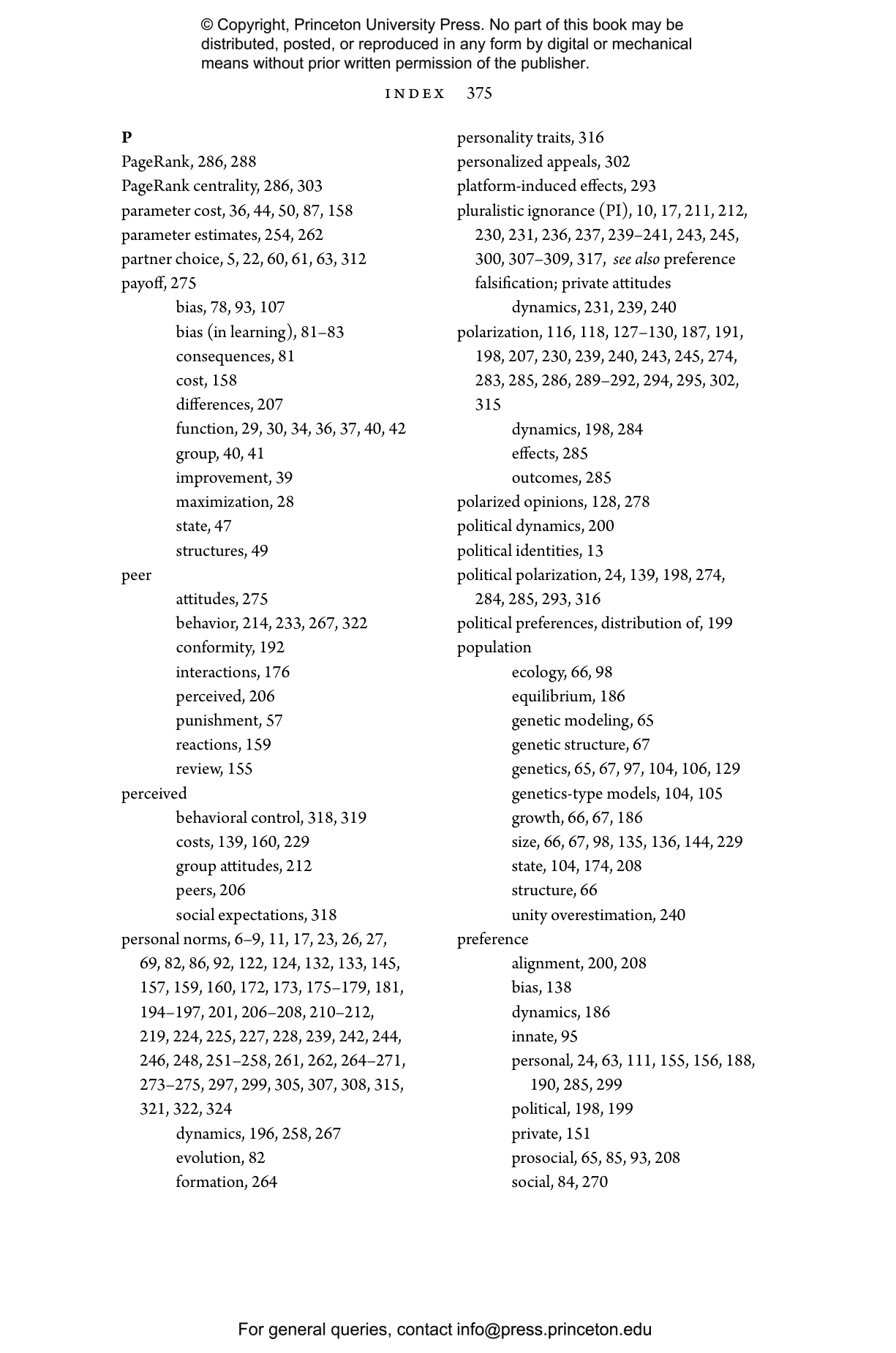
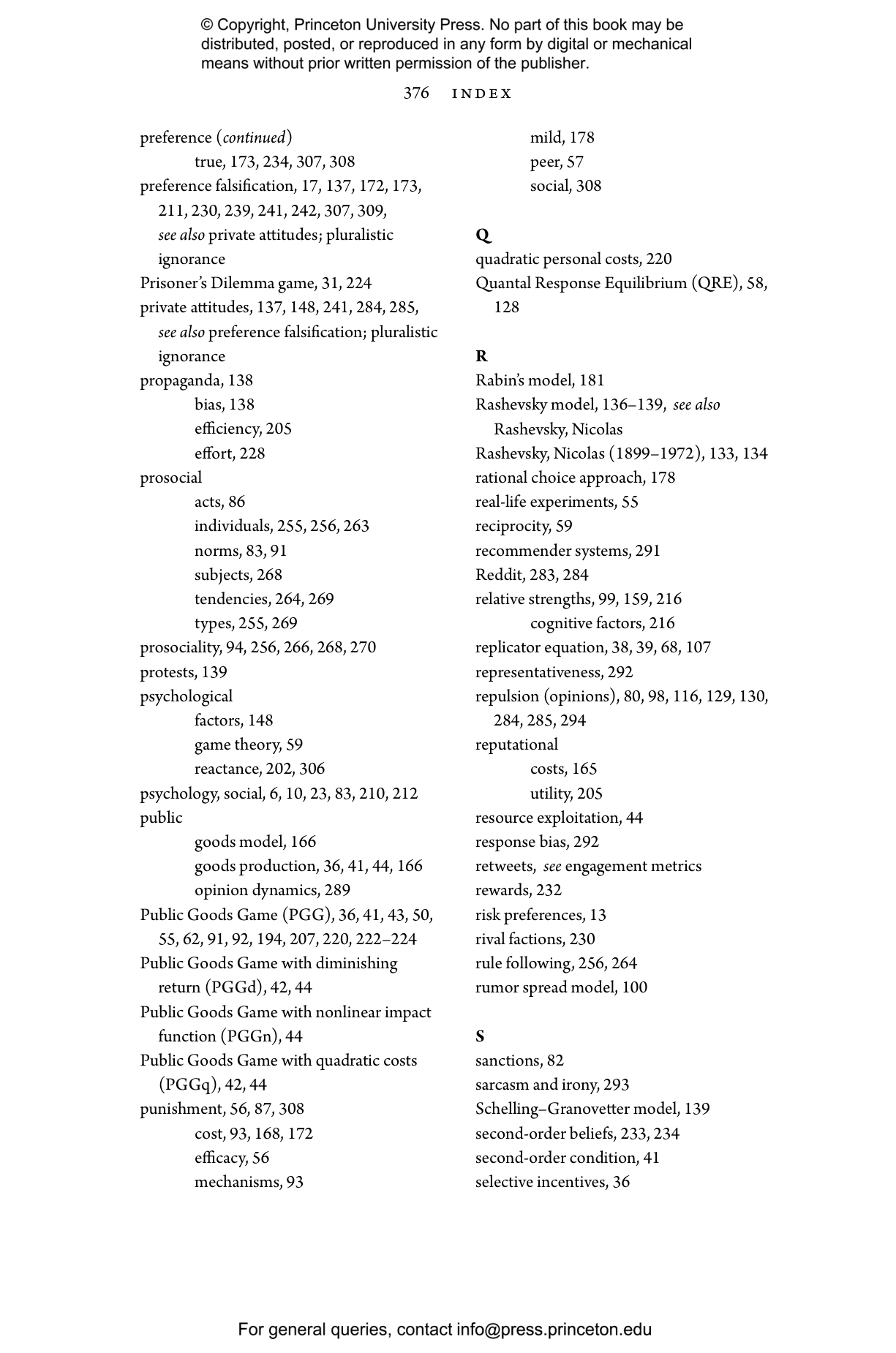
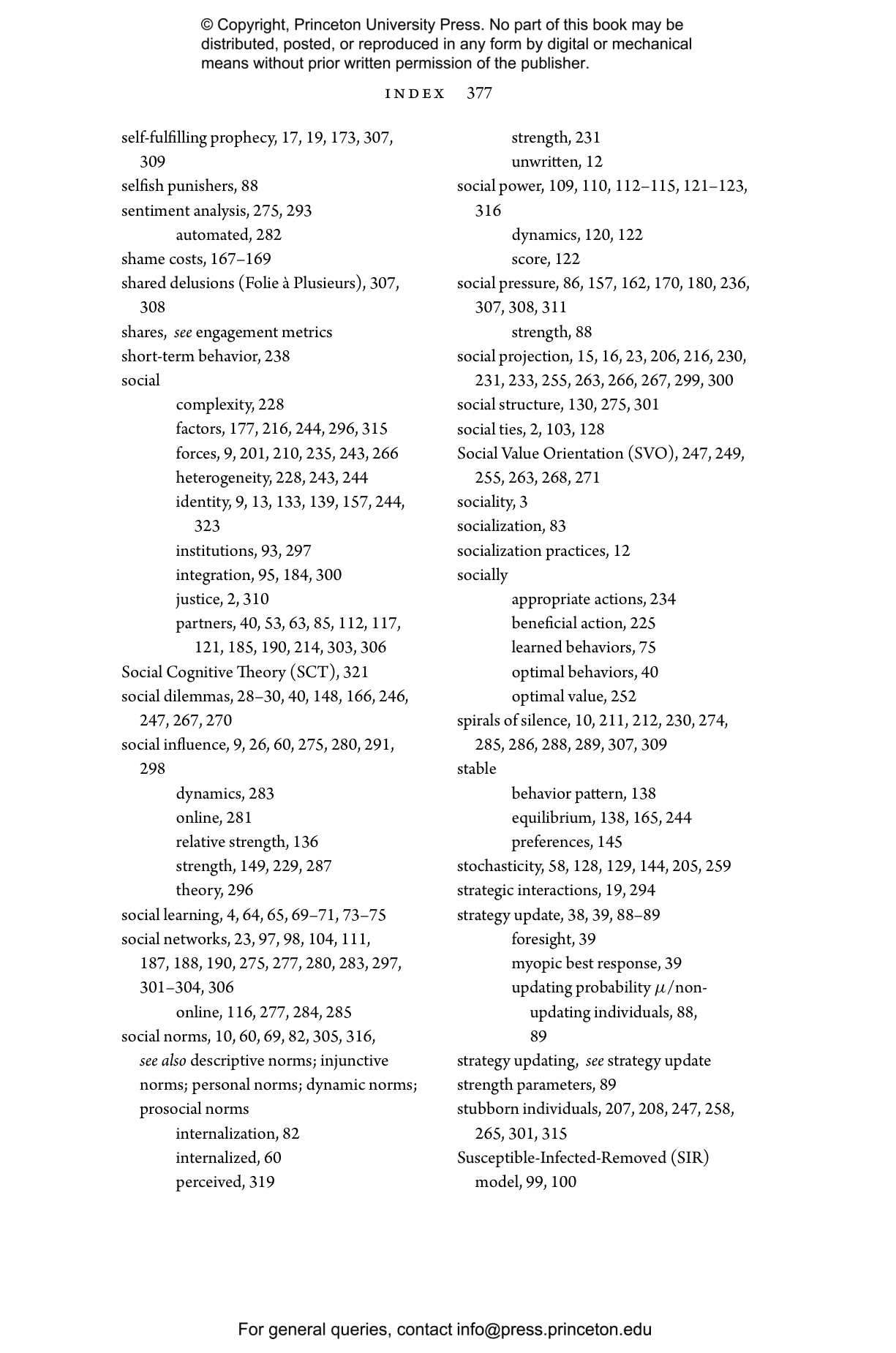
- Index
“Improving human well-being in a lasting way is difficult and can be achieved only by collective action. In this outstanding book, Sergey Gavrilets integrates diverse theoretical approaches—and behavioral experiments—into a comprehensive framework for understanding how collective action can be effectively concerted. These insights offer superb practical guidance for solving pressing social problems facing our societies.”—Peter Turchin, author of The Great Holocene Transformation: What Complexity Science Tells Us about the Evolution of Complex Societies
“Sergey Gavrilets is a pioneer in the construction of integrated models of collective action in which material payoffs interact with other factors such as beliefs, norms, and social influence. This excellent book will enable researchers to see the power of this integrated approach and bring theory to bear on many real-world applications.”—Paul Seabright, author of The Divine Economy: How Religions Compete for Wealth, Power, and People
“Building on foundational research in the study of cultural evolution, this book is a shining example of how theories in the social sciences can advance cumulatively rather than merely agenda-hopping from one fashionable ism to the next. Gavrilets takes us further than we have ever been before in our understanding of the evolution of norm psychology.”—Harvey Whitehouse, author of Inheritance: The Evolutionary Origins of the Modern World
“Mathematics is the key to precisely formulating scientific ideas and exploring their logical consequences. Sergey Gavrilets’s review of the many fundamental contributions by mathematical theorists to understanding the problem of human collective action is very useful. Most importantly, he points out that human collective action is sustained by complex social systems, not any one simple factor.”—Peter J. Richerson, coauthor of Not By Genes Alone: How Culture Transformed Human Evolution