Black鈥攆avorite color of priests and penitents, artists and ascetics, fashion designers and fascists鈥攈as always stood for powerfully opposed ideas: authority and humility, sin and holiness, rebellion and conformity, wealth and poverty, good and bad. In this book, the acclaimed author of Blue now tells the fascinating social history of the color black in Europe.
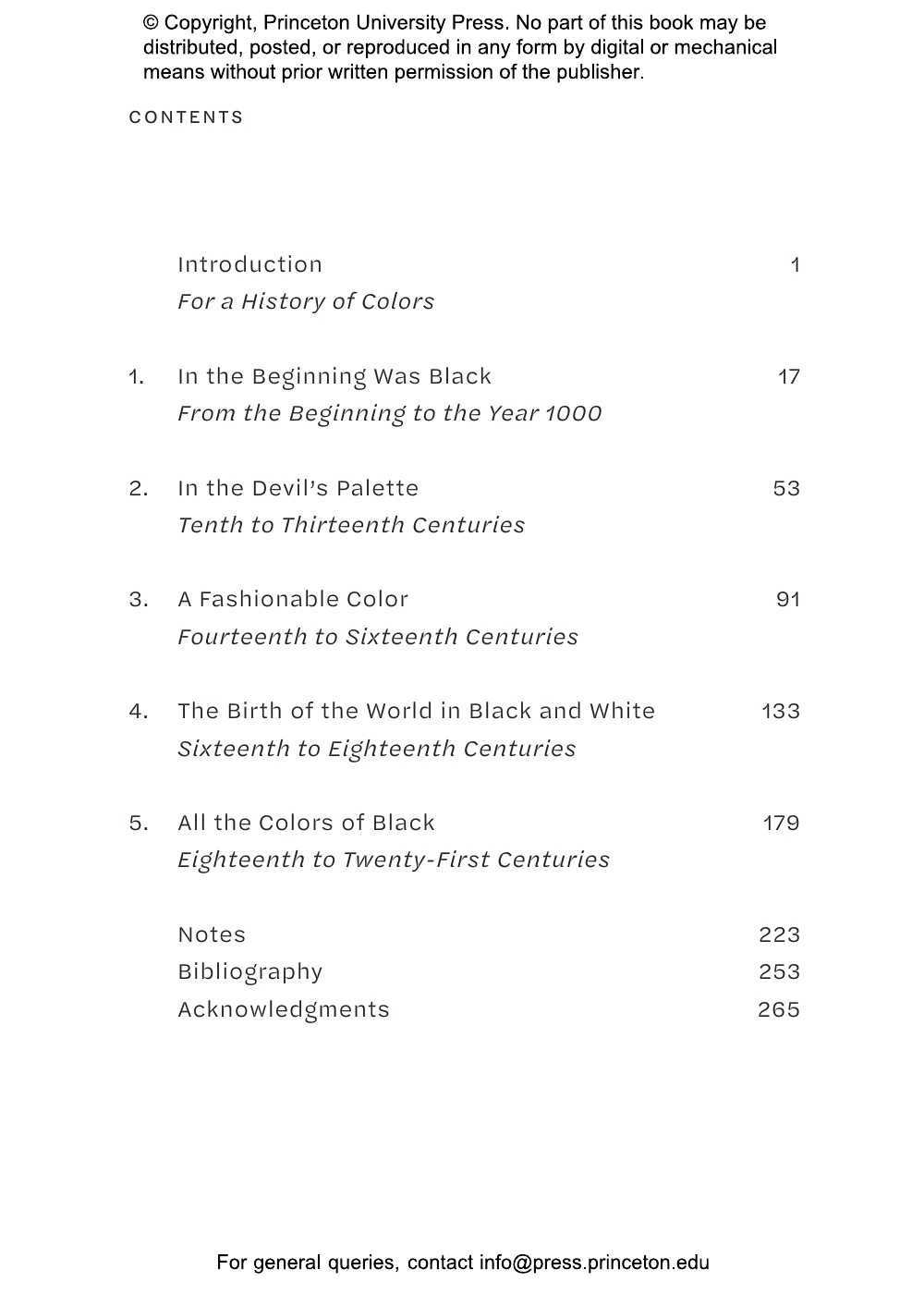
In the beginning was black, Michel Pastoureau tells us. The archetypal color of darkness and death, black was associated in the early Christian period with hell and the devil but also with monastic virtue. In the medieval era, black became the habit of courtiers and a hallmark of royal luxury. Black took on new meanings for early modern Europeans as they began to print words and images in black and white, and to absorb Isaac Newton’s announcement that black was no color after all. During the romantic period, black was melancholy’s friend, while in the twentieth century black (and white) came to dominate art, print, photography, and film, and was finally restored to the status of a true color.
For Pastoureau, the history of any color must be a social history first because it is societies that give colors everything from their changing names to their changing meanings鈥攁nd black is exemplary in this regard. In dyes, fabrics, and clothing, and in painting and other art works, black has always been a forceful鈥攁nd ambivalent鈥攕haper of social, symbolic, and ideological meaning in European societies.
With its striking design and compelling text, Black will delight anyone who is interested in the history of fashion, art, media, or design.
The History of a Color: Pocket Editions are attractive, affordable, and reader-friendly text-only paperback editions of Michel Pastoureau鈥檚 bestselling illustrated histories of color.
Michel Pastoureau is a historian and emeritus director of studies at the 脡cole Pratique des Hautes 脡tudes de la Sorbonne in Paris. A renowned authority on the history of colors, symbols, and heraldry, he is the author of many books, including Blue, Green, Red, Yellow, White, and Pink (all 快色直播).
"Who would have thought the history of a single color could be so fascinating? Black: The History of a Color, by Michel Pastoureau, proceeds chronologically from cave painting to modern fashion and focuses on mythology, heraldry, religion, science and painting along the way. The author, a historian at the Sorbonne, narrates developments in the material, aesthetic and sociological dimensions of the color black with infectious, wide-ranging curiosity and easy-going erudition. After this you'll want to read his previous book, from the same publisher, Blue: The History of a Color."鈥擪en Johnson, New York Times
"[Pastoureau] has a terrific story to tell."鈥擱obert Fulford, National Post
"A satisfyingly fresh angle of approach to the past."鈥擣ritz Lanham, Houston Chronicle
"What is interesting in sociological histories like Pastoureau's is their revelations about how cultural attitudes change. . . . This book will have you seeing black in more shades than you imagined."鈥擵ictor Swoboda, Montreal Gazette
"Pastoureau's work is accessible, generous and witty. . . . Superb."鈥擬arc Horton, Edmonton Journal
"This erudite and elegantly written exploration of the history of black charts its changing symbolism and shades of meaning as a colour of death and rebirth, of religious authority and evil, of luxury and poverty."鈥擣iona Capp, The Age
"Pastoureau combines a charming, conversational tone with a haughtiness I found entirely endearing. A director of studies at the Ecole Pratique des Hautes Etudes at the Sorbonne in Paris, he writes from a position of professorial confidence. He has conducted extensive research into the history of colour for a quarter century and his aim is to correct misapprehensions and banish ignorance. His style is not to inquire, explore or interrogate, in the fashion of academic studies today. It is to impart knowledge."鈥擲ebastian Smee, The Australian
"Skillfully written, and a pleasure to read."鈥�Choice