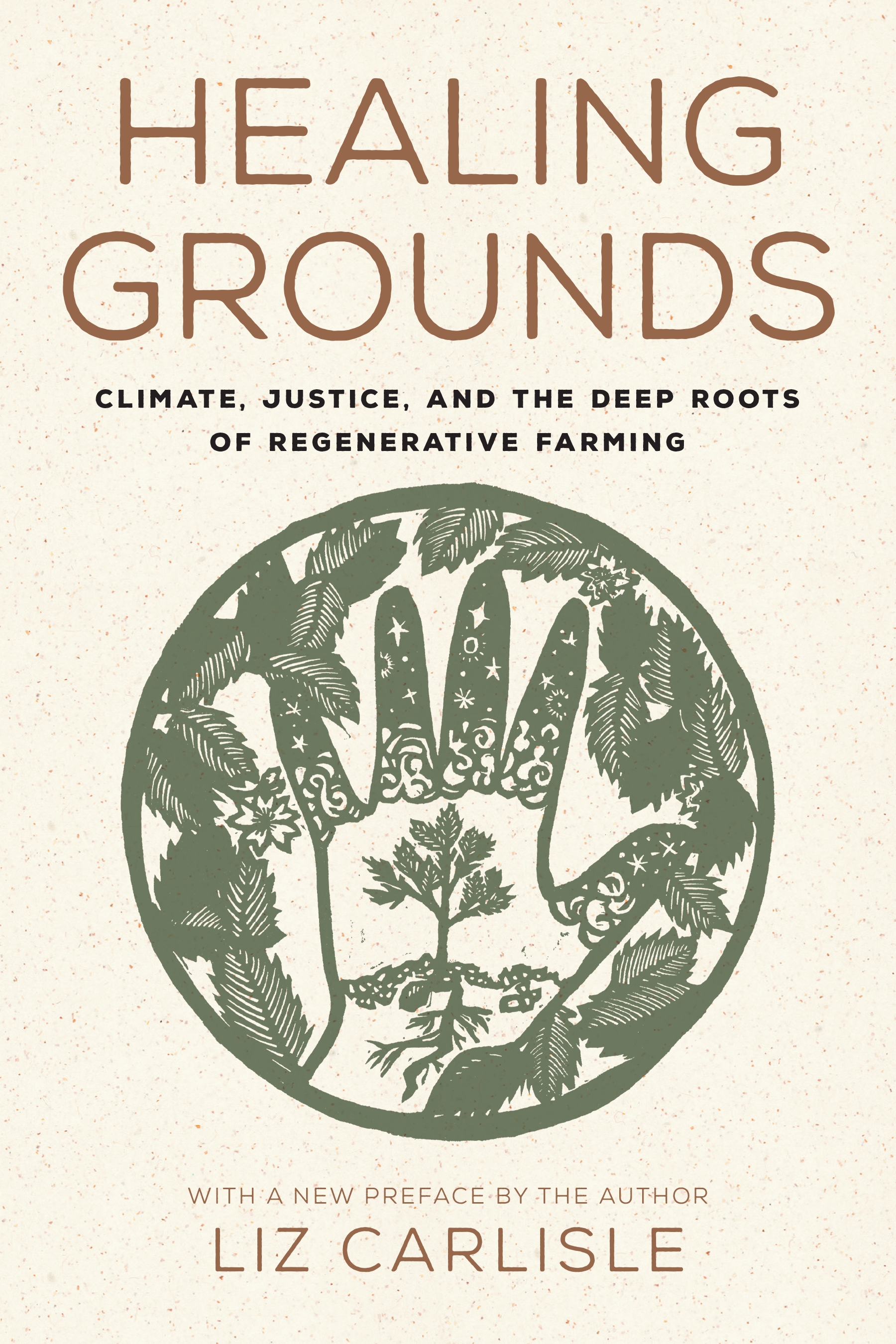
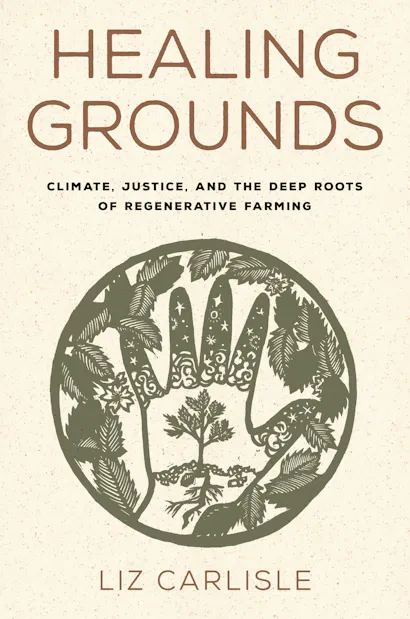
A powerful movement is happening in farming today鈥攆armers are reconnecting with their roots to fight climate change. For one woman, that鈥檚 meant learning her tribe鈥檚 history to help bring back the buffalo. For another, it鈥檚 meant preserving forest purchased by her great-great-uncle, among the first wave of African Americans to buy land. Others are rejecting monoculture to grow corn, beans, and squash the way farmers in Mexico have done for centuries. Still others are rotating crops for the native cuisines of those who fled the 鈥淎merican wars鈥� in Southeast Asia.
In Healing Grounds, Liz Carlisle tells the stories of Indigenous, Black, Latinx, and Asian American farmers who are reviving their ancestors鈥� methods of growing food鈥攖echniques long suppressed by the industrial food system. These farmers are restoring native prairies, nurturing beneficial fungi, and enriching soil health. While feeding their communities and revitalizing cultural ties to land, they are steadily stitching ecosystems back together and repairing the natural carbon cycle. This, Carlisle shows, is the true regenerative agriculture鈥攏ot merely a set of technical tricks for storing carbon dioxide in the ground, but a holistic approach that values diversity in both plants and people.
Cultivating this kind of regenerative farming will require reckoning with our nation鈥檚 agricultural history鈥攁 history marked by discrimination and displacement. And it will ultimately require dismantling power structures that have blocked many farmers of color from owning land or building wealth.
The task is great, but so is its promise. By coming together to restore these farmlands, we can heal not only our planet but also our communities and ourselves.
"Climate change is perceived to be a threat that emanates from the sky above, through holes in the ozone, or via century-defining storms. . . . A professor of environmental studies specializing in food and farming, Carlisle illustrates the confluence between agriculture and climate change as she shares the personal stories of Indigenous, Black, Latino, Asian, and other immigrant populations committed to the practice of regenerative farming. . . . [She] offers restorative hope and practical help for this existential crisis."鈥�Booklist
"Carlisle’s Healing Grounds is worthy of your time and attention. . . . Her work seeks to revive the spirit of POC farmers wounded on a bloodied battleground. To plead with non-POC RA [regenerative agriculture] leaders to stop and think about their role in US agricultural history and to curb their current cooption. To urge for rapid political support. We RA advocates must listen to POC farmers’ stories of resistance and respect the sacredness of their healing grounds."鈥�Agroecology and Sustainable Food Systems
"While agriculture is central to the narrative, what is fascinating about Healing Grounds is the vignettes on social justice that show how difficult it has been for peoples to maintain their way of raising food in the face of more dominant European input-intensive systems. This book will interest those who wish to better understand the diversity of agricultural practices and their basis within the cultures of the world, and the links between social justice and the way our food is grown."鈥�Biologist
"Healing Grounds makes a timely and critical intervention, particularly given regenerative agriculture’s recent rise in popularity and concerns about its dilution and greenwashing. Carlisle charts a clear, challenging, yet hopeful path forward for regenerative agriculture and food systems justice, one that requires deep systemic change, racial justice, and BIPOC leadership."鈥�Journal of Agriculture, Food Systems, and Community Development
"Carlisle's nontechnical writing style makes the book accessible to the general public as well as undergraduate university and college students. The book will interest all students engaging with the qualitative and social science components of environmental studies, including those focusing on environmental sciences, anthropology, sociology, or geography. The simplicity of each case study narrative makes this an especially appropriate text for undergraduate and community readerships."鈥�Choice
"In Healing Grounds, Liz Carlisle makes the compelling case that soil can save us from climate catastrophe, but only if the global Indigenous communities who originated soil stewardship practices lead the way. In a tone that is both authoritative and humble, Carlisle convinces the reader that the same extractive forces that wrest carbon from the soil, also yank earth stewards from the land. Further, there can be no ecosystemic redemption without addressing colonialism. Healing Grounds is a refreshingly truthful account of the real roots of climate chaos and the authentic path to healing."鈥擫eah Penniman, author of "Farming While Black" and Co-Founder, Soul Fire Farm
"Liz Carlisle gets to the heart of the matter: You can’t have good farming or good food without social justice, and social justice is inextricably tied to race and land reform. The biggest issues in the United States are addressed here, directly and fairly. As important a ‘food’ book as we’ve seen."鈥擬ark Bittman, author of "Animal, Vegetable, Junk" and Creator, The Bittman Project
"In this wonderful book, Liz Carlisle shares the dissidence against the dominion of colonial capitalism in these United States. She analyzes what America might become, and shares a map for the noble work ahead to get there. The best of it is that the ground beneath your feet will never feel the same again."鈥擱aj Patel, author of "Stuffed and Starved" and co-director of 鈥淭he Ants & The Grasshopper鈥�
"Few people can turn ‘nitrogen-fixing legumes’ into such page-turning prose like Liz Carlisle can. In Healing Grounds, she turns her finely tuned ear towards farmers with roots in Africa, Asia, and the Americas, showing how modern methods can be linked with time-tested solutions to grow abundant food for all."鈥擭ina F. Ichikawa, Executive Director, Berkeley Food Institute
"A gorgeous page turner that explores climate healing through our relationships to land and each other. A must read for anyone working at the nexus of climate change and racial justice."鈥擜my Trauger, Professor of Geography, University of Georgia and author of Geographies of Food and Power
"The book inspired so many ideas and reflections on the rich, deep and complicated history of regenerative agriculture. Each of the guests here today are featured in the book in powerful ways. What struck me deeply from reading the book was the rich and layered knowledge systems shared by each of the women farmers/scientists/land stewards featured in the book. At the end of the book Liz writes, 'the vital work of rebuilding soil carbon is inextricably woven together with the vital work of racial justice.' And I might add, gender equity. The book makes the case for a truly intersectional and relational effort needed to create a more resilient agricultural system in the face of climate disruption."鈥擥abrielle McNally, Women for the Land Initiative at the American Farmland Trust